Introduction: Truth vs. Mythology
Today is the 83rd anniversary of the Battle of Midway (June 4–7, 1942), widely regarded as one of the most significant naval battles in American history and a pivotal turning point in both the Asia-Pacific War and World War II. This historic engagement solidified the aircraft carrier’s dominance in naval tactics and strategy. Notably, Midway was only the second carrier battle in history, occurring just a month after the Battle of the Coral Sea in the South Pacific.
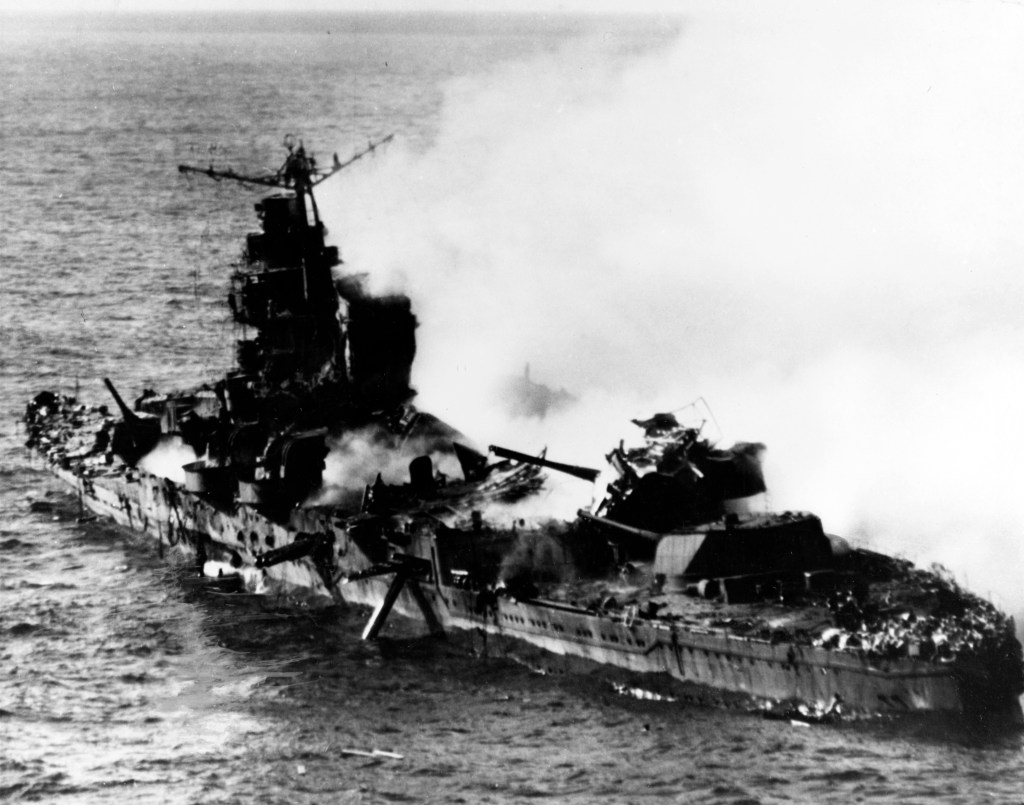
The battle also served as a partial retaliation for the Japanese “sneak attack” on Pearl Harbor. On June 4, the first day of the battle, four of the six carriers involved in the December 7, 1941 raid—Akagi, Kaga, Hiryu, and Soryu—were destroyed by planes launched from the carriers of the U.S. Pacific Fleet. Additionally, the Japanese Combined Fleet lost one heavy cruiser – the Mikuma – and another one was so severely damaged that it was out of action for many months. The Kido Butai also lost all 257 planes as a result of the battle. In stark contrast, the Americans lost the carrier USS Yorktown, the destroyer USS Hammann, 150 aircraft, and 307 personnel died (including three captured airmen executed by the Japanese).
Not only did Japan suffer its first major naval defeat in 350 years at Midway, but it lost the strategic initiative in the Pacific campaign. For the first six months of the war, the Japanese were on the offensive, carving out one of the largest empires in history and causing great consternation among the Allies, including Australia, the Netherlands, the British Empire, and, of course, the United States. This string of seemingly endless victories for the Empire of the Sun ended at Midway (although it was foreshadowed a month earlier when the Battle of the Coral Sea forced the Japanese to cancel Operation MO – the invasion of Port Moresby in Papua New Guinea, then an Australian territory).
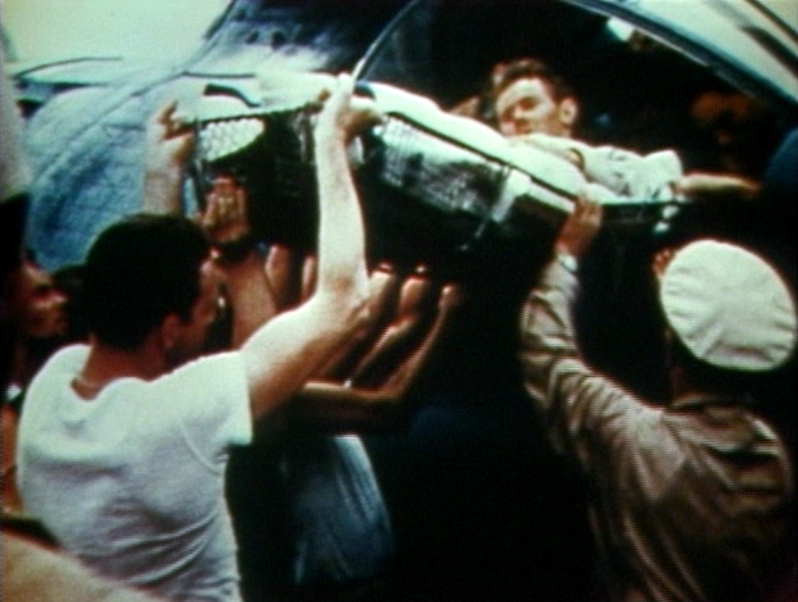
Like many pivotal moments in American military history, the Battle of Midway has been surrounded by myths and misconceptions. These narratives were, in part, a product of the strict wartime censorship imposed on journalists by all participating nations, including the United States. In 1942, the absence of modern-day 24-hour news coverage meant that updates were limited. With television still in its infancy and largely unavailable beyond major cities, the media landscape was dominated by newspapers and radio. Moreover, the wartime press operated under significant government restrictions, leaving little room for dissent or independent reporting.
Another source of myths and misconceptions surrounding the Battle of Midway is its portrayal in historical accounts, both in Japan and the United States. On the Japanese side, a prominent example is the book Midway: The Battle That Doomed Japan, which perpetuates the narrative that the First Striking Force (Kido Butai) was mere minutes away from delivering a decisive blow to the three American carriers—Enterprise, Hornet, and Yorktown—when U.S. Navy dive bombers descended from 20,000 feet and inflicted devastating strikes on Akagi, Kaga, and Soryu.
On the American side, the tendency has been to frame Midway as a David versus Goliath encounter between the U.S. carrier task forces and the seemingly unstoppable Imperial Japanese Navy’s Combined Fleet. This perspective is reflected in titles such as Incredible Victory by Walter Lord (1967) and Miracle at Midway by Gordon W. Prange (1982). Both works, based on primary sources and interviews with veterans, approach the subject earnestly but rely heavily on the same Japanese account of the battle—Midway: The Battle That Doomed Japan —authored by Mitsuo Fuchida. Fuchida’s work contains deliberate inaccuracies, aiming to downplay Japanese strategic and tactical errors while portraying the American triumph as a fortuitous stroke of luck rather than a calculated achievement.

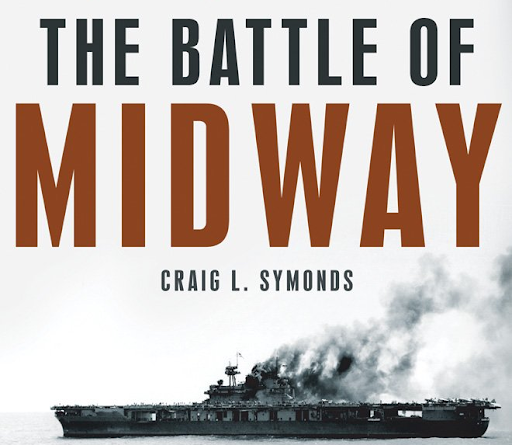
In recent decades, much of the mythology surrounding the Battle of Midway has been replaced by more accurate and detailed accounts, notably Shattered Sword: The Untold Story of the Battle of Midway by Jonathan Parshall and Anthony Tully (2005) and The Battle of Midway by Craig Symonds (2011). Shattered Sword offers a meticulous examination of the Japanese perspective during Operation MI, countering longstanding inaccuracies propagated by earlier works, such as Mitsuo Fuchida’s Midway: The Battle That Doomed Japan. Parshall and Tully’s expertise in Japanese naval strategy, tactics, and doctrine provides a corrective to the embellished narratives that dominated much of the discourse for decades. Meanwhile, Symonds’ comprehensive account explores the battle from both the American and Japanese viewpoints, drawing heavily on the findings of Shattered Sword to provide a balanced and well-substantiated overview of the pivotal engagement.
Myths and Misconceptions
Myths and misconceptions have long shaped how historical events are perceived, often distorting their realities and embedding misleading narratives within collective memory. This phenomenon is evident in various pivotal moments, whether tragic attacks like Pearl Harbor, the assassination of President Kennedy on November 22, 1963, or the September 11, 2001 terrorist attacks, or even military victories such as D-Day, the Battle of the Bulge, and the controversial Soviet triumph in Berlin. The Battle of Midway is no exception; it too has been surrounded by legends and inaccuracies that warrant deeper scrutiny.
Midway Was Launched in Response to the Doolittle Raid?
Contrary to popular belief, the Japanese did not conceive the Midway operation solely as a reaction to the American Doolittle Raid on Tokyo on April 18, 1942. Admiral Isoroku Yamamoto, who masterminded the strategy, had been contemplating a decisive confrontation with the U.S. Pacific Fleet well before the daring raid led by Lieutenant Colonel James Doolittle. Yamamoto’s rationale stemmed from the realization that Pearl Harbor had failed to force the United States into negotiations or submission; instead, American resolve only intensified.
Having spent time studying at Harvard University and serving as Japan’s naval attaché in Washington, Yamamoto understood Japan’s limited ability to sustain a prolonged war against the industrial and military power of the United States. While forward-thinking in his embrace of aviation as central to naval operations, Yamamoto adhered to the traditional Mahanian belief in the decisive battle at sea. His vision for Midway was to replicate Admiral Togo’s triumph over Russia’s fleet at the 1905 Battle of Tsushima—a resounding victory that would compel America to seek peace.
The Timeline of Operation MI
Planning large-scale operations like Midway required extensive coordination and preparation, especially amidst Japan’s simultaneous campaigns across Asia and the Pacific. While Yamamoto wielded significant influence, even he could not draft the complex plan for Operation MI on the spur of the moment. Preliminary discussions began in the wake of Pearl Harbor, but the operation gained formal shape between February and March 1942. By the first week of April, the scheme had already been approved by Japanese high command—weeks before Doolittle’s bombers took off from USS Hornet 700 miles from Japan.
This timeline underscores that Midway was not hastily designed as a retaliatory strike for the Doolittle Raid but rather a calculated effort to deliver a decisive blow to the United States and shift the strategic balance of the Pacific War in Japan’s favor.
Nimitz’s Calculated Ambush
The prevailing narrative that Admiral Chester W. Nimitz committed the American carriers at Midway out of desperation is an oversimplification that underestimates the meticulous planning and strategic foresight behind the decision. Far from being a reckless gamble, Nimitz’s approach was rooted in intelligence, strategic positioning, and an appreciation of the inherent strengths of his forces juxtaposed against the flaws in the Japanese operational design.
The foundations of Nimitz’s plan were laid by the unparalleled work of U.S. Navy codebreakers, who decrypted Japanese communications and identified Midway as the target of Operation MI. This intelligence allowed Nimitz to position his carriers—USS Enterprise, USS Yorktown, and USS Hornet—in advance, turning the impending engagement into a calculated ambush rather than a chaotic confrontation. Far from being heavily outnumbered, Nimitz leveraged the strategic advantage offered by Midway Atoll itself, which served as an unsinkable fourth carrier. With its airstrips, supply depots, and defensive installations, Midway provided a formidable platform for reconnaissance and combat operations that augmented the firepower and capabilities of the U.S. fleet.
The Japanese, on the other hand, diluted their numerical superiority by dispersing their forces across multiple objectives and formations. While nearly 200 Japanese ships were indeed mobilized as part of their Pacific operations in early June 1942, not all were concentrated at Midway. A substantial number of vessels were involved in Operation AL, the simultaneous invasion of Attu and Kiska in the Aleutian Islands, while others were scattered across disparate task forces—the Kido Butai (carrier strike group), the Invasion Force, and the Main Body, among others. This fragmentation violated the principle of Mass in military strategy, which emphasizes the concentration of overwhelming force at the decisive point of engagement. The dispersed Japanese fleet lacked the cohesion necessary to fully capitalize on its numerical advantage, allowing the U.S. Navy to exploit gaps in coordination and communication.
Nimitz’s decision also reflected a pragmatic understanding of the broader strategic situation. He recognized that even if Midway were to fall into Japanese hands, it would not pose a significant threat to Hawaii or the continental United States. The Japanese lacked the logistical infrastructure and adequate air cover to sustain and defend Midway as a forward base for long-term operations. Nimitz understood that reclaiming Midway at a later time would be a viable option if necessary. This strategic calculus freed him to focus on delivering a decisive blow to the Japanese fleet, rather than becoming preoccupied with the defense of Midway itself.
Furthermore, Nimitz’s carriers benefited from tactical positioning that maximized their operational reach while minimizing exposure. By keeping his fleet concealed and utilizing Midway’s reconnaissance capabilities, Nimitz ensured that the American forces struck first, catching the Japanese off guard and undermining their offensive momentum. The ambush at Midway was not a desperate act but a masterful orchestration of resources and intelligence, capitalizing on the vulnerabilities of the Japanese plan.
Ultimately, Nimitz’s decision reflected the principles of modern naval warfare—leveraging intelligence, exploiting terrain, and ensuring the element of surprise. By transforming Midway into a strategic asset and recognizing the disjointed nature of Japanese operations, Nimitz crafted a battle plan that turned the tide of the Pacific War. Far from being overwhelmed, the American forces demonstrated that ingenuity and preparation could prevail even against a seemingly superior adversary.
The Misstep of Operation AL
Another common misconception surrounding the events of Midway is the belief that Operation AL—the Japanese invasion of the Aleutian Islands—was deliberately designed as a diversionary tactic within Operation MI. In reality, Operation AL was more a concession than a strategic complement, begrudgingly included in Japan’s plans due to pressure from other factions within the Japanese high command. Admiral Isoroku Yamamoto, the architect of Operation MI, was far from enthusiastic about the Aleutian campaign.
The notion that Operation AL served as an effective distraction from Midway falls apart on closer analysis. Yamamoto’s overarching strategy aimed to replicate the decisive naval victory of Tsushima, where overwhelming force against a concentrated opponent had delivered Japan a historic triumph. Splitting forces to execute a diversion undermined this principle of concentrated engagement, diluting resources and scattering the fleet across multiple theaters of operation. The simultaneous campaign in the Aleutians effectively contradicted the strategic intent behind Operation MI, as Yamamoto wanted the U.S. Navy to converge at Midway, ensuring a decisive confrontation.
By diverting assets to the Aleutians, Japan weakened its numerical and operational cohesion at Midway. While the Aleutians undoubtedly represented a minor strategic interest, the logistical and tactical benefits of occupying these remote islands were negligible in comparison to the stakes at Midway. The isolated nature of the Aleutians and their minimal impact on the broader theater of the Pacific War meant that capturing them offered little more than symbolic value. Any hopes that Operation AL would significantly disrupt American planning or draw naval resources away from Midway were overly optimistic and strategically flawed.
Moreover, the U.S. Navy, guided by the intelligence breakthroughs of its codebreakers, was never misled by Japan’s dual-pronged approach. American planners recognized that the Aleutian operation was a secondary effort and maintained their focus on Midway as the primary theater of battle. Rather than being drawn into Yamamoto’s theoretical “trap,” the Americans exploited Japan’s divided forces, using their concentrated strength to deliver a decisive response at Midway while keeping a minimal but effective presence in the Aleutians.
In hindsight, Operation AL serves as a cautionary tale for the risks of strategic overreach. It illustrates how internal disagreements and competing priorities within the Japanese high command hampered the cohesion of their Pacific campaigns. What could have been a singular, devastating blow to the U.S. Navy at Midway was undermined by the misallocation of resources and the ill-conceived Aleutian campaign. The flaws in Japan’s planning not only diluted their naval superiority but also handed the initiative to the United States, allowing Nimitz to craft his calculated ambush and decisively shift the tide of the Pacific War.
The “Fateful Five Minutes” Myth in Midway; Debunking Mitsuo Fuchida’s Interpretation
The events of the decisive Battle of Midway, often celebrated as the turning point in the Pacific War, have been analyzed and re-analyzed by historians, military strategists, and commentators alike. Among the more contested narratives surrounding this battle is the so-called “Fateful Five Minutes” myth, popularized by Japanese naval officer Mitsuo Fuchida in his account, Midway: The Battle That Doomed Japan. Fuchida’s interpretation, which attributes the Japanese defeat to bad luck and a brief moment of misfortune, has been widely challenged and ultimately debunked. This essay explores the origins, motivations, and flaws of the “Fateful Five Minutes” myth, examining it within the broader context of Japan’s flawed operational planning and execution during Operation MI.
Origins of the Myth
Mitsuo Fuchida, a veteran of the Imperial Japanese Navy and an observer of the crippling defeat at Midway, authored Midway: The Battle That Doomed Japan as a reflective and explanatory text for Japanese audiences. In his narrative, Fuchida posited that the Kido Butai—the Japanese carrier strike force—was on the brink of launching a decisive counterstrike against U.S. Task Forces 16 and 17 when disaster struck. According to Fuchida, the delay in launching came down to a tragic combination of bad timing and bad luck. He claimed that all four Japanese carriers had spotted their planes and were moments away from initiating an offensive when American dive bombers suddenly appeared overhead, delivering a devastating attack.
This interpretation, while dramatic and appealing in its simplicity, serves more as a post-facto justification than a factual recounting of events. Fuchida’s framing of the battle as a momentary lapse—rather than a culmination of systemic planning flaws—was likely aimed at “saving face” for the Imperial Japanese Navy, which had suffered an unprecedented and humiliating defeat. By shifting the focus to “victory disease” and unforeseen misfortune, Fuchida attempted to absolve the Japanese high command of responsibility for their tactical and strategic miscalculations.
Flaws in the “Fateful Five Minutes” Narrative
A closer analysis of the battle reveals several critical flaws in Fuchida’s account. First and foremost, the operational state of the Kido Butai contradicts the notion that its carriers were poised to launch a strike wave. Historical records and post-battle analyses indicate that Japanese aircraft were not armed and ready on their flight decks. Instead, the carriers were still engaged in the process of rearming and refueling their planes. The chaotic nature of the morning’s engagements—marked by successive American air attacks—had left the Kido Butai scrambling to recover and re-organize its air operations.
Moreover, Fuchida’s claim ignores the relentless pressure placed on the Japanese fleet by U.S. air assaults throughout the morning of June 4, 1942. The Kido Butai had been fighting off waves of American attacks, including strikes from torpedo bombers, dive bombers, and land-based aircraft. These attacks disrupted Japanese flight deck operations and consumed valuable time and resources. Between the necessity of defending against incoming attacks and the complexities of coordinating offensive maneuvers, the Kido Butai lacked the cohesion and readiness required for a decisive counterstrike.
Timing is another critical issue that undermines the “Fateful Five Minutes” narrative. Most of the Japanese planes, except for the Zeros assigned to the combat air patrol (CAP), were still in the hangar decks, not ready on the flight decks. Preparing and “spotting” the strike—moving the planes to the flight deck and organizing them for launch—would have taken approximately 45 minutes, a luxury of time that the Japanese fleet simply did not have before the arrival of the American dive bombers. The resulting chaos and lack of readiness ensured that the strike force was caught in its most vulnerable state, further discrediting the notion that bad luck alone dictated the outcome.
The Role of American Strategy
Far from being a battle decided by chance, the outcome at Midway was the product of meticulous American planning and execution. Admiral Chester W. Nimitz’s forces leveraged intelligence breakthroughs to anticipate Japan’s movements, enabling them to position their carriers advantageously. The use of Midway Island as a reconnaissance hub provided crucial situational awareness, allowing the Americans to launch their attacks with precision.
The ambush by U.S. dive bombers, which inflicted catastrophic damage on the Japanese carriers Akagi, Kaga, and Soryu, was a carefully orchestrated strike that capitalized on the disarray within the Kido Butai. By targeting the fleet at its moment of maximum vulnerability, the Americans ensured the success of their assault. This was not the result of bad luck; it was the culmination of superior strategy, preparation, and adaptability.
The Broader Implications
Fuchida’s emphasis on the “Fateful Five Minutes” reflects a broader tendency in historical narratives to attribute military failures to external factors rather than internal shortcomings. In the case of Midway, the defeat of the Imperial Japanese Navy was not a fluke but a foreseeable consequence of flawed operational planning. The dispersion of Japanese forces across multiple objectives—partly due to the ill-conceived Operation AL—diluted their numerical and tactical advantages. Coupled with the underestimation of American resolve and intelligence capabilities, these errors created the conditions for Japan’s catastrophic loss.
The “Fateful Five Minutes” myth also serves as a cautionary tale about the dangers of post-facto historical revisionism. By framing the defeat at Midway as a product of misfortune rather than strategic misjudgment, Fuchida’s narrative obscures valuable lessons about the importance of cohesion, adaptability, and realistic planning in military operations.
Conclusion
The “Fateful Five Minutes” myth, as promulgated by Mitsuo Fuchida, offers an overly simplistic and misleading explanation for Japan’s defeat at Midway. While it may have served as a convenient narrative for Japanese audiences grappling with the humiliation of their loss, it fails to withstand scrutiny against the historical evidence. The reality of Midway was far more complex, involving systemic failures in Japanese strategy and execution, coupled with the ingenuity and resilience of the U.S. Navy. By debunking the myth, historians can better appreciate the lessons of Midway—lessons that emphasize the critical role of preparation, intelligence, and adaptability in the art of warfare.
 A Certain Point of View, Too
You must be logged in to post a comment.