
The Wild Blue: The Men and Boys Who Flew the B-24s Over Germany 1944–45
By: Stephen E. Ambrose
Publisher: Simon & Schuster
Year Published: 2001
Genre(s): Aviation, Military History, Aerial Warfare, World War II (1939-1945)
The Unsung Wings of Victory: A Reflection on Stephen E. Ambrose’s The Wild Blue
When we conjure images of America’s strategic bombing campaign against Nazi Germany, it’s often the sleek silhouette of the Boeing B-17 Flying Fortress that dominates our collective imagination. Hollywood has etched this vision into memory with films like Twelve O’Clock High, Command Decision, and Memphis Belle—stories of brave crews launching from British airfields into the perilous skies over Hitler’s Reich. These cinematic tributes have elevated the B-17 to near-mythic status, casting it as the heroic centerpiece of the U.S. Army Air Forces’ daylight offensive.

Yet, as Stephen E. Ambrose reminds us in The Wild Blue: The Men and Boys Who Flew the B-24s Over Germany 1944–45, the true backbone of that campaign was not the media-darling Flying Fortress, but the less glamorous, more prolific Consolidated B-24 Liberator. With over 18,000 built, the B-24 served in every theater of World War II where American forces fought. It was harder to fly, carried fewer guns, and lacked the aesthetic grace of the B-17—but it flew faster, hauled more bombs, and delivered devastating blows to the Nazi war machine.
Ambrose, in his final major work, shifts the spotlight from the aircraft to the young men who flew it. His narrative centers on George S. McGovern, a 22-year-old pilot from South Dakota whose wartime service in the B-24 would later inform his public life—including a run for the presidency nearly three decades later. Through McGovern’s journey from cadet to combat pilot, Ambrose crafts a deeply human story of courage, growth, and the quiet heroism of those who flew from Italian bases into the heart of Nazi-held Europe.

The Wild Blue also reclaims the overlooked legacy of the Fifteenth Air Force and the Italian campaign. While the Normandy landings and the Allied push through France captured headlines and historical attention, the relentless raids launched from Italy over Austria, Romania, and southern Germany were no less vital. Ambrose’s tribute to these missions—and the men who flew them—is both overdue and deeply moving.

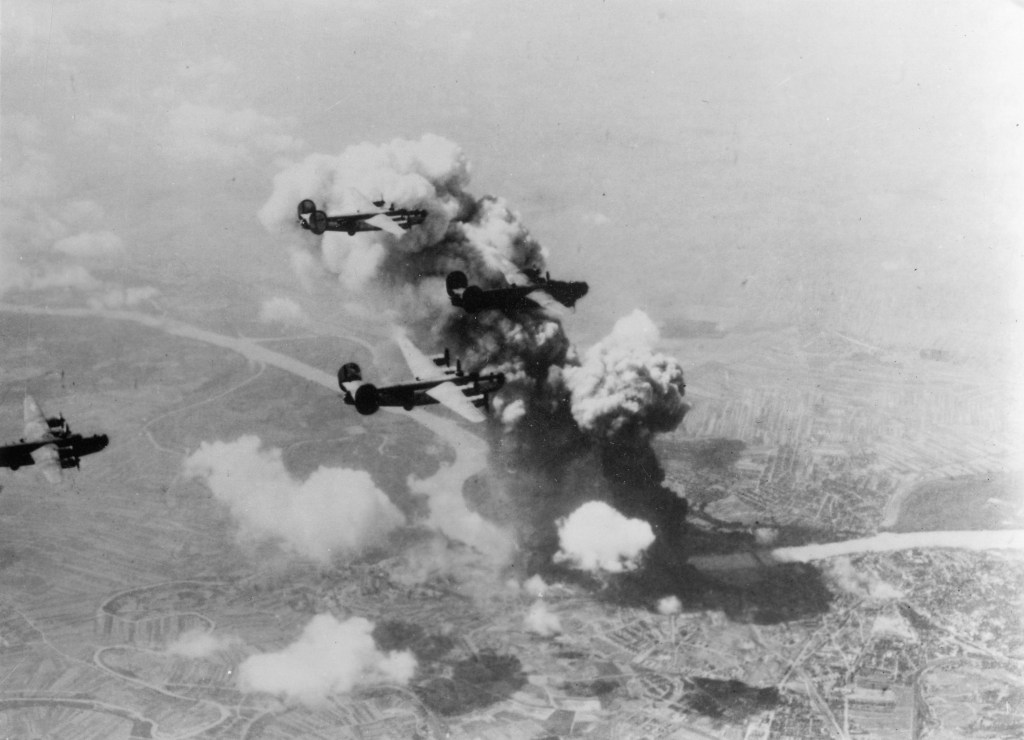
In honoring the B-24 and its crews, Ambrose doesn’t just correct the historical record; he restores dignity to the forgotten corners of wartime memory. The Wild Blue is more than a chronicle of aircraft and missions—it’s a testament to the emotional architecture of service, sacrifice, and the quiet resolve that helped liberate a continent.
 A Certain Point of View, Too

You must be logged in to post a comment.