
Writer’s Log, Stardate 2306.7

“When you write a book, you spend day after day scanning and identifying the trees. When you’re done, you have to step back and look at the forest.” ― Stephen King, On Writing: A Memoir of the Craft
After taking an hour-long rest-and-relaxation break before noon, I decided to focus my attention on editing the rough draft of Reunion: Coda instead of writing new material. It was not an easy decision to make – I’ve been working on one chapter since May 19, and I would like to get to the next chapter soon, even though I have not decided yet if Chapter Ten will be set in 1983 or 2000. That depends on what happens in the next scene in Chapter Nine, and since my focus has been on inquiring about permission to use the lyrics from “Somewhere” (which I decided, in the end, not to use) and revising the existing material now rather than later, progress on that has been…slow.

“To write is human, to edit is divine.” ― Stephen King, On Writing: A Memoir of the Craft
Today I looked over my “Scrap Sheet” file – which is actually the “rough draft” version of Reunion and made a few cosmetic changes to the text. Not many, since I also did the “edit and revise” thing yesterday, and even though I’m a decent editor with other writer’s works – cos, of course, their styles are often different from mine, plus there’s the whole “objectivity” thing – I don’t fare too well with my own material.
It’s not that I’m lazy and don’t want to put in the hard work of copy editing, revising, or rewriting the manuscript. One of the reasons why it often takes me hours to write one “simple blog post” or an “easy movie review” is that I don’t write the first draft in one fell swoop and then edit it. No, no, my sweet summer child. I’ll start writing something, read it as I go, and then, if the material on my computer screen sounds clunky or if it’s too long, I hit the BACKSPACE key, delete the “clunky” stuff, and try to come up with something less clunky.

This isn’t something new, either. I’ve always written like that. Even when I was on the staff of either my high school or college student newspaper, I edited as I wrote. And, of course, since I could never be 100% objective about my own material, I was always surprised when another pair of eyes – either another student editor or my journalism instructor – spotted errors or sloppy writing on my “hard copy.”
My method of edit-as-I-go does work, though, even if it slows my forward momentum considerably. And since I’m not the Speedy Gonzales of typists, my daily output on the novel rarely exceeds 1,000 words a day. I write, on average, between four and five pages a day, although if I wake up at four o’clock in the morning – which happens way too often lately – it’s closer to two or three pages a day of “fresh” material.
“I like to get ten pages a day, which amounts to 2,000 words. That’s 180,000 words over three months, a goodish length for a book — something in which the reader can get happily lost, if the tale is done well and stays fresh.” ― Stephen King, On Writing: A Memoir of the Craft
(Stephen King, in On Writing: A Memoir of the Craft, says that his ideal target is 2,000 words a day, and that’s to be reached before his stop time in the afternoon. Granted, Steve-O probably types faster than I do, plus he has far more experience at writing novels – this will be my first one if it doesn’t kill me in the process. I am lucky if I reach the 1K mark on two out of the five workdays on my writing schedule.)
I don’t know if the edits I’ve made will suffice. I think they will, but I would rather have another person as an editor. I’m okay at fixing obvious mistakes: typos, strange turns of phrase I wrote late one day and then caught when re-reading “the rough draft” with fresh eyes the next morning, and continuity/factual errors that inevitably creep into a manuscript, especially when the ideas flow out of my brain faster than I can type or I’m in “the zone” and writing away as if I were taking dictation from my Muse.
What gives me the most challenging time, though, is deciding, for instance, if a certain sequence is overlong and needs to be trimmed or catching repetitiveness in my narration. I think I’m good at dialogue and coming up with believable (or at least somewhat plausible) situations, but I’m less confident when it comes to description and pacing.

On the plus side, this time around, I have a Beta Reader – a writer friend with far more experience than I do with fiction and poetry – who, when she has time, reads my rough draft on Google Drive with a dispassionate eye and makes helpful suggestions on what to cut or revise.
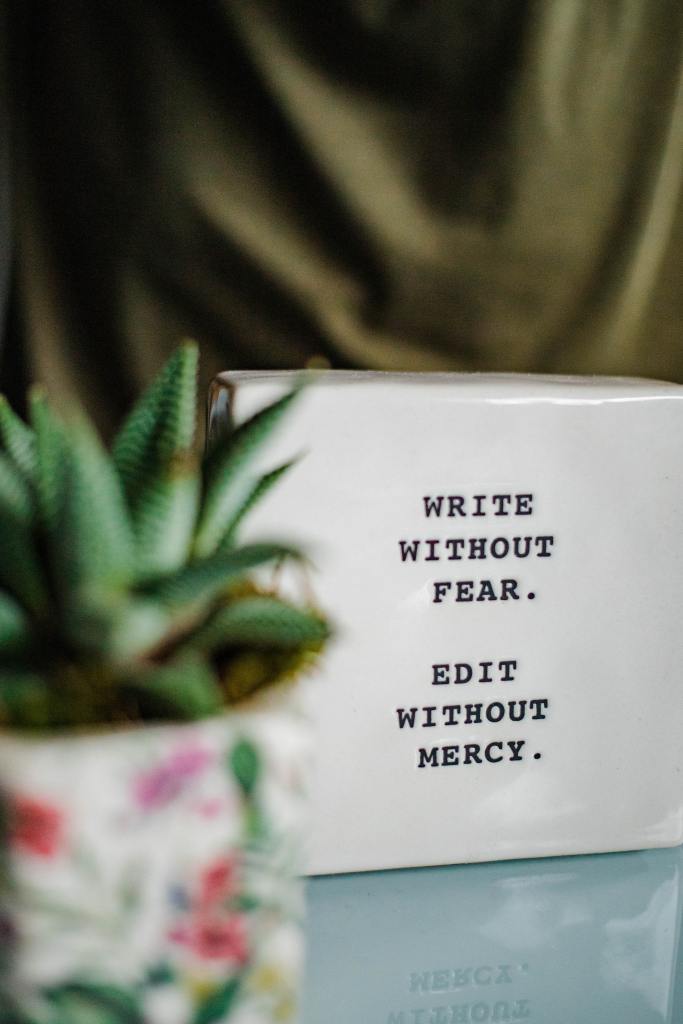
When I wrote Reunion: A Story back in 1998, I didn’t have a Beta Reader, and because none of the people I showed the original draft to were writers, all I ever heard was, “This is great, Alex! You should get it published!” I didn’t have anyone around to give me “constructive criticism” or “helpful advice,” so of course, I was oblivious to the errors that I missed – and failed to fix – between 1998 and 2018.
So, yeah. Having an extra set of eyes has helped immensely.
Now, if I could only sleep better at night, this novel-writing stuff would be a mite easier, and a lot more fun.
 A Certain Point of View, Too
Comments
4 responses to “On Writing & Storytelling: Today I Edited; Tomorrow…I’ll Write?”
Thank you for sharing your editing process with us. It’s nice to see what works for another person.
LikeLiked by 1 person
It works…mostly.
And, of course, computers make it way easier than back in the 1980s. (Or even the mid-1970s, which is when I got my first electric typewriter as a gift.)
LikeLiked by 1 person
I know, right. Remember White-Out.
LikeLiked by 1 person
Or Brother “self-correcting” typewriters that came out in the late 1980s. They could either “erase” typos on regular paper (but the ink, being erasable, rubbed off the paper!) or use thermal paper (but then you couldn’t use the self-correcting bit).
I absolutely hated Liquid Paper.
LikeLiked by 1 person