It’s late morning here in Lithia, Florida, on Thursday, June 15, 2023. Here, early summer weather patterns are holding. Right now, it’s mostly cloudy, warm (78°F/23°C), and still cool enough to go outside for a walk and not come back winded and sweaty. But it’s warming up, and the forecast calls for a high of 93°F/33°C and no rain. We probably won’t see any showers or thunderstorms till the weekend; it is the rainy season, after all, and there are some pretty nasty-looking weather systems in other parts of the South, so….
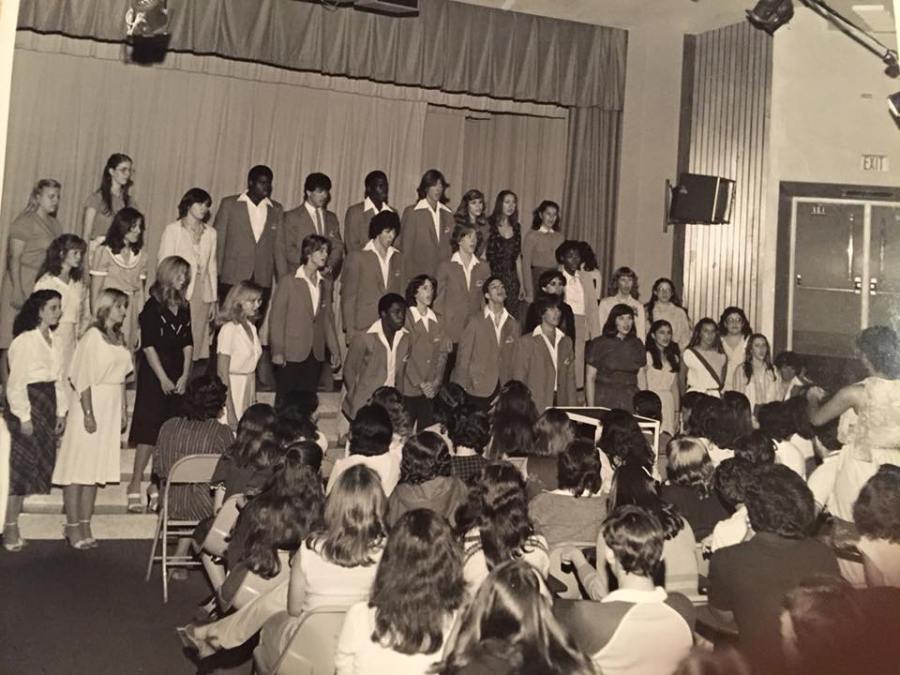
Today is the 40th anniversary of my last attendance day as a student at South Miami Senior High. Back in 1983, the 15th of June fell on a Wednesday, and even though commencement would not be held till Friday, June 17 at the Gibson Center on what was then called Miami-Dade Community College, South Campus, that was the end of my 11-year stint as a student in the Dade County Public School system.
If you’ve read my most recent posts on A Certain Point of View, Too, you already know that my final day at Cobra Country was not a particularly happy one. My life at home then was – difficult; Mom was dating a retired pilot with a bad temper and a serious drinking problem, and he made my life miserable. Plus, neither my mother nor I had seriously thought about my going to college, so we weren’t sure what I was going to do in the immediate aftermath of my high school graduation.

There were, of course, many other reasons for my melancholic reaction to leaving school. I liked the predictability of my routine, and even though I didn’t enjoy every one of my classes – I loathed, for instance, Algebra I; I didn’t grasp the subject then, and I still don’t grasp it now – I felt safe when I was on campus. (That’s how unhappy I was during the six years that my mother dated Joe Bubenik, and that’s why I don’t particularly feel thrilled when I’m in the orbit of a heavy drinker.)
And, of course, I hated leaving South Miami because I would miss seeing all the attractive women – either students or even faculty members – that I had crushes on. Of course, since I was extremely shy and lacked self-confidence, I never asked any of the girls out on a date, and the only times that I “made out” with a girl between 6th and 12th grade was with “K.” a girl I had dated in elementary school. These “make out” sessions never went past French kissing, and they did not rekindle our childhood romance, but at least I can say I learned how to really kiss a woman while I was still a high school student.
If you want a more detailed account of my perceptions about my last day at South Miami High, I wrote a fictionalized version in my novella Reunion: A Story.

Here’s an excerpt from the chapter Forgotten Dreams:
On the last day, however, as soon as the third period (actually, it’s second period, but old habits die hard) bell rings there is a mass exodus from the school, even though there are a few faculty and staff members stationed like guards in the hallways as a deterrent. They are either bypassed or ignored altogether, and in some cases the teachers simply turn their backs on the whole thing. There are more important details to attend to – grading exams, recording grades, and putting away materials until another school year begins in the fall semester – and standing guard duty seems to be a waste of time. What few students remain do so out of habit or loyalty to friends, favorite teachers, or alma mater. In every classroom small groups of students sit together in a corner or at their desks, exchanging yearbooks, pens, and maudlin inscriptions. On each of the high school’s three floors, a smaller group of students, with no place to go and nothing else to do, pulls itself together into a work party and carries away armloads of textbooks into the departmental storage room. An even smaller group just wanders aimlessly about like a desert tribe without a leader or plan of action.
Diaz-Granados, Alex. Reunion: A Story (pp. 10-11). Kindle Edition.
On Writing & Storytelling
“I need to stop getting into situations where all my options are potentially bad.” ― Jack Campbell, Dauntless

As for my work-in-progress, Reunion: Coda, I regret to inform you that no progress was made yesterday. None at all. I am exactly where I was when, on June 9, I saw that there wasn’t an easy way to add a fourth scene to Chapter Nine and decided to move on to Chapter Ten (which, according to the “alternating timelines” structure of the novel, is a “grown-up Jim” chapter instead of a “high school Jim” one).
The frustrating thing about starting Chapter Ten is this: I know what I want to happen, not just in the opening scene but in the chapter as a whole. I don’t have a formal “on paper” (or, if you prefer, “on a computer screen”) outline, but I have a general idea of what goes on in this “Jim and Maddie” chapter. I even have dreams about it when I sleep at night – that’s how vivid the details of this part of Reunion: Coda are now.

My problem isn’t the lack of ideas. It’s more of a “how to write the scene” problem. I’m having a hard time trying to figure out if I’m going to begin the scene with a description of place, time, and characters, or if I’m going to start with a line of dialogue, then go on with descriptions, and so forth.
If this “stuck in the mud” syndrome had plagued me at an earlier section of the manuscript, I might have simply thrown my arms up in disgust and said, “You know what? Fuck this. I’m spending time and energy on a book that, if I finish and publish it, will sell only a few copies, get a few nice reviews, and then…nothing.”

“First forget inspiration. Habit is more dependable. Habit will sustain you whether you’re inspired or not. Habit will help you finish and polish your stories. Inspiration won’t. Habit is persistence in practice.” ― Octavia Butler, Bloodchild and Other Stories


But, as I’ve written a few times in the recent past, I’ve come this far (Chapter Ten!), so quitting now will actually feel worse than if I’d set the manuscript aside, say, in Chapter Two or Chapter Three. I’ve invested three months to this first draft already, so I’m determined to continue until I finish this damn novel, come what may.
“Writers remember everything…especially the hurts. Strip a writer to the buff, point to the scars, and he’ll tell you the story of each small one. From the big ones you get novels. A little talent is a nice thing to have if you want to be a writer, but the only real requirement is the ability to remember the story of every scar.
“Art consists of the persistence of memory.” ― Stephen King, Misery
 A Certain Point of View, Too
You must be logged in to post a comment.