
An Excerpt from Reunion: A Story
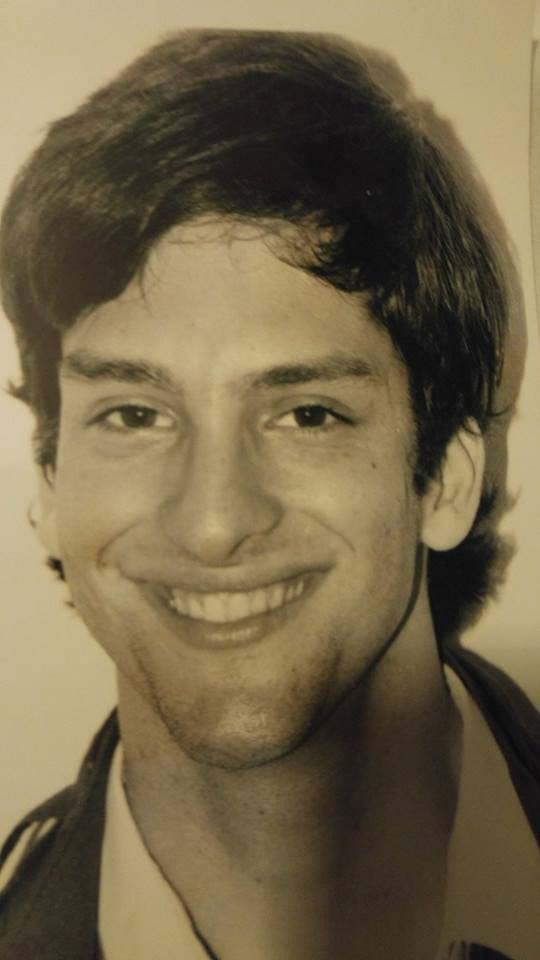
In 1987, 11 years before I decided to write my first complete work of fiction, I took a Creative Writing course (CRW-2001, I believe it was) at what was then called Miami-Dade Community College, South Campus. As I recall, late in the semester, we students were asked to write a short piece of fiction that featured either a dream sequence or fantasy using, in the words of Professor David Schroeder, vivid descriptions of the setting and concrete details. We could choose any genre – including erotica if that struck our fancy – but we had to do our best to use words to draw a mental picture for the reader.
I was younger and somewhat cocky back then, so I decided to write a story in which my narrator-protagonist has a crush on one of his teachers and, on the last day of his senior year in high school, falls asleep in the school library and has a “hot dream” about her.
However, when I began writing the scene, I decided that I didn’t just want to focus on the sexy bits; I believed the dream sequence would work better if I added a section that was grounded in reality. I wasn’t sure if my instructor would like a story with such a long buildup, but I wanted to set up the story in such a way that my “I-guy” was a believable (and likable) character, rather than just a carbon copy of one of those horny teens from movies such as Porky’s or Private Lessons.
I no longer have my copy of the original version of Jim Garraty’s dream; I might have thrown it away after I recycled most of the setup material for a more plausible – and more romantic – dream sequence in the novella I wrote in 1998 – Reunion: A Story.
If you read the finished novella, which I self-published via Amazon five years ago and, after making various revisions, republished earlier this year, you’ll notice that I began writing Reunion “from the middle out” – that is, I wrote the revised dream sequence first, then added more material to the beginning and wrote, from scratch, the concluding third of the novella.

This excerpt is based on the oldest section of Reunion and was adapted almost word for word from the original CRW-2001 assignment from 1987. This is the version that appears in the 2023 edition of the novella, so it has been tweaked a bit from the draft that earned a B+ from Professor Schroeder 36 years ago.
If you want to read the actual dream sequence, though, you’ll simply have to buy the book from Amazon (in Kindle e-book or paperback) or the online version of Barnes & Noble.
Journey’s End: Wednesday, June 15, 1983
6:00 AM, Home
I woke up on the morning of my last day of high school with a blinding headache. I had not slept well. I’d stayed up too late, spent far too many hours leafing through my still new yearbook. (In one of those strange moments of reflection, I wondered if 20 years later I would recognize myself in those black and white photos after drinking one scotch and soda too many.) At three in the morning, I finally turned off my reading lamp and plopped my head on my pillow. Even so, I’d only managed to doze off when it was suddenly time to get up again; the Sony radio/alarm clock was blasting out Sousa’s “Semper Fidelis March” at what seemed to sound like 180 decibels. I switched it off quickly before my head exploded.
I reluctantly took one of my hands out from under the bed sheets, and keeping my eyes closed, turned on the lamp on the night table next to my bed. I opened my eyes slowly, letting them grow accustomed to the light little by little.
“Gotta get up, buddy-boy,” I muttered under my breath, “so get movin’.”
I got out of bed slowly, but my body was not yet in synch with my brain. I stood up tentatively, looking for all the world like a newborn fawn trying to get up on its feet. My legs were not sure if they could support my body weight, and for a few seconds I felt sure that I was going to fall flat on my face. I was surprised when I didn’t fall. Not only were my legs capable of supporting my 160-pound body weight, but they could also propel me across my room. I tried crossing the space between my bed and my battered student’s desk (still cluttered with half a year’s worth of English assignments, a Smith-Corona typewriter, a rough draft of my last research paper, and several issues of Time magazine), and, although my knees wobbled ever so slightly, I made the short round trip twice before I was certain I’d make it to the bathroom. Taking one last look around, I turned off the light from the wall switch, then shuffled blearily across the hallway to the bathroom.

10:55 AM: South Miami Senior High – A Classroom
On the last day of school, things always seem to take place at a slower pace than usual, especially after the last final exams have been completed. Since Finals Week is so markedly different from the norm, with schedules switched to accommodate final exams, there is a battle between the faculty and the restive students for the maintenance of order and discipline. The administration insists on enforcing strict attendance even on this last day, and the students demand to be released after 180 days of boredom and drudgery. For the first two days of Finals Week the administration blusters, bullies, and cajoles, and much of the student body remains on campus to review for the remaining exams.
On the last day, however, as soon as the third period (actually, it’s second period, but old habits die hard) bell rings there is a mass exodus from the school, even though there are a few faculty and staff members stationed like guards in the hallways as a deterrent. They are either bypassed or ignored altogether, and in some cases the teachers simply turn their backs on the whole thing. There are more important details to attend to – grading exams, recording grades, and putting away materials until another school year begins in the fall semester – and standing guard duty seems to be a waste of time. What few students remain do so out of habit or loyalty to friends, favorite teachers, or alma mater. In every classroom, small groups of students sit together in a corner or at their desks, exchanging yearbooks, pens and maudlin inscriptions. On each of the high school’s three floors, a smaller group of students, with no place to go and nothing else to do, pulls itself together into a work party and carries away armloads of textbooks into the departmental storage room. An even smaller group just wanders aimlessly about like a desert tribe without a leader or plan of action.
Every once in a while, the silence that has prevailed since the last finals period commenced is broken by the loud metallic SLAM of a locker being violently opened. This is followed by the soft thudding sounds of notebooks being carelessly dumped on the carpeted floor. Papers fly all over the place like an out-of-place snowstorm, becoming, for a few hours, a weird carpet upon a carpet. Then the silence returns, only to be broken again by the slam-thudding sounds or an infrequent “Hey-hey-hey Cobras, Number One, Cobras Num-ber One!” chant recalling football games and pep rallies of the past. The chant echoes eerily through the halls…then the silence returns, falling like a final curtain on a deserted stage. This is South Miami High on the 15th of June 1983.
“Here you go,” I said to the attractive cheerleader (ex-cheerleader, I mentally corrected myself) whose yearbook I’d just signed. Hastily I had jotted this entry: To Ann Saroyan: It was nice having you for a classmate in English this year. It really was a trip and a half! Best Wishes, Jim. I closed the yearbook and handed it back with an I-aim-to-please smile.
Ann Saroyan – she looked sort of strange dressed in “civilian” clothes; I was accustomed to seeing her in her cheerleader’s uniform – beamed happily. Her hazel eyes gleamed with end-of-high-school joy. “Thanks, Jim,” she said. She smiled at me and handed me my yearbook. She had quickly scribbled: Good luck in the future. Love, Ann Saroyan, Class of ’83.
“Thank you,” I said after reading the inscription and closing my yearbook. “Really.”
Ann smiled again. She looked wonderful. I stood there for a minute, still thinking how strange it was to see the captain of the cheerleaders in jeans and a brown-and-beige plaid blouse. She was very pretty. She leaned toward me slightly and kissed me chastely on the cheek. “Goodbye, Jim,” she said in a half-whisper. Then glancing back over her shoulder at the clock on the wall, she gathered her belongings and walked out of the classroom, presumably to collect a few more yearbook inscriptions.
I watched her leave, and after looking around the nearly empty classroom – Mrs. DeVargas, my English 4, Advanced Placement instructor, had departed some time before to get a cup of Sanka so she could finish grading some thirty-odd final exams in the refuge of the English Department office – I grabbed my backpack, stuffed my yearbook inside, and walked out into the corridor.




 A Certain Point of View, Too
You must be logged in to post a comment.