
Late Morning/Midday, Friday, June 21, 2024, Madison, New Hampshire
Madison Summer Almanac

Hi, there. It’s a gray, gloomy early summer day in my New England nook. The current temperature is 74°F (24°C) under cloudy conditions. With humidity at 88% and the wind blowing from the northeast at 4 MPH (6 Km/H), the feels-like temperature is 82°F (28°C). Today’s forecast calls for light rain showers throughout the day. The high will be 77°F (25°C). Tonight, scattered rain will continue. The low will be 63°F (17°C).
(It looks like this is the weather trend for the weekend, so I doubt we’ll see much – if any – sunshine here in the Madison area until next week.)
On Writing & Storytelling: A Quick Update About Chapter 18’s Scene Two
From Concept to Realization: The Long and Winding Path

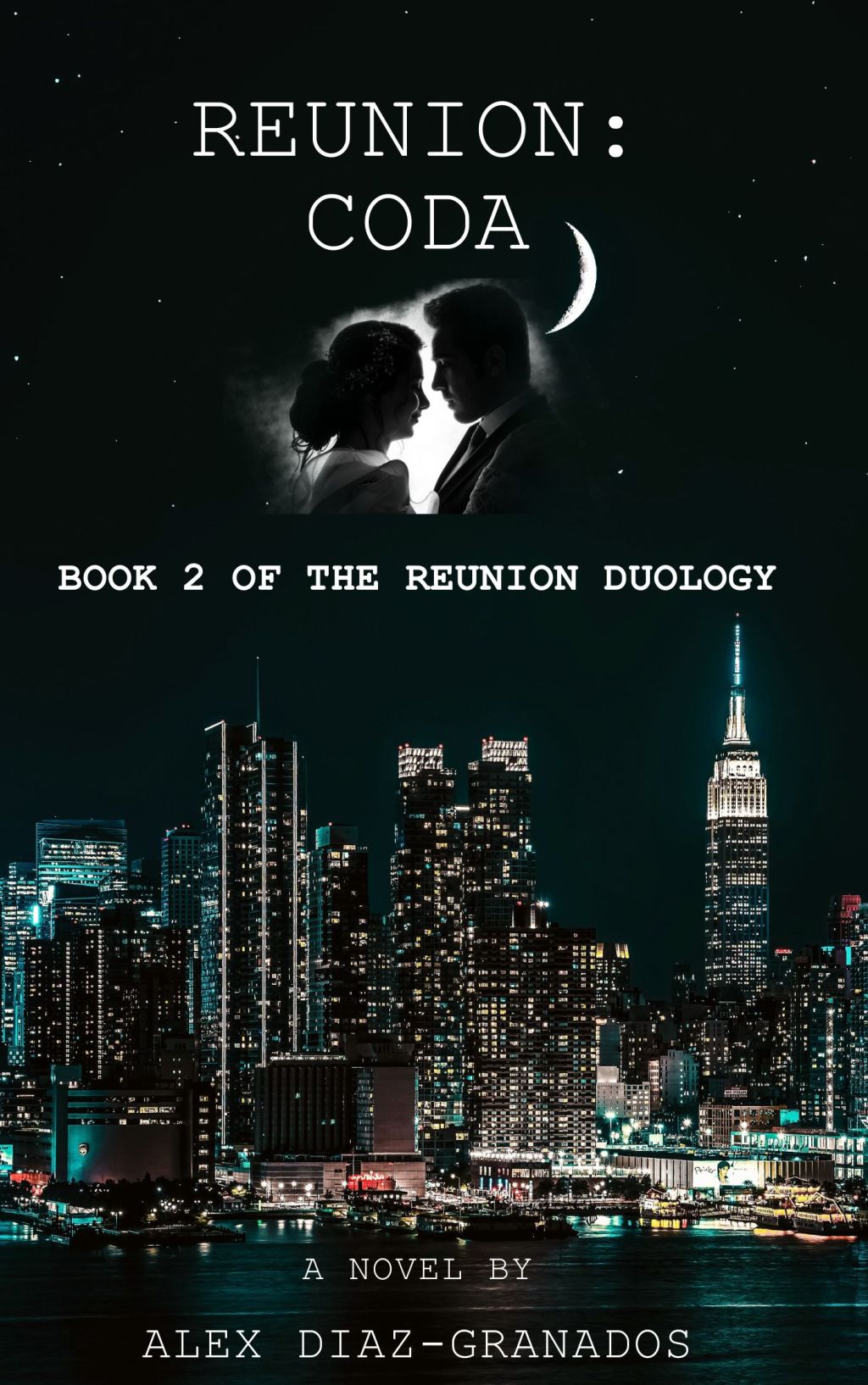
After nearly a week of hard work, I finally achieved it. I penned another scene for The Gathering Storm, the 18th chapter of Reunion: Coda.
I had an idea of the main events that would unfold in this “Jim at his job in Columbia University” chapter, but I lacked what my creative writing teacher at Miami-Dade Community College (now Miami-Dade College) called “concrete details.”
As a writer, you may have ideas for character actions, dialogue, or plot points in your mind. This is a key part of writing, but it’s not enough. You need to write them down – or type them in your app of choice – otherwise, your great concept is useless in practice.
Writing down the vivid images that I’ve imagined in advance is something I’m good at. I’ve dabbled in writing since I was a kid. I also studied journalism/mass communications in college. I’ve crafted two books and a handful of screenplays (by myself or with a partner), so I’m not a rookie when it comes to telling stories.
But even with all those ideas and experience, it can be hard to make them into real stories, especially when you’re writing fiction. You don’t have the same tools as journalism, where you can use interviews, facts, figures, and your own eyes to answer “what, who, where, when, why, and how.” Writing about imaginary people and things that never happened is tough.

I never found this easy. That’s why I delayed so long in trying to write a sequel to my 1998 novella, Reunion: A Story. Fiction is always more challenging than non-fiction because it demands more creativity.
And, of course, my job is harder when I’m exhausted, gloomy, anxious, or all the above.
So, yeah, I have an idea of how my story should end. But it’s always hard to get it there by writing down what’s in my head.
That’s what happened with Chapter 18, Scene Two this week.
(And Chapter 18, Scene One the week before….)
A Rough Draft is Always Better than None
So, yesterday I wrote a rough draft of that part of the book. I had made a basic outline on Wednesday – I usually don’t do that, but I needed to this time – so all I had to do was fill in the gaps with more details, what the characters said, and what they saw, heard, and felt.
I struggled a lot. For hours, I typed, erased, retyped, erased, and tweaked Scene Two until I had filled up three pages of fresh content on Microsoft Word.
The rough draft captures the essence of the scene as I imagined it, but it still needs some polishing, especially in the way I portray the two characters that Jim talks to. I have to give Jim’s boss and the history department secretary some more flair and detail.
Also, I have to spice up the dialogue and make it flow better. I don’t mind if the dialogue in fiction is tidier than actual speech, with all its “ahs,” “ums,” and clumsy pauses, but I can’t stand it when my characters don’t sound real enough.
I’ll polish up the rough edges when I resume writing later today. For now, I’m just glad that I have something on Microsoft Word to build on.


Comments
4 responses to “Musings & Thoughts for Friday, June 21, 2024, or: On Writing & Storytelling – ‘Tis Better to Have a Rough Draft of Something Than Not Having a Draft at All”
Yes you are right. Fiction require more creativity than a factual book. That’s why, if I ever write another book, it won’t be fiction. Well there is an exception and that is when you write research papers on a topic that require inventiveness and solving unsolved problems. You have to be pretty creative to do that.
LikeLiked by 2 people
In the case of Reunion: Coda (and to some extent, Reunion: A Story), it depends which era of Jim Garraty’s life I’m currently writing in. Young Jim’s high school experience is based (no surprise there) on my own, although there are many radical differences.
Adult Jim’s chapters are harder to write because I’m neither a best-selling author nor a college professor. And although I’ve been involved with several women as an adult, I’ve never dated a concert pianist.
Writing fiction is fun, otherwise I wouldn’t do it at all. But it’s more difficult than I envisioned when I promised my mom that I’d write a novel someday when I was 15 or 16.
LikeLiked by 1 person
Yes, I can imagine. Not easy at all.
LikeLiked by 1 person
The redeeming quality of this project is that it’s the continuation of a pre-existing story, so at least I (and the reader) already know many of the principal characters. So, there’s that.
LikeLiked by 1 person