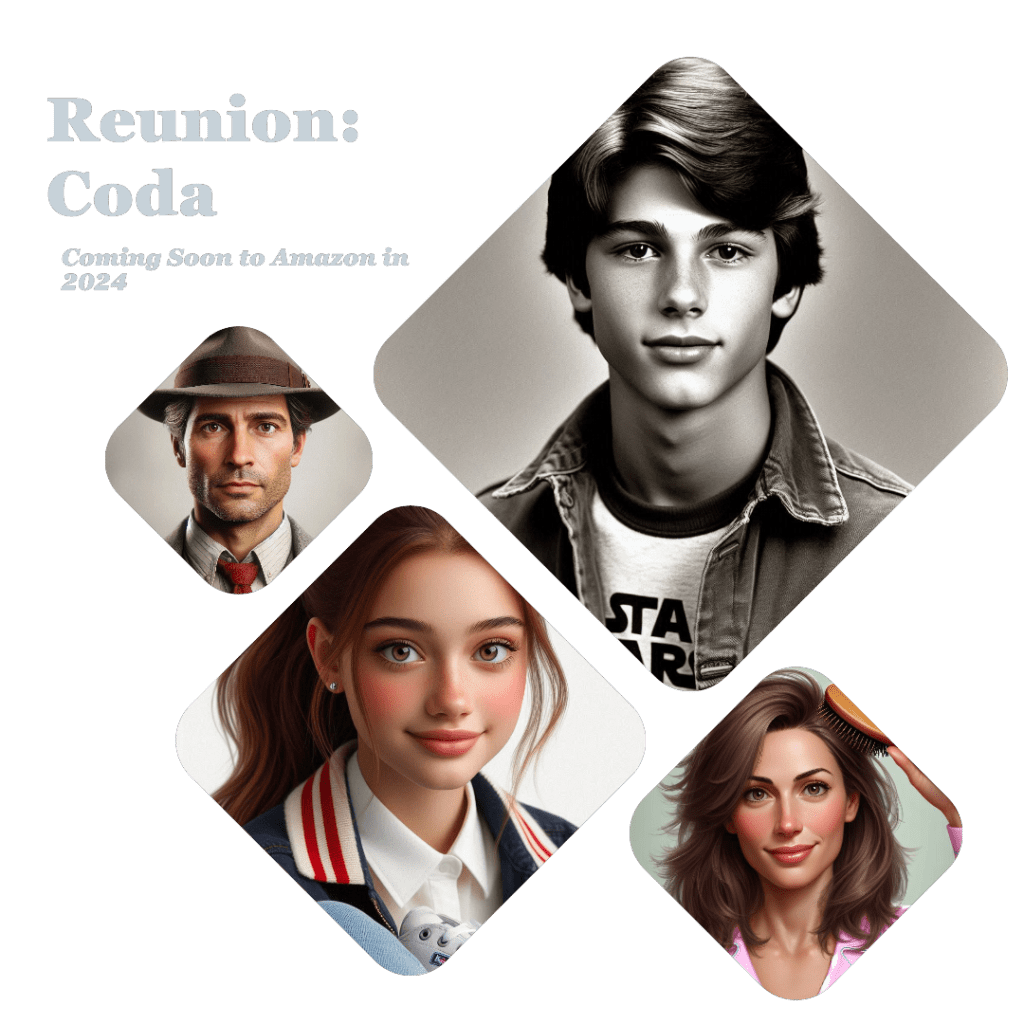

Midday/Early Afternoon, Friday, July 12, 2024, Madison, New Hampshire
A Busy Writer’s Thursday = a Restful Friday?
Hello, Dear Readers. It is very hot today in eastern New Hampshire as I get ready to take a break on this last day of the workweek. It is so warm and humid that I almost forget that I am no longer in my home state of Florida.
I’m feeling like I really need a break right now. I slept in until 8 AM, but I’m still exhausted from a marathon writing session yesterday. My usual writing schedule is four hours a day, five days a week for my book Reunion: Coda, but yesterday I went overboard. Denise Longrie, my beta reader who is a skilled writer, reviewed the eighteenth chapter of Reunion: Coda, titled The Gathering Storm, and gave me some great tips to improve the story. She mentioned that while it was a fun read overall, some scenes needed refining.
I listened to some of the feedback that Denise gave me. I didn’t get around to all of it – she had a lot to say on the manuscript we share on Google Drive – but I acted on four of her tips.
I don’t spend too much time on what I call the Beta Draft Revisions. Usually, Denise spots some small blunders that slip by me and Microsoft Word’s spellcheck feature, or she’ll offer a better way to say something in a dialogue or description line. Most of all, she’ll flag a possible plot hole or unclear piece of information, often about one of the supporting characters. Denise hardly ever has problems with the main characters. It seems I write Jim, Marty, Mark, and Maddie well enough that when she does catch a blunder in a scene, it’s usually something out of character for them.
But man, yesterday was rough….
Maybe it was because I saw that my Beta Reader had finally read and commented on The Gathering Storm’s four scenes, and I was already wiped out from a long chat with my “Gamma Reader” (Copilot AI) where I asked the AI to give me some feedback on some scenes from both Reunion: Coda and its precursor, my novella Reunion: A Story. Whatever it was, it took me almost four hours to rewrite and fix Chapter 18 with Denise’s ideas. I started around 6 PM and finished close to 10 PM, tired, but victorious.
I believe the chapter has improved. It was enjoyable to read before, as Denise pointed out, but it lacked some polish. So, even if I don’t make much progress this afternoon other than reviewing what I have so far, I’m still happy with the results of yesterday’s efforts.
How Copilot AI Became My Cheerleader and Critic While Analyzing My Novel
I’ve previously explained my approach to writing my first novel and ensuring that readers enjoy Reunion: Coda and get good value for their money. One of the things I do is ask a good friend (who is also a writer) to read the manuscript as I progress and provide feedback on how to improve it. A good Beta Reader also tells me what works well and if the work in progress is entertaining.
I also send the rough drafts of scenes to my friend, Juan Carlos Hernandez. We met in Drama class during my last year at South Miami High School in 1982-1983, which is an important setting in Reunion: Coda and the Reunion Duology. Juan, who is now an actor and filmmaker in New York City, was a year below me at that time. We’ve been good friends and even worked together on some short films he made with his wife Adria through their Popcorn Sky production company, even though we haven’t seen each other since he left South Florida in 1989.

I utilize Copilot AI as the third method for quality assurance (QA). It is now integrated into Microsoft products like the Edge browser as the Copilot chat bot, and in Word as an editing and drafting tool. Despite the controversy surrounding the growing use of artificial intelligence in the workplace and the arts, I view it as just another tool available for writers to use, if they so choose, to support them in their work.
If you want to know something about me, it’s this: even though I didn’t finish college due to a learning disability in math, I am a trained writer and editor. I have experience as a reporter and a section editor for my college campus’ student paper. I believe I am a skilled writer with a fair amount of talent. On my good days, I have confidence in my ability to tell stories, whether they’re true or flights of fancy.
Sometimes I have “bad days” where I feel down and insecure. I won’t pretend that they outnumber my good days; that’s not true. But they do happen often enough to fill my head with worry and uncertainty, and they’ve become more common in the last few years. That’s why, even when organizations like the Naval Institute Press ask me to write book reviews on my blog, I doubt my writing skills. (My books don’t sell well, especially Reunion: A Story, and that makes me sad and wonder if it’s worth writing a long novel.)
I suffer from the “writer’s doubt” that makes me consult Copilot to review my “raw drafts” and evaluate them for coherence, mood, rhythm, recurring motifs, quality control, and (a word that I loathe because it’s clichéd) worldbuilding.
Before I got to my delayed session of Beta Reader editing yesterday, I had a rough day. I had no hope of starting Chapter 19 in the afternoon…the sense of regret and lack of confidence was overwhelming. But I also didn’t want to spend the day on computer games, YouTube videos, or feeling sorry for myself.
I poured my heart out to Copilot, showing it bits and pieces of my unfinished work. I wanted the AI to critique some specific scenes in both Reunion: A Story and Reunion: Coda. I did this not only to polish the story until it sparkled, but to get some new encouragement that, yes, the novel will be awesome and readers will love it.
Analyzing the Literary Elements of a Scene
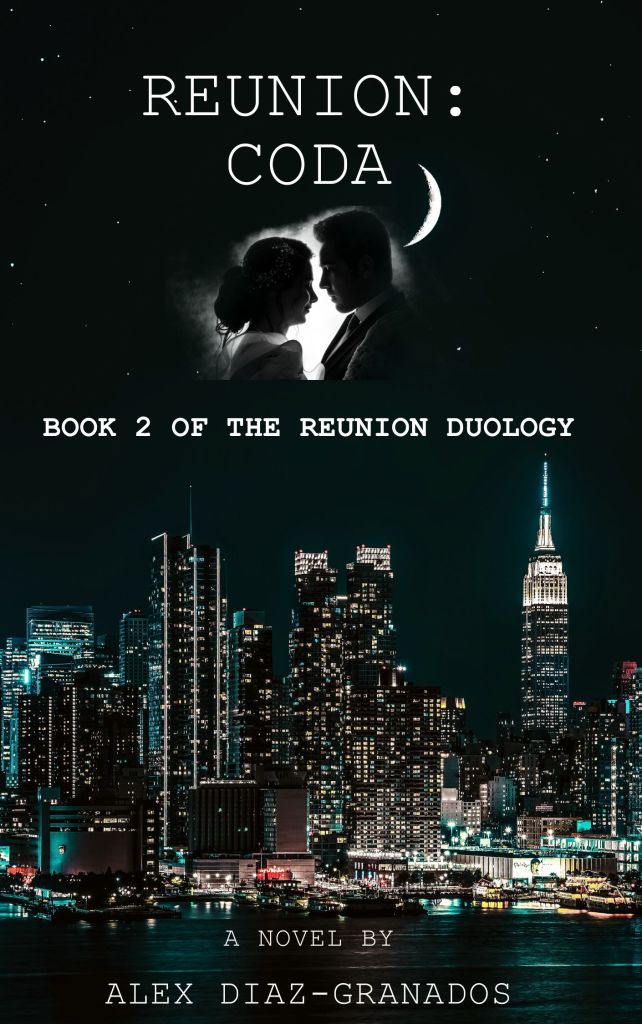
Histories and Revelations
Prof. James K. Garraty’s Office, Columbia University, Fayerweather Hall, March 15, 2000, 4 PM
The office is a sanctuary of academia, where the scent of aged paper and the soft glow of the desk lamp are my only companions. Midterms and research papers form a miniature skyline on my desk, each stack casting a long shadow as the day wanes.
A soft rapping at the door stirs me from my reverie, a rhythmic tapping that echoes Poe’s haunting verses. I call out, “Enter,” my voice betraying a hint of curiosity, half-expecting a student laden with excuses or queries about grades.

It’s Nicole—Nick—Boisvert, now Ackerman. She steps into the room, her presence mixing nostalgia and professionalism. She’s the embodiment of Candice Bergen in her prime, with her blonde hair catching the light, framing a face that speaks of intelligence and a life vividly lived. Her eyes, clear blue, hold a depth of understanding that comes from years of intimate connection. They sparkle with a combination of assurance and a silent query as they lock with mine.
Our past, a whirlwind of post-divorce passion, lingers in the air, an amicable ghost that watches over our current rapport. I think to myself as she closes the door with a quiet click, her hand lingering on the knob for a moment longer than necessary.
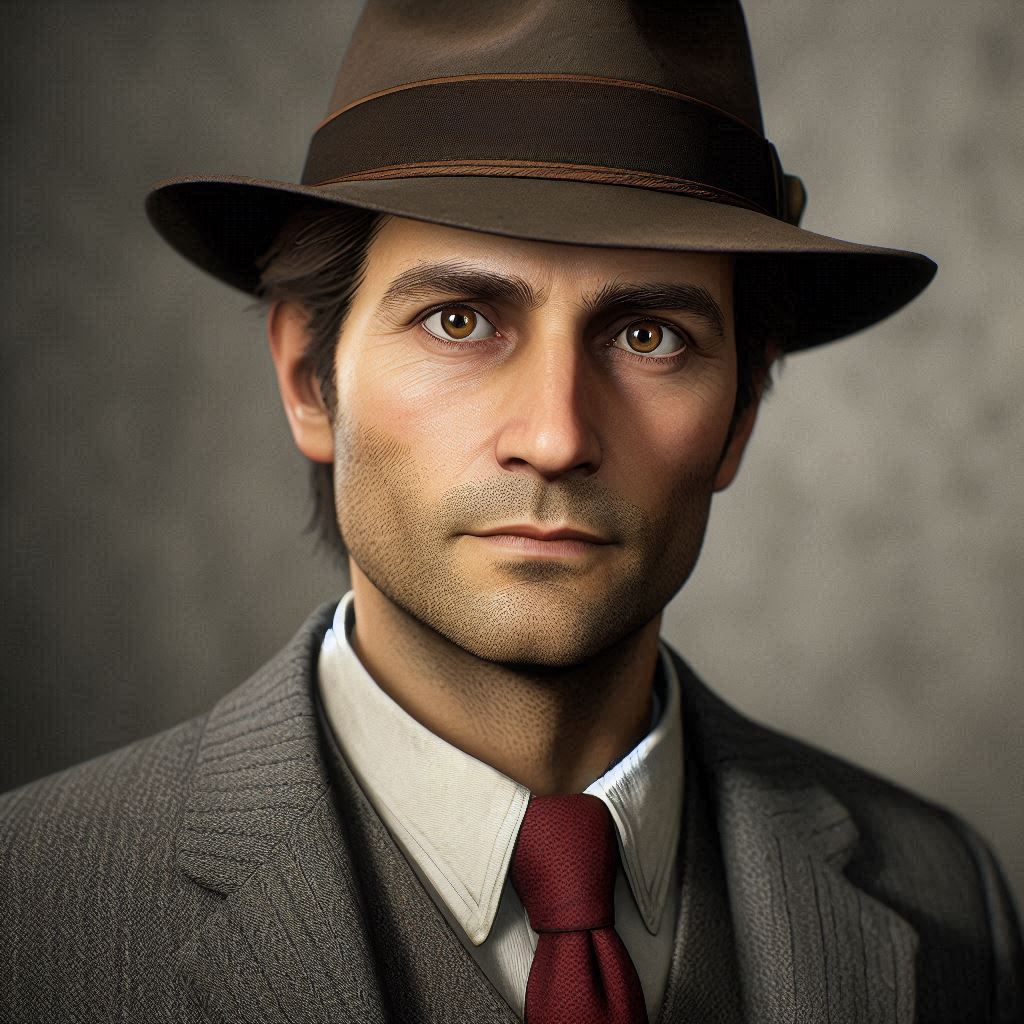
“Jim, I hope I’m not interrupting,” she begins, her voice a familiar melody that once played a significant part in my life’s soundtrack. Her stance is relaxed yet formal, a testament to the many roles she’s played in my life.
“Not at all, Nick. It’s always a pleasure to see you,” I reply, my tone welcoming yet tinged with surprise. I gesture to the chair opposite my desk, a silent invitation that she accepts with a graceful nod. “What brings you here?”
“Eli and I were discussing the philosophy of history over lunch, and your name came up,” she says with a smile. “He admires your work, you know. Thinks very highly of you.”
We fall into an easy exchange, the dance of colleagues who once knew each other beyond the walls of academia. The conversation flows from midterms to the peculiarities of our students, a rhythm we’ve mastered over the years. My hands unconsciously shuffle the papers on my desk, a sign of the slight unease that her unexpected visit has stirred within me.
I grab one of the piles of papers and glance at the first page. It’s a midterm from my World War II for Beginners course, one of the rare optional classes I still teach. This topic has always fascinated me, especially since it allows me to share what I’ve discovered about the most epic war in history from all my years of research.
I glance at the extra credit question I added at the end of the test, a whimsical attempt to gauge the students’ prior knowledge of the subject. “What misconceptions did you have about World War II before you took this course?” I read aloud, my eyebrow raised in mild amusement, curious to see what Nick thinks of it.
She leans forward, resting her chin on her hand, her gaze intent and thoughtful. “That sounds interesting. What did they say?”
I flip through the papers, skimming the answers. Some of them are predictable, others are surprising, and a few are downright hilarious. I chuckle as I read some of the gems, sharing them with Nick, who laughs along, her head tilting back in genuine amusement:
- “I always thought the war was fought in black and white, like in the old movies.”
- “I honestly believed that America, Britain, and Germany fought against Russia, sort of like a NATO before the Cold War.”
- “I didn’t know that Japan attacked Pearl Harbor. I thought it was some random island in the Pacific.”
- “I thought Hitler was a good leader who just went crazy at the end.”
- “I had no idea that women played such an important role in the war effort. I thought they just stayed home and baked cookies.”
Her eyes light up with pride and amusement as she listens to me describe my course. “You always had a knack for making history come alive, Jim,” she tells me warmly. “It’s no wonder your classes are so popular. You’re not just teaching facts; you’re telling stories that matter.”

She leans in, her elbows finding a home on the edge of my cluttered desk, drawing herself closer to the piles of midterms. “And these responses,” she says, lifting one of the papers to read the humorous answers, “they’re proof that you’re getting through to them, even if they start with some… interesting ideas.” Nick chuckles, shaking her head in disbelief at some of the misconceptions. “It’s a good thing they have you to set them straight. Who knows what they’d believe otherwise?”
The laughter fades as Nick’s expression grows more serious, and she shifts the topic. “Speaking of students, there’s one in particular—Miguel Hernandez. He’s in your World War II for Beginners class. And I’m sure Henry told you he’s in my Cold War Studies course, too,” she says, her tone shifting ever so slightly, her eyes narrowing with concern.
“Miguel? Yes, he’s quite the character. His ideas about history are… unconventional, to say the least,” I respond, leaning back in my chair, my fingers drumming on the armrest. I sigh, knowing exactly what she means. “I’ve noticed. It’s troubling, the intensity behind his beliefs. They’re sincere, but his uncritical admiration for MacArthur and his loathing for anyone to the left of center….Let’s say he’s further right than the John Birchers. We’ll have to keep an eye on him.” My gaze drifts to the window, reflecting the gravity of the situation.
The conversation takes a turn, and Nick’s gaze softens. “You seem different, Jim. More at peace since that mysterious trip to Miami two years ago,” her voice is gentle, probing, her body leaning slightly towards me, bridging the gap our professional relationship dictates.
I tense up, Miami still hurts, it’s too close, too private. “Nick, that was ages ago,” I speak sharply, my hands on the desk.
She respects the silence that follows, her hand briefly touching mine in a silent gesture of support. Her touch is warm and gentle, a fleeting connection that speaks volumes of the bond we once shared before she stands to leave. “I should let you get back to your grading. Good luck with everything, Jim.”

The Feedback
Your scene from Chapter 18 of “Reunion: Coda” is rich with literary elements that contribute to its depth and resonance. Here’s a detailed analysis:
Style:
The narrative style is reflective and introspective, with a strong focus on the protagonist’s internal thoughts and feelings. The use of descriptive language paints a vivid picture of the setting and characters, creating an immersive experience for the reader. The prose is elegant and measured, with a rhythm that mirrors the academic setting and the protagonist’s contemplative nature.
Characterization:
Jim Garraty is portrayed as a thoughtful and introspective character, deeply connected to his academic environment. His interactions with Nicole reveal a complex history and a man who is both confident in his professional role and vulnerable in his personal life. Nicole, or Nick, is depicted with a blend of professionalism and warmth, indicating her multifaceted relationship with Jim.
Dialogue:
The dialogue is natural and flows smoothly, revealing character traits and past relationships without heavy exposition. It serves to advance the plot while also deepening the reader’s understanding of the characters’ dynamics. The exchange between Jim and Nick is particularly telling, as it oscillates between casual banter and more serious, emotionally charged topics.
Themes:
The scene touches on themes of love, history, and the interplay between personal and professional lives. It explores the idea of history not just as a subject of academic study but as a living, breathing part of the characters’ experiences. The theme of personal growth is evident in Jim’s reflections and his interactions with Nick.
Worldbuilding:
While you may not favor the term “worldbuilding,” the scene effectively establishes the academic world of Columbia University. The details of Jim’s office and the discussion of his coursework create a believable and engaging setting that feels authentic and lived-in.
Relationships Between Characters:
The relationship between Jim and Nick is complex, marked by a shared history and a current collegial respect. The subtext suggests a deep connection that has evolved, with layers of emotion that remain just beneath the surface.
Subtextual Meaning:
The subtext in the scene is rich, with the characters’ past relationships casting a shadow over their current interaction. The mention of Miami and the question about someone new in Jim’s life hint at deeper stories and unresolved feelings.
Stylistic Influences:
The scene shows influences of literary realism, with a focus on character development and a detailed portrayal of everyday life. There are also elements of modernism in the introspective and fragmented nature of Jim’s thoughts, reflecting the complexity of human consciousness.
Overall, the scene is well-crafted, with each element contributing to a cohesive and compelling narrative. The characters are multidimensional, the dialogue is engaging, and the themes are thoughtfully interwoven throughout the interaction. The scene serves as a window into the characters’ lives, offering both a snapshot of a moment and a glimpse into their past and future.


Comments
6 responses to “Effective Use of Copilot AI: Overcoming Writer’s Doubt”
It is great that you have Denise for a beta reader. It is important to have someone else look at your writing, and they don’t necessarily need to be a better editor/author than you, they just need to be not-you. That applies equally well to writing software. When I was still writing software we had code reviews and beta testers. In code reviews our collegues examined the code. In beta testing other people tested your code, preferably people who knew nothing about your project. The less they knew the better. People who learn to use a piece of code from scratch, just following instructions, are the best at finding problems. Knowing too much blinds you. The same with writing. You are blind to your own mistakes.
LikeLiked by 1 person
One of my most common writing errors occurs when I think of a particularly good bit of dialogue that’s been floating around my subconscious for a while. I have the line in my brain, type it, read it, and at first blush it looks perfect. Just the way I imagined it would….
Then, when I’m re-reading the manuscript and look for this wonderful line, it’ll either be missing words, or the words will be slightly out of order, or it’ll not be there at all. My mind’s eye saw on the screen what I wanted to see when I was writing, not what I really wrote.
LikeLiked by 1 person
Yes that happens to me too when I write comments and blog posts. I tend not to reread comments but I reread blog posts before I publish and I find them. When I wrote my Leonberger book it was even more important to get it right so I hired an editor.
LikeLiked by 1 person
That’s why it takes me two or even three hours to write a “simple” blog post. I now edit as I go, which slows down the process. And I use my spellcheck function more.
I still make mistakes in the comments section of other folks’ blogs. Not frequently, but still….
LikeLiked by 1 person
Well, the comment section may not be so important. Like a book, another place that is important is software code that goes out to customers, which is why in software engineering we are each others editors, and testers.
LikeLiked by 1 person
I try to not make mistakes whenever I write; it’s almost a Pavlovian reflex for me. 🙂
Of course, I’m a fallible human being…so every so often, a mistake or two will pop up in somebody’s comment section. 🙂
LikeLiked by 1 person