

“Narrative Threads: A Conversation on Crafting the Reunion Duology” Part One of a series
What inspired you to write the Reunion Duology, and how do the themes of ‘Reunion: A Story’ connect with ‘Reunion: Coda’?
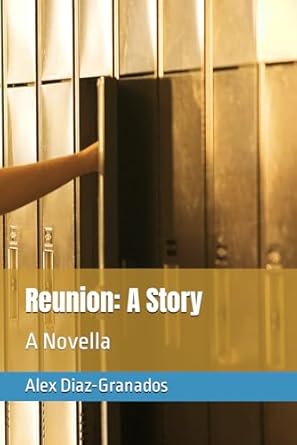
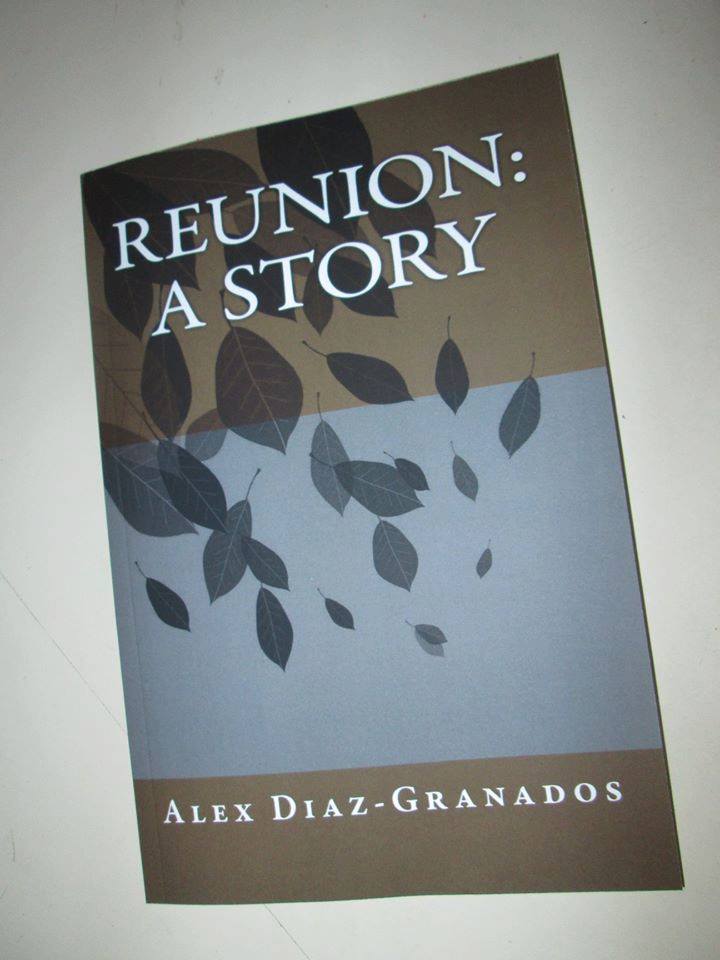
I wrote a story called Reunion: A Story – the working title was “Love Unspoken, Love Unbroken” – sometime in the fall of 1998, though I can’t remember exactly when. The goal was to see if I could knock out a short piece of fiction. Before that, while studying journalism at what used to be “Miami-Dade Community College, South Campus,” I tried writing a science fiction novel. It turned out to be too big and ambitious for someone with just one creative writing class under their belt, so I ended up dropping it.
So, there I was 10 years after taking CRW-2001 at Dade-South (now Dade-Kendall), wondering when I would quit thinking about writing a novel and doing it. I didn’t want to be remembered as a guy who talked about being a novelist like Stephen King or Tom Clancy but didn’t produce anything, so I began brainstorming possibilities for a work of fiction.
I had this idea about an alternate history where, for some reason, the U.S. never drops the atomic bomb on Japan and instead goes ahead with Operation Downfall, the massive two-part invasion of Japan in late 1945 and early 1946.
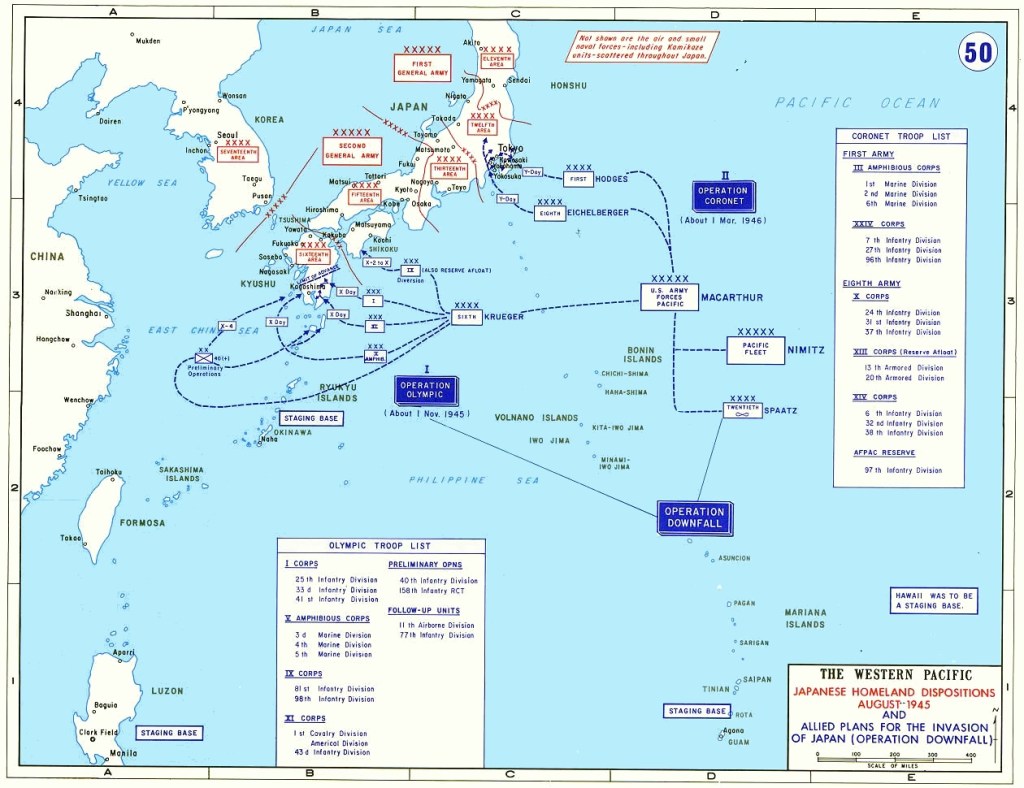
It wasn’t original – David Westeheimer’s Lighter than a Feather and Alfred Coppel’s The Burning Mountain played with similar concepts – but I thought I could add my own twist to it. I dove into researching Operations Olympic and Coronet, but once I saw how huge this planned invasion was, plus realizing I’d need to study the Japanese Ketsu-Go plans too, I decided to shelve the idea.
After messing around with different action-adventure ideas and throwing them out, it hit me: a novel was way too big and ambitious for my first project. So I decided to “think smaller” and went for writing a short story instead.
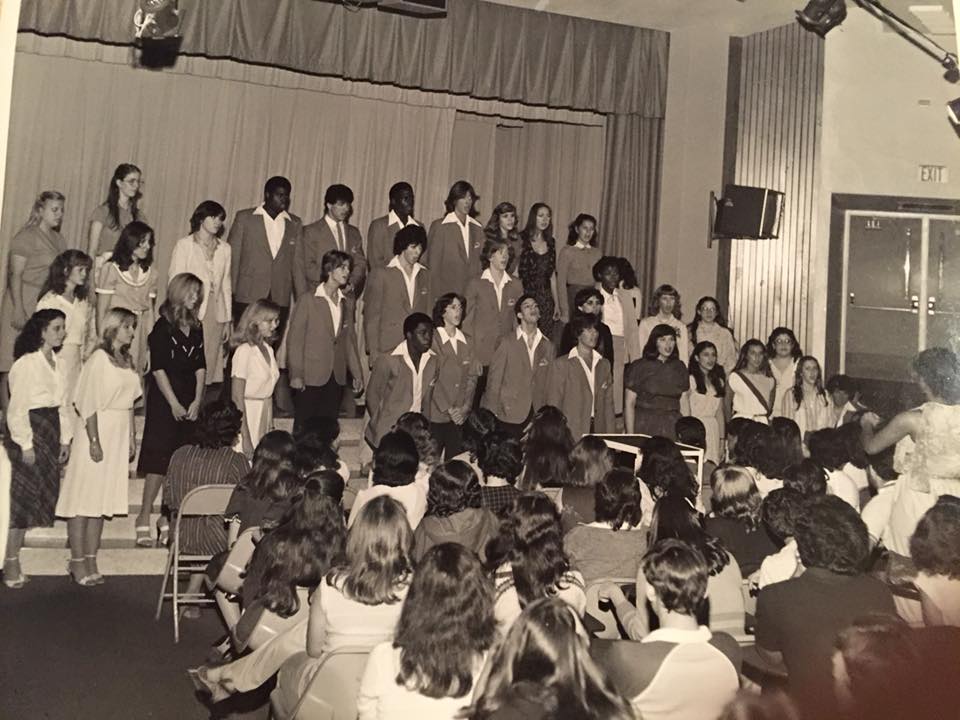
Honestly, I can’t recall the exact day of my big eureka 26 years ago. But I do remember reading about Jennifer Houghton’s passing—she was a high school classmate who died in a car crash in North Carolina in her mid-30s, right around when I started digging into my shelved WWII novel. We weren’t super close, but we had a mixed chorus class together at South Miami High in the early ’80s, and I remembered her as a kind person and a talented singer.
Another reason for “Love Unspoken, Love Unbroken” was that I knew the South Miami Class of 1983 had their 15-year reunion in July 1998. I was still bummed it was too pricey for me to attend. I had mixed feelings about the reunion. Part of me wanted to catch up with classmates I hadn’t seen since Commencement Day in 1983, a day I mention in Reunion: Coda. But I felt embarrassed about still living at home and not achieving the goals I set back in the ’80s… and that I couldn’t afford to join any of the events.
The combination of missing my 15-year reunion and hearing about my classmate’s passing kept spinning in my head until I wondered, “What if a girl I secretly loved but never confessed to died suddenly? How would I deal with that? And how could I make it into a story readers would enjoy?”

Reunion: A Story dives into the world of unrequited love, teenage angst, and the journey from loss to acceptance, all while highlighting the power of true friendship. Reunion: Coda takes these themes further and explores how taking risks can pay off. It shows Jim Garraty finding redemption, not just through his studies but also by growing close to Maddie. As you move from Book 1 to Book 2, you see Jim change and grow thanks to love, bravery, and the bonds he forms.
Can you share insights into the protagonist, Jim Garraty’s character development throughout the series?

Jim Garraty actually made his debut in a writing exercise back in 1987, not in “Love Unspoken, Love Unbroken” in 1998. In that exercise, we had to write a story where the main character has a dream or fantasy. Back then, Jim wasn’t fully fleshed out. He was just a high school senior who, after a sleepless night, wakes up too early on the last day of Finals Week during the 1982-83 school year, struggles to stay awake for his final exam, and then dozes off in the school library.

While taking a nap, Jim has a vivid fantasy about a young and attractive teacher in the Language Arts department. She has a figure and face that has launched a thousand crushes. I don’t remember why I chose to write a piece of erotica. Maybe I was trying to see what I would get away with as a college student. That plot point would have gotten me in trouble at good ol’ South Miami High. Or maybe it was because I was taking Human Sexuality that same semester and the topic of intimacy was in the back of my mind.
I ended up scoring a B+ for my work. The only thing Prof. Schroeder wasn’t a fan of was how much I used underlined text to show italics. I had created the fantasy sequence on an Apple II computer, and back then, it wasn’t as simple to italicize words as it is in Word now.

As I mentioned, Jim Garraty wasn’t fleshed out. He didn’t get a backstory or any particular motivation besides having a crush on a good-looking but unavailable faculty member, which led to a vivid dream about her.
But I did write a detailed setup for the assignment, which I called “Journey’s End,” and I wrapped it up with Jim leaving the school’s main entrance at the end of the day and school year. I remember Professor Schroeder mentioning he liked how I ended it with this line:
With quick, deliberate strides, I stepped out into the brightly sunlit June afternoon. A warm breeze wafted gently from the west. In the trees, barely heard above the din of cars and buses on the adjacent street, a mockingbird sang.

I’m bringing this up not only because Jim was a “proto-character” back in 1987 but also because “Journey’s End” evolved into “Love Unspoken, Love Unbroken.” I kept the original setup the same and switched the storyline from a “forbidden attraction” to a sweeter, more romantic one where Jim, now a Harvard-bound senior aiming to be a history professor, dreams about dancing with his high school crush, Martina “Marty” Reynaud.


The rewritten fantasy sequence was great, but it wasn’t a full story by itself. So, I expanded it with a “Present Day” storyline inspired by the idea of “what if a girl I liked from a distance died tragically.” This is where I gave Jim a job and moved him far from his home in South Florida. He also got a best friend, Mark Prieto, who’s named after my best buddy from 1975 until he moved to Michigan in 1979. That’s when Jim became more than just a blank slate; I turned him into an up-and-coming historian like Stephen Ambrose and added a dual timeline to the story.
 A Certain Point of View, Too
You must be logged in to post a comment.