

What research did you undertake to authentically portray the historical aspects, particularly the World War II elements, in your novels?
I’m really into history, especially the 20th-century wars. So, when I decided to have Jim Garraty as the main character and narrator for Reunion: A Story, I thought he’d make a great history professor. To make writing his job easier, I asked myself, “If I could pick any career besides journalism, what would it be?” Since Saving Private Ryan was still fresh in my mind – I wrote Reunion in the fall of 1998 and Spielberg’s WWII film came out that July – I figured being a teacher specializing in military history, particularly World War II, would be super cool.
When it came to research, I didn’t go too deep. Having spent years on a college campus, I took note of what professors do outside class. There’s a bunch of extra stuff like paperwork, department politics, clashing with colleagues, and teaching students, some of whom are just there because they have to be.
The professor I watched most was my journalism mentor, Peter C. Townsend, but he was also into history. His routine wasn’t much different from other professors, even those teaching social studies or history.
Both books in the Reunion Duology are kind of “period pieces,” though Reunion: A Story is less so since I wrote its “Present Day” parts in 1998. The main story happens over a few hours one mid-June day in 1983. For that, I relied on my memory of the last day of high school.

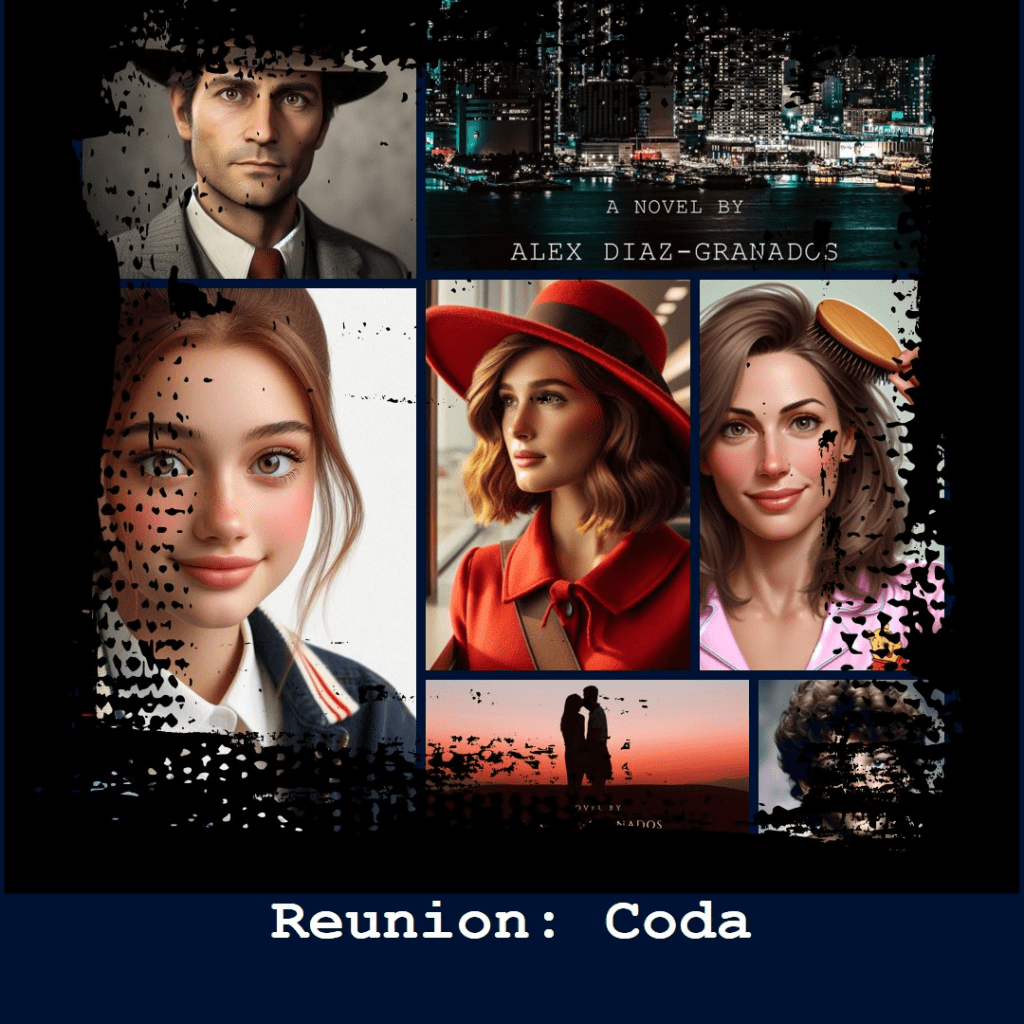
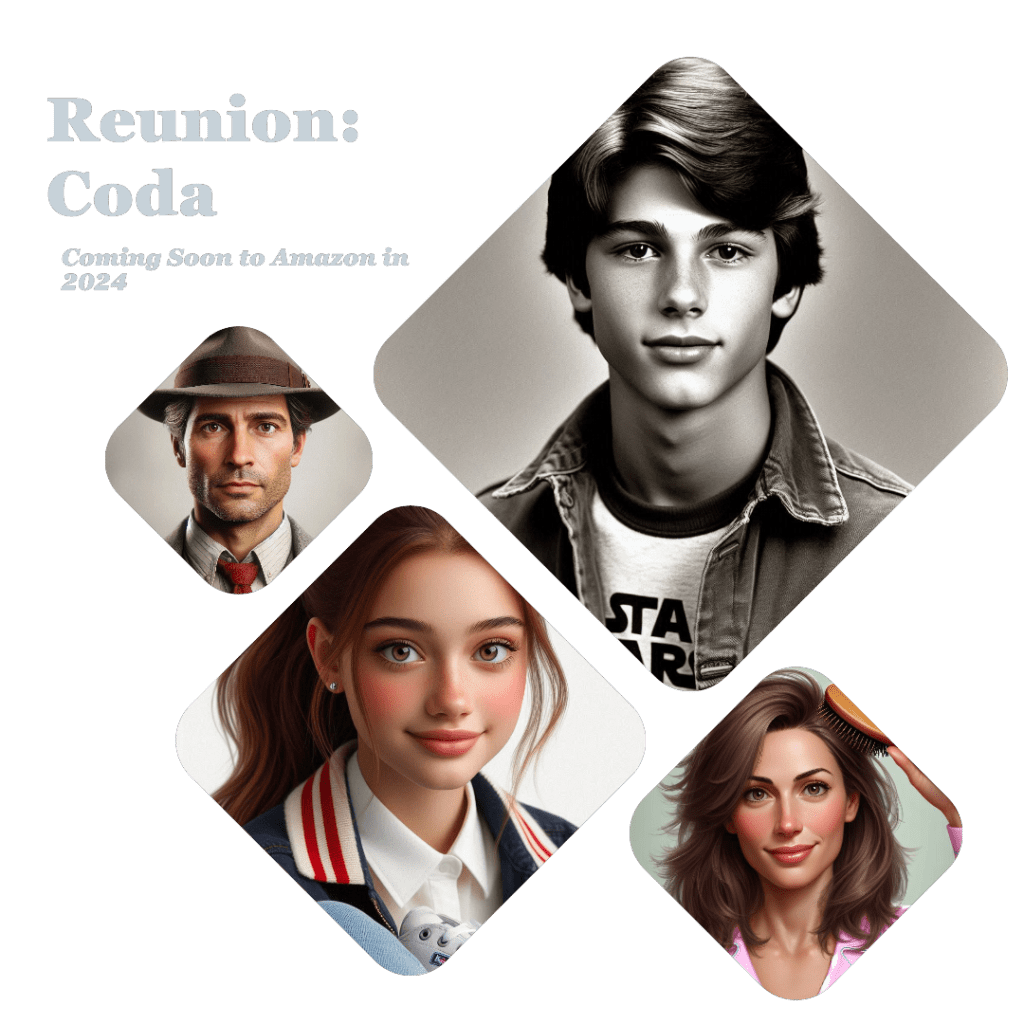
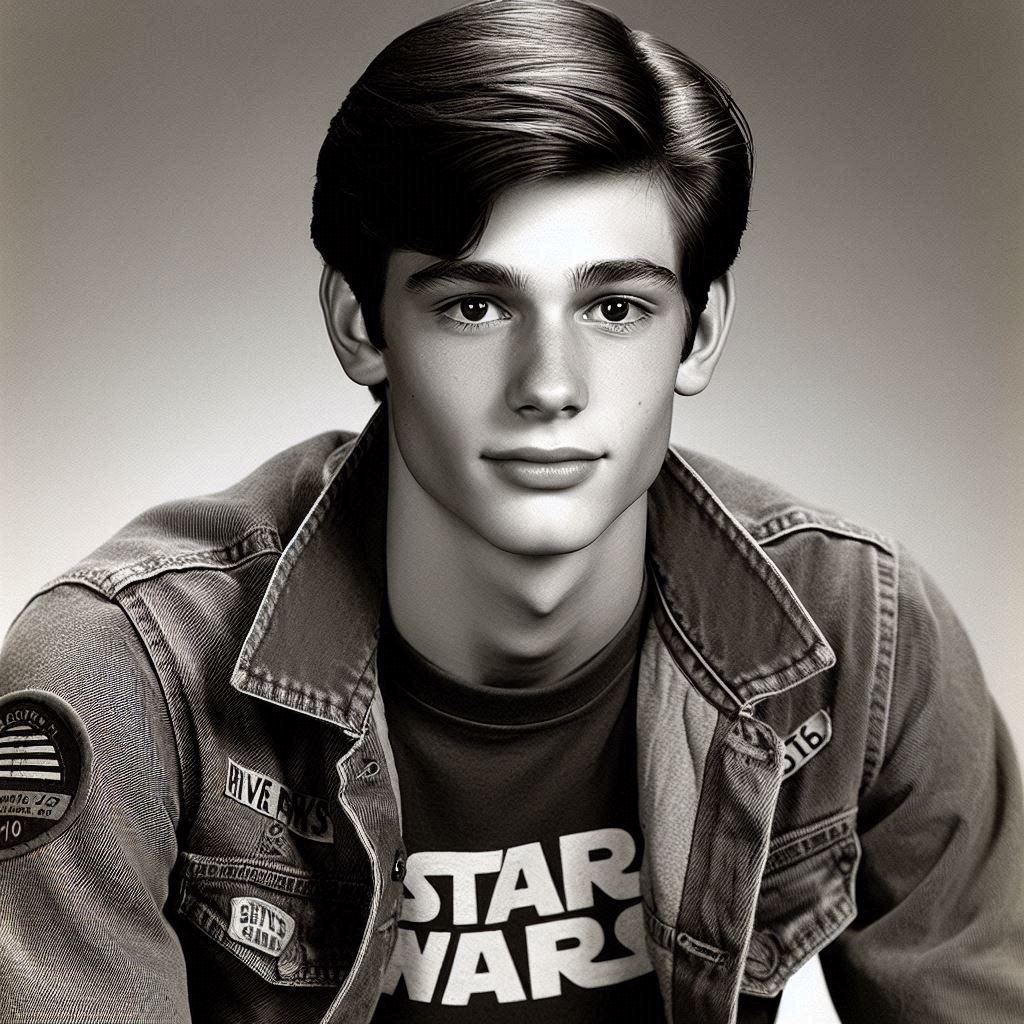





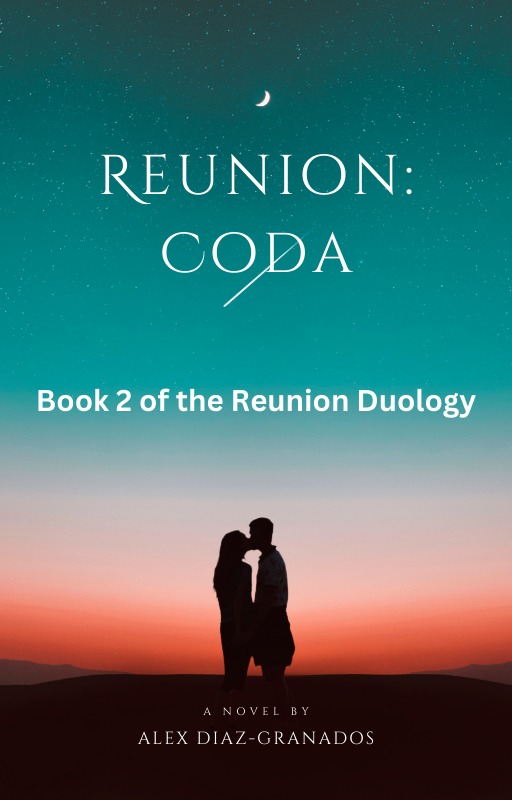
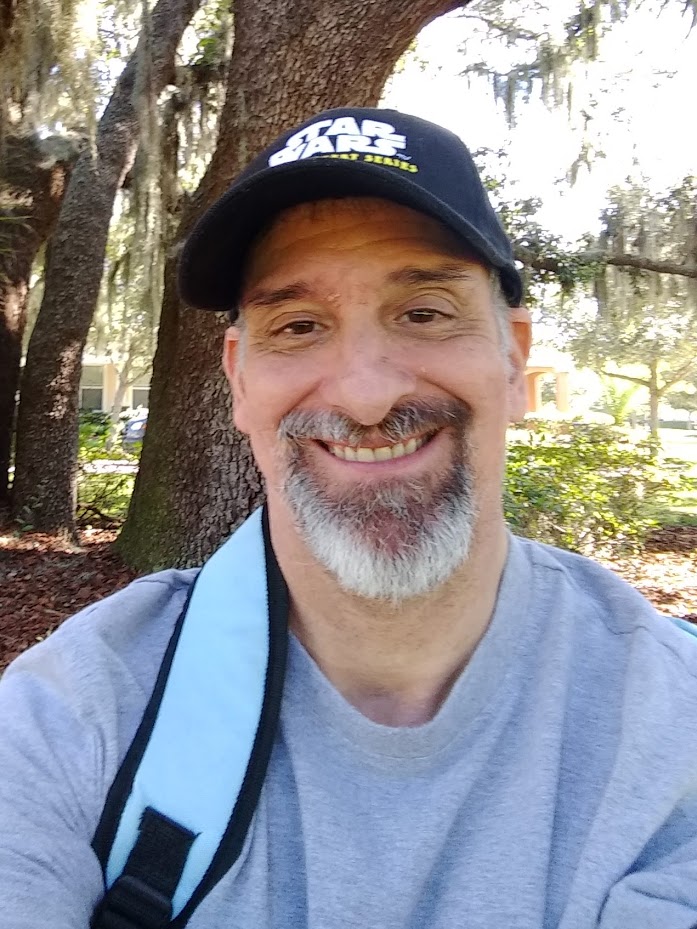
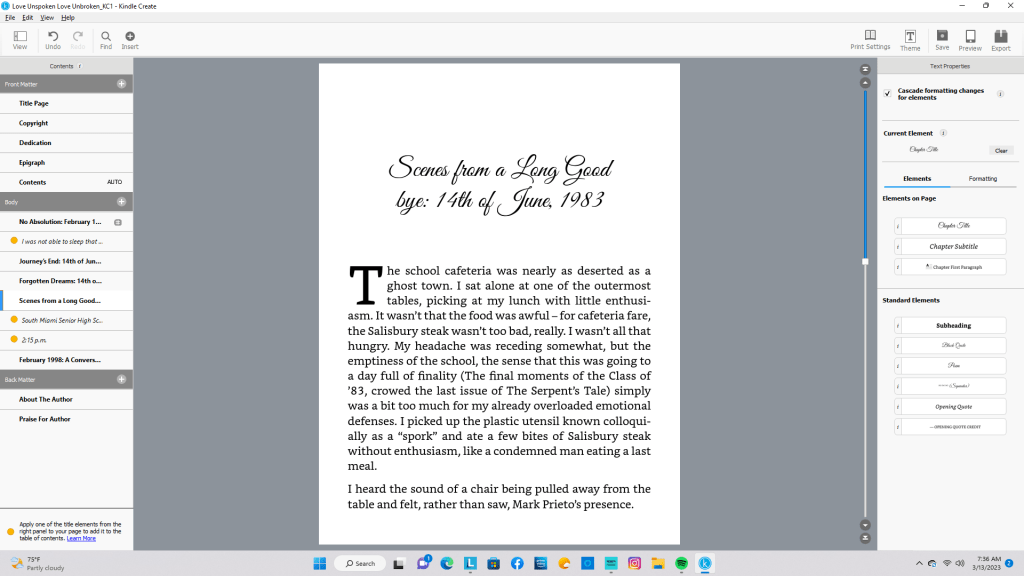
(C) 2018 Alex Diaz-Granados
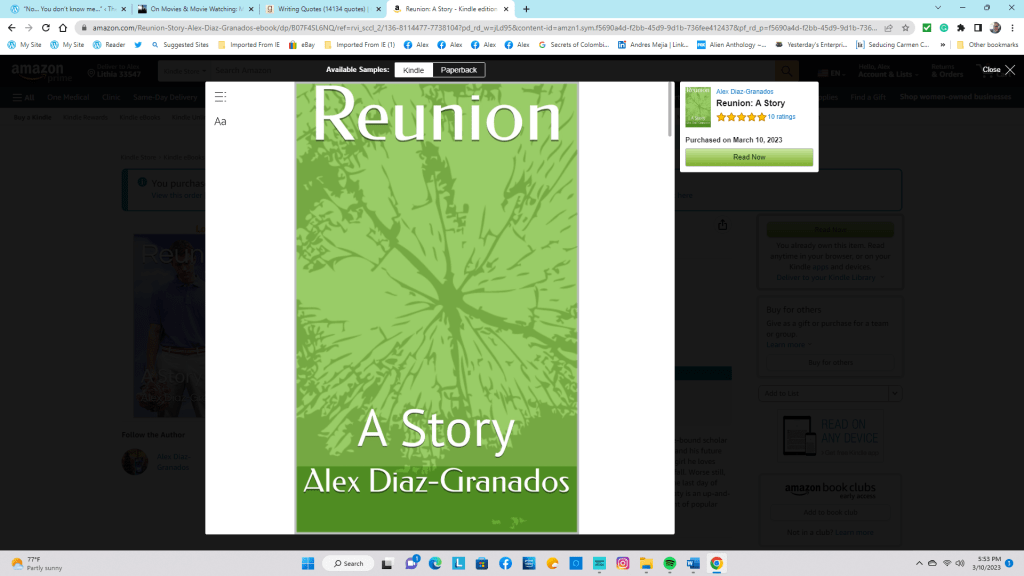
(C) 2023 Alex Diaz-Granados & Kindle Create
Reunion: Coda is a bigger challenge because not only is it longer and more complex due to its dual timeline narrative, but the Present Day chapters are set in early 2000, which is now almost a quarter century behind me. That’s a decade more than the gap between Reunion: A Story and the time in which most of it is set. So I try to find out what the weather was like in New York or London on specific days, as well as news events of the day.
Alex Diaz-Granados
Since Reunion: A Story was my first serious attempt at fiction, I chose June 15, 1983, because I remembered it clearly, making it easier to write about.
Reunion: Coda is a bigger challenge because not only is it longer and more complex due to its dual timeline narrative, but the Present Day chapters are set in early 2000, which is now almost a quarter century behind me. That’s a decade more than the gap between Reunion: A Story and the time in which most of it is set. So I try to find out what the weather was like in New York or London on specific days, as well as news events of the day.

As for the World War II elements? I’ve read countless books and watched documentaries such as The World at War, Victory at Sea, Great Blunders of World War II, and The War: A Ken Burns Film since I was a kid in Miami. I draw upon everything I’ve absorbed since the early 1970s and put it down on the page, especially in scenes when Jim is giving a lecture in Fayerweather Hall.
 A Certain Point of View, Too
Comments
4 responses to “Narrative Threads: A Conversation on Crafting the Reunion Duology, Part the Second”
It was interesting to read about the background to Jim’s character. I think making him a history professor was a great choice both for the narrative and because it matches your interest.
LikeLiked by 1 person
First rule of writing fiction: “Write what you know.”
It’s ironic. For years I resisted the notion of revisiting Jim Garraty’s story; I convinced myself as long ago as the early 2000s that Reunion was a standalone story and that Jim’s story was complete. I then tried to put my WWII knowledge to good use in a novel I started in 2021, but…that didn’t go well.
It took me a while to figure out how to continue Jim’s story plausibly, but I found the solution in a small, almost insignificant detail at the end of Reunion: A Story. It’s one of those tiny bits of visual information that can go unnoticed, but it was when I re-read my novella’s ending to help me figure out how to get Jim into a sunnier destination in Reunion: Coda that I had my “aha!” moment.
LikeLike
That’s very interesting Alex. I like that First rule of writing fiction: “Write what you know.”
LikeLiked by 1 person
It’s a good rule to go by, especially when you begin writing short stories, novellas, and novels. Later, when you’re more experienced (and if you’re inclined to do more research and even travel to prospective settings), you can break away from it. For now, though, I’ll stick to it.
LikeLiked by 1 person