
Dual Timelines: What inspired you to set the story in two distinct periods and locations? How did you ensure a seamless transition between the early 1980s in South Florida and New York City in the early 2000s?
In Reunion: A Story, which started as a “one-off” novella, the idea of using “dual timelines” came from – surprisingly – Billy Joel’s “Scenes from an Italian Restaurant.” That song has a quirky structure because it started with the middle part – the Ballad of Brenda and Eddie – and later added the story of two friends catching up at an Italian restaurant. When I was turning Reunion’s revised dream sequence – originally NSFW – into a bigger story, I thought, “Why not?” This included a clear beginning, a longer middle, and what seemed like a solid ending. The frame story got its nostalgic vibe from Joel’s intro and outro, even though I felt the 1998 Present Day part was secondary to Jim and Marty’s main narrative.



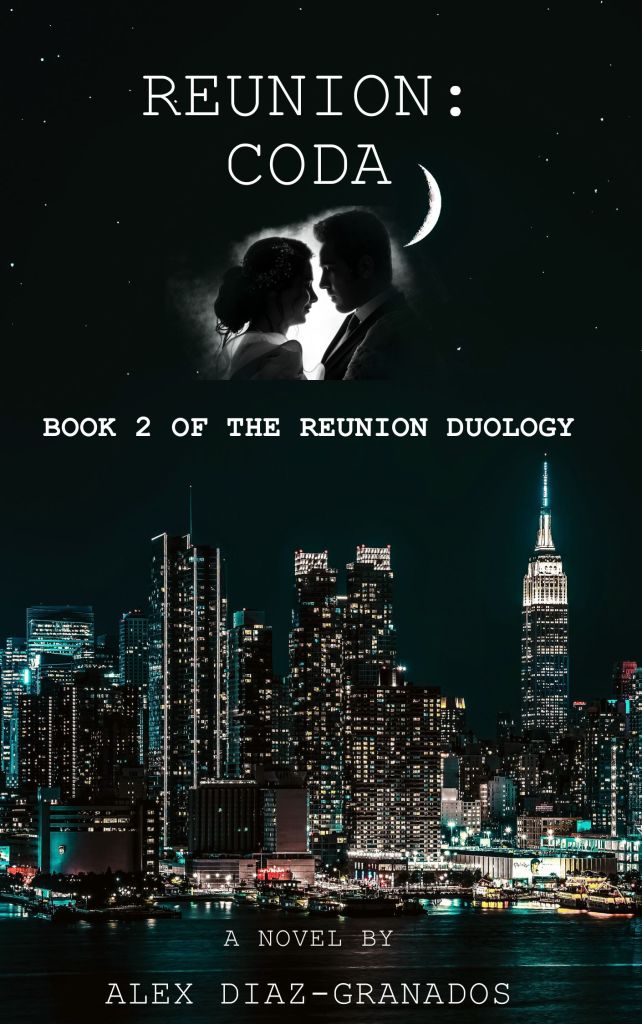
In Reunion: Coda, the “two timelines” method solved the challenge of giving readers more Jim and Marty scenes without clashing with Reunion: A Story’s events. To avoid strictly retelling the story from Marty’s viewpoint, I decided on a parallel storyline: Jim meeting Marty in high school in 1981 and then meeting Maddie 19 years later. So, I alternated between Jim’s high school journey, starting when he joins the boys’ choir at South Miami High and ending at his graduation, and his unexpected romance with Maddie in spring 2000. As I’ve said before, handling transitions is a breeze for me. I use chapter headings that show specific dates and locations and write the ’80s scenes in past tense, while chapters set in 2000 are in present tense.
 A Certain Point of View, Too
You must be logged in to post a comment.