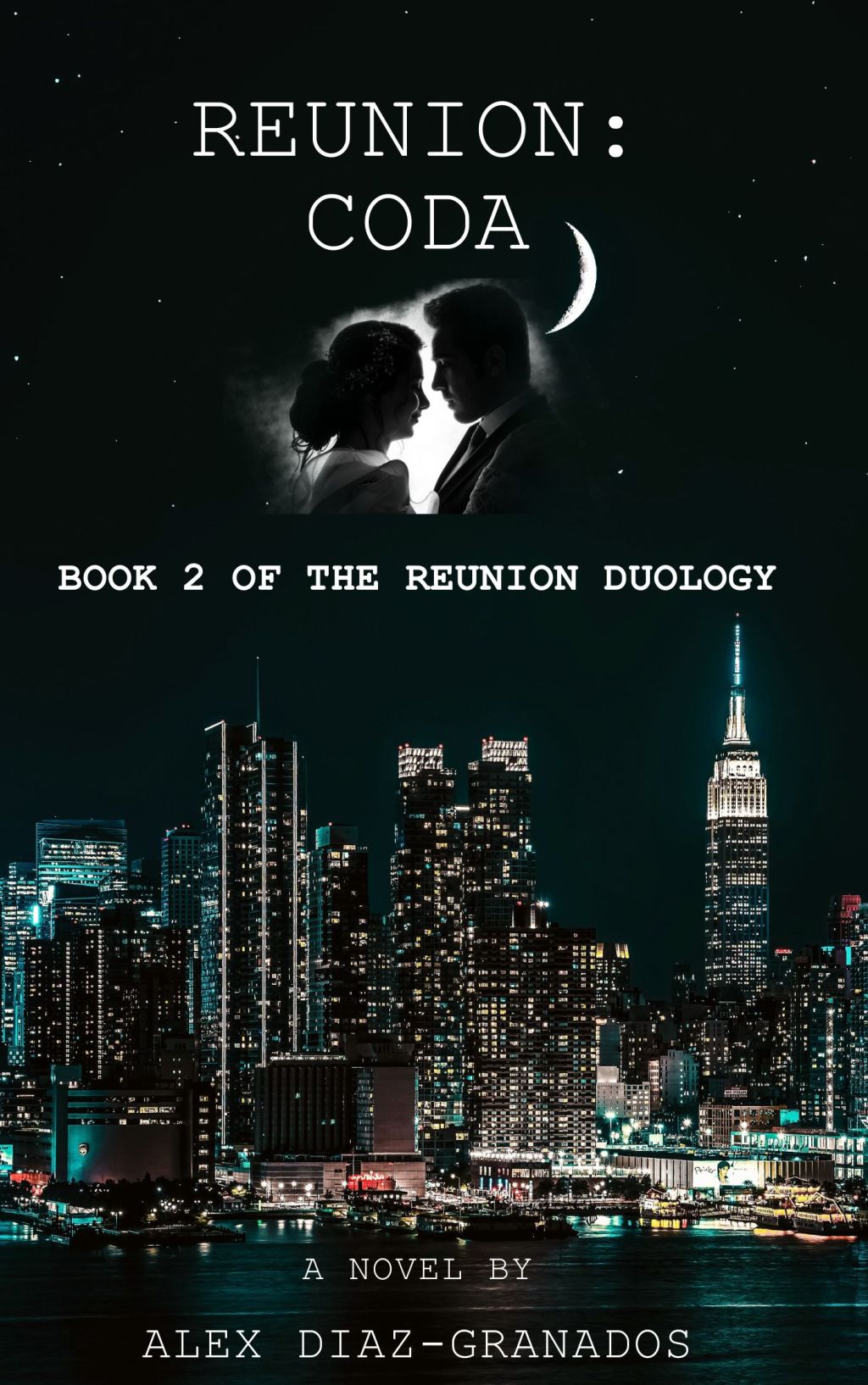

Write a “Conflict Scene” between the main character and the villain.
En Route to the Metropolis Arms, Saturday, March 18, 2000, 11:30 PM EST
An hour has elapsed since I left Maddie’s Queens apartment, no thanks to the Big Apple’s traffic. Still exhilarated from our kissing session (but nothing more!) with the charming concert pianist, I now find myself heading back to the Metropolis Arms – and home. I bemoan the lateness of the hour, realizing I’ll have to finish my grading duties on Sunday.
I stroll through the bustling maze of city blocks, where an eclectic mix of businesses and storefronts beckon in midtown Manhattan. There’s a cash-checking place called Amscot, a Chinese laundry, and Carousel, a quaint mom-and-pop shop offering everything from greeting cards to model kits to Playboy magazines. Internet cafés juxtapose with corporate giants like Starbucks, while a Blockbuster video that hardly anyone frequents struggles in silence. Fajitas de Guadalupe tantalizes with the aroma of Mexican delicacies amidst this vibrant array. Some establishments remain alive and thriving, their neon signs aglow, while others lie dormant, dimmed, and shuttered. As I meander home, my path alternates between zones of brightness and darkness; light dances with shadow in a rhythm punctuated by broken streetlights awaiting the city’s touch.

The night is cold, with temperatures hovering around 32°F, and a biting wind cuts through my Columbia University sweatshirt, padded jacket, gloves, scarf, and Star Wars baseball cap. Despite the chill, I’m wrapped up in thoughts about grading papers and prepping for exams, mingled with the lingering sweetness of Maddie’s unforgettable kisses.
I stride through one of those murky patches when I suddenly hear a scratchy whisper behind me. “Hey, buddy. Got a light for a smoke?”
Turning around, I say, “No, sorry, man. Don’t smoke.”
Out of the shadows steps a figure, bundled up like many New Yorkers against the cold, features obscured by the darkness. I discern it’s a man, roughly five foot nine, donning what seems to be an old Army BDU jacket from the late ’80s sans name tape, jeans, and robust work boots. The man’s footsteps reverberate on the pavement. I feel uneasy, but not fully alert. I casually suggest that he try Carousel, which I noted was still open; surely, a place selling cigarettes, Playboys, and Trojans must sell matches too?

“Oh, that’s unfortunate,” the man retorts sarcastically, no longer whispering. The voice is familiar—and much to my horror, unmistakably belongs to Miguel Hernandez.
Suddenly, Miguel lunges at me, fists clenched, eyes blazing with fury. “You and that colleague of yours, Professor Boisvert, you ruined my chances at Columbia!” he screams, his voice echoing off the brick walls. “I shouldn’t have thrown that drink at her, I know that. But did you have to call Campus Security, Professor?”
I step back, trying to keep my balance. “Miguel, calm down. It’s not like that. I understand you’re upset, but listen to me—what you’re saying isn’t true.” My voice trembles, but I try to keep it steady.
Miguel’s eyes narrow. “You gave me a C on my last essay about MacArthur! I deserved an A! MacArthur and Smedley Butler were true patriots, trying to save America from Communists. But you liberals just don’t get it, do you?”
I take a deep breath, trying to remain calm. “Miguel, I understand your perspective. MacArthur had some valid strategic ideas during World War II, and Butler was indeed a complex figure. But you have to consider the broader context. MacArthur’s political ambitions and his disconnect from life in the U.S. led him down a path of arrogance and disrespect for the chain of command during the early years of the Cold War.”
Miguel scoffs, his anger not abating. “That’s just liberal propaganda! MacArthur was a hero, and you know it. He was trying to protect us from the real enemy.”
I shake my head, trying to reach him. “It’s not about propaganda, Miguel. It’s about understanding the full picture. MacArthur’s actions, especially during the Korean War, showed a dangerous disregard for civilian control of the military. That’s a fundamental principle of our democracy. It’s not about being a hero or a villain; it’s about the consequences of his actions.”
Miguel’s fists tighten, but there’s a flicker of doubt in his eyes. “You really believe that, don’t you?”
“Yes, I do,” I reply, my voice steady. “And I believe in your potential too, Miguel. But you have to be willing to see things from multiple perspectives. That’s what makes a great historian.”
For a moment, it seems like my words might reach him, but then his face hardens again. “You’re just like the rest of them,” he mutters. “I knew you’d be here, walking alone. I’ve been watching your apartment for days. I know you park your car at the garage and walk this way the few times you drive, usually on weekends. Easy to find you.”
Before I can react, he lunges at me once more.
Miguel’s fist swings toward my face. I dodge, just barely, using some of the moves I learned from dancing. Another punch comes my way, and I manage to block it with an open palm. But Miguel is relentless. He’s a Gulf War vet, and it shows. His punch clips me on the chin, sending me sprawling to the ground. Pain explodes in my jaw as I land hard on my rear, my Star Wars cap flying off and landing next to me.
I clutch my injured jaw—no broken bones, no loose teeth, but the pain is excruciating. “Miguel, stop,” I manage to gasp, looking up at him. He stands over me, breathing heavily, his expression wavering between fury and uncertainty. For a moment, it seems like he’s going to hit me again. But then, in the distance, we both hear the wailing of a police car’s siren. Miguel’s eyes dart around nervously, and with a frustrated growl, he turns and vanishes into the darkness of the alleys.
I sit there momentarily, stunned, the cold pavement seeping through my jeans. My mind races, replaying the encounter with Miguel. The adrenaline is still coursing through my veins, making my hands shake as I reach for my cap. I put it back on, adjusting it to cover my disheveled hair, and slowly get to my feet.
The streets seem quieter now, the usual hum of the city dulled by the shock of the attack. I glance around, half-expecting Miguel to reappear, but the alley is empty. I take a deep breath, trying to steady myself. The pain in my jaw is a constant throbbing, a reminder of how close I came to serious injury.
I start walking again, more cautiously this time, my eyes scanning the shadows. The vibrant lights of midtown Manhattan feel distant, almost surreal. I pass by Carousel, its neon sign flickering, and I can’t help but think about the irony of my earlier suggestion. Matches, cigarettes, and Playboys—such mundane things in the face of what just happened.
 A Certain Point of View, Too
You must be logged in to post a comment.