Late Afternoon, Friday, November 29, 2024, Miami, Florida
Hi there, Constant Readers. Welcome to the Friday edition of A Certain Point of View, Too. Yesterday was Thanksgiving Day in the United States and its associated territories – including Puerto Rico, Guam, and the U.S. Virgin Islands. Although I didn’t do anything special on this national holiday, I opted not to spend too much time working on my writing. Instead, I completed one writing exercise from How to Write Romance: Or, How to Write Witty Dialogue, Smoldering Love Scenes, and Happily Ever Afters.

For a while, I contemplated treating Thanksgiving Day as a working day; thanks to my recent move back to Miami, I find myself woefully behind the schedule I had laid out earlier this year with the hopes of publishing Reunion: Coda in time for the 2024 Holiday Season. I’ve reluctantly accepted that the best I can do is have the book ready for a 1Q 2025 release, but that requires me to be more productive than I am now.
My plan for yesterday was to resist going into holiday mode and instead work on Scene Three of Chapter 21. However, I woke up much earlier than planned and found myself occupied with other house-related tasks that took time away from my writing schedule. Consequently, I decided to change my plans and indulge in a session of Sea Power: Naval Combat in the Missile Age instead.

In case you’re new to this space and missed my posts about Sea Power, this is a new wargame developed by Triassic Games and published by MicroProse. It was released a little over two weeks ago in Early Access, but even in this incomplete version, Sea Power looks like a worthy successor to noteworthy naval wargames such as Harpoon, Jane’s Fleet Command, and the submarine warfare sim Cold Waters.
I’ve played through the Vietnam War-set scenario Dong Hoi four times now, so yesterday I tried a player-designed mod titled Jane’s Redux. Its designer adapted the original scenarios from Jane’s Fleet Command, a late 1990s sim by Sonalysts, Inc. for Sea Power, giving fans of the older game an exciting new look.
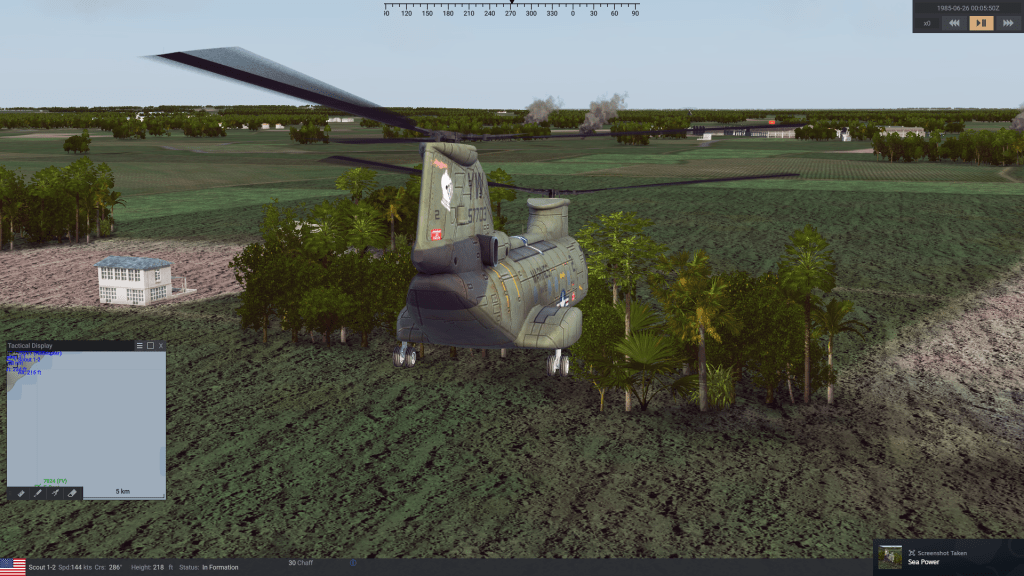
So far, I’ve played the Sea Power version of Fleet Command’s CVBG Norwegian Sea and Shore Bombardment. In the first scenario, players must defend a U.S. Navy carrier group from Soviet Backfires and their Tu-142 Bear patrol plane guide before the Russians can launch cruise missiles at USS Nimitz. In the second, players must destroy Chinese anti-aircraft and radar sites and land a team of Marines near an enemy headquarters on Hainan Island.
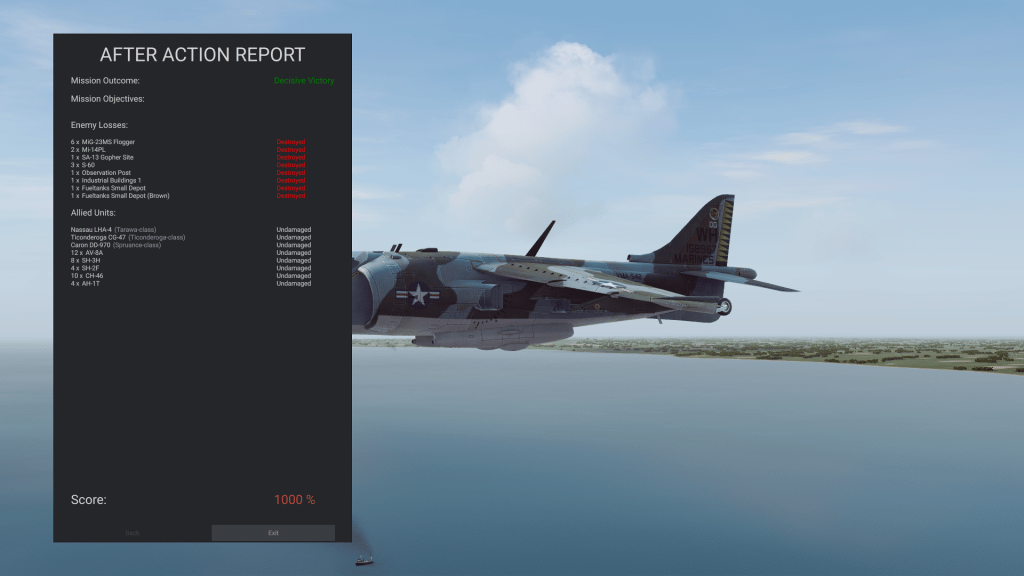
I beat the AI on the original Fleet Command when I played Shore Bombardment, so I wasn’t surprised when I did well in its Sea Power counterpart, even though the user interface (UI) of the new game is different and it’s easy to get distracted by Sea Power’s highly detailed graphics and immersive sound effects.
Back when I was living in New Hampshire, I took a stab at playing CVBG Norwegian Sea on the original Fleet Command. It felt like an overwhelming challenge, and I couldn’t muster the courage for a full playthrough. Picture me, sweating bullets over whether I’d successfully maneuver my F-14 Tomcats to spot aerial threats and take down Soviet Backfires before they could unleash their anti-ship missiles on my precious carrier group. With so much hanging in the balance and the lurking fear of catastrophic failure, I chose to abandon the mission rather than face potential disaster.

Encouraged by my success with Shore Bombardment and Sea Power’s intuitive interface, I decided to tackle the new version of CVBG Norwegian Sea. Having already mastered complex air operations with a Tarawa-class amphibious assault ship and its squadron of Marine Corps AV-8A Harrier jump jets, CH-46 transport helicopters, and AH-1T Cobra attack helicopters, I felt confident. Surely, launching F-14s to intercept Soviet bombers couldn’t be much harder than that, right?
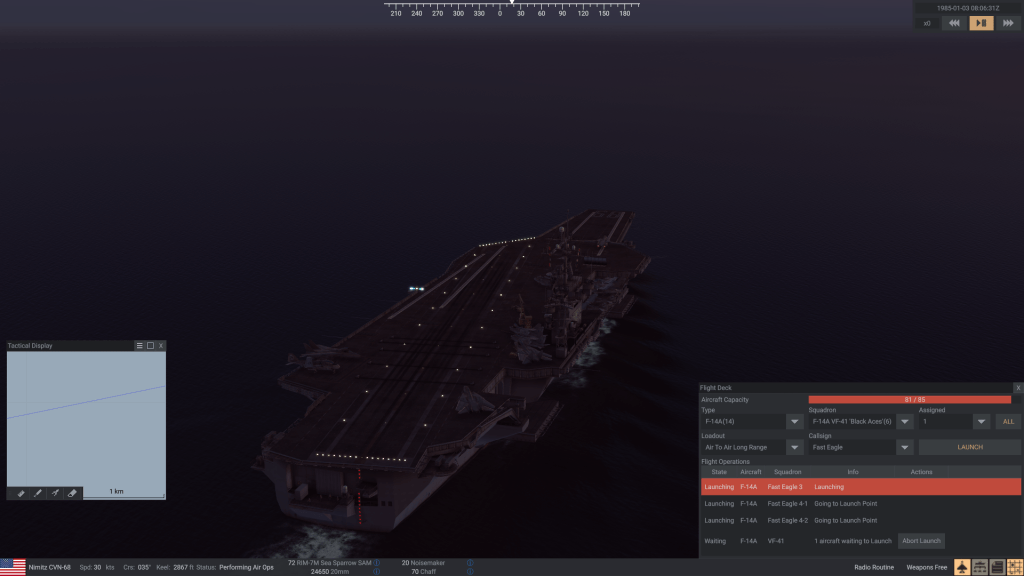
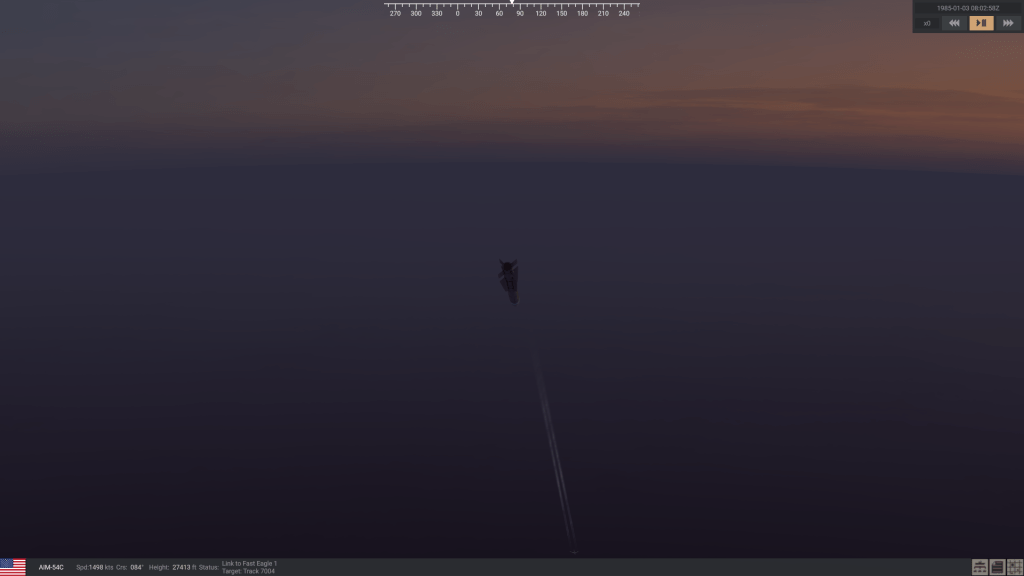
As it turns out, I did reasonably well in this scenario. I not only maneuvered the two F-14s that were already at their Combat Air Patrol (CAP) stations and guided them to two successful intercepts – I even managed to shoot down the Tu-142 Bear-F maritime patrol scout first, thus denying the Backfires vital targeting data needed to guide the anti-ship missiles to the Nimitz battle group off the Norwegian coast.
Unfortunately, even though NATO did not suffer any casualties – all my ships and aircraft were undamaged, and all four Soviet planes were shot down – the game only awarded me a Pyrrhic victory with a score of 7%.
Why?

In my haste to defend my carrier group, I failed to take the necessary steps to properly identify one of the radar contacts on my tactical display. I mistakenly labeled an “unknown” aircraft as an “enemy.” I ordered one of my F-14s (Fast Eagle 2) to engage with an AIM-54 Phoenix air-to-air missile. The Tomcat crew complied, and the “bandit” was shot down – only it wasn’t a Tu-22M Backfire – it was a civilian airliner!
(In a front-page exposé, the New York Times would have detailed the shocking incident with a headline screaming “Navy Pilot Shoots Down Civilian Airliner in Tragic Error.” The article would recount the harrowing moments leading up to the shootdown, painting a vivid picture of the frantic attempt to protect the USS Nimitz from a perceived Soviet threat during a high-stakes battle at sea in World War III. In the aftermath, the press would reveal the tragic misidentification that led to a commercial aircraft being mistaken for an enemy bomber. Public outrage and media scrutiny would follow, leading to a comprehensive investigation by the Navy. The once-promising naval career of the pilot, who had shown exceptional skill and leadership in previous operations, would be irreparably tarnished. A court-martial would likely ensue, with the pilot facing severe penalties and eventually being discharged from service in disgrace. The incident would serve as a grim reminder of the high cost of errors in the fog of war, forever marking a somber chapter in modern naval history.)
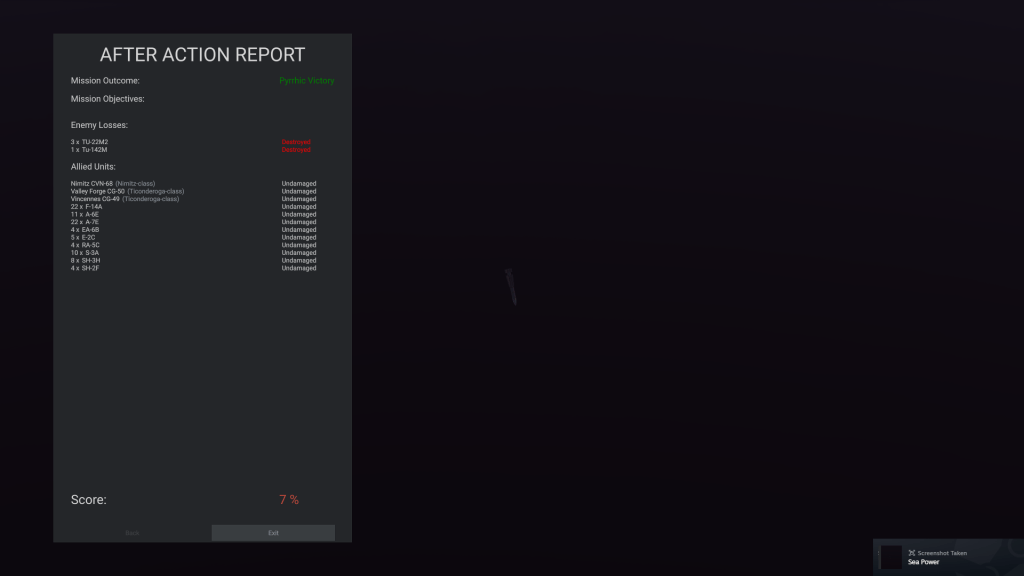
Next time I play this scenario, I will ask questions first and shoot later.
 A Certain Point of View, Too
You must be logged in to post a comment.