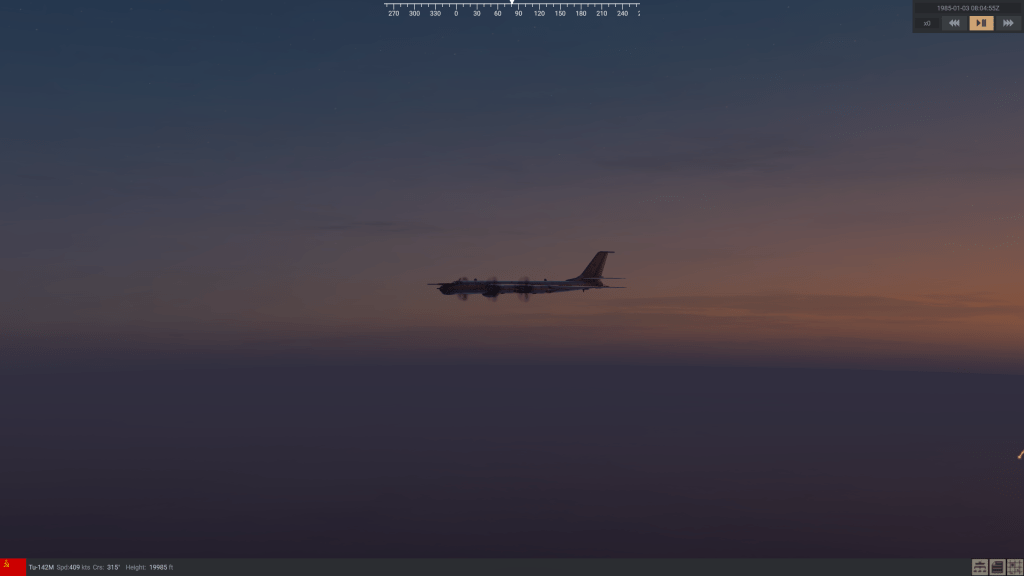
“Dawn Clash in the Norwegian Sea”
Time Magazine
March 11, 1985 Issue
By James K. Garraty, Senior Correspondent. With reporting by Alex Diaz-Granados from Washington

In the early light of dawn on March 1, 1985, the tranquil waters of the North Atlantic were shattered by the deafening roar of jet engines and the explosive engagement of one of the most intense air-sea battles in recent history. The aircraft carrier USS Nimitz, along with her Ticonderoga-class cruiser escorts, USS Vincennes and USS Yorktown, faced a formidable and well-coordinated air assault by Soviet Naval Aviation’s Backfire bombers.

The sudden clash between the Soviet-led Warsaw Pact and the North Atlantic Treaty Organization, now on its second day, follows the recent death of Soviet leader Konstantin Chernenko. A coup by hardliners opposing the appointment of the younger General Secretary Mikhail Gorbachev has precipitated the outbreak of hostilities, throwing the world into a precarious state of heightened tension.
At approximately 0800 hours, as the first hints of sunrise painted the horizon with hues of orange and pink, six F-14 Tomcats from VF-41 (the Black Aces) and VF-84 (the Jolly Rogers) launched from the Nimitz to intercept the approaching Soviet bombers. The radar scopes of the Nimitz’s Combat Information Center lit up with the signatures of four Tu-22M Backfire bombers and a Tu-142M Bear-J maritime patrol and strike coordination aircraft closing in fast.

The Tomcats, with their distinctive skull-and-crossbones insignia of the Jolly Rogers and the ace of spades emblem of the Black Aces, soared through the vibrant dawn sky to engage the Soviet threat. In a display of aerial prowess and tactical precision, the F-14s intercepted and downed all four Backfire bombers and the Bear-J aircraft. However, two Backfires managed to launch their deadly payloads – the formidable AS-4 Kitchen antiship missiles – aimed squarely at the Nimitz battlegroup.
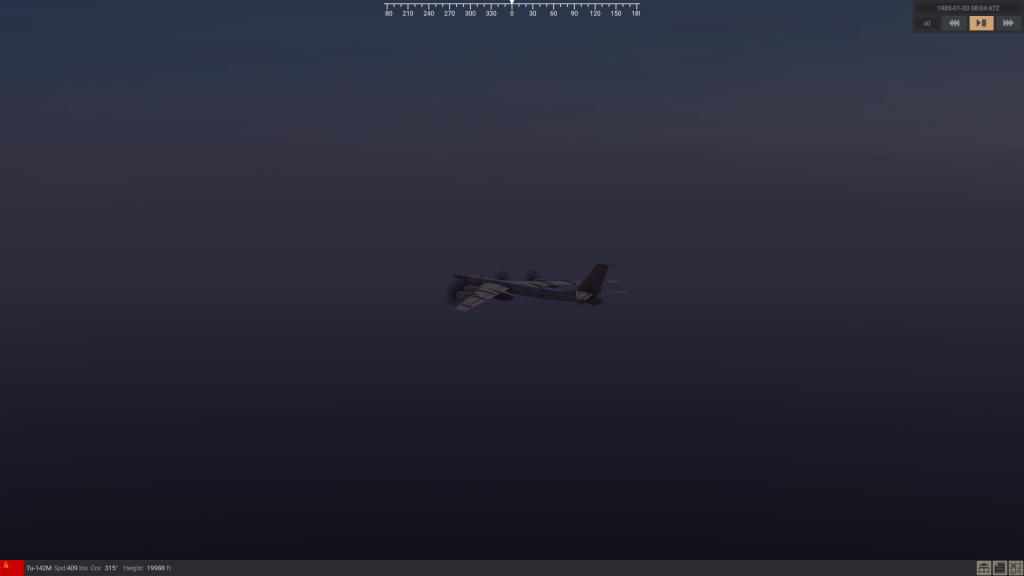

In a dramatic turn of events, the USS Vincennes, with its advanced Aegis Combat System, successfully engaged and destroyed all incoming missiles before they could reach their targets. According to Nimitz public information officer Cmdr. Juan Carlos Hernandez, one Backfire bomber almost managed to escape, successfully evading an AIM-54 Phoenix air-to-air missile over southern Norway. Yet, determination and skill prevailed as a second Phoenix missile, fired by “Victory Flight-Three,” brought down the elusive bomber. Norwegian national guardsmen, speaking anonymously, reported capturing three Soviet airmen who bailed out near the crash site.

During the chaos, two civilian airliners inadvertently strayed into the battle area. Despite attempts to communicate via radio, the pilots did not respond, forcing the F-14 crews to use visual signals to divert them from the danger zone.
In the Kremlin, Soviet officials have claimed that their attack inflicted damage on the Nimitz and that only one Backfire was lost. However, Western diplomats stationed in Moscow expressed skepticism over these assertions, given the robust defense mounted by the Nimitz battlegroup.
As daylight fully broke over the North Atlantic, the Nimitz and her escorts continued their vigilant watch, ever ready for the next wave of the conflict. The events of March 1 serve as a stark reminder of the razor’s edge on which the world now teeters, a delicate balance of power and diplomacy in the face of escalating tensions and the ever-present threat of war.

 A Certain Point of View, Too
Comments
One response to “Old Gamers Never Die: ‘CVBG Norwegian Sea’ Scenario in ‘Sea Power’ Revisited”
[…] didn’t think I’d be able to produce that scene, considering that I spent several hours crafting that “alternative history” Time magazine article based on my last playthrough of Sea Power’s version of CVBG Norwegian Sea. As I mulled over my […]
LikeLike