Navigating the Quirky Seas: From Journalism to Zany Fiction Adventures
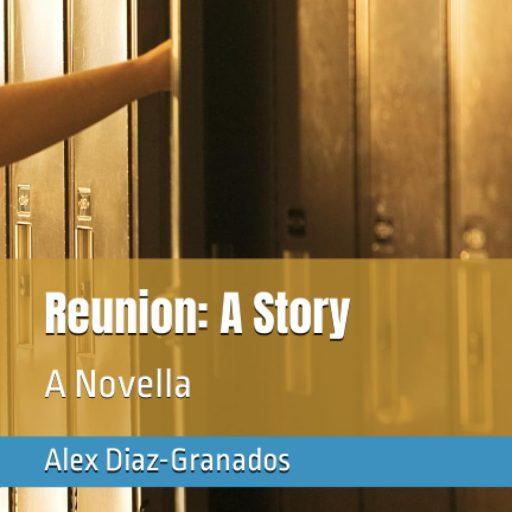
Even though I’ve been writing for many years—having studied journalism in high school and majored in it at Miami-Dade Community College (now Miami-Dade College)—and have penned thousands of articles, reviews, and blog posts, my ventures into fiction have been few. The first two pieces—a short Battlestar Galactica meets Star Trek “fanfic” story and a “novel” I wrote in 1980—were done in ninth grade at Riviera Junior High, 45 years ago. I don’t consider them part of my “official bibliography” because (a) they weren’t that great, and (b) one was an assignment for my ninth-grade English class. Until I began writing Reunion: Coda almost two years ago, my only existing work of fiction was my novella, Reunion: A Story.
When I embarked on the journey to write my first novel, I felt a bit like Frodo Baggins setting out from the Shire—minus the hairy feet and the Ring of Power, of course. This new adventure wasn’t bound for Middle-Earth, but it was certainly uncharted literary territory for someone who had already started—and swiftly abandoned—three manuscripts: an ambitious sci-fi epic from my freshman year of college, a daring alternate history where the U.S. invades Japan without atomic bombs, and a historical novel set amidst the 1944 Normandy campaign.
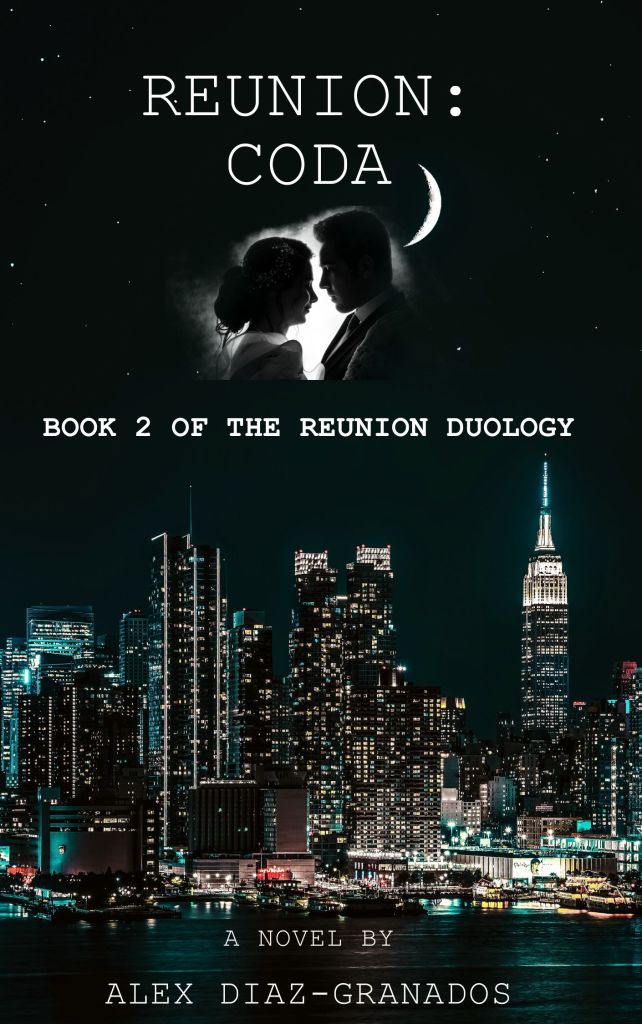
I’ve detailed elsewhere why I chose to follow up on Reunion: A Story (if you’re curious, the whole juicy tale is available here). Suffice it to say, diving into a general fiction work that blends coming-of-age elements, historical fiction, and romance was like leaping into the deep end of a swimming pool filled with literary sharks. Although this novel followed an existing story, I still felt very much like a “first-time novelist” navigating the choppy seas of a new and daunting literary world.
To bridge the gaps in my understanding of the craft, I amassed a small library of “how-to” books—each one seemingly contradicting the other. (For those keeping score at home, most of these books are still boxed away somewhere, inaccessible but theoretically useful.)
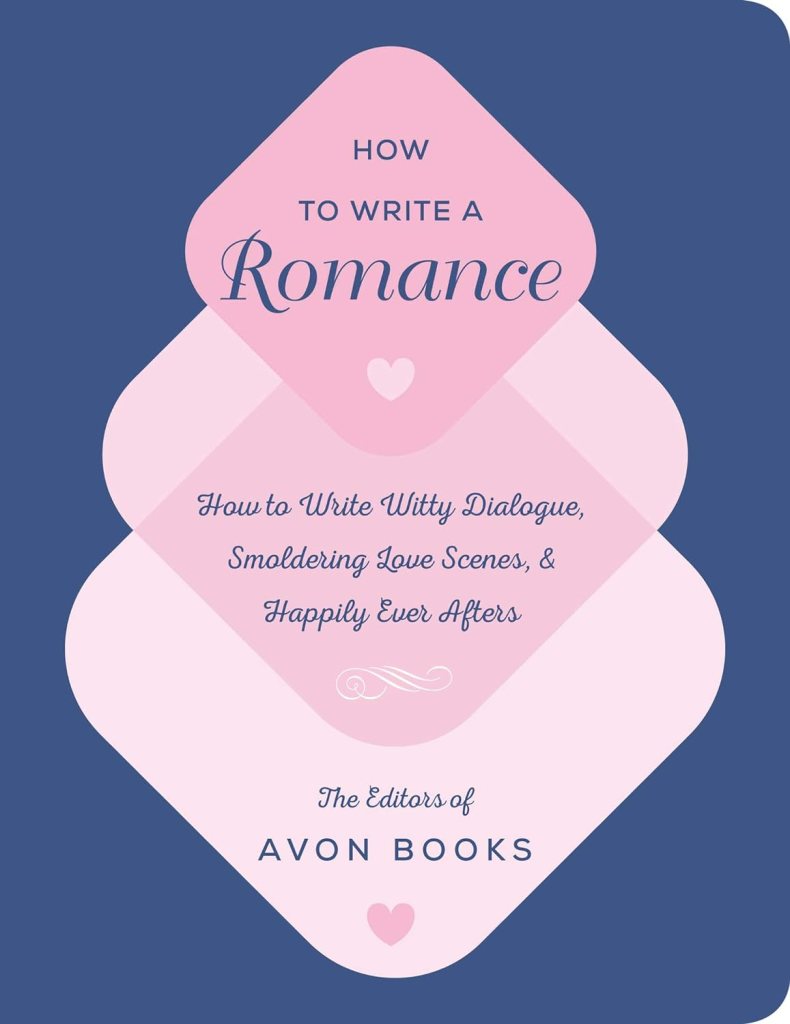
One of the few texts I have on hand is How to Write a Romance: Or, How to Write Witty Dialogue, Smoldering Love Scenes, & Happily-Ever-Afters, by the Team at Avon Books. Despite its title, it isn’t a detailed guide on crafting romance novels. Instead, the book is a blend of writing exercises—with prompts like “Write a scene in which the hero watches the heroine dance with another man, from his perspective”—and supportive advice for new writers from published romance novelists. It also includes a notes section for jotting down plot points, bits of dialogue, or notes about specific characters, settings, and situations.
I bought How to Write a Romance during my first (and only) winter in Madison, New Hampshire, shortly after arriving in the Granite State. Even though it has some prompts that I assiduously avoid—“You’re a time traveler and you fall in love with someone in the past…”—the book has sparked some of Reunion: Coda’s scenes even when the prompts don’t seem to mesh well with the story I’m telling.
When Prompts Get Quirky: Embracing the Challenges of Unusual Writing Exercises
I’ll give you a shining example of a particularly perplexing prompt that I eventually used in the novel, even though it required strenuous mental gymnastics:
Your heroine is wearing a fake mustache and your hero is soaking wet. How did they end up like this? What do they do next?
Believe me, I had skipped that prompt numerous times in the past, thinking it had no place in my novel. But there it was, like a literary itch I couldn’t scratch. The prompt’s goal is to nudge writers out of their comfort zones—much like tossing them into a quirky, dramatic scene to explore their characters’ reactions. By thrusting characters into bizarre situations, the prompt helps to delve into their personalities, unearth hidden traits, and unfold unexpected plot twists—elements that can turn a mundane narrative into a masterpiece.
I’m not sure if it was a stroke of brilliance or an act of sheer desperation, but during yesterday’s afternoon writing session, I figured out how to use that prompt in my novel.

The first light of dawn filters through the curtains, casting a soft, golden hue over the room. The air is crisp, with a hint of the lingering chill from the night before, but the promise of a clear, sunny day is palpable. I stir first, my eyes fluttering open to the sight of Maddie beside me, her face serene and a soft giggle escaping her lips even in sleep. I can’t help but smile, wondering if she’s dreaming about our intimate moments after our dinner at Delmonico’s or something else entirely.
Maddie, wrapped in one of my Arrow shirts, slowly wakes up, her hazel eyes still heavy with sleep. She looks at me with a mix of love and recognition, her hair adorably tousled. I marvel at how beautiful she looks, even in her early morning disarray. She snuggles closer to me, and we exchange soft good mornings.
“Good morning, Sweets,” I say, my voice a gentle rumble.
Maddie blushes, her cheeks turning a delicate shade of pink. “Morning,” she replies, her voice still groggy.
I chuckle softly. “You were giggling in your sleep. What was so funny?”
Maddie coughs in embarrassment, her blush deepening. “I had the strangest dream,” she admits. “I was wearing a fake mustache, and you were soaking wet. I have no idea why my subconscious conjured that up, but it was hilarious.”
I laugh, the sound warm and infectious. “That does sound pretty funny,” I agree, pulling her closer. “Tell me more.”
Maddie takes a deep breath, her eyes twinkling with amusement. “Well, in the dream, we were in this old-timey silent film, like something out of a Mack Sennett comedy. I was dressed as a detective, complete with a fake mustache, and you were a hapless bystander who somehow got caught in the middle of a pie fight. You were drenched from head to toe in cream and custard, and then, out of nowhere, someone sprayed you with seltzer water. It was like a comedy of errors, and I was trying to solve the mystery of who started the whole mess.”
I can’t help but laugh at the absurdity of it. “And did you solve the mystery?”
Maddie grins. “Not exactly. Every time I got close to figuring it out, another pie would come flying out of nowhere and hit you in the face. And just when you’d start to clean up, someone would squirt you with seltzer water again. It was like the universe was conspiring to keep you soaked and me laughing.”
We both burst into laughter, the sound filling the room and deepening our connection. Eventually, I get up, slipping on my boxers and trousers as Maddie watches unabashedly. I catch her gaze and feel a mix of embarrassment and flattery.
“If I don’t mind being admired, neither should you,” Maddie says with a playful smile.
I grin, feeling a warmth spread through me. “Fair enough. How about you come with me to Columbia University today? I don’t have any classes, just some office work. I can show you around.”
Maddie’s eyes light up. “I’d love that. Is this something like ‘Take Your Girlfriend to Work’ day?”
I chuckle. “You know, it just might be. I’m pretty sure there’s a provision in the employee handbook somewhere.”
Maddie laughs, and I lean down to kiss her forehead. “I’ll make us some breakfast before we get ready to go.”
“Sounds like a plan to me. Lead on, MacDuff!”


Comments
2 responses to “Writer’s Shop Talk: Venturing into Fiction: My Journey from Journalism to Novel Writing”
Thank you, Alex, for linking to my post “An Interview with Author Alex Diaz-Granados”. It was indeed a great interview. Thank you for allowing me to participate in that.
LikeLiked by 1 person
You’re welcome, Thomas.
LikeLiked by 1 person