

Midday, Sunday, January 26, 2025, Miami, Florida
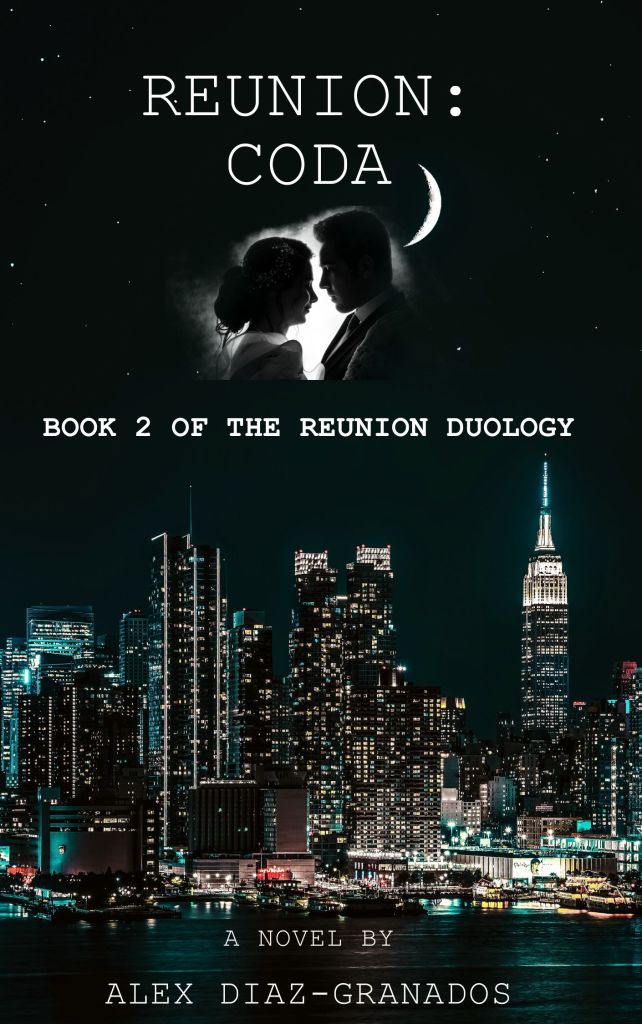
In the world of writing, there are two primary camps: planners and pantsers. Planners meticulously outline their stories, mapping out each plot point and character arc before they ever write a single word. Pantsers, on the other hand, fly by the seat of their pants, allowing the story to unfold organically as they write. Though I’ve always been firmly rooted in the pantser camp, the journey of crafting Reunion: Coda has given me a newfound appreciation for the value of a well-constructed outline.
I’m not a fan of outlines. I didn’t enjoy creating them for research papers in high school and college; I’d usually write my term paper and then craft an outline as an afterthought. I guess I’m more of an improvisational writer than a meticulous planner. Let’s face it: a detailed outline takes time and creativity, and I often lack the patience for it.
I’ve shared before that most of Reunion: Coda has been written pretty spontaneously—without any detailed outlines, character biographies, or character arc diagrams to guide me. When I kicked off this project back in March 2023, I took some time to reread Reunion: A Story to look for a loose thread in the narrative that I could use to build a bigger story. It took a bit of searching, but once I found it, I started to get an interesting idea for how to tell Jim Garraty’s story.
This “no outlines” method worked particularly well in the first two-thirds of the novel, especially during the flashbacks to Jim’s high school days. By building the narrative on the foundation of an existing story, many scenes in Reunion: Coda expand on or explain characters and situations mentioned briefly in Reunion: A Story. Thus, most of the chapters set in the 1980s were relatively easy to write without a detailed outline. The novella itself served as a loose framework for the novel, even though it was initially conceived as a standalone story with no prequel or sequel in mind.
Things changed for me after I wrapped up Jim’s high school story with his graduation in June 1983. At that point, I couldn’t really lean on the novella’s storyline anymore. One of the reasons was that I had put off writing a sequel to Reunion: A Story for so long. I only had a vague idea that Jim Garraty would eventually publish Uncertain Trumpets, the non-fiction book he was working on during Reunion: A Story I also thought he might give romance a shot once he came to terms with his recent divorce and dealt with the tougher losses from his younger days.

As a result, I’ve mostly abandoned the “pantser” approach to writing scenes and chapters, adopting a more methodical, albeit slower and sometimes irritating, scheme of detailed outlining. Usually, I’ll focus on the characters, settings, and situations without getting bogged down by minutiae like dialogue or sensory details. After all, if I’m going to write (hopefully) witty lines or craft richly detailed (and, fingers crossed, steamy) love scenes, why bother with an outline at all, right?
Still, as much as I loathe outlines, I have to admit they’re essential, especially when the finish line is in sight. These pesky plans help me figure out if a scene fits into the narrative puzzle thematically and logically. They also let me nip any unnecessary plot points in the bud, saving me from pulling my hair out during the rewrites. By sketching out the big picture, I dodge those narrative dead ends and ensure Jim Garraty’s story wraps up nicely.
As I transition from outlining to fully fleshing out scenes, I find myself more deeply immersed in Jim Garraty’s world. One memorable scene stands out in particular, meticulously crafted to weave together history, personal memories, and the tender blossoming of romance. Entitled “A Day at Columbia: History, Memories, and Blossoming Romance,” this passage captures a moment of profound connection and discovery for Jim and Maddie amidst the storied halls of Columbia University.
Columbia University
Thursday, March 23, 2000

The chill of the mid-morning air nips at our cheeks as Maddie and I stroll across Columbia University’s picturesque pathways. It’s a clear, sunny day—not quite warm, but hints of spring bloom in the budding trees around campus. I glance at Maddie beside me, smiling at her radiant elegance in her sky-blue dress and matching jacket. It’s incredible how she manages to look stunning despite re-wearing the same outfit from our dinner last night at Delmonico’s.
We approach an imposing building with grand ionic columns and an impressive façade that speaks of its historical significance. Maddie grabs onto my arm, her eyes wide with excitement, and happily walks beside me like a little girl discovering a new world.
“This is a pretty majestic building,” she remarks, her eyes sweeping across its architectural marvels.
I smile, eager to share its rich history. “That’s Low Memorial Library,” I say, pointing to the building. “Dwight D. Eisenhower served here during his tenure as the university’s president.”

Maddie’s eyes twinkle with the memory of her grandfather’s stories. “Grandfather mentioned meeting General Eisenhower at a post-VE Day reception in London. He always said Ike was quite charming.”
I grin, delighted to share such golden memories. We continue to wander the campus, weaving through bustling students and busy faculty members, each engaged in their own routines. The scent of freshly cut grass and blooming flowers fills the air. Maddie, with her refined British manner, draws charming comparisons between Columbia and the Royal Academy of Music in London, where she honed her piano skills.
“You know, Jim, Columbia has a certain charm that reminds me of the Royal Academy,” Maddie says, her voice laced with nostalgia. “I studied piano there in the mid-1980s, before my brief stint with the London Philharmonic. The atmosphere here feels quite similar—a blend of history and vitality.” She squeezes my arm gently, her eyes lighting up as she recalls fond memories.
I nod, intrigued by her past. “Sounds like an incredible experience. Do you miss it?”
“Sometimes,” she admits, her eyes softening. “But New York has its own magic. I moved here in 1995 and never looked back. Columbia seems like an ideal place for you to teach history.”
I’m touched by her sentiment as we approach Fayerweather Hall. I can’t help but feel a surge of warmth and pride. “This is where I spend most of my days, either in the classroom or elbow-deep in research. Henry Townsend, our department chair, is like a mentor and father figure to me.”
Maddie brushes a stray lock of hair from her face, curious. “Any chance we might meet him?” she asks, her voice full of genuine interest.
Before I can respond, Maddie spots someone familiar. “Isn’t that Richard Billows?” she asks, her tone a mix of excitement and curiosity.
I glance in the direction she’s pointing and recognize the well-regarded history professor. “Yes, that’s him,” I confirm. “He specializes in Ancient Greek and Roman history.”
A knowing smile spreads across Maddie’s face. “I remember reading one of his books and even attended one of his lectures last year. Quite an engaging speaker.”
As if on cue, Billows notices us and approaches with a beaming smile. “Jim! What a pleasant surprise,” he exclaims, extending a warm handshake. “Nice to meet your charming company too.” He regards Maddie with genuine curiosity and warmth.
“This is Madison Reynaud, but she goes by Maddie,” I introduce, glowing with pride. “She’s one of the principal pianists with the New York Philharmonic.”
Billows raises an eyebrow, clearly impressed. “A pleasure to meet you, Ms. Reynaud. The New York Philharmonic is world-renowned. Quite an accomplishment to be one of their principal pianists.”
Maddie smiles, her cheeks flushing slightly. “Thank you, Professor Billows. I’ve read your book on Ancient Greek political systems and thoroughly enjoyed it. Your lecture on Roman governance was equally fascinating.”
Billows gives her an appreciative nod, clearly impressed by her knowledge. He then turns back to me. “I just finished reading your book on Operation Market-Garden, Uncertain Trumpets. Exceptional work! Reminded me quite a bit of Cornelius Ryan’s A Bridge Too Far.”
Feeling a mix of humility and pride, I respond, “Thank you, Professor Billows. Connie Ryan is a tough act to follow; he set the bar high.” I can’t help but feel a bit flattered by the comparison.
Maddie chimes in, “The compliment isn’t far off. I’ve been a fan of Cornelius Ryan since childhood, yet Jim’s work holds its own,” she says, her tone sincere and admiring. I notice a slight blush on her cheeks, adding to her charm.
I add, “Ryan planned to write a five-book series on World War II but sadly finished only three before he died from cancer in 1974.”
Billows nods appreciatively. “Ryan’s work has certainly set a high standard. Keep up the excellent work, Jim.”
With a final handshake and goodbye, Billows returns to his university duties. The sound of students chattering and the distant hum of traffic create a lively background as we continue our tour. I glance at Maddie, her arm linked with mine, a radiant smile on her face. “Ready for the rest of the tour?” I ask, a sense of anticipation in my voice.
“Lead the way, like your U.S. Rangers, Professor Jim,” Maddie replies with a playful grin.
 A Certain Point of View, Too
You must be logged in to post a comment.