Afternoon, Wednesday, March 12, 2025, Miami, Florida
“Writing is a lonely job. Having someone who believes in you makes a lot of difference. They don’t have to make speeches. Just believing is usually enough.” ― Stephen King, On Writing: A Memoir of the Craft
Writer’s Log, Stardate 2503.12
It was two years and three days ago when I first perched at my writing desk in Lithia, Florida, with a heart full of hope and a mind full of doubt. I had pledged to write a novel—my magnum opus. Little did I know that the journey would twist more than a pretzel at Oktoberfest.

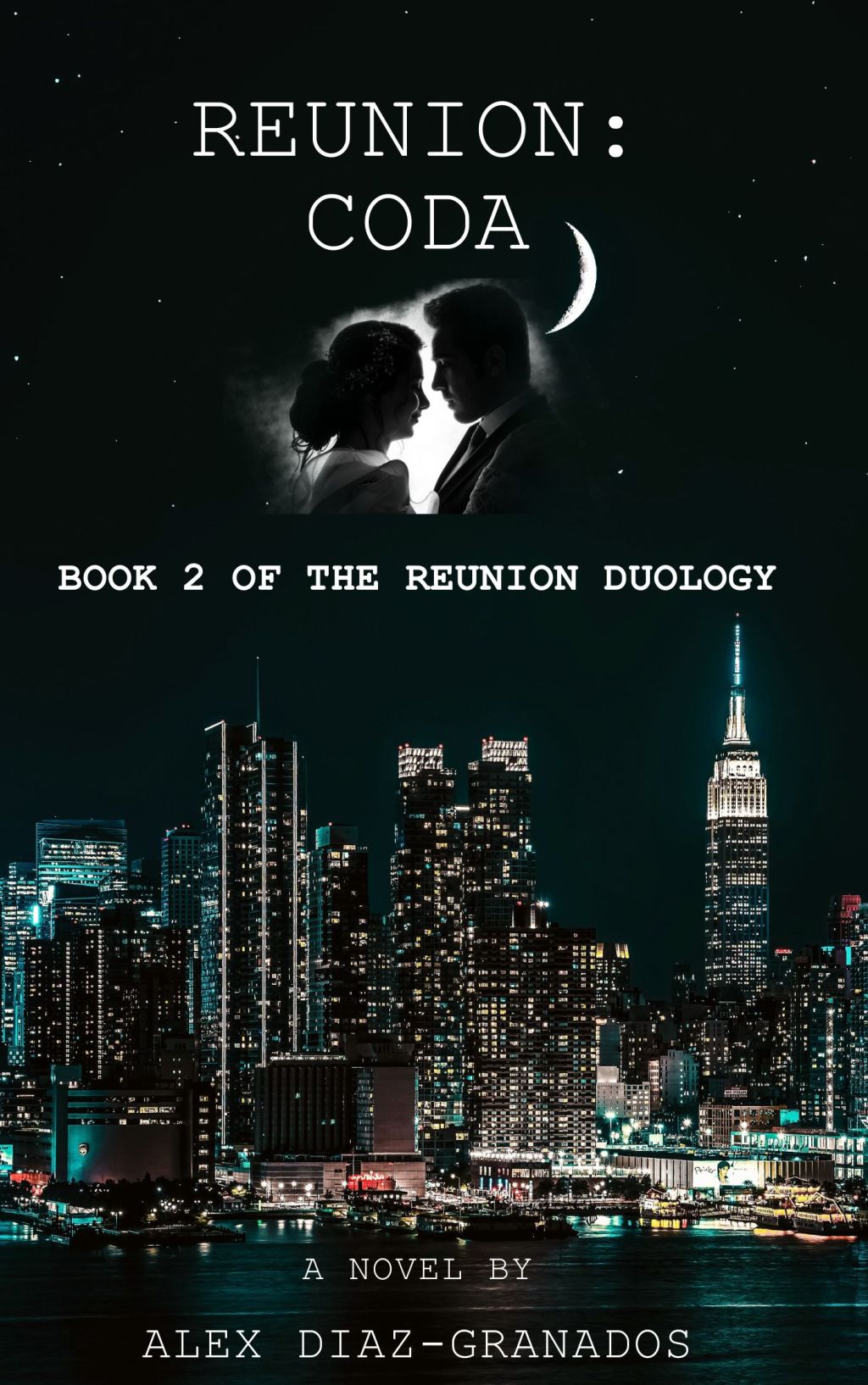
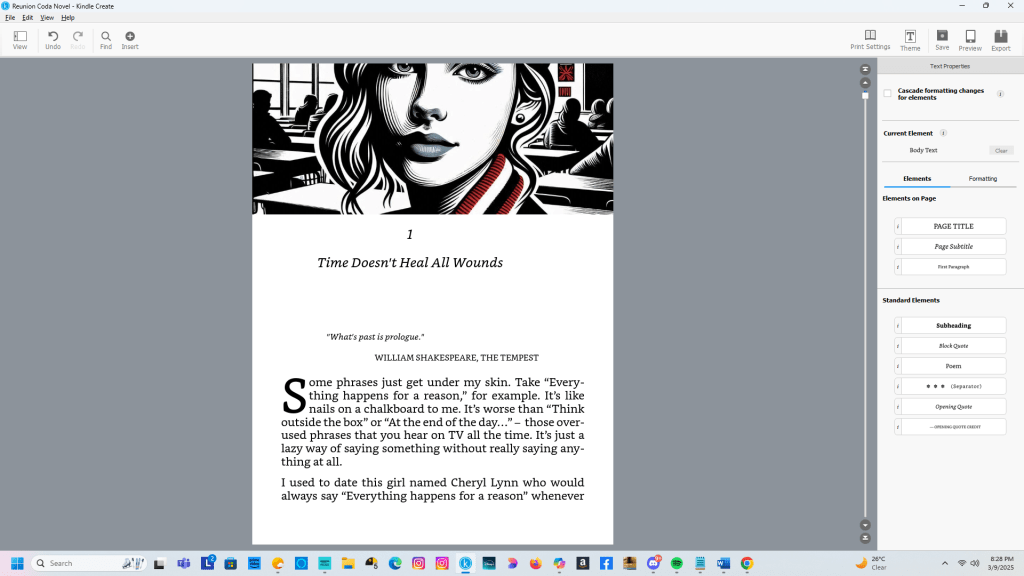
Fast forward to today: I have not only remained committed to Project X, which has now developed into Reunion: Coda, but I also have an almost complete manuscript that spans 541 pages and contains 132,119 words. It’s like climbing Everest and discovering a cozy chalet at the summit.
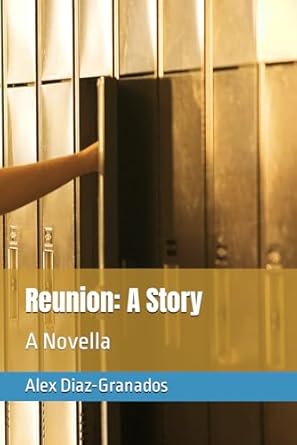
Why was the story successful? I focused on a narrative I was equipped to tell, unlike my earlier historical novel, The Tonic of Our Victory, which was too grandiose and complex for my developing writing skills at the time. Instead, I returned to the world of Jim Garraty, a character from my 1998 novella Reunion: A Story. Jim’s need for emotional growth and aspirations reflected my own, allowing the narrative to flow smoothly, like a well-aged wine.
“The scariest moment is always just before you start. After that, things can only get better.” ― Stephen King, On Writing: A Memoir of the Craft
The burning question was: “How has Jim Garraty evolved since February 1998, and how does he move on after losing the love he never confessed?” This, my friends, was the linchpin. Of course, numerous other questions arose, like, “Will Jim find love again?” “Can I write love scenes that sizzle yet remain tasteful?” and “What was Jim’s family like?”
As I navigated these questions, I realized something profound: it wasn’t just about getting the words on paper; it was about giving life to characters who deserved to leap off the page. And with every twist and turn, I found my own voice growing stronger, more assured—like Jim himself.

Of course, having Reunion: A Story as a solid foundation was a godsend. Jim’s crush, the dazzling Martina Elizabeth Reynaud, and his buddy Mark, slid right into this new chapter like old friends crashing a party. Moments that were mere whispers in the first book have now been amplified in Reunion: Coda. And Marty, who flitted through dreams and barely had a real-life cameo with our hero, finally gets her time in the spotlight, shining as more than just Jim’s lost Dream Girl.
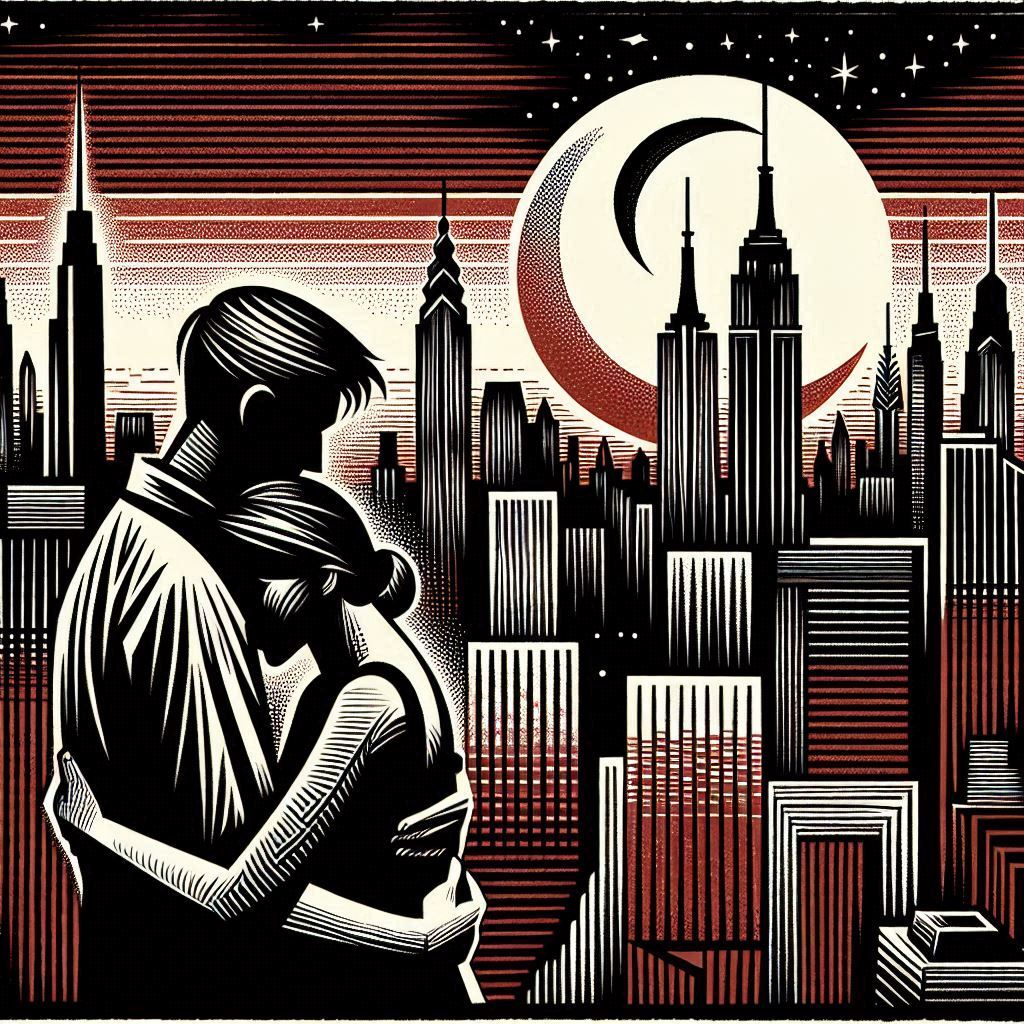
Because I wanted Reunion: Coda not only to be a mirror into Jim’s past but also a window into his present, I remembered the maxim, “A new story requires new characters.” And because I wanted to see Jim “move forward into broad, sunlit uplands” in his emotional life, I thought—why not introduce someone who could truly light up his world? Enter Maddie, a vision of elegance and grace, with an allure that captivated everyone around her. Her refined demeanor and sparkling presence made her the perfect counterbalance to Jim’s brooding introspection. So, I placed her right onto Jim’s path at the Moonglow Club, a glitzy nightclub in Brooklyn’s Williamsburg district, adorned with a Big Band/WWII theme. The vibrant, lively clientele and the swinging tunes provided the ideal backdrop for sparks to fly and hearts to connect.
I glance at the bottle of Heineken in my hand, feeling the chill of the condensation on my fingers. It’s a new nightclub, and I’m curious to see what it’s like. I’m not here to hook up, but I wouldn’t mind some company. Maybe someone who shares my passion for history. Someone who appreciates the stories behind the facts. Someone who can make me laugh and think at the same time.
That’s when I hear her voice. “Excuse me,” she says, “is this seat taken?”
Her accent is refined and elegant, like a mix of Roosevelt’s Mid-Atlantic drawl and a British aristocrat’s clipped tone. I swivel around, and there she is, clutching a bag stuffed with books from Book Culture—that quaint little bookstore on Broadway.
Her hair, the color of caramel, cascades in loose waves that brush her shoulders with effortless grace. Her hazel eyes, framed by arched brows, are luminous and expressive, catching the club’s dim lights like facets of amber and green. Her heart-shaped face, softened by the delicate contours of her cheeks, holds an inviting warmth. Her lips, poised in a polite smile, seem to carry the promise of lighting up even the darkest corner of the room. The sky-blue dress she’s wearing hugs her frame perfectly, a splash of softness against the nightclub’s gritty backdrop. She’s breathtaking.
And she’s a complete stranger.
But something about her reminds me of someone I used to know.
As she steps closer, a faint but unmistakable scent reaches me—jasmine and orange blossom. It’s subtle, almost teasing in its familiarity. For a moment, it pulls me back to humid South Miami nights, and I catch myself on the edge of an old memory.
I shake my head, snapping back to the moment. Take it easy, Jim, I think, that’s just the beer talking.
A jolt of attraction and curiosity rushes through me, unbidden and undeniable. Who is she? What brings her here? And why do I feel like I already know her?
“Is this seat taken?” she asks again, her voice cutting through the din as she shifts the heavy bag of books in her arms. “I hate to bother you, but I really need to put this down before I drop it. It’s heavier than it looks, and if I hold it any longer, someone’s liable to trip.”
Her smile is polite but insistent, and I can tell she’s not used to being ignored. I finally snap out of my daze and gesture at the chair across from me. “Sorry—no, it’s not. Please, sit down.”
She nods her thanks and slides into the chair with natural elegance. She checks the floor quickly before placing her bag under the table, tucking it neatly out of the way. She casts a quick glance around the room, her curiosity evident in the way her eyes dart over the wartime decor and lingering crowds.
“So,” she says, returning her attention to me, her smile lighting up again. “What brings you here?”
“I’m here for the music,” I say, shrugging. “I love the Big Band era. Glenn Miller, Tommy Dorsey, Duke Ellington, Artie Shaw, Benny Goodman… They don’t make them like that anymore.” I point at the stage where the Swinging Millers are about to resume their performance. “And this place has a great vibe. It’s called Moonglow, after all.”
She meets my gaze and smiles. “It does,” she says.
“You’re a swing fan, too?” I ask.
“Sometimes,” she says. “I prefer classical music, but I’m not picky about genres. It depends on my mood, really.”
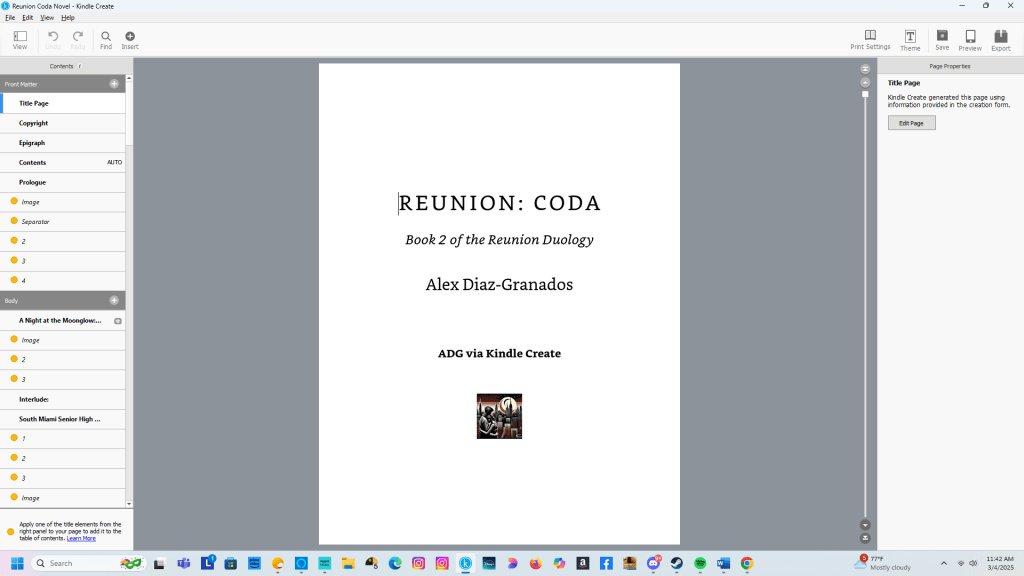
As I pen the final chapters, the story’s end is beginning to coalesce, promising a satisfying conclusion. I am confident that I’ll be able to deliver on the promise of #ReunionCodaIn2025. There are still a few chapters to go, but the journey has been nothing short of transformative—for Jim and me.
 A Certain Point of View, Too
You must be logged in to post a comment.