
Afternoon, Thursday, March 13, 2025, Miami, Florida
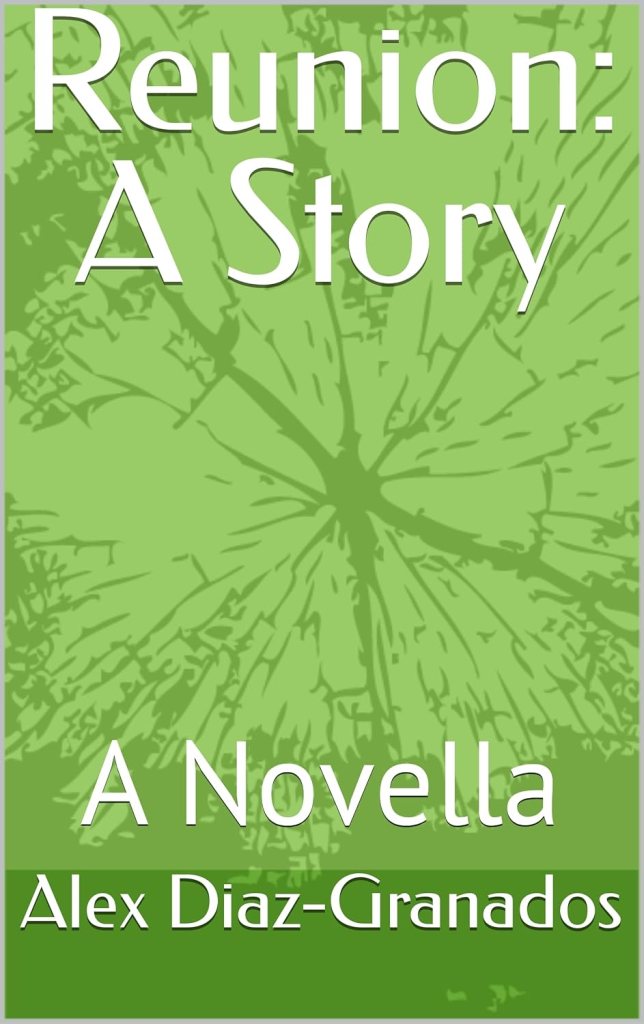
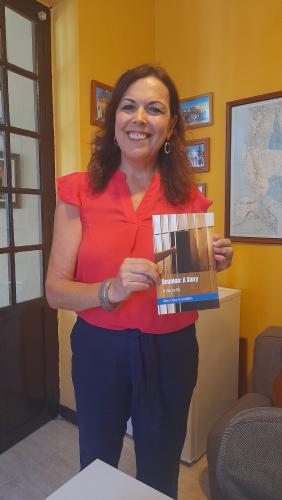
Like most writers, I’m often asked questions like, “Where do you get your ideas from?” and “How did you write this story?” So, to give you some idea of how the first book in the Reunion Duology came to be and what it’s about, here are some questions and answers related to my first work of fiction.
The Premise: It is February 1998. Jim Garraty, a 33-year-old respected history professor and bestselling author, lives in New York City. Popular with both students and readers, Jim seems to have it all. Fame, a nice apartment in Manhattan, and a reputation as one of the best World War II historians in the U.S. But when he gets a cryptic email from his best friend from high school, Jim is forced to relive his past. A trip to his hometown of Miami reopens old wounds he thought had healed long ago.
Q.: How did you come up with the story in Reunion: A Story?
A.: Reunion: A Story has an unusual origin story. In its first iteration, it wasn’t even a short story; it was a three-page fantasy sequence that I wrote in 1987 for a creative writing class at what was then Miami-Dade Community College’s South Campus. I don’t remember now what our professor, David Schroeder, had in mind, but I do remember coming up with the character of Jim Garraty and setting the scene at my old high school, South Miami Senior High. The basic template for Jim was created there—he was 18 years old, a smart 12th grader about to graduate, and a romantic at heart. Those traits remained true in the various iterations of the story.
The original plot of the scene—well, that was radically different from the version of Reunion: A Story that I published on Amazon in 2018. As I said, I don’t remember if Prof. Schroeder asked the class to write a dream sequence or a fantasy; it’s been over 30 years since I took that CRW course—but I do remember thinking that if he wanted a fantasy, I would give him one that would be, well, attention-getting. At around the same time that I was taking CRW 2001, I was also working on a multi-part series of columns about my experiences in high school for the campus student newspaper’s About Time section. As I recall, it was a three-part “saga,” as my journalism professor, Peter C. Townsend, called it. Of course, the columns were 400-500 words long and barely scratched the surface of my three-year stint at South Miami High—my alma mater.

All that thinking about the past had a strong influence on the choices I made for the fantasy sequence—South Miami High on my last day as a student there. And, as embarrassed as I feel about this now, my preoccupation with sex and dating—or rather, my lack of success in that arena—manifested itself in that fantasy. I’m not going to get into specifics about that. Suffice it to say that although the setting and the protagonist survived throughout the long process involved in the creation of Reunion: A Story, the 1987 dream sequence would have been rated NC-17 if it were a movie for theatrical release.
In purely technical terms, the story was told somewhat differently. If I remember correctly, the dream sequence involving CRW 2001 was written in third-person omniscient narrative voice, while the later versions of Reunion: A Story (also known as “Love Unbroken, Love Unspoken”) are told from Jim’s perspective in first-person, limited perspective.
I don’t have my original draft of the dream sequence—I lost my copy—with its “B+” grade and notes from Prof. Schroeder on the margins—at some point after I decided to use it as the core for Reunion: A Story years later. But much of the non-erotic stuff survives in the final version of the novella.
The present version of the tale, which happily is more of a PG-13 tale, was “born” at a very strange time in my life. In 1998, I was working with Gaude Timor, a Miami resident who owned a printing shop called Gaude Printing. Gaude was in her late 50s or early 60s at the time and, when I was introduced to her by a mutual friend, she wanted to become a published author of children’s stories.
Like many Cuban Americans of her generation, she was bilingual. She could write in English, but she had not taken any creative writing courses in the U.S. She had already “self-published”—through her own printing business—a few stories in slim hardcover books. Still, she wasn’t having any luck finding a publisher who would help her with mass distribution and marketing on a nationwide basis.
Our mutual friend recognized that Gaude needed significant assistance with her writing if she wanted a chance at securing a publishing deal. He also understood that I needed a consistent job to earn money from writing. Gaude had numerous manuscripts for children’s stories that required editing and revising. Since my mom raised me to be neither lazy nor foolish, I accepted the opportunity in the fall of 1994.
I am not going to delve too much on the seven-year working “partnership” with Ms. Timor here. It did not end well, for one thing, and it’s not relevant to this story, except for one essential “plot point”—I needed a respite from writing children’s stories that I, as a reader and editor, knew would not be able to compete with contemporary, living authors such as J.K. Rowling, much less long-dead ones like J.R.R. Tolkien or the Brothers Grimm. I wanted to write an original work of my own with a more realistic setting and for a different audience.
At first, I had no idea what kind of story I wanted to write. I knew I had to choose something that would not require a lot of research or time-consuming prep work; this ruled out anything in the science fiction or military fiction genres. I also don’t do horror stories well; I have read a lot of Stephen King novels and stories, but it’s not a genre that I think I could write comfortably in. I’d probably come across as a second-rate Steve King imitator. And because a lot of Gaude’s stories were sappy “happily ever after” romances with lots of magic and supernatural beings, I did not want to write a “chick lit” story, either.
In desperation, I went through my college notebooks and folders to see if there was anything from either my college course on satire or CRW-2001 that I could use as a foundation for a short story. Luckily, I did…the strange “dream sequence” that had earned a B+ from Prof. Schroeder almost 11 years earlier.
I’m not going to bore you with a blow-by-blow account of how a three- to four-pages-long scene morphed into a 40-page (in print) story. I will say, though, that several things happened shortly before I started writing the first draft of Reunion: A Story
The initial spark for Reunion: A Story was a sad occurrence. A few weeks before I sat down at my desk to write a story about high school (which is how I thought of it then), I had read the obituary of a young woman that I’d known at South Miami High when we were both singers in the school’s mixed chorus. She had been killed in a car crash somewhere in North Carolina at the young age of 31. Although I didn’t know her well and had never had as much as a passing crush on her, it still hit me hard. She was a sweet and popular student, and we’d been in the same ensemble—she sang with the alto section, I sang in the bass section—during the 1982-83 academic year.

Another source of inspiration was the fact that 1998 marked the 15th anniversary of the Class of 1983 graduation. I had not gone to the 10-year reunion in ’93 because it was a pricey affair, and also due to embarrassment; I had not earned my AA degree in journalism and mass communications from Miami-Dade, and though I was working at the time, it was mostly every-once-in-a-while freelance consulting and business writing gigs, and not a steady, well-paying career job.
I really wanted to go to the 15-year class reunion, but when I saw that the three-day get-together cost close to $300, I thought, “I would have liked to go, but I can’t afford it.”
A major influence on my work, particularly in structure and themes, was Billy Joel’s “Scenes from an Italian Restaurant.” I admired how Joel crafted “The Ballad of Brenda and Eddie” with a distinct “frame story” for a proper beginning and end.
Although the stories in my novella, Reunion, and “Scenes from an Italian Restaurant” are different, I consciously adopted Joel’s structure and narrative technique when I sat down to write my story.
There’s more to discuss about this influence, but that encapsulates the basic origin of Reunion.
 A Certain Point of View, Too
Comments
4 responses to “Dear Reader, Let Me Tell You a Story: About the Making of My Novella ‘Reunion’”
There was certainly a lot of history behind Reunion A Story that I did not know about. In the end it was a great novella that was beautifully written.
LikeLiked by 1 person
I mentioned the highlights in our interview last fall, Thomas. 🙂
I’m glad you read (and liked) this more detailed behind-the-scenes post. And thank you for the kind words about Reunion: A Story.
LikeLiked by 1 person
Now I’ll be singing “A bottle of red, a bottle of white” to myself all day…
LikeLiked by 1 person
It’s a great song to listen to (or sing). The Ballad of Brenda and Eddie is tricky, though!
LikeLiked by 1 person