

1. Don’t Set Unrealistic Goals for Your First Novel
While there’s certainly a place for ambition and artistic risks, I learned (through trial and error) that setting overly ambitious goals for your first novel can lead to frustration and burnout. Instead of diving into a sprawling historical epic or a complex science fiction adventure, start with a smaller, character-driven story. This approach allows you to focus on developing your writing skills without being overwhelmed by intricate plot details.
If fiction writing isn’t a regular practice for you, and especially if you haven’t taken creative writing courses, aim for a narrative that is closer to home—a semi-autobiographical story set in a familiar place and time. This will not only make the writing process more manageable but also more enjoyable and rewarding. Keep your first novel simple, and let your characters shine.

2. Set a Schedule and Stick to It
One of the most important takeaways I got from reading Stephen King’s On Writing: A Memoir of the Craft is this: Writing a novel, especially one you want to publish, is a serious endeavor, and thus you should take it as seriously as you would, say, a 9-5 job in an office setting. King, for example, sets a 2,000-words-a-day goal and writes—in a study with the door closed and no distractions—for four hours in the morning, five days a week.
He doesn’t say that we must write 2,000 words a day or write for four hours in the morning during the regular work week; when I wrote Reunion: Coda, I set a more modest 1,000-words-a-day target and worked on the manuscript—usually—from 2 to 6 in the afternoon.
Despite my best intentions, I didn’t always start exactly at 2 or end precisely at 6, nor did I consistently hit the 1,000-words target every day. However, by establishing a set routine—something I had failed to do in my previous attempts to write a novel—I made slow but steady progress. This dedication allowed me to finally complete Reunion: Coda on April 2. Having a routine provided structure and discipline, which ultimately made the writing process more manageable and rewarding.
3. Beta Readers Are Your Best Friends in This Enterprise

It’s often said that writing is a solitary profession, and for the most part, that’s true. You spend countless hours at your desk, tapping away at your keyboard or scribbling in your notebook, with no TV blaring and the door firmly closed. However, every writer needs someone to provide feedback on their work, ensuring that the story and characters are coming together and catching any mistakes. For Stephen King, his wife Tabitha plays this crucial role, offering her honest appraisal of his latest creations.
In my case, halfway through writing Reunion: Coda, I realized that I needed a fresh pair of eyes to look at my work. That’s when I reached out to Denise Longrie, a talented poet and short story author whom I had befriended while writing reviews for the now-closed website Epinions. Even though Denise doesn’t usually enjoy romance-heavy books, she agreed to be my Beta Reader, and I couldn’t have been more grateful.
When Denise joined the project, she began by reading my manuscript starting from the midpoint where I had left off. As I wrote new chapters, she went back to the beginning to familiarize herself with the earlier parts she had missed. After that, whenever I finished a chapter or two, I would inform her so she could review the new content. Denise offered notes of encouragement and suggested changes, and her feedback was invaluable.
If Reunion: Coda is any good, readers should know that Denise played a significant role in shaping it. Her support and insights helped me through the writing process, and I am forever thankful for her contribution as my Beta Reader.
4. Build Your Novel One Scene At a Time

One of the reasons, I think, why I abandoned my first two novels was that I was overly conscious that I was working on a novel and forgot to focus on individual scenes first, arranging them into chapters that together comprised a novel. Consequently, I felt overwhelmed and lost focus on the story I wanted to tell. Moreover, I chose genres and situations that were bigger than life and required months, if not years, of exhaustive and expensive research.
Reflecting on this, when I began working on Reunion: Coda, I remembered that writing a novel involves creating one scene at a time, gradually building the story piece by piece. This approach is particularly beneficial for first-time novelists because it allows them to concentrate on small, manageable portions of the narrative, making completing a novel much more attainable. By focusing on scenes, you can ensure each moment is vivid and compelling, which ultimately forms a solid foundation for your chapters.
This method and choosing a smaller but more personal and manageable story is why I completed Reunion: Coda instead of adding it to my list of abandoned manuscripts. The process became more enjoyable and less intimidating, and I could maintain the passion and creativity required to bring the novel to life.
5. “Never Give Up – Never Surrender.”
This was my third attempt to write a novel since 2015, and I was determined not to let this story slip away like the others. Reunion: Coda was a tale that I felt deeply connected to, not only because it continued an existing narrative but also because a small but dedicated group of fans eagerly awaited a novel about Jim Garraty, Mark Prieto, and Martina “Marty” Reynaud. At first, I wasn’t sure if the new Reunion book would be a prequel or a sequel; ultimately, it blossomed into a blend of both. Even though I didn’t have the entire novel outlined, either on paper or in my mind, I trusted that I would be able to bring this story to life.
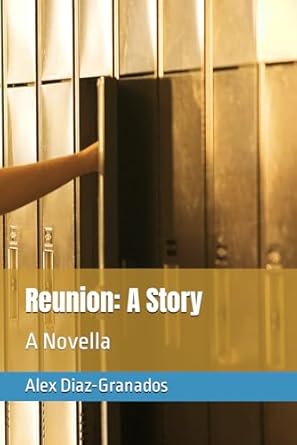
I’ve shared a lot about my two-year adventure of writing Reunion: Coda, so I won’t go over all those details again. Even though I followed all the technical steps of writing a first novel, I faced many emotional hurdles that nearly stopped me from finishing it. The biggest challenges came from two unexpected moves across states within just 10 months, from December 2023 to October 2024, which brought a lot of stress. On top of that, I dealt with periods of depression and self-doubt and struggled with the memory of being told I’m not a “real” writer.
Never doubt that you are good enough. Storytelling is your gift and it should be shared. Start writing and see where you go. – Stacy Maxwell
Luckily, unlike my two earlier attempts to write a novel, I enlisted friends to counsel me and cheer me on early in the making of Reunion: Coda. Even though I penned Reunion: Coda alone in three different writing rooms, one in Lithia, Florida, another in Madison, New Hampshire, and finally in Miami, Florida, I had a wonderful support network of friends both old and new. They were the lifeline that kept me inspired and encouraged, and I’ve listed them in Reunion: Coda’s Acknowledgments section; read all about them there.
As frequent readers of this blog are aware, I have been an avid movie enthusiast since the age of six. One of my favorite comedies is the 1999 film Galaxy Quest, which serves as a clever and insightful parody of late 20th-century science-fiction franchises, particularly Star Trek: The Original Series, and their dedicated fanbases. Among the many memorable lines from Galaxy Quest is Commander Quincy Taggart’s well-known catchphrase, “Never give up – never surrender.”
I don’t remember if I watched Galaxy Quest at any point before I moved back to Miami last fall; I know I haven’t watched any of my Blu-rays since I got here. So I can’t say for sure if I consciously thought of that line, delivered with gusto by comedian Tim Allen as the Kirk-like captain of the NSEA Protector, Commander Quincy Taggart. Nevertheless, I never gave up, never surrendered to the doubts, fears, and other tribulations I faced while writing Reunion: Coda. Now, I can proudly point to my finished book – and its Amazon product page! – and say, “Here’s my novel!”
For readers everywhere, Reunion: Coda is available wherever Amazon sells books, including France, Germany, the UK, Canada, and Japan, and in three formats: Kindle, paperback, and hardcover. Thank you for your support and happy reading!
 A Certain Point of View, Too
Comments
2 responses to “Writer’s Shop Talk: Five Things I Learned While Writing ‘Reunion: Coda’”
These are great reminders to all of us why we write, should continue. Thanks.
LikeLiked by 1 person
You’re welcome, Jacqui. Thanks for stopping by!
LikeLiked by 1 person