
Afternoon, Wednesday, June 11, 2025, Miami, Florida
“Don’t wait for the muse. As I’ve said, he’s a hardheaded guy who’s not susceptible to a lot of creative fluttering. This isn’t the Ouija board or the spirit-world we’re talking about here, but just another job like laying pipe or driving long-haul trucks. Your job is to make sure the muse knows where you’re going to be every day from nine ’til noon. or seven ’til three. If he does know, I assure you that sooner or later he’ll start showing up.”― Stephen King, On Writing: A Memoir of the Craft
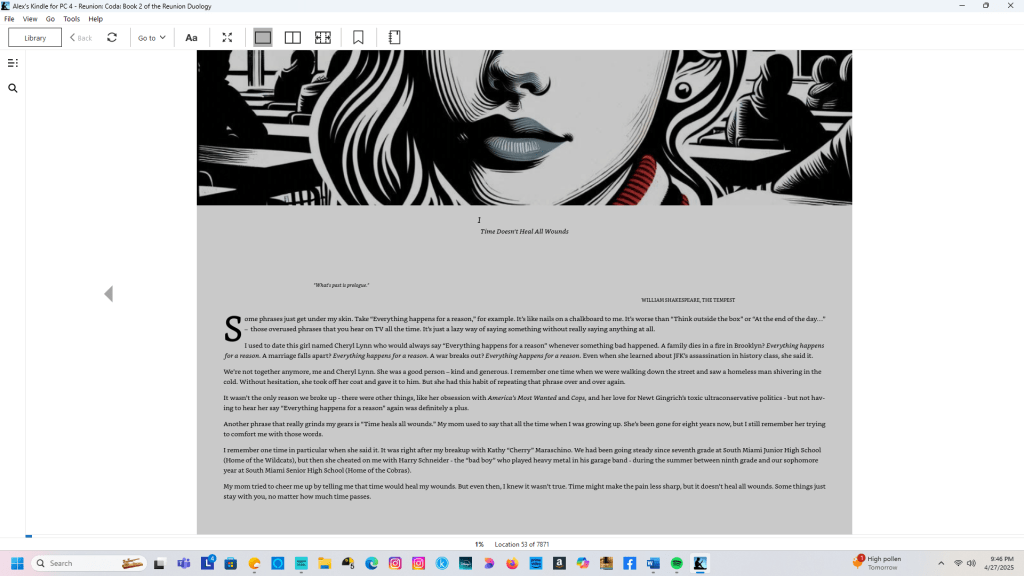
It has been a little over two months since Reunion: Coda saw the light of day. Since April 5, I’ve been deep in the trenches of quality assurance—meticulously combing through the text to catch imperfections I hadn’t spotted before. And, of course, I’ve had to face the less enjoyable reality of marketing the novel, a task I approach with more reluctance than enthusiasm.
The first batches of Reunion: Coda carried some of the same quirks and errors that had slipped into the Reunion duology. Some were minor—typos, punctuation errors, small inconsistencies that managed to escape my scrutiny during pre-publication. Others, however, were more glaring: duplicate passages sneaking in after an edit mishap with Kindle Create, and plot holes that even my excellent beta reader and rigorous revision process couldn’t entirely shield against. Despite devoting twice as much time to editing as I did to writing fresh material, some flaws still found their way in.

By mid-May, I had tackled every QA issue I was aware of, leaving me with the inevitable next step: selling the novel. If I’m honest, this is the part of self-publishing that challenges me the most. Writing is natural to me—I love storytelling, the process of crafting narratives that resonate. But the business side? That’s where I falter. I don’t claim to be a great author, nor do I see myself as someone “above” the commercial aspects of publishing. The simple truth is, I lack the entrepreneurial instinct necessary to be both a creator and a marketer. My mind doesn’t operate in numbers and strategies (which probably explains why I never finished college), and salesmanship has never been in my skill set.

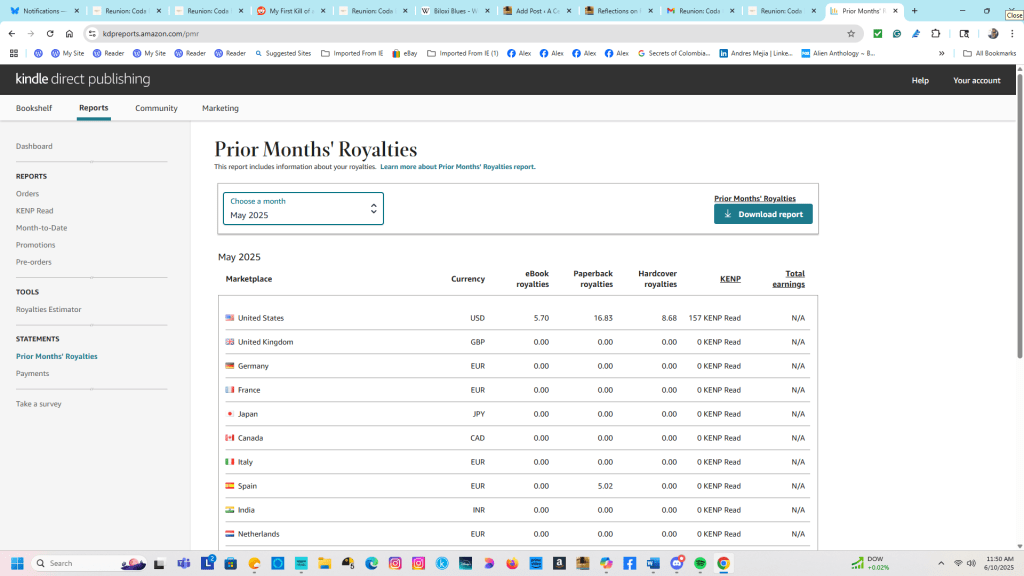
I had hoped for a stronger response from the friends in my circle who are avid readers. Not that I expected anyone to single-handedly propel Reunion: Coda to national recognition, but I did imagine a ripple effect—a few readers recommending it, leading to more buzz, and eventually turning into the kind of word-of-mouth momentum that gets a book noticed. Something akin to the way E.L. James’s book gained traction years ago—only, in this case, with a PG-13 story rather than Fifty Shades of Grey.
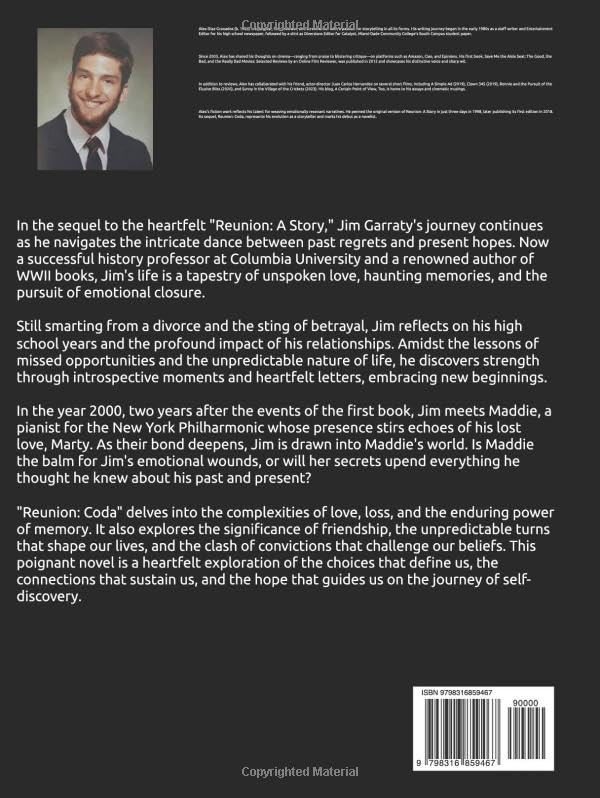
April and May brought some promising sales, but June has been slower than I’d hoped. Still, Reunion: Coda holds a 4.6-star rating on Amazon, with every review so far reflecting a positive response. Writer Alex is thrilled that readers appreciate the book. Marketer Alex, however, is watching the numbers and hoping things pick up.
Reunion: Coda received its latest review when Amazon published Pooja Gudka’s thoughts overnight. As a longtime fan of the Reunion duology, Pooja approached the novel with high expectations—and, by her admission, the book delivered.
She praised the writing, noting that it “draws you in from the moment you begin reading” and strikes the right balance between intelligence and accessibility. The themes resonated deeply with her, particularly the exploration of lost love, memory, and the way the past shapes us. She also highlighted the characters, describing them as real people—flawed yet compelling, just as we are in life.
While she kept plot details concealed to avoid spoilers, she spoke to the novel’s emotional depth, saying it contains “beautiful moments, heavy moments, thoughtful moments” and captures the complex nature of human relationships—how we crave connection, but often find that love and friendship bring unexpected complications.
In the end, her verdict was clear: Reunion: Coda met her expectations, offering a poignant, thoughtful, and well-written story that she highly recommends—especially for readers who have already experienced Reunion: A Story.
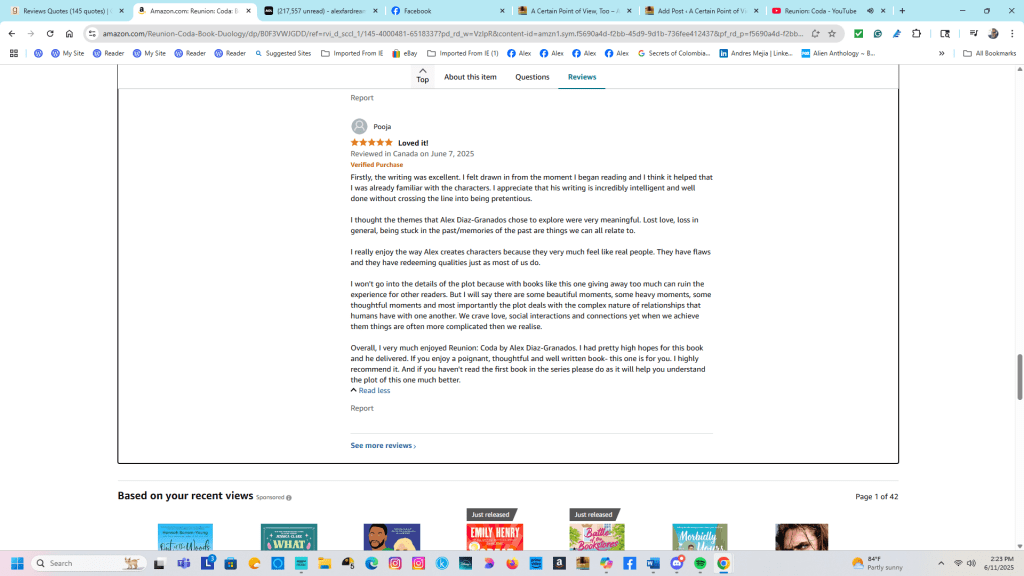
Writer Alex is deeply grateful for reviews like Pooja’s and others on Amazon and personal blogs. They reaffirm that Reunion: Coda has resonated with readers who connected with its story, characters, and themes—something any author hopes for but never takes for granted.
Marketer Alex, meanwhile, holds onto the hope that as more people share their thoughts online, pass along copies to friends, loved ones, or even tuck them into Little Free Libraries, the novel will find its way into more hands. Stories thrive when they’re read, discussed, and passed along—and with any luck, Reunion: Coda will continue to spread in just that way.
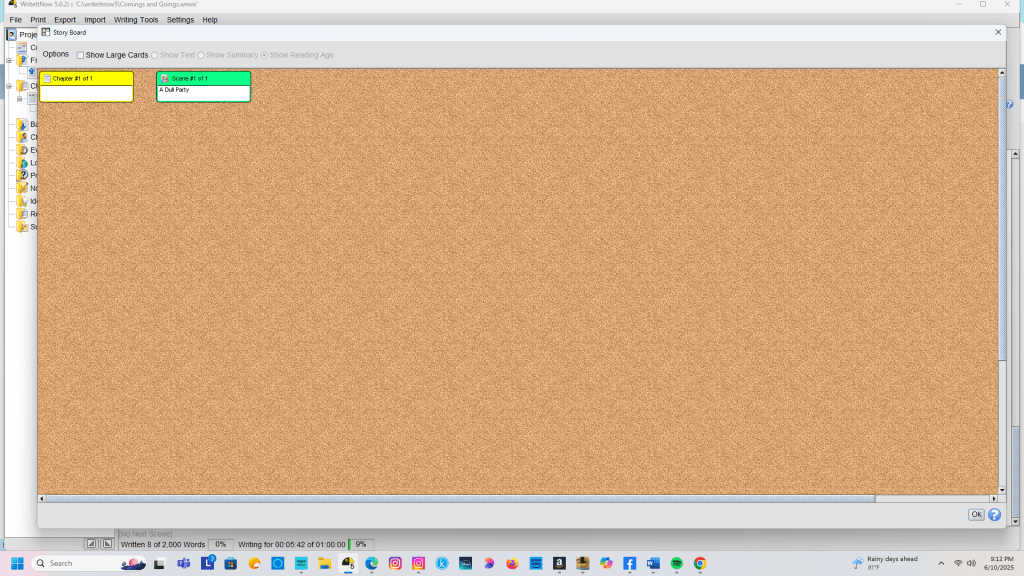
But I’m not, as my late mother used to say, resting on my modest laurels and waiting for Calliope to grant me a divine spark of inspiration. Yesterday afternoon, I took the first tangible step on a new journey—I wrote the opening scene for Comings and Goings.

I started this project a few weeks ago, not just out of creative curiosity but as a way to keep my momentum alive. Finishing a novel is exhilarating, but if I let myself linger too long in that post-publication lull, I risk slipping into a rut that could take years to climb out of. In the business of storytelling, once a work-in-progress is completed and released into the world, we must let it go (except, of course, when we’re tasked with marketing it ourselves). The only way forward is The Next Project—because sitting around and twiddling our thumbs rarely leads to the kind of stories worth telling.
As I move forward with Comings and Goings, I know it won’t be a long work—but that doesn’t mean it won’t be a meaningful one. For the first time in my writing career, I’ve outlined a story before diving into the draft, proving that even old writers can learn new tricks. And so far, it’s shaping up well—Scene 1 alone stands at 2,403 words, already laying a strong foundation for the emotional depth and character-driven narrative that I aim to explore.
I’m approaching Comings and Goings with more urgency than I did between the two Reunion books. At 62, I’ve come to appreciate that time is never guaranteed, and waiting for the perfect moment to write can mean missing the opportunity altogether. So instead of hesitating, I’m pressing forward—because in storytelling, as in life, the only way to truly honor what comes before is to keep moving toward what’s next.
 A Certain Point of View, Too
You must be logged in to post a comment.