
Late Morming/Midday, Wednesday, June 18, 2025, Miami, Florida
“But there’s a story behind everything. How a picture got on a wall. How a scar got on your face. Sometimes the stories are simple, and sometimes they are hard and heartbreaking. But behind all your stories is always your mother’s story, because hers is where yours begin.” ― Mitch Albom, For One More Day

I am, first and foremost, a storyteller.
That’s the logline on this blog’s homepage—and an honest reflection of who I am. I’ve loved writing for as long as I’ve been able to speak, or so my late mother used to say.
One fall afternoon when I was about nine, she pulled me aside and said, “You’ve always had a way with words. I remember once, when you were just two, I was sitting in my bedroom on a rainy day, crying because I missed your father. You toddled in, looked at me, and said, ‘Look outside at the lake, Mommy. Can’t you see the angels crying too?’”

I don’t remember saying that—especially not six decades ago—but I do remember learning to read at a precociously early age. Exactly when is a bit of a family legend. My mom told a few variations of my ‘origin story’ as a wordsmith. In some versions, my dad was still alive when my maternal grandmother proudly announced that she’d taught me to read before I turned two, using ABC blocks and whatever newspaper or magazine was within reach. In others, I was definitely two. Either way, I was well into reading before I started pre-K at Colegio El Nogal in Bogotá, Colombia, where we lived for almost six years before returning to Miami in 1972.
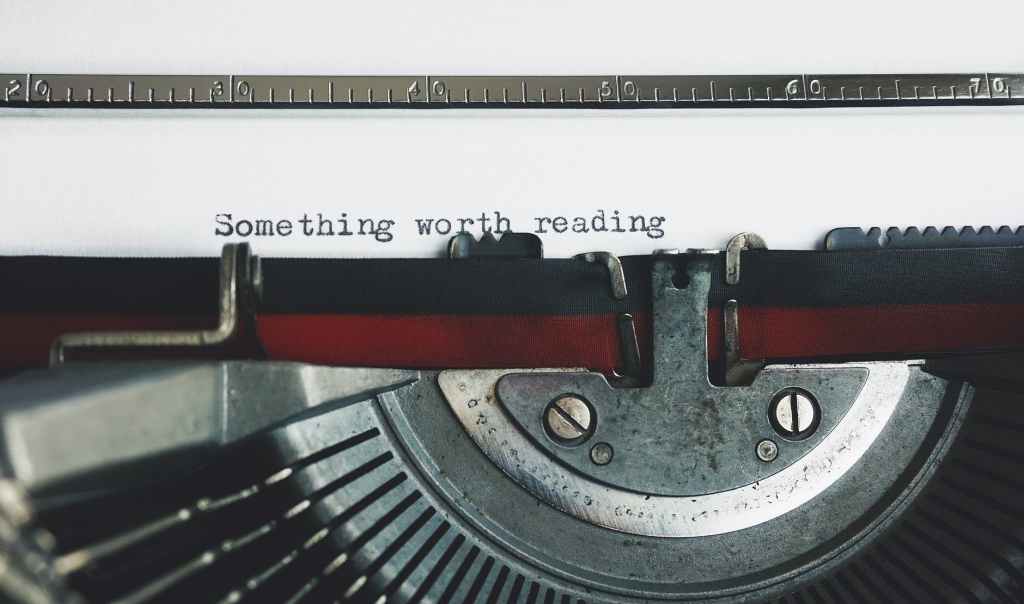
As for writing? That journey began in earnest not long after we moved back. Sometime between November 1972 and June 1973, in Mrs. Margo Chambers’ Special Education class at Tropical Elementary, I discovered the tool that would change everything: the electric typewriter. Thanks to cerebral palsy, I’ve never been able to write more than a few paragraphs in longhand. But once I got access to one of the classroom’s battleship-gray Royal typewriters—stamped PROPERTY OF DADE COUNTY PUBLIC SCHOOLS in white block letters—I was off to the races.
Sure, I typed up the standard school essays that paved the way for this blog (“Today is Monday, March 5, 1973. It is a nice sunny day in Miami. It’s also my 10th birthday, and I’m in school.”). But I also began experimenting with fiction—mostly short stories set during World War II. Nothing that would’ve put me in the literary ring with Hemingway or Hammett, but my teachers—especially Mrs. Chambers—seemed impressed. And for a ten-year-old kid with a stubborn streak and stories to tell, that meant the world.
I wouldn’t have an electric typewriter of my own until late 1975. Growing up, our financial situation wasn’t dire, but it wasn’t comfortable enough that I could ask my mother for something like that. Eventually, I received one—a smaller version of that Royal typewriter from Mrs. Chambers’ classroom—thanks to a ladies’ group that one of our neighbors in Westchester, Sheila Blanchard, belonged to. I wish I could remember the name of the organization, but their generosity left a lasting mark.
I mostly used that typewriter for homework in Mrs. Anna Brown’s fifth-grade class once I’d been mainstreamed. Still, I’m sure plenty of pages were filled with my fair share of boyish, jingoistic war stories—tales of virtuous Allied soldiers clashing with dastardly Axis villains. They weren’t polished, and they weren’t subtle, but they were mine. And they were a beginning.
Of course, I can’t recount my entire writerly origin story in a single blog post. But if there’s a turning point, a moment when vague childhood inclinations crystallized into ambition, it happened sometime in junior high. Two things struck me like lightning around that time: the words “Written and directed by George Lucas” in the end credits of Star Wars, and the eerie pull of my first Stephen King novel—Salem’s Lot. That pairing of cinematic storytelling and literary dread sparked something permanent. I decided, then and there, that I would become a writer—and someday, I’d write a novel of my own.
That dream carried me into journalism classes at South Miami High and later Miami-Dade Community College, where I also enrolled in a single creative writing course that did more than just fulfill a credit—it gave life to a character named Jim Garraty. He began as a modest exercise and stuck around like a song I couldn’t stop humming.
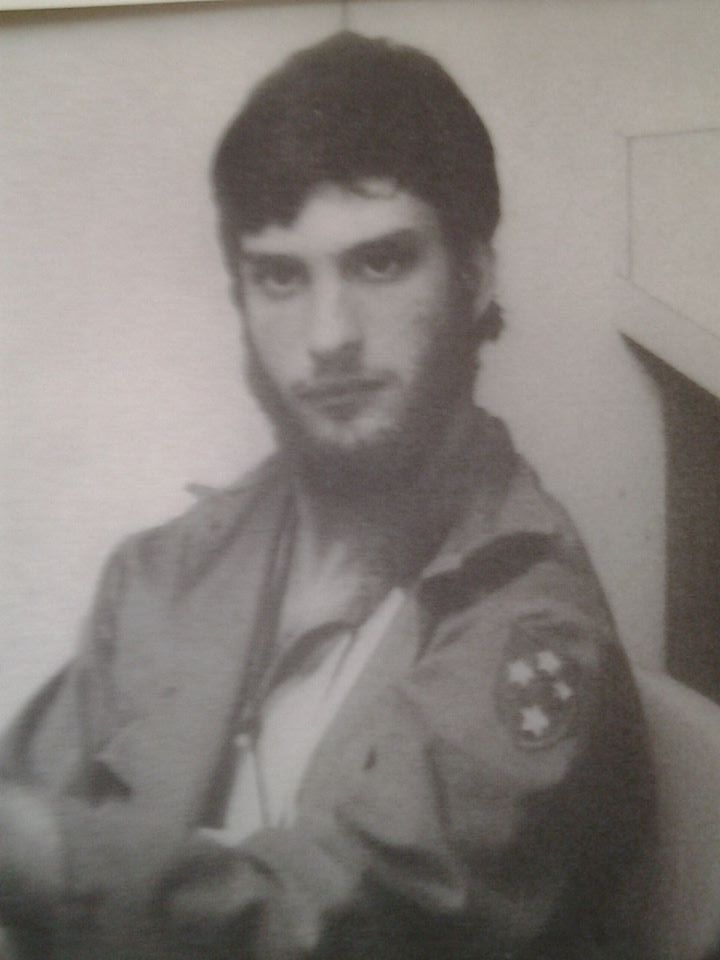
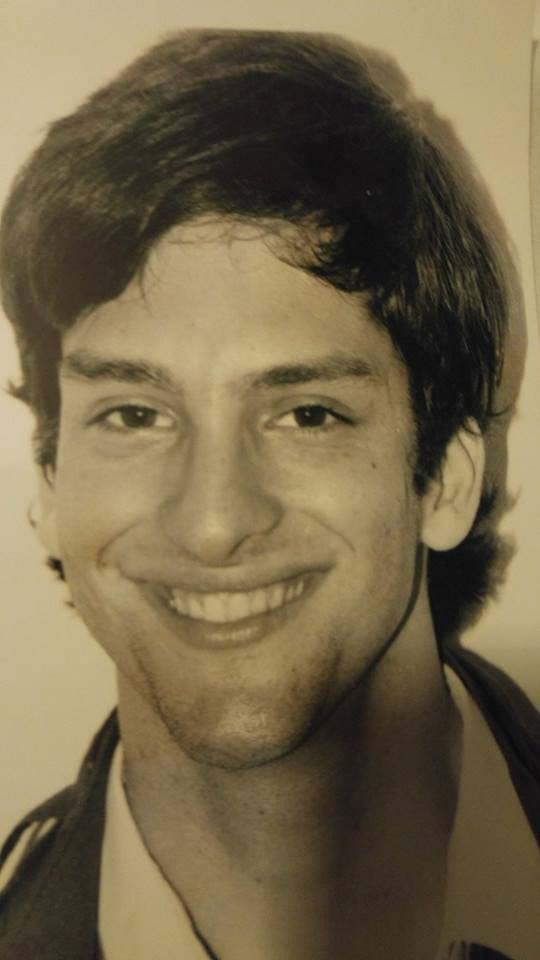


From there, the path wasn’t exactly linear, but it was always forward. I started writing reviews online—first on Amazon and Epinions—before finding my footing at Associated Content (which later became Yahoo Voices), and eventually launching this blog. Somewhere along the way, I taught myself how to write screenplays, a few of which found their way onto YouTube as short films courtesy of Popcornsky Productions. That process taught me as much about economy and rhythm as any classroom ever could.
And then came the stories that refused to stay quiet—the ones that would become Reunion and Reunion: Coda. My first works of fiction, maybe, but in truth, they’d been in the making for decades.
Ironically—or maybe inevitably—the Reunion Duology is not the kind of story younger me imagined writing. I wasn’t (and still am not) a reader of Nora Roberts or Danielle Steel. The most overtly “romantic” books I own are Herman Raucher’s Summer of ’42 and Stephen King’s 11/22/63, both soaked more in nostalgia and tragedy than conventional love. So you’d think that, when I finally wrote my first novella back in 1998, it would’ve been something in the vein of a Tom Clancy technothriller or an epic historical filled with battlefield grit.
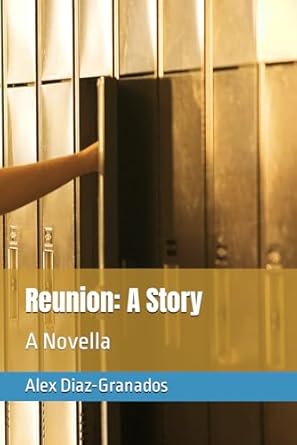
Instead, what emerged was Reunion: A Story, and much later—after years of resisting the idea of a sequel—Reunion: Coda. I’d tried to start a World War II novel in 2022, thinking I’d finally scratch that long-standing historical itch. But when the pages wouldn’t come and the characters stayed mute, I stopped forcing it and listened to the one voice that never really went silent: Jim Garraty’s. As it turned out, his story wasn’t finished. Not by a long shot.
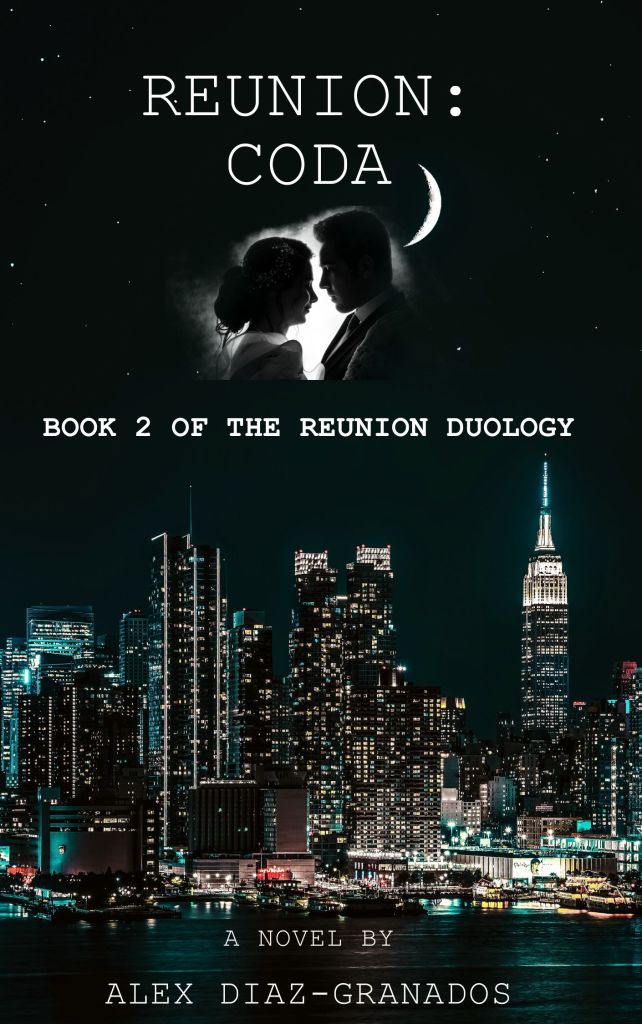
Maybe that’s the quiet truth about being a writer. Sometimes you don’t choose the story; the story chooses you. Or perhaps it’s more like a slow, quiet predestination—the kind that isn’t etched into stone but written softly between the lines of old notebooks and dusty drafts. You look back and realize: it was always leading here.
So, if you’re reading this and haven’t yet met Jim, Maddie, Mark, or Marty, I invite you to step into their world. Reunion: A Story and Reunion: Coda are both available now—tales of memory, missed chances, and the unexpected grace of second beginnings. Start with one, or dive into both. Either way, I hope you find something true in their pages.
 A Certain Point of View, Too
Comments
2 responses to “From Typewriter Dreams to Storytelling Realities: A Writer’s Journey”
I am surprised you haven’t read more romantic novels considering both your books have some extremely romantic moments. I guess when the story comes to us we can’t help but write it down.
LikeLiked by 1 person
While I have a few romantic movies in my collection (some I bought for myself, like When Harry Met Sally…, others I bought for my mom but kept after she died), I don’t (like you) gravitate toward pure romantic novels. Some of the scenes you speak of (like Maddie’s introduction, or Jim and Marty’s farewell at M-DCC) came to me naturally (they’re cinematic thanks to my movie-watching side). However, since I don’t read Roberts, Steel, or others in the “romance” genre, I turned to “how-to” books to learn how to write the more overtly “love scenes.”
Since the Jim-and-Marty arc has been rattling around my head since 1998, I didn’t need “help” for their scenes. But for Jim-Maddie? Yep. I had to “go to school” for those bits. (I even bought a guide on how to write sex scenes, but I decided it was best to concentrate on the “before sex” and “after sex” elements and let readers use their imaginations for the “during” part.)
LikeLiked by 1 person