

She first walked into the story in jeans, a white blouse, and Keds sneakers—shy, late for chorus, and clutching a schedule change form like it held her whole academic future. I didn’t know then that she’d become the emotional center of Reunion: A Story and Reunion: Coda. I didn’t even know her name.
What I did know was that she had chestnut hair pulled into a ponytail, rosy cheeks from the winter air, and an uncertain glance that quietly caught the attention of Jim Garraty—and, if I’m honest, mine as well. Marty wasn’t based on any one person, not really. Her looks were loosely inspired by a girl I barely knew in high school, someone whose yearbook photo sparked a moment of creative clarity nearly 15 years later. But Marty herself? She came to life on her own terms.
In Reunion: A Story, written in a burst of inspiration over three days in October 1998, she lived mostly in memory—a vivid, bittersweet ache that Jim carried like a song stuck in his head. Readers met her through the haze of nostalgia and the sting of what wasn’t said. She was elegant, untouchable. The one who got away.


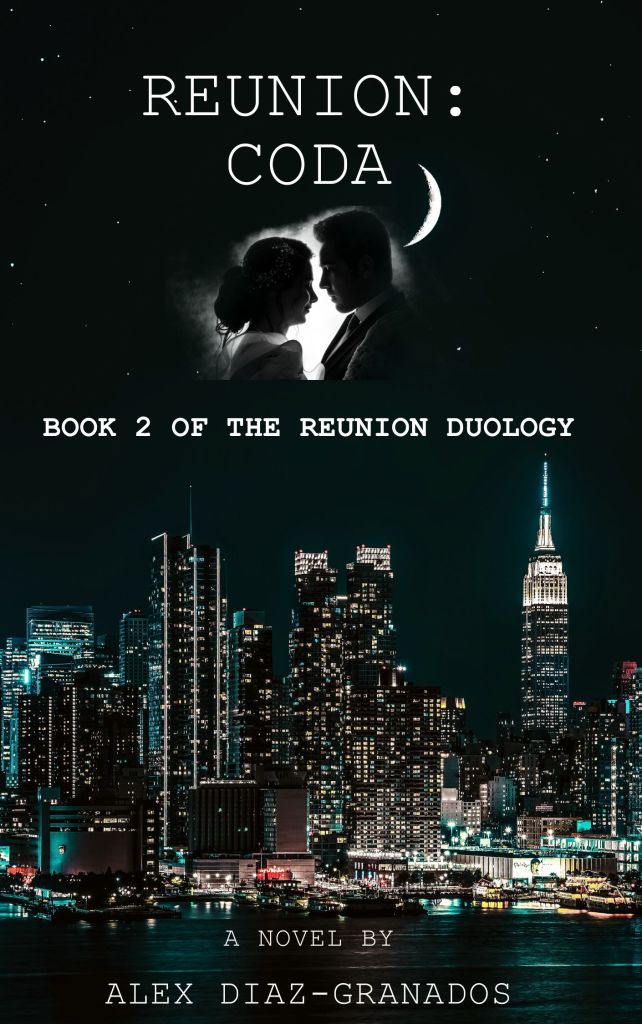
But Reunion: Coda changed all that. Because in truth, Coda is her origin story. And once I finally let her speak—not just smile, or drift across the threshold of a daydream, but speak—I saw her more clearly. She’s thoughtful, vulnerable, stronger than she lets on. She’s someone who reads the room but doesn’t always speak first. She misses things, regrets things. She wishes she’d sung that duet. And she means what she says.

Here’s the moment from Reunion: A Story—the one and only time we meet her in Book One in real time, not memory or dream:
Before I could finish my reply, the most beautiful girl in South Miami High wrapped her arms around me in a tight embrace and, softly, tenderly, placed her lips on mine. Gently, tentatively, I returned the kiss. I closed my eyes. A million sensations hit me all at once—the scent of her perfume, the slight taste of strawberries from her lips, the clean minty taste of her breath, the rise and fall of her chest as she slowly breathed, the palpable beating of her heart, the welcome warmth of her presence—and I remembered the lyrics of the song I’d heard in my dream:
Where time’s winds blow, that’s where you’ll be.
Where love’s fires glow, your smile I’ll see.
Across the stars, across the sea,
Where time’s winds blow, our hearts will be.
“I’m going to miss you,” she said.
I nodded. “I’m—I’m going to miss you, Marty.”
It’s the kiss that memory kept playing on loop for decades—and the moment that let her step out of the shadows of nostalgia and become real. Not just the pretty girl in the hallways. Not just a chapter from youth. But a voice, a choice, and a name.
Funny how fiction can feel more familiar than memory sometimes.
 A Certain Point of View, Too
You must be logged in to post a comment.