

More (Unsolicited) Advice to Aspiring Writers
The Path from There to Here – Some Backstory
I’ve been a storyteller and a writer for as long as I can remember. Early on, I accepted that my disability meant I probably wasn’t destined to be an astronaut or a United States Marine—two jobs that seemed very cool from a distance. I also suspected, even as a kid, that my rocky relationship with math would rule out being a lawyer (not that I ever wanted to be one, but my grandmother sure did).
Writing and storytelling just felt natural to me. I was the kind of kid who devoured books and lived half my life inside my head, dreaming up wild scenarios. It made sense that writing would become “my thing.” Honestly, I can’t imagine doing anything else.
Of course, when I was ten or eleven, I had no clue what a writing career really looked like. I figured writers spent a lot of time alone, hunched over desks, tapping away—first on clunky electric typewriters in the late ’70s and early ’80s, and eventually on personal computers. I imagined conjuring entire worlds out of thin air and turning them into stories people might actually want to read—maybe even buy. I knew it would take work, but somehow that didn’t scare me. It just felt possible.
Back then, the Internet wasn’t part of daily life. It mostly belonged to universities and government agencies. Hardly anyone had a home computer in 1976 or 1977, which is around when I first began thinking seriously about writing. I didn’t get to use a home computer (someone else’s) until the summer of 1985—and I wouldn’t own one until late April 1987. The Internet as we know it was still a distant shimmer on the horizon.
Looking back, I suppose the turning point came when I joined The Serpent’s Tale, the student newspaper at South Miami Senior High, in August of 1980. There’s a twist to that story: I hadn’t signed up for the class. My homeroom teacher at Riviera Junior High, Mr. Katims, quietly enrolled me in Basic Newspaper Reporting and Editing. He simply said, “You’re a good writer, Alex. I put you in a class I think you’ll enjoy.” That was it.
At the time, my “plan”—if you could call it that—was to soak up everything I could about print journalism, bluff my way past math, and support myself as a reporter while chasing my dreams of writing novels. As long as math stayed out of the picture, I did pretty well. I was an Honors student at Miami-Dade Community College, joined the student newspaper, and even worked my way up to managing editor after a whirlwind stint as a foreign correspondent in Seville, Spain.
But eventually, college caught up with me—specifically, remedial math. I failed, and the thought of retaking it just drained me. Despite loving reporting and editing, I couldn’t escape the feeling of burnout. In the end, I left college just nine credits short of a degree—all because of math.
Still, before I walked away, I managed to take at least one creative writing course—the kind that tosses you in the deep end and says, “Start inventing characters.” That’s actually where Jim Garraty first came to life. I learned a little about how stories fit together, but the publishing world—the business of manuscripts, query letters, and hopeful submissions—was still a mystery to me.
It took years (and plenty of detours) to get a handle on that side of things. If I hadn’t been tangled up in my own anxieties—chiefly the fear of failure, and the intimidating maze of Traditional Publishing™—maybe I’d have landed with one of the big houses by now, instead of scrappily self-publishing and learning everything on the fly.
Since I’ve laid my cards on the table about what I didn’t know then, maybe it’s time for some practical advice for anyone hoping to build a writing life. Here’s where I always start:
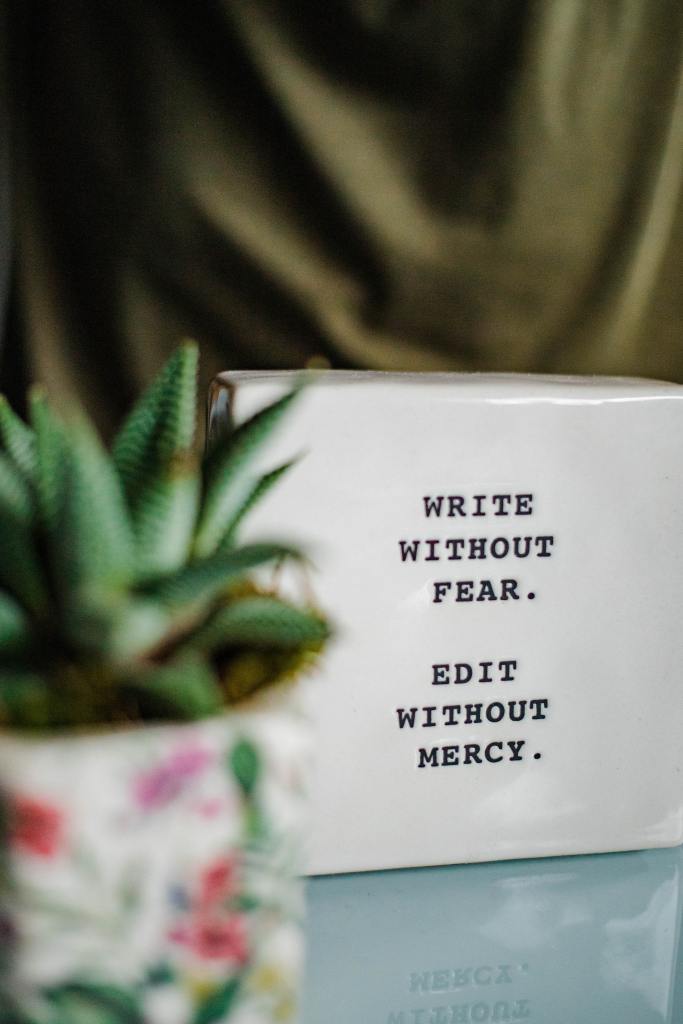
Know Your Basics
I say this as someone who’s been both reporter and editor: poor grammar and awkward phrasing will yank a reader right out of a story, regardless of genre. Some writers twist their sentences into knots, trying too hard to sound profound, when a clear, friendly tone would serve them—and their readers—much better. Other times, the issues are more basic, like mashing dialogue and description together without a pause for breath.
Take a sentence like “Have a happy honeymoon Frankie.” It’s a small thing, but there’s no comma separating the direct address (“Frankie”) from the rest of the sentence. Without that punctuation, it reads more like a command or an afterthought than a heartfelt wish. It should be “Have a happy honeymoon, Frankie.” That little pause makes all the difference. Details like this keep your writing clear and help your readers stay immersed in the world you’re building.

Your Work Environment Matters
About fifteen years ago, when my mom fell ill and I became her primary caregiver, my writing life took a hit. Suddenly overwhelmed and managing a flood of new responsibilities, I abandoned my original Blogger blog. Most of my energy went into triage—handling emergencies, keeping things afloat. I bought a laptop just to keep writing, though my “office” was now the dining room table instead of my second-floor bedroom-turned-writing room.
The dining room was a thoroughfare. Home health aides moved in and out, and my older half-sister was constantly crossing between the kitchen and my mom’s sickroom. It was noisy, chaotic, and far from restful. I managed to write a few reviews for now-defunct sites like Epinions and Examiner, but fiction—and blogging—felt impossible.


What I learned was this: if you’re dreaming of writing that alternate history novel where women fly combat missions for the U.S. Eighth Air Force in WWII, desire alone isn’t enough. You need time and space—a quiet, as-calm-as-possible environment. Sure, some writers thrive in coffee shops or noisy apartments. But most need some form of sanctuary to coax their stories into existence.
For me, I only finished pieces like Reunion: Coda and Comings and Goings because I finally had a peaceful space to work, even as the rest of my life was unraveling. The bottom line? Writing is hard enough without extra distractions. Create a space—however small or imperfect—where you feel at ease, and you’ll give yourself the best chance to finish what you start. It won’t solve every problem, but it’ll make the journey feel a lot more possible.

 A Certain Point of View, Too
You must be logged in to post a comment.