
Tuesday, October 14, 2025 — Orlando, Florida
“The ease with which unsolicited help is offered and the reluctance with which help is given when – instead – it is asked, should make us reflect on the real motivations behind so-called ‘altruistic’ actions.” — Luigina Sgarro
I’ve never been fond of unsolicited advice—especially when it comes from someone who knows about as much as a housecat about the intricacies of publishing, let alone the emotional and logistical terrain of my writing career.
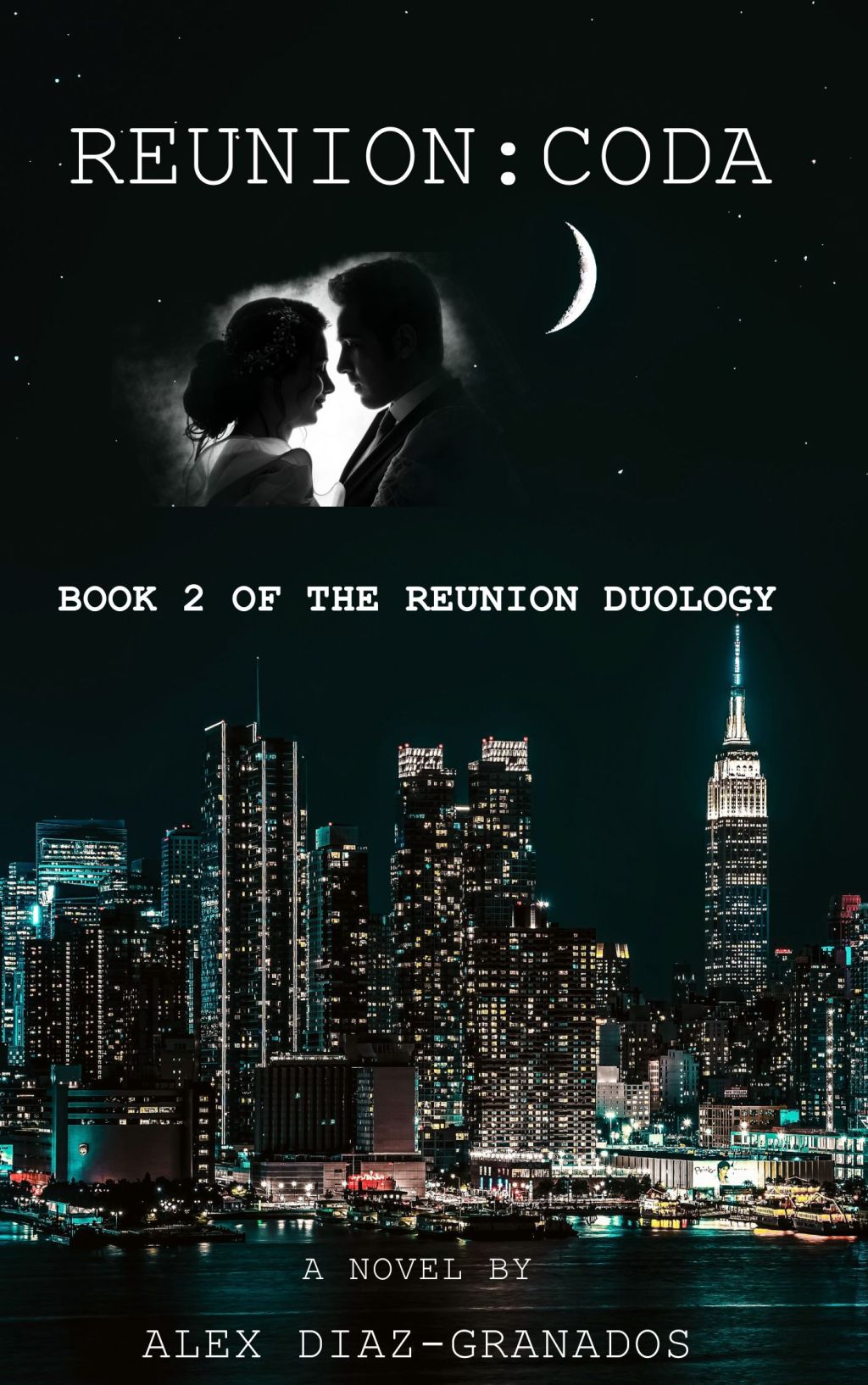
This past summer, a certain someone—who shall remain safely anonymous for their own protection—breezily suggested I order 100 author’s copies of Reunion: Coda (the self-published novel I’d just completed), set up a table outside a South Florida bookstore, and sell and sign the books in person.
“You’ll make a ton of money that way—way more than you’re making on Amazon now,” Mr. Anonymous assured me, with all the confidence of a late-night infomercial host.
“Sorry, dude,” I replied. “That might sound good in theory—if I just happened to have a thousand bucks lying around waiting to be turned into hardcover books. Even at Amazon’s author pricing, I’d still need over $1,000 for 100 copies. Where exactly am I supposed to find that kind of cash?”
Undeterred, Mr. Anonymous offered his masterstroke: “Just put it on your credit card!”—as if he’d just solved world hunger. Never mind that he knew perfectly well I didn’t want, or need, to add more debt to my life. “If you sell the books at retail price—or even a bit extra for signed copies—you’ll not only make your money back, you’ll turn a profit!”
On the surface, it sounds almost tempting—the stuff of entrepreneurial daydreams. But let’s do the math.
An author’s copy of Reunion: Coda in hardcover costs $13.66 to print. Add $3.59 for shipping and handling, plus $0.89 in Florida sales tax, and each book comes out to $18.14.
Multiply that by 100 and you get… drumroll, please… $1,814.00.
So the modest proposal here is to gamble nearly $2,000 on the assumption that I’ll be able to sell all 100 copies at $30 each—or a smidge more for autographed editions—and somehow not end up with a living room full of unsold books.





Let’s be clear: I’m not about to hide behind false modesty and pretend I’m not a good writer. If I thought I lacked talent or skill, I wouldn’t be sharing my words with the world—whether on this blog or in my Jim Garraty stories. I majored in journalism, had a solid run as a reporter, columnist, and editor in both high school and junior college, and even earned a high B in a creative writing course back in the late ’80s. I know how to craft fiction and nonfiction—and, dare I say, tell a good story.
But selling? That’s another matter entirely.
I have roughly the charisma and business instinct of a nervous houseplant when it comes to hawking a product—even one I created. The thought of setting up a “writer’s table” in front of a local Barnes & Noble—in the blazing South Florida sun, no less—with 100 hardcovers of Reunion: Coda, hoping to sell at least 25 copies just to recoup part of my $1,814 investment? Let’s just say I’ll leave the high-stakes salesmanship to others and stick with what I do best: writing stories, not peddling them in the parking lot.
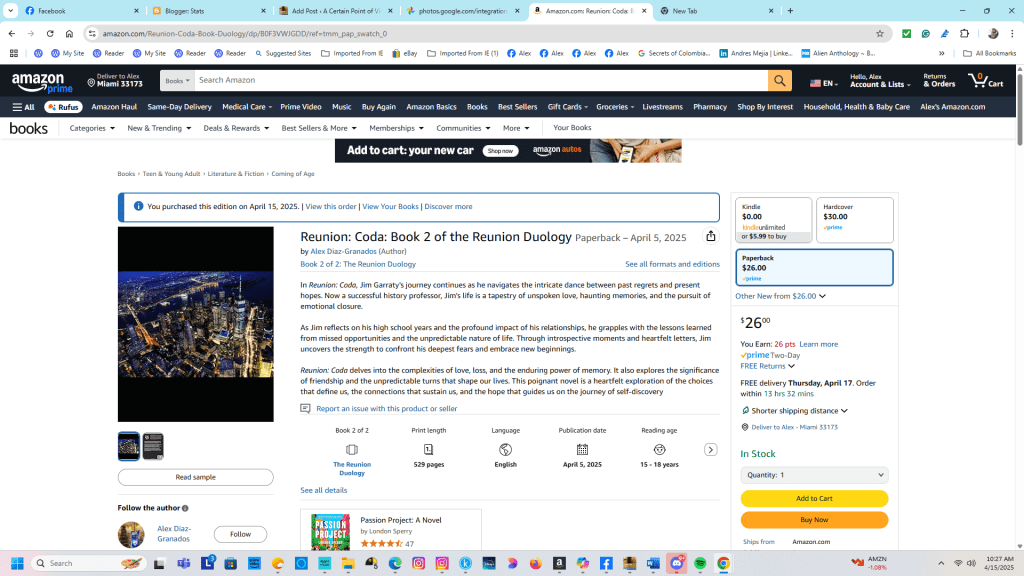
There’s also the matter of logistics. While author’s copies are cheaper than retail ones, Amazon takes its sweet time to ship them—and the timeline isn’t measured in days, but weeks. I know this firsthand. I ordered a replacement copy of Reunion: Coda in September—after updating the text with a few final revisions I’d missed back in April. That order, placed on September 20, is still marked “Not Shipped” as of this morning. Estimated arrival? Sunday.
So even if I’d taken Mr. Anonymous’s advice back in July, while I was still in Miami, I wouldn’t have received those 100 copies until late August—just as I was preparing to move to Orlando.
And let’s not forget: author’s copies don’t count toward official sales statistics, nor do they qualify for royalties. In other words, I’d be putting in all the effort and risk for little more than a pat on the back and a lighter wallet.
Now, if Mr. Anonymous had offered to bankroll the whole operation in exchange for a share of the net profits—and better yet, actually stand out in the sun and help hawk the books himself—maybe the scheme wouldn’t seem quite so outlandish. And who knows, if I were more like Victor Kliam or the late, great Billy Mays—possessing the kind of charisma and salesmanship that moves grills and gadgets by the truckload—I might have done pretty well with this whole enterprise.
Alas, I’m not. And I’m definitely not prepared to risk nearly $2,000 on a venture that feels more like a gamble than a strategy.
I’ll leave the infomercial heroics to the professionals and stick to what I know best: writing stories—not hustling hardcovers in the Florida heat.
Postscript: On Advice, Agency, and the Quiet Work of Creation
There’s a strange comfort in knowing your limits—not as a retreat, but as a form of emotional clarity. I write because it’s how I make sense of memory, presence, and the rituals of connection. Advice, when offered without context or care, often misses the deeper truth: that creative work isn’t just about hustle or profit margins. It’s about emotional stewardship.
So no, I won’t be setting up a table in the sun anytime soon. But I will keep writing stories that matter to me—and, I hope, to others. That’s the kind of legacy I’m willing to invest in.


Comments
5 responses to “On Writing and Storytelling: How Not to Sell a Novel in South Florida”
You are right. That is not a good idea. It is risky and to succeed with that scheme you’ve got to be a good salesman, which you confess to not being. I would personally never attempt that and I’ve seen independent authors trying something similar, just to end up with lots of unsold books.
LikeLiked by 1 person
It wasn’t a helpful suggestion, and I am not in a position, financially speaking, where I can afford to “invest” $1,814 in author’s copies that I’d probably get stuck with.
LikeLiked by 1 person
I would not do it either, if it was me. Not good advice.
LikeLiked by 1 person
It was “performative advice,” I think. He could have bought a couple of copies and given them to some of his reading friends, or donated one to a Little Free Library. And even if the advice had been given in good faith, it was still piss-poor. Not Helpful, as we used to say on bad Epinions reviews.
LikeLiked by 1 person
[…] I’m glad I ignored that unsolicited advice to buy multiple author copies and resell them outside a Miami bookstore. The logistics alone would’ve been a nightmare, and the books wouldn’t have arrived before my […]
LikeLike