
📖 Writing Romance Without Reading Romance: Why Reunion: Coda Works
I’ll admit something: when I started writing Reunion: Coda, I worried. I don’t, as a general rule, read romance novels. My shelves are filled with history, memoir, and fiction of other stripes, but not much in the way of “romance.” So when I realized my story would carry strong romantic elements, I asked myself: Would my lack of familiarity hurt the book? Would readers feel something missing?
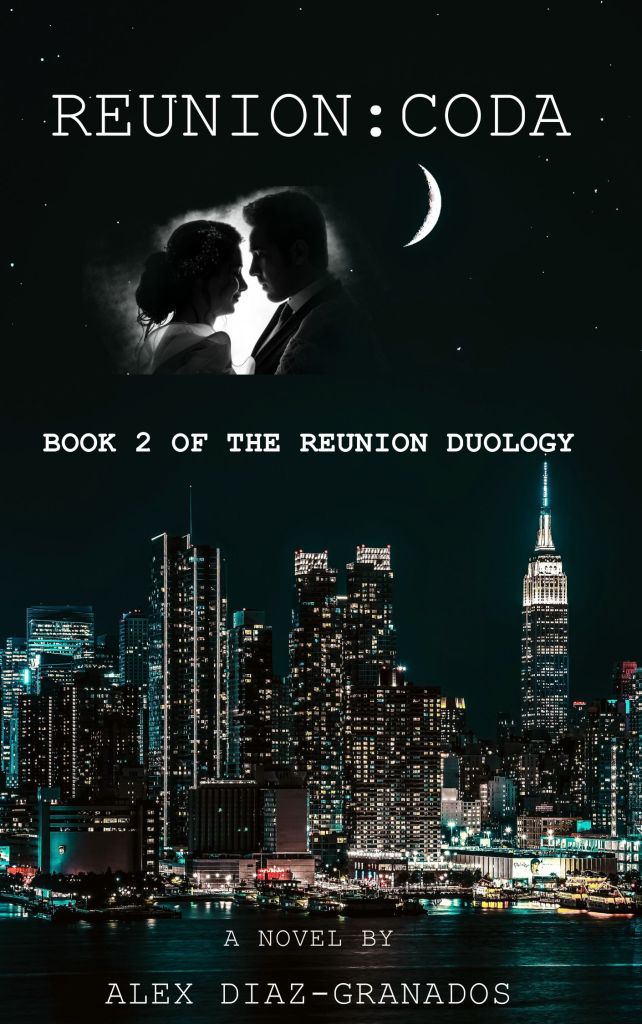
But the truth is, I worried over nothing. Coda isn’t a “romance novel” in the conventional sense — it’s a novel with romance. And the difference matters. The story doesn’t rely on tropes or formulas. It leans instead on atmosphere, restraint, and emotional realism.

🌟 Marty: Constancy and Longing
Jim’s love for Marty is one of the constants of his life. Even in high school, his attraction is conveyed through hesitation, hope, and the ache of wanting more than friendship.
On that first day back to school, after class, I decided to take a chance and ask her if she would sing a duet with me in the Spring Concert… I decided to go with “Somewhere” because it was more subtle and hopeful. It was also one of my favorite songs, and I knew Marty liked it too… She laughed and gave me a friendly hug. “You’re welcome, Jim. You’re a good friend.” I hugged her back and felt a pang of mixed emotions. I was happy that she agreed to sing with me, but I also wished she would see me as more than a friend.
This isn’t a formulaic “confession scene.” It’s a moment of restraint, of intimacy conveyed through music, gesture, and silence. Readers don’t need exposition to know Jim’s feelings — they see it in his nervousness, his choice of song, and the pang of mixed emotions when Marty calls him a friend.

🌟 Maddie: Renewal and Recognition
Years later, Jim encounters Maddie in a Brooklyn nightclub. Her entrance is staged not as a trope, but as a lived moment of atmosphere and recognition.
Her accent is refined and elegant, like a mix of Roosevelt’s Mid-Atlantic drawl and a British aristocrat’s clipped tone… Her hair, the color of caramel, cascades in loose waves… Her hazel eyes, framed by arched brows, are luminous and expressive… She’s breathtaking. And she’s a complete stranger. But something about her reminds me of someone I used to know… A jolt of attraction and curiosity rushes through me, unbidden and undeniable.
Here, romance emerges from sensory detail and memory. Maddie’s presence is described with warmth and cadence, but Jim’s recognition — the echo of Marty in her scent and aura — makes the moment layered. It’s not “love at first sight,” but it is resonance at first sight.
✽ Why This Works Without Romance Tropes
Both scenes — Marty’s duet and Maddie’s entrance — show that romance in Coda isn’t about formula. It’s about:
- Restraint: Jim doesn’t declare love; he lets silence and gesture speak.
- Recognition: Attraction is conveyed through being seen, remembered, and echoed.
- Emotional realism: Readers feel the pangs, the hesitations, the relief, without needing exposition.
✨ Closing Reflection
So yes, I worried that my lack of romance-reading experience might hurt Reunion: Coda. But Marty’s duet and Maddie’s entrance prove otherwise. Romance here isn’t about tropes; it’s about emotional truth. It’s about constancy and renewal, longing and recognition.
That’s why Coda works — not as a “romance novel,” but as a novel with romance.
And now I’d love to hear from you: when you read stories with romantic elements, what makes them feel authentic to you? Is it the grand gestures, or the quiet moments — the half-smiles, the songs, the recognition across a crowded room?
 A Certain Point of View, Too
You must be logged in to post a comment.