
From ’42 to ’84: The Heirship of Memory
“You were kind. You were here. That’s what matters.” – Alex Diaz-Granados, Comings and Goings – The Art of Being Seen
“Life is made up of many comings and goings, and for everything that we take with us, we must leave something behind.” — Herman Raucher, Summer of ’42
The Lineage of Memory
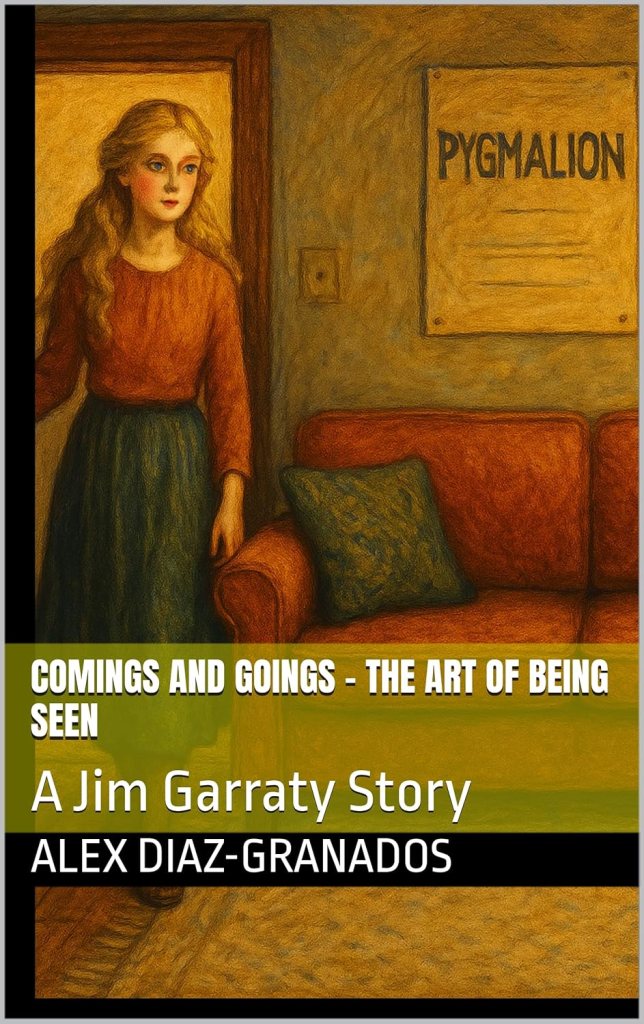
Every story of memories begins with a threshold. Raucher’s Summer of ’42 opens with Hermie’s voice, already older, already haunted by the summer that shaped him. Comings and Goings: The Art of Being Seen begins with its own invocation—a dedication, an epigraph, and an Author’s Note that situate the story as both homage and divergence.
Where Raucher framed memory as ache, I reframe it as kindness. Where Hermie’s encounter left him haunted, Jim’s encounter with Kelly leaves him affirmed.
Echoes of ’42
- The ritual of the beer → Hermie’s awkward first drink with Dorothy becomes Jim’s Heineken with Kelly, layered with memory of Mark and Marty but steadier now: “like the beer had learned something, or maybe I had.”
- Music as emotional subtext → Raucher leaned on Michel Legrand’s score; I place Billy Joel’s This Night (borrowing Beethoven’s Pathétique) as the undercurrent. Both use music to carry longing, but here it becomes a metaphor for adolescence itself: “a song trying not to fall apart.”
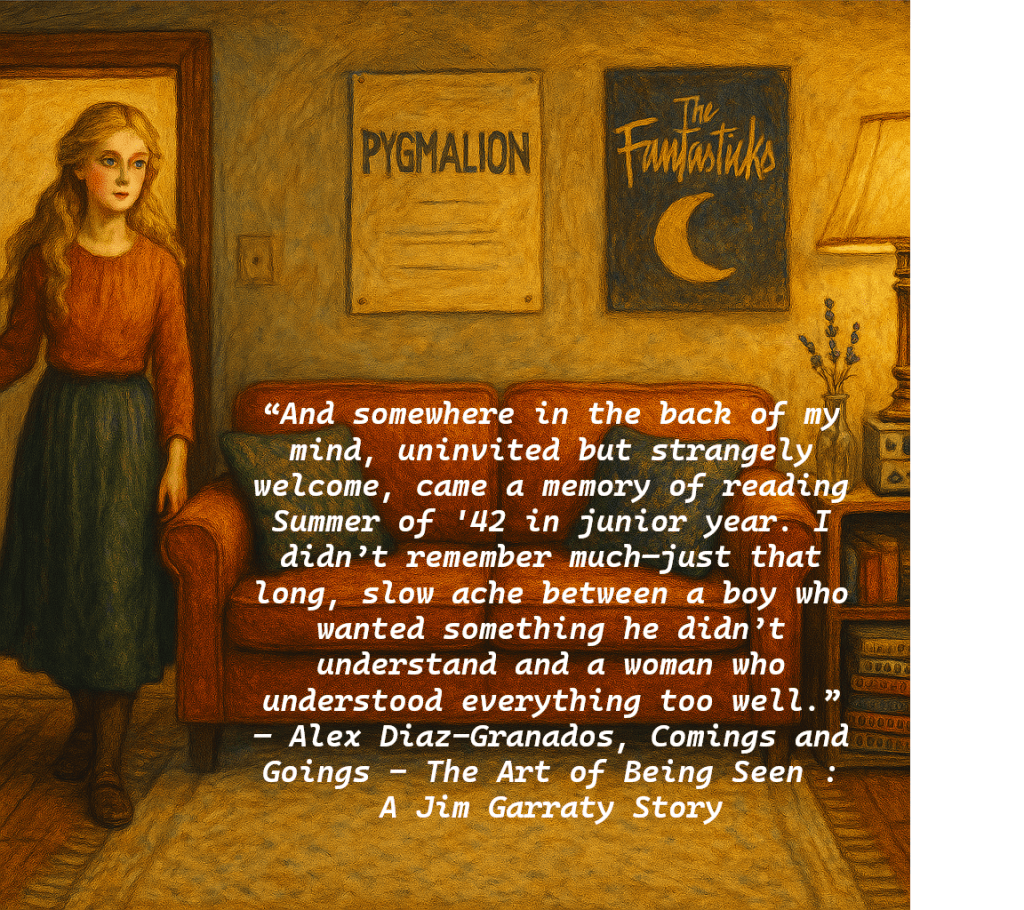
- The remembered ache → Jim recalls reading Summer of ’42 in junior year, not understanding its “long, slow ache.” In Kelly’s presence, he begins to. The intertextual echo makes Comings and Goings consciously part of the lineage.




Divergence in Heirship
- Agency and offering → Dorothy’s gesture is shaped by grief and imbalance. Kelly’s gesture is framed as agency: “Not a come‑on. Not a test. A gesture. An offering.” Reverence replaces awkwardness; awe replaces imbalance.
- Kindness as legacy → Kelly’s words—“You were kind. You were here. That’s what matters.”—become the counterpoint to Raucher’s ache. Intimacy is reframed as communion rather than imbalance.
- Presence over loss → Hermie is haunted by what he cannot hold. Jim is affirmed by what he held, however briefly. Memory becomes proof of being seen.
The Legacy of Memory
The closing passage seals the heirship:
“She passed through my life like a song you only hear once—unexpected, perfect, and over before the chorus. But I kept that night… She came into my life softly. And then she went. Comings and goings. Sometimes that’s all life is.”
Where Raucher’s story ends in silence, mine ends in affirmation. The Garratyverse honors the ache of fleeting connection but transforms it into a gentler inheritance: kindness as legacy, presence as proof.
Note for Readers
Comings and Goings is not simply a sequel or a spin‑off. It is a spiritual heir to Summer of ’42, consciously borrowing Raucher’s cadence while reimagining its architecture. It insists that intimacy is not imbalance but mutual agency, that memory is not loss but legacy, and that being seen—even once—matters.
 A Certain Point of View, Too
You must be logged in to post a comment.