

Behind the Curtain: Marty’s Origins
Ever since the day I first sent my novella, Reunion: A Story, out into the world back in 2018, the questions started coming. Sometimes they arrived shy and quiet, like old friends at a backyard barbecue, and other times they landed with surprising directness. Most often, it was a fellow South Miami Senior High alum—someone who shared those hallways and restless Florida afternoons—who’d lean in and ask, “Is Martina Elizabeth Reynaud—Marty—real? Was she one of us? Did she walk our halls in 1983?”

I get it. There’s something about recognizing pieces of yourself in a story that makes you want to tug at the curtain and see who’s behind it. After all, Jim Garraty—the guy steering the ship in Reunion—is stitched together from scraps of my own life, and more than a few faces I knew back then. Sometimes, the line between fact and fiction is as thin as morning mist.


Take Mrs. Quincy, Jim’s Mixed Chorus instructor. She’s a patchwork of memory and imagination, but her roots run deep into South Miami’s own legendary choral director, Ms. Joan Owen. Both in my pages and in the real world, these women were magnetic—beloved teachers whose voices could fill a room and hearts with music. Their departure, just months before the Spring Concert, sent ripples through our tight-knit choir. In both worlds, the loss stung; concerts were canceled, and students found themselves adrift, longing for one last song.
With all those roman à clef flourishes woven into Reunion, and again in Reunion: Coda, it’s no wonder my friends from the Class of ’83—especially the women—start connecting the dots. It’s always the women who ask, never the guys. Maybe they know that if Mrs. Quincy, Dr. Burke, Mr. Sterling, and Mrs. Brillenstein serve as stand-ins for Ms. Owen, Dr. Warren Burchell (our first principal), Mr. Rhea Farthing (the assistant principal who hung up his hat in ’83), and Mrs. Billie Bernstein (drama teacher, homeroom shepherd of my sophomore and junior years), then Marty must be more than a figment. Maybe she’s the ghost of a girl I loved—or at least, a girl who haunted my teenage dreams. The most beautiful girl in South Miami High, someone you couldn’t help but remember.
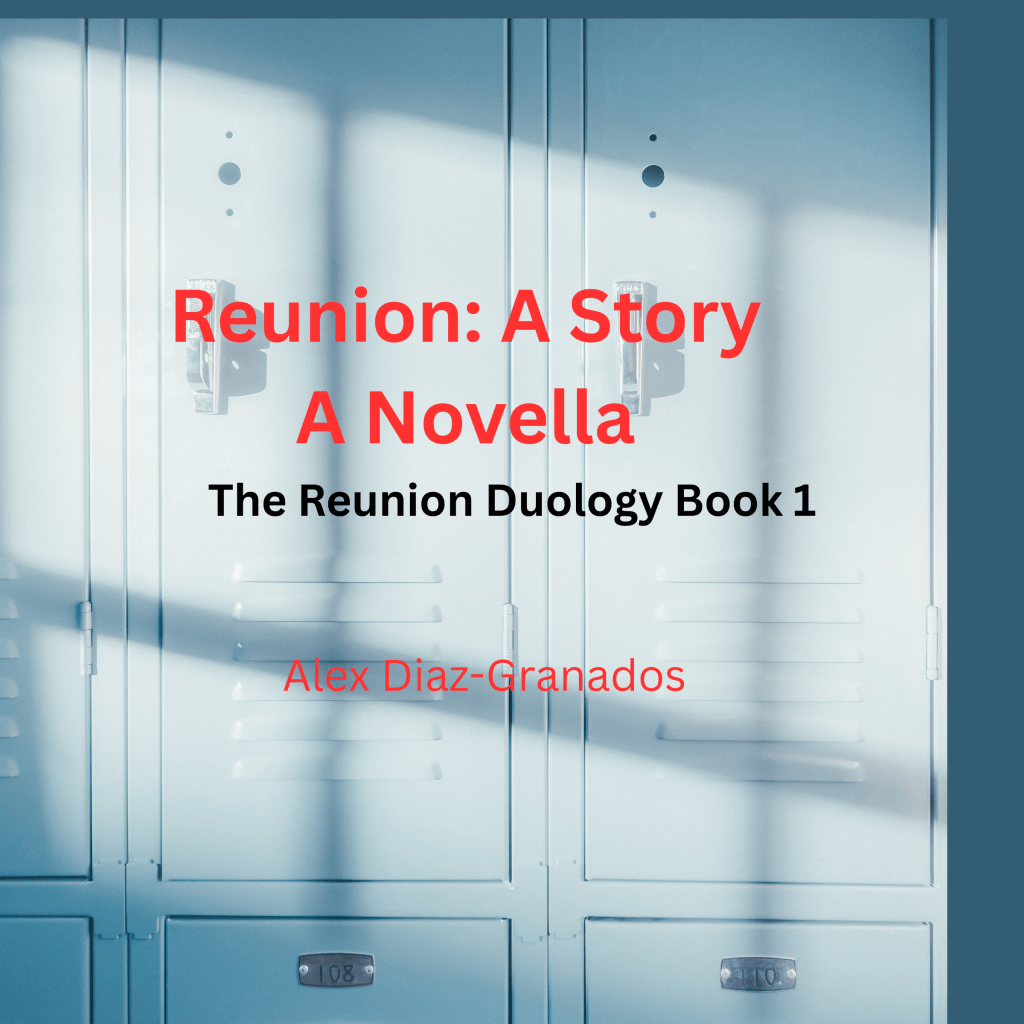
The short version of my answer is always: “No, Marty isn’t based on one particular girl, but I’m glad you think she is!”
The longer version is: “No, Marty isn’t a thinly disguised version of anyone I loved, had a crush on, or was even tangentially aware of. But, since fiction needs to be rooted in something real, I did have a ‘template’ for her physical beauty to go with the sweetness, wit, and emotional intelligence I wanted her to possess.”
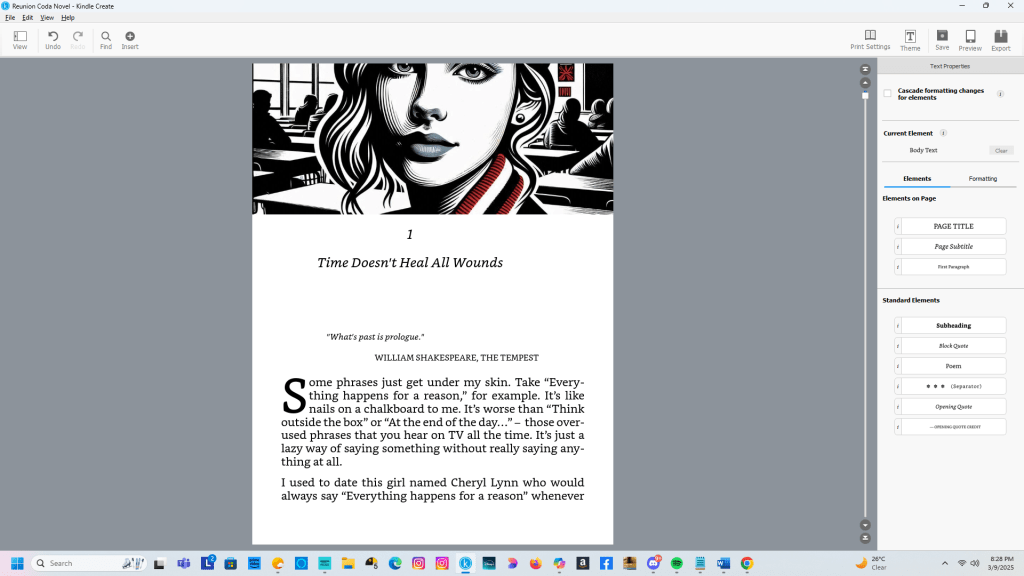
When the idea first struck me to take a college creative writing exercise and breathe it into something fuller—a short story or maybe even a novella—I wondered if I could really pull off fiction. I knew from the start that I’d need to invent a young woman readers could believe: someone a bright, sensitive guy like Jim Garraty would carry with him long after the last bell rang, someone whose memory would linger like the scent of sun-warmed orange blossoms.
Sure, Jim inherited plenty of my own high school quirks and moments, but his story had to branch off, to become its own thing. And while I could have simply borrowed from real life—say, based Marty on Mary Ann Pena, the Class of ’82 alum who stole my heart in 10th grade—I made a deliberate choice not to. For one thing, my own story with Mary Ann unfolded differently than Jim’s with Marty. We did share a candlelit dinner once, and later there was a kiss in the school elevator—but that was as far as it went. More importantly, I wanted to test myself: Could I flip through my 1983 DeCapello yearbook, catch a girl’s photograph, and reimagine her, transforming memory into fiction?
Now, keep in mind that South Miami Senior High School had a large student population in the 1982–83 school year—2,100 students in grades 10–12, and a graduating class that was approximately 465 students strong. Many of the young women who graduated with me that June were undeniably beautiful, so it took me an hour of browsing through my yearbook—until I came across one girl’s senior portrait.
Cecilia L. Trotter—Cece, as most called her—was a name that floated through the halls long before I ever met her. Though I arrived at South Miami Senior High by a twist of fate, outside the typical feeder system, I’d only heard scattered stories about her during my final semester. By reputation alone, Cece was considered the prettiest girl in our class, admired by many of my male classmates who’d known her since elementary school. When I finally met her in April 1983, just weeks before graduation, I found her to be unexpectedly kind and refreshingly unpretentious; our brief hallway conversations revealed a warmth that went far beyond the “popular acclaim.” I never shared a class with Cece, nor did I have enough time to form any deeper feelings, but seeing her senior portrait in my yearbook struck me with clarity—she was the perfect template for Marty, embodying both the grace and genuine spirit I hoped to capture in my story.
Even though I didn’t plan on sharing Reunion with the world when I was writing it, I knew that I needed to make Marty radically different from Cece to avoid the inevitable comments of “You had a crush on Cece Trotter in high school, didn’t you?” That’s why, Dear Reader, Martina Elizabeth Reynaud has chestnut hair rather than dark blonde, hazel eyes instead of Cece’s complete heterochromia (a rare condition in which each iris is a distinctly different color), and a distinctive British (Received) accent and cultural background instead of an All-American girl’s.
Like most of the school now, the chorus room had the ambiance of a deserted house. The metal music stands, songbooks and piano scores were locked away in the storage closet in the back of the soundproof room. In a corner of the room, the black Kawai piano with the sticky C-note was shrouded with a protective canvas cover; it looked like a corpse covered with a sheet. I looked at the empty space where it had been only a few hours before. Snippets of memories flashed before me like mental newsreels: Mrs. Quincy sitting on her piano bench, peering at the sheet music through bifocal lenses and playing the keyboard with gusto…Mrs. Quincy correcting our off-key slips or breaks in pitch…our attempts to keep a straight face while learning the lyrics to a particularly hilarious song. I smiled wistfully at these visions of the not-so-long-ago past, wanting to keep the moment etched deeply in my mind and not wanting it to dissolve – like the dream – forever. I placed my backpack on the tiled floor. “Hello, Jimmy,” said an all-too familiar voice from somewhere behind me. It was Marty. No one else at South Miami had that delightful, almost exotic English accent.
I turned around slowly until I faced her. “Hi, Marty,” I said.
She got up from one of the few chairs that had not been placed in storage and gave me a shy half-smile. “So, come to say goodbye, then?” Marty asked.
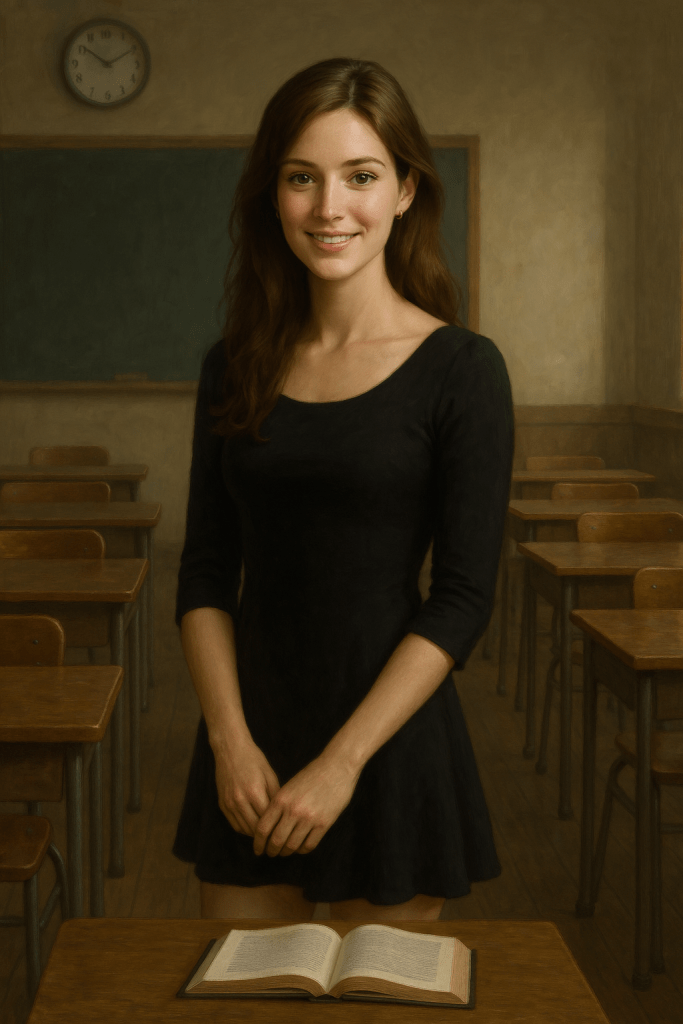
I gazed at her, committing every detail of her appearance to memory. She wore faded Levi’s blue jeans, a white and orange SOUTH MIAMI CHORUS T-shirt, white socks and an old pair of Keds sneakers. Her chestnut hair was tied into a ponytail. She wore very little makeup; a touch of mascara here, a hint of blush there, a bit of lip-gloss to make things a bit interesting. She was shockingly, heartrendingly beautiful.
My heart skipped a beat. “I couldn’t go without seeing you, you know,” I said.
She smiled. “Oh, come on; I bet you say that to all the girls.”
“It’s true,” I said. “And no, I don’t say that to all the girls.”
She smiled again. “I see,” she said. “How did you do on your final?”
“Okay, I guess. How about you?”
She shrugged. “All right, I suppose. Biology is not my cup of tea. I’ll be happy if I pass with a 75.”
I essayed a small smile. “I’m sure you did better than that.”
Conclusion
Reality often provides the scaffolding for fiction—the faces, places, and fleeting encounters that linger in memory. But imagination is what transforms those fragments into story. Writers must blur the edges, reshaping truth into something that feels authentic without being literal. That’s the paradox of verisimilitude: the illusion of reality created not by transcription, but by invention. Marty may have roots in a yearbook portrait, but she lives only in the Garratyverse—a reminder that fiction is at once a mirror and a mask, reflecting our past while daring us to dream beyond it.
 A Certain Point of View, Too
You must be logged in to post a comment.