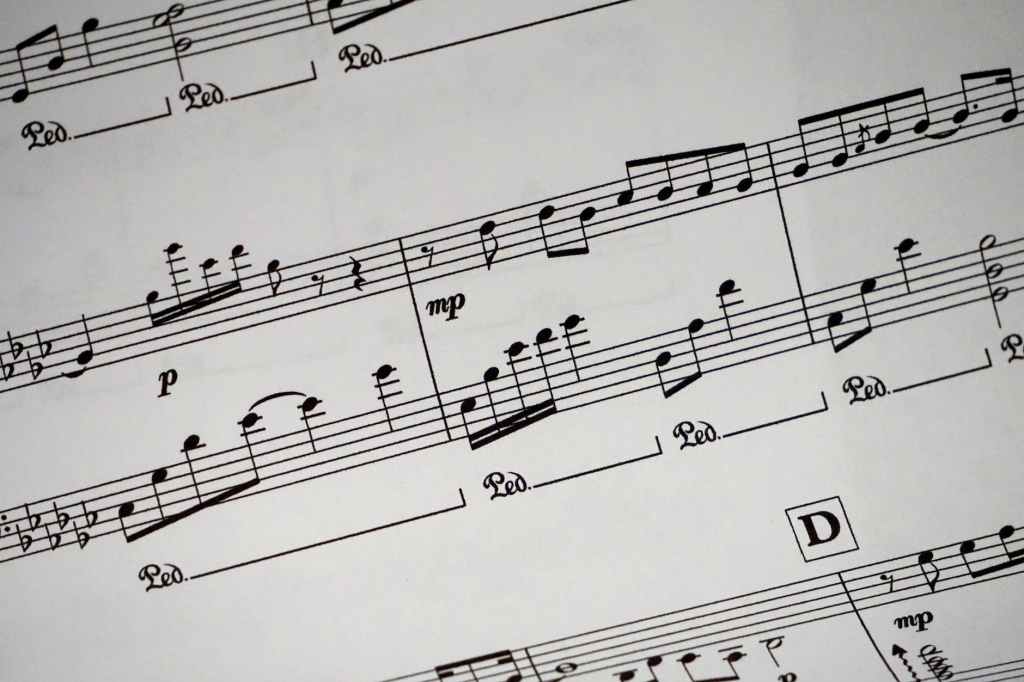
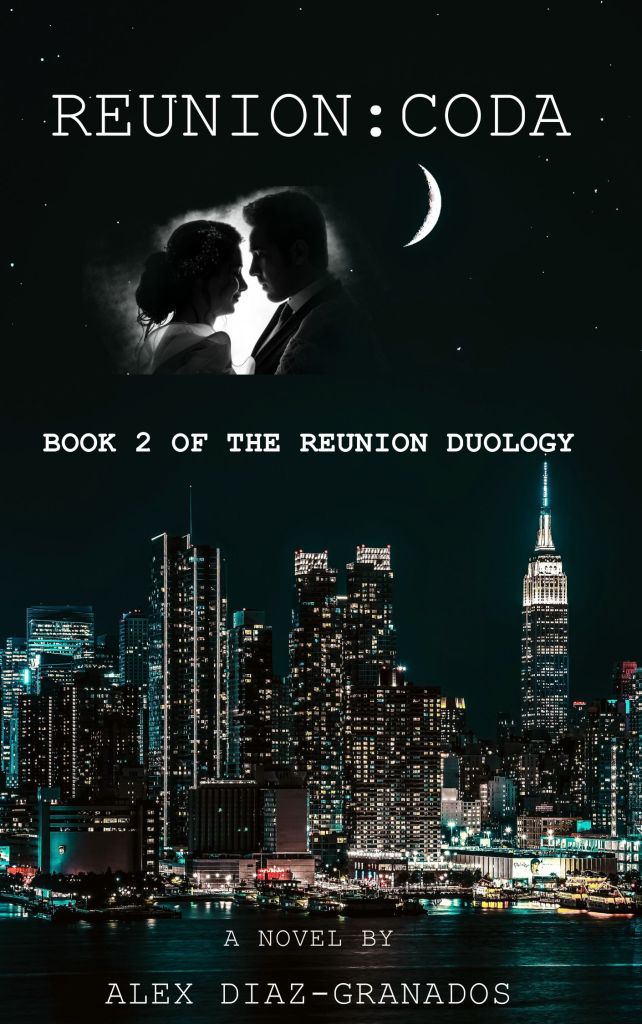
The Music Behind the Words: How Soundtracks, Standards, and Serendipity Shaped the Reunion Duology
Most writers can point to a moment in their youth when they first felt the spark — that strange, exhilarating sense that imagination could be shaped into story. For me, that moment arrived in ninth grade at Riviera Junior High School, when my English teacher, Ms. Allen, assigned us the task of writing a “novel” of at least twenty pages. It had to follow the traditional storytelling arc — rising action, climax, denouement — the whole works.
I was seventeen, a die‑hard Star Wars fan, and absolutely convinced that my destiny lay somewhere between George Lucas and Cornelius Ryan. So I wrote Hypercraft One: The Sound of Armageddon, a forty‑page, neatly typed space‑war adventure about exiled Americans battling faceless Soviet villains across the cosmos. It was cheesy, derivative, and earnest — and it earned me an A+.
But the real revelation wasn’t the grade.
It was the music.
While writing Hypercraft One, I discovered that I couldn’t — or perhaps didn’t want to — write without a soundtrack. Back then, in 1980, that meant vinyl LPs and eight‑track tapes. I’d put on John Williams’ scores for Superman: The Movie and Star Wars, and suddenly the scenes in my head sharpened. The emotions deepened. The pacing found its rhythm.
I didn’t know it then, but I had stumbled onto the creative ritual that would shape every story I wrote afterward. Music wasn’t background noise. It was architecture. It was emotional scaffolding. It was the key that unlocked the door to imagination.
That discovery — that I write through music — became the quiet engine behind the Reunion Duology.
Chorus Class and the Music of First Love
When I began writing Reunion: A Story in 1998, I knew that Jim Garraty and Martina “Marty” Reynaud had to meet in a place where music wasn’t just present, but essential. That’s why they encounter each other in South Miami Senior High’s choral department — a setting drawn from my own teenage years, when chorus class was one of the few places where I felt both grounded and free.
Music becomes the language of their connection:
- the way their voices blend
- the shy glances across rehearsal rooms
- the shared performances
- the emotional honesty that singing demands
Their relationship is born in harmony — literally and figuratively.
And when I wrote the vignette where Jim first sees Marty in Reunion: Coda, I happened to be listening to a new album, I’ll Remember You – VE Edition. Their cover of “We’ll Meet Again” — the Vera Lynn wartime classic — drifted through my headphones, and suddenly the scene crystallized.
The nervous girl at the door.
The trembling leg.
The British accent.
The shy smile.
The crystal‑clear voice singing a song about separation, hope, and the promise of reunion.
It was perfect.
Not because I planned it, but because the music carried the emotional truth of Jim and Marty’s story: a love defined by memory, longing, and the ache of what might have been.
Stepping Back Into Life: The Moonglow Club
When I returned to the world of Reunion to write Coda, I faced a delicate challenge: how to reintroduce Adult Jim without making readers think, “Oh no… he’s still drowning in grief two years after Marty’s death.”
I knew I needed contrast.
I needed noise, life, movement.
So I inverted the opening line of Reunion: A Story — “It’s quiet here” — into:
“It’s noisy here.”
And I needed a setting that reflected Jim’s passions without trapping him in the past. While listening to the soundtrack of The War: A Ken Burns Film, I found it: a WWII‑themed nightclub in Williamsburg, Brooklyn. A place filled with swing music, vintage décor, and the hum of Friday‑night energy.
A place where Jim could breathe again.
And then came the name — sparked by a track on the album:
“Moonglow.”
It was perfect: romantic, nostalgic, luminous. A place where Jim could meet someone new without betraying the memory of someone old.
Her entrance, her scent, her voice, her presence… all of it shaped by the music I was listening to as I wrote. The Ken Burns soundtrack gave the scene its emotional palette: warmth, memory, and the quiet possibility of renewal.
That someone, of course, was Maddie.
The Song That Found Me: “All the Things You Are”
I didn’t grow up steeped in the Great American Songbook. I knew a few standards from chorus class, but my heart belonged to classical music and film scores. Jerome Kern wasn’t on my radar — not really.
But while deep into the manuscript of Reunion: Coda, I bought a digital album called Great Concerts by Mantovani. One track began with an ethereal, almost unrecognizable introduction. I didn’t know the song by heart, so the melody didn’t reveal itself immediately.
And then, like a sunrise breaking through clouds, the familiar line emerged — not in words, but in the shape of the melody. And I froze.
Because that was it.
That was how Jim felt about Maddie.
Not as a replacement for Marty.
Not as a consolation prize.
But as a new light — unexpected, gentle, illuminating.
I checked the track list.
“All the Things You Are.”
I went to YouTube and listened to every version I could find — Sinatra, Ella, Sarah Vaughan, Oscar Peterson. And I fell in love with the song.
It became Maddie’s quiet leitmotif — not quoted in the text, but woven into the emotional fabric of the story.
And nowhere is that clearer than in the Queens scene.
A Queens Evening, a Soft Snore, and a Song That Changes Everything
There’s a moment in Coda where Jim drives Maddie home from JFK after her long flight from London. She’s exhausted, stubborn, affectionate, and frayed at the edges — a woman who wants to be with him but is too tired to admit she needs rest.
As she falls asleep on his shoulder, snoring softly — a tiny, human, endearing sound — Jim’s internal conflict becomes a symphony of tenderness and restraint.
He wants her.
He wants to protect her.
He wants to do the right thing.
He wants to be the man she deserves.
And then, as the tension between them softens, he turns on WCBS‑FM.
Jack Jones begins to sing “All the Things You Are.”
And the entire emotional temperature of the scene shifts.
The song becomes:
- a balm
- a bridge
- a signal that love is present, not theoretical
- a reminder that tenderness is sometimes more intimate than desire
By the time they reach her apartment, the song has done its work. The argument dissolves. The vulnerability remains. And Jim’s choice — to stay with her, but not push her — becomes one of the most quietly romantic decisions he makes in the entire book.
That moment exists because of the song.
Because of the way it entered my writing life.
Because of the way it illuminated Jim’s heart.
Why Music Matters in the Reunion Duology
Music isn’t a theme in the Reunion books.
It’s the bloodstream.
It shapes:
- how Jim remembers
- how Marty expresses herself
- how Maddie enters his life
- how scenes unfold
- how emotions rise and resolve
- how the narrative moves, breathes, and sings
From John Williams to Vera Lynn, from swing standards to Mantovani, from choral harmonies to jazz ballads, the Duology is built on the music that shaped me — the music that helped me write, imagine, and feel.
I didn’t set out to write musical novels.
But I did set out to write emotionally honest ones.
And for me, honesty has always had a soundtrack.
Postscript: A Dance, a Clarinet, and a Moment That Says Everything
There’s a scene late in Reunion: Coda that captures, better than any explanation ever could, how music functions in the Duology — not as decoration, but as emotional architecture.
Jim and Maddie are alone in Mark’s house. The night is quiet, the air warm with possibility. And then Maddie steps closer, teasing him with a line that reaches all the way back to the Moonglow Club:
“You haven’t even asked me to dance yet, Professor.”
In that instant, the room shifts. The furniture, the beer bottles, the stack of CDs — they fade into the periphery. What remains is the callback, the invitation, the unspoken promise.
Jim clears his throat, sets his bottle aside, and offers his hand.
“May I have this dance, Ms. Reynaud?”
And as Artie Shaw’s clarinet begins to weave its smooth, velvety line through the room, they sway together — not as two people haunted by the past, but as two people finally stepping into the present.
Her head rests against his chest.
His arm wraps around her waist.
The music holds them both.
Their banter is light, affectionate, playful — the kind of warmth that only exists when two people have earned their way to each other:
• her teasing about his dancing lessons
• his self‑deprecating humor
• her deadpan “that would have been a tragedy”
• his quiet admission that good dancing can “open the door to her heart”
And then the kiss — soft, steady, unhurried.
A kiss that feels like a bridge between the man Jim was and the man he is becoming.
The music swells.
The world outside hums indifferently.
Inside, the melody wraps around them like a shared secret.
It’s a moment that feels infinite — the emotional equivalent of a sustained final note.
And that’s why music matters so deeply in the Reunion Duology.
Because it doesn’t just accompany the story.
It scores it — guiding the rhythm, the tone, the emotional truth of every step Jim takes toward love, memory, and renewal.
 A Certain Point of View, Too
You must be logged in to post a comment.