

Excavating a Lost Branch of the Garratyverse
A reflection on the story that almost was
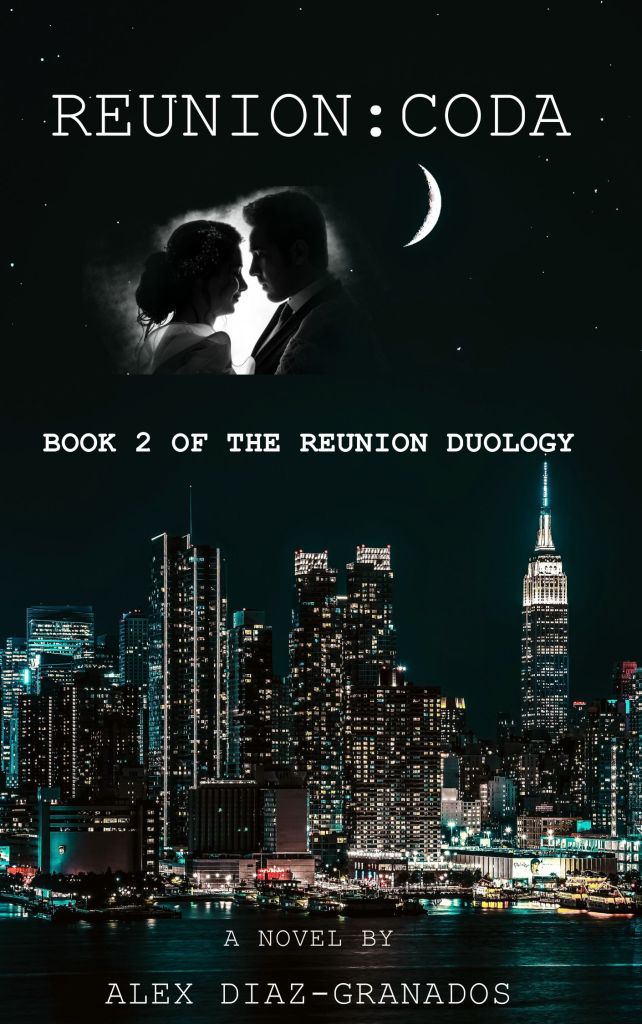
Every long-running fictional universe has its ghost trails—the paths nearly taken, the drafts that flickered briefly before vanishing, the characters who stepped forward only to retreat into the wings. Within the Garratyverse, one such spectral branch is The Best Years of Our Lives…Supposedly, a project begun in August 2018 and set aside after ten days. What survives is a single, vivid excerpt: a fossilized imprint of a story that might have reshaped the emotional architecture of Jim Garraty’s world years before Reunion: Coda existed.
Its significance lies not only in what appears on the page, but in what it reveals about the creative and emotional landscape from which it emerged. The fragment captures a writer standing at a crossroads, holding a story that felt too heavy for its moment—raw, intimate, and unmistakably connected to the DNA that would later define the Garratyverse.
A Story Born in the Heat of a Florida Summer
The excerpt opens in August 2016, with Jim standing in an empty townhouse, contemplating loss, memory, and the emotional debris of middle age. The tone is somber and unflinching, shaped by lived experience with caregiving, decline, and the slow, painful rituals of saying goodbye.
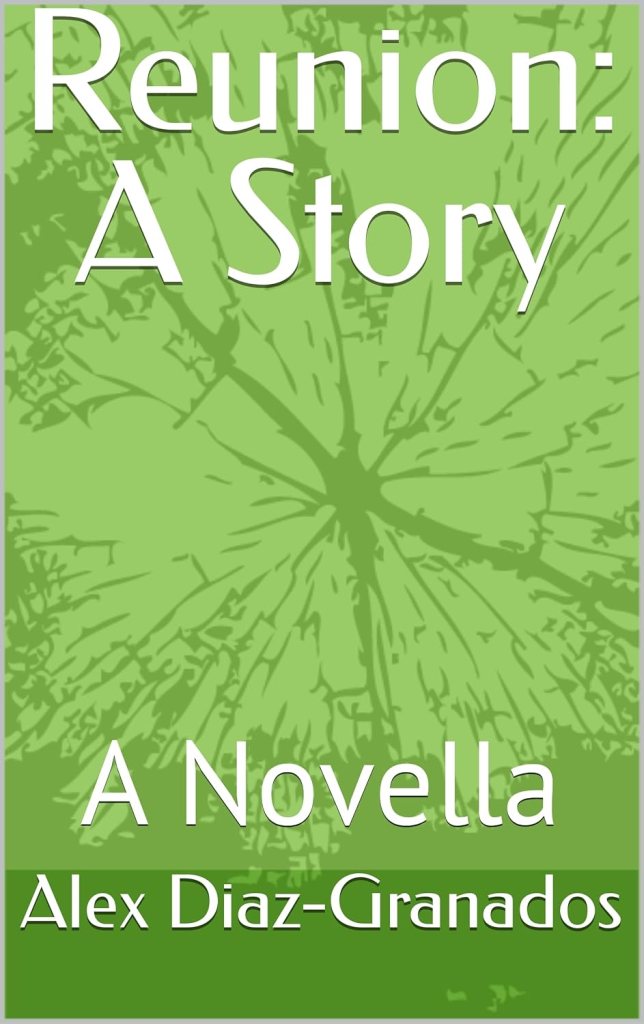
This version of Jim is older than the one introduced in Reunion: A Story and more weathered than the man who anchors Reunion: Coda. His history is marked by heartbreaks that echo real emotional terrain: Kathy, the high school girlfriend; Carrie, the ex‑wife; and the long, slow farewell to his mother. Their names—Kathy Bennett and Carrie Tellado‑Garraty—appear here in their earliest, unfiltered form, long before they were softened or reimagined in later work.
The emotional landscape is recognizably Garratyverse, yet the narrative direction diverges. Rather than revisiting adolescence or weaving dual timelines, this draft focuses on the aftermath—on what remains when the dust settles and a character is left alone with the echoes.
Where the Dual‑Timeline Instinct First Emerged
The abandoned 2018 project also reveals an early version of a structural choice that would later define Reunion: Coda: the impulse to tell Jim’s story across two eras. Even in its incomplete state, the narrative was already reaching backward toward adolescence, preparing to explore the origins of Jim’s bond with Marty and the emotional logic behind his enduring love for her.

The dual‑timeline structure wasn’t yet fully formed, but the instinct was unmistakable—the desire to juxtapose the man Jim became with the boy he once was, and to let the past illuminate the present. In that sense, The Best Years of Our Lives…Supposedly stands as the first attempt to excavate the Jim–Marty arc in depth, years before the Garratyverse found its final shape.
The title itself carried a layer of irony, echoing a film shown to tenth‑grade students in 1980. It hinted at a story concerned not with nostalgia, but with the complicated truth that the “best years” of a life are rarely as simple, golden, or unbroken as memory suggests.

Why the Story Stalled
A blog post written in 2020 recounts the moment the project lost momentum: a single dismissive comment delivered at precisely the wrong time. It’s a familiar turning point for many writers. Creative confidence is fragile, especially when the material cuts close to the bone.
This fragment wasn’t simply a story about Jim’s grief; it was a story written from inside grief. Under those conditions, it’s unsurprising that the project faltered. Stories aren’t always abandoned because they lack strength—sometimes they’re set aside because the writer isn’t ready to carry them.
The Fossil Record and Its Echoes
Although this draft never became the sequel envisioned in 2018, its fingerprints remain throughout the Garratyverse:
- Kathy and Carrie reappear in Reunion: Coda, their names altered but their emotional resonance preserved.
- The theme of parental decline becomes a quiet but powerful undercurrent in Jim’s adult life.
- The motif of aftermath—what endures after loss, what is carried forward, what is left behind—emerges as a defining element of later work.
- The narrative voice, reflective and emotionally literate, foreshadows the tone that would mature fully in Coda.
Rather than a discarded idea, this fragment reads like an evolutionary ancestor—an early branch that didn’t survive but still shaped the tree.
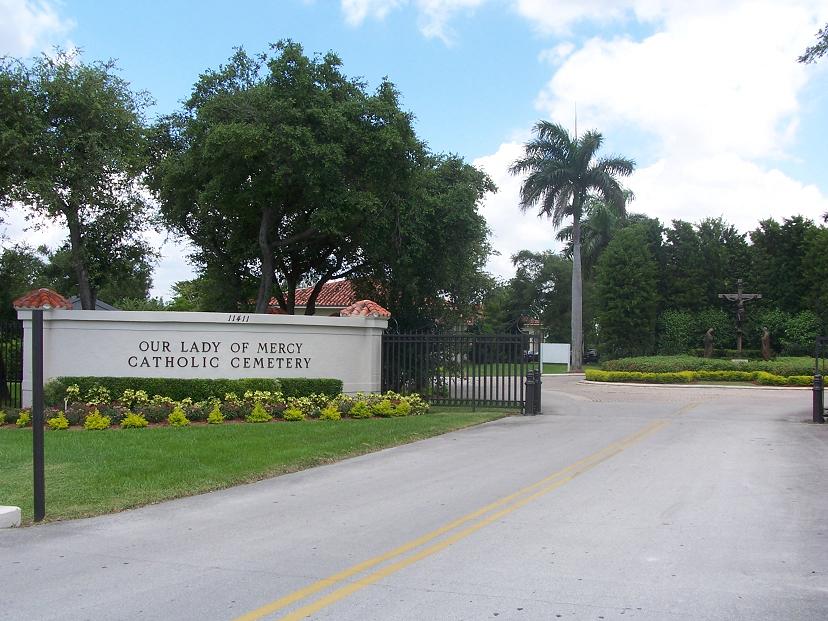
Two hours later, two men from the transportation company that serves the Van Ordsel Family Funeral Chapels and Crematory arrived at the house to take my mother’s body away. The sun had risen at 6:40 a.m. Eastern Daylight Time, but it was hidden behind a dark gray curtain of cumulus and stratocumulus clouds heavily laden with rain. Father Garcia was long gone and was probably now asleep in his bed at St. Thomas the Apostle Catholic Church’s rectory. But Kate, the registered nurse from Catholic Services’ hospice unit, had stayed behind, keeping watch over my mother’s mortal remains and offering whatever comfort she had to give to those of us who were grieving. It was Kate who let the guys from Van Ordsel – a thickset, grey-haired Cuban named Alfonso and a slimmer but still formidable “anglo” guy with thinning black hair and a hangdog expression that seemed to have been on his face since the day he was born – in through the front door. They wore uniforms very much like those of your average ambulance driver and entered the house pushing a gurney on which they would take Mom from her deathbed and off to the funeral home. They didn’t rush – they made the passage from the foyer to my mother’s bedroom slowly, pushing the gurney carefully so it would not crash into any of the furniture or bang against the walls in the narrow hall that led from the living room, past the downstairs bathroom, and into what I now thought of as that room. Not Mom’s room, not the “future guest room,” and certainly not “the room where Mom died.” I looked at Alfonso and was about to offer – however halfheartedly – whatever assistance that I could, but the man simply shook his head. “Don’t worry, sir,” he said with a slight but still noticeable Cuban accent, “we’ll take care of your mom for you.”
Alfonso and his co-worker disappeared into the now silent bedroom where Mom’s body lay in deathly repose. Mark, Cristina, and I stood in a ragged row in front of the living room sofa, looking for all the world like a trio of shell-shocked GIs after a firefight in the bocage country of Normandy in the summer of 1944. Kate, her navy-blue scrubs still miraculously wrinkle-free, stood alone by the open front door and watched as the first raindrops of a mid-July rainstorm began to fall outside.
What This Lost Story Reveals About the Garratyverse
Viewed in hindsight, The Best Years of Our Lives…Supposedly feels like a prototype for the emotional depth that would later define the series. It demonstrates:
- a willingness to confront grief directly
- a fascination with memory as both anchor and burden
- a commitment to emotional realism over melodrama
- a belief in the narrative potency of quiet, ordinary moments
It also illustrates a broader truth about creative work: emotional material doesn’t disappear when a project stalls. It composts. It becomes soil for something else.
The Story That Had to Wait
When Reunion: Coda finally began three years later, the return wasn’t to this abandoned draft but to the emotional questions it raised. The story that emerged approached loss, memory, and the long shadow of adolescence with greater distance, structure, and generosity.
The Garratyverse didn’t restart in 2018 because it wasn’t ready to. The story needed time to ripen. So did its author.
And when the return finally came, it wasn’t an act of resurrection—it was an act of transformation.
A Final Thought
Every writer keeps a drawer full of ghosts. Most never see daylight. This one did, briefly, and in doing so it left behind a trace—a reminder that even abandoned stories matter. They mark the places where the creative path bent, paused, or quietly changed direction.
This fragment stands as both relic and testament: a record of the long, winding, emotionally honest journey that eventually led to Reunion: Coda and the Garratyverse as it exists today.
 A Certain Point of View, Too
You must be logged in to post a comment.