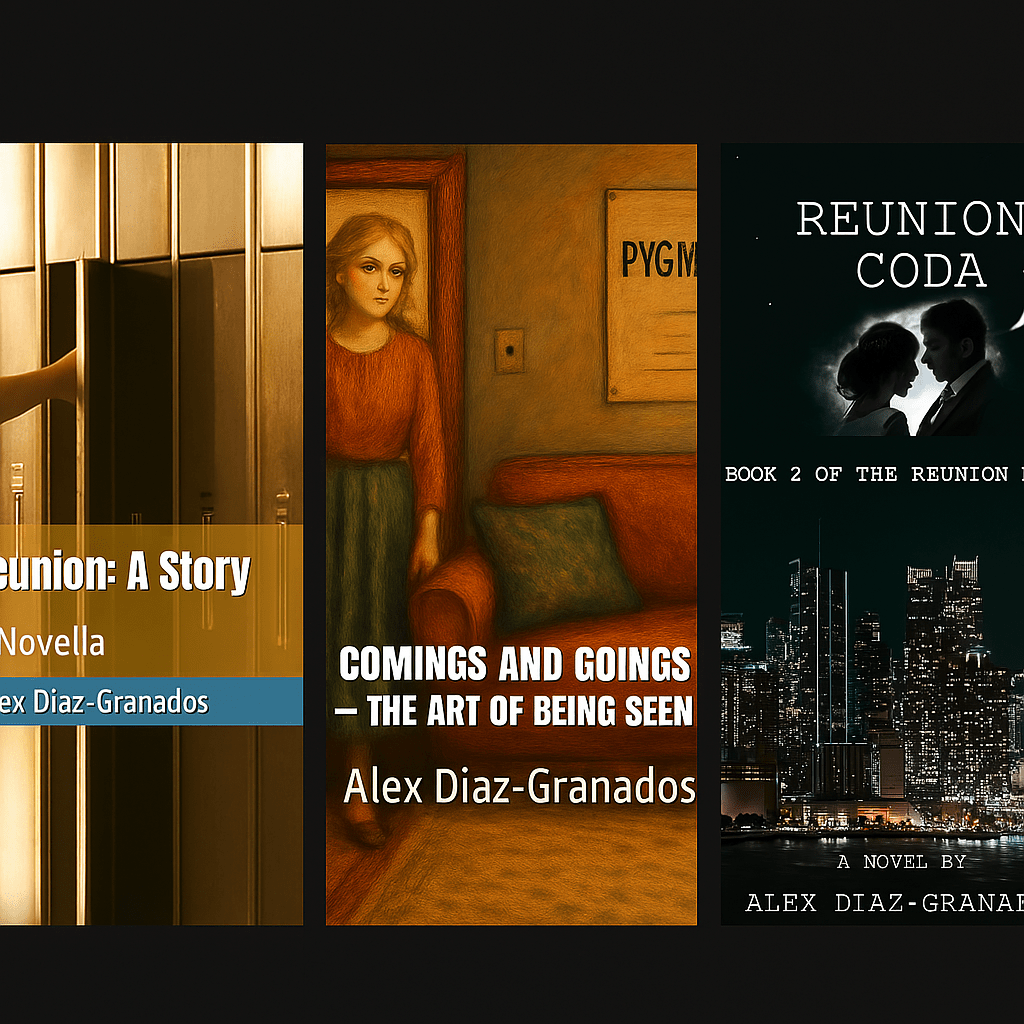

The Music of Memory: Why These Four Pieces Score the Garratyverse
Every story has a soundtrack, even if it never plays out loud. Some pieces don’t just accompany a narrative — they reveal its emotional architecture. As I’ve been revisiting Reunion, Reunion: Coda, and Comings and Goings, I’ve realized that four very different pieces of music map uncannily onto the emotional lives of the characters who inhabit them.
They aren’t background cues. They’re emotional mirrors.
Reunion — Walton’s “The Death of Falstaff”

Sir William Walton’s elegy is all restraint and tenderness — grief expressed in a whisper rather than a wail. It’s the sound of something slipping away before anyone can name it.
That’s the emotional core of Reunion.
Jim’s return home is steeped in the weight of what he didn’t say, what he didn’t understand, and what he can never get back. Marty’s absence becomes a presence. The novella moves with the same quiet dignity as Walton’s music: reflective, aching, and honest. It’s not tragedy; it’s inevitability.
Reunion: Coda — “All the Things You Are”

If Reunion is an elegy, Coda is a warm exhale.
“All the Things You Are” is harmonically rich, full of yearning that resolves into something tender and hopeful. It’s a love song that understands time — longing, fulfillment, and the courage to step into something new.
That’s Jim and Maddie’s story.
It’s about choosing connection over nostalgia, presence over regret.
It’s about love that doesn’t erase the past but transforms it.
The melody finally resolves, and so does Jim.
Comings and Goings — “This Night”
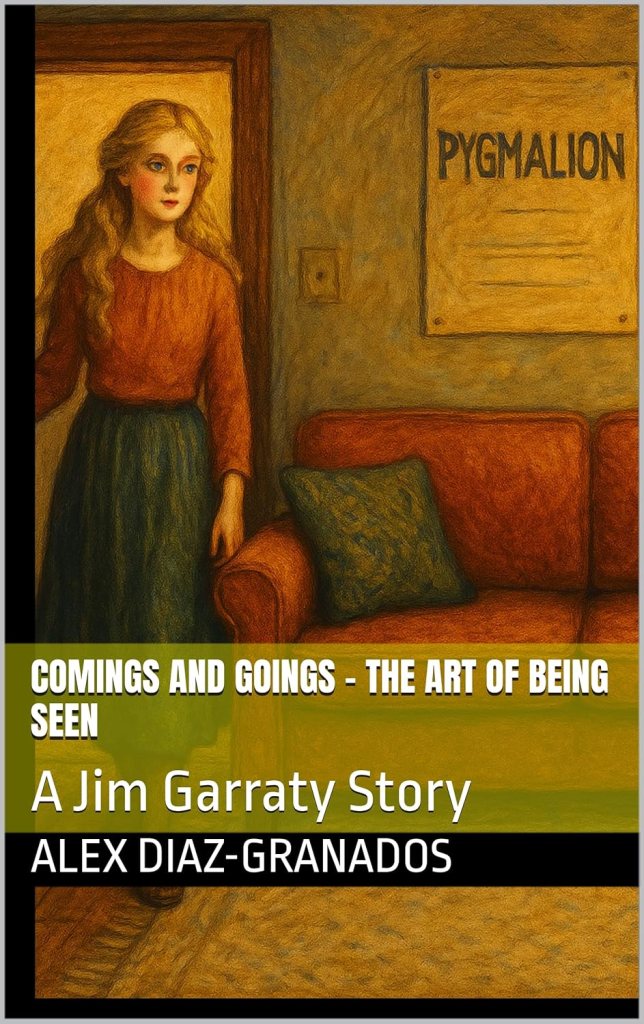
Billy Joel’s “This Night,” built on Beethoven’s Pathétique, lives in two emotional worlds at once: nostalgia and forward motion. It’s a song about the nights that change you, the people who leave fingerprints on your life, and the bittersweetness of being seen.
That duality is the heartbeat of Comings and Goings.
The story is about arrivals and departures — literal and emotional. It’s about the quiet moments that shape a life more than any grand event. It’s about the way Jim carries his past with him, not as a burden but as a map.
Marty’s Theme — “Forgotten Dreams”

And then there’s Marty.
Leroy Anderson’s “Forgotten Dreams” is a wistful miniature — tender, nostalgic, glowing with the warmth of a memory you can’t quite hold. It’s not tragic. It’s not grand. It’s the sound of a moment that mattered deeply and quietly.
That’s Marty’s presence across all three stories.
She’s the lost possibility that shaped Jim’s emotional life.
She’s the unfinished melody that still hums beneath the surface.
She’s the reason he grows, regrets, and ultimately learns to love better.
“Forgotten Dreams” doesn’t overwhelm the narrative — it haunts it gently. Just as she does.
A Four‑Piece Emotional Score
Taken together, these pieces form a musical arc that mirrors Jim Garraty’s journey:
- Elegy (Death of Falstaff)
- Renewal (All the Things You Are)
- Continuity (This Night)
- Memory (Forgotten Dreams)
It’s a progression from grief to love to understanding — from silence to song.
And maybe that’s the real soundtrack of the Garratyverse: not the music the characters hear, but the music their stories remember.
 A Certain Point of View, Too
You must be logged in to post a comment.