
Saturday, February 21, 2026 — Orlando, Florida
Hello, Dear Reader. Late winter in Central Florida is showing off today. As I write this, the morning sun is pouring through my window, the temperature sits at a pleasant 77°F (25°C), and MSN Weather promises we’ll climb to 85°F (30°C) by midafternoon. If there’s a better way to usher in February’s penultimate weekend, I haven’t found it.

Yesterday came and went without any news from ACX about the Audible edition of Reunion: Coda. Stefan Lee wrapped up recording on the night of February 10, and I submitted the project the following morning—fully aware that ACX’s four-step quality assurance process can take up to 10 business days. Still, knowing the timeline doesn’t make the waiting any easier.
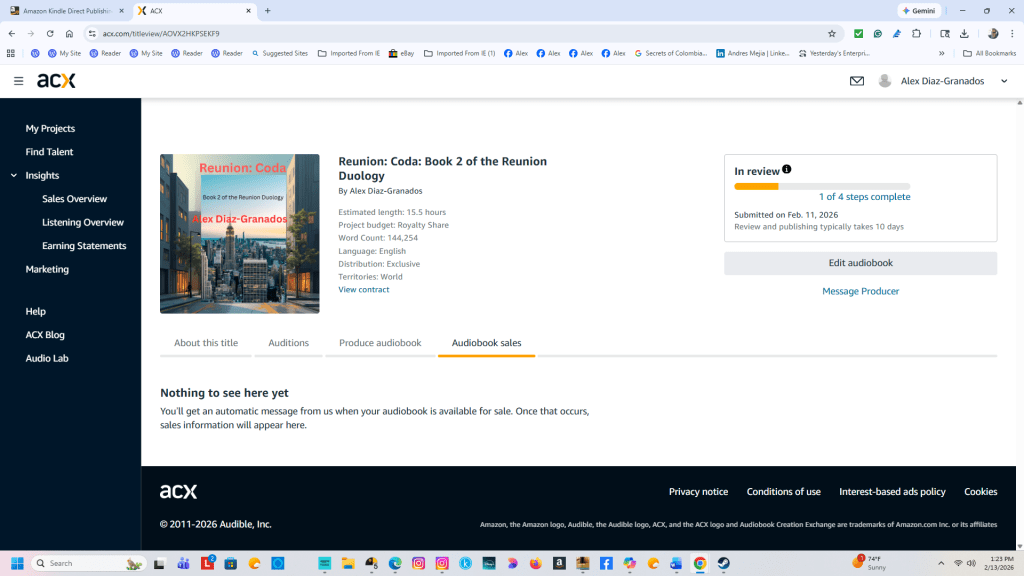
On Friday the 13th—auspicious timing, if you enjoy symbolism—I received word that the cover art had passed review. That alone felt like a small victory; both Reunion: A Story and Comings and Goings – The Art of Being Seen stumbled at that very hurdle. With the cover approved, only the metadata check, audio file review, and final approval remain.


Audible edition cover created by Alex Diaz-Granados

As I’ve mentioned before, ACX’s QA process is a hybrid of human and computer review, and it only moves forward during the workweek. Presidents’ Day fell on Monday, so perhaps the ACX team enjoyed a well-earned three-day weekend. Whatever the reason, Reunion: Coda’s status didn’t budge on Monday… or Tuesday… or Wednesday.
Having been through this twice already, I know that if something were wrong—an audio glitch, a metadata mismatch—I’d be greeted by a blunt red warning demanding immediate attention. No such alert has appeared. But neither has any progress beyond the cover art review. And with the 10-business-day window closing as early as Tuesday the 24th, the silence is starting to feel a bit ominous.
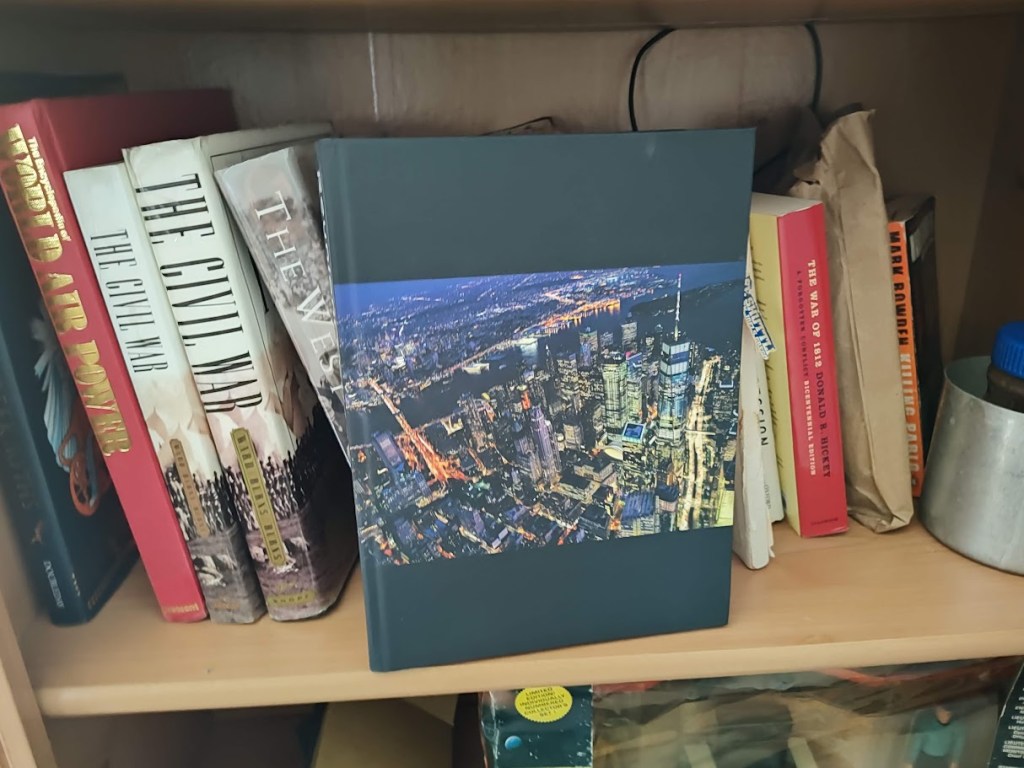

I understand the realities: ACX handles hundreds, maybe thousands, of submissions each week. The holiday shortened the work schedule. And Reunion: Coda is a hefty novel, clocking in at 16 hours, 18 minutes, and 57 seconds. A thorough review is only fair. But more than a week without a single update? Even the calmest soul would feel a twinge of anxiety.

Thankfully, it’s Saturday—one of my sacred days off from literary work—and I intend to make the most of it.
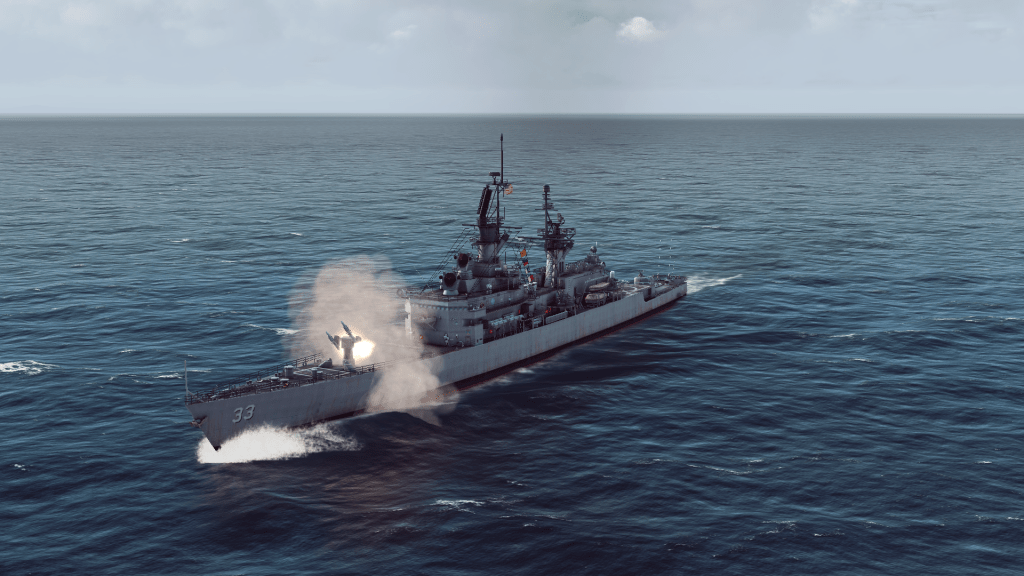
At the top of my relaxation agenda is continuing the Hormuz scenario in Sea Power: Naval Combat in the Missile Age. If you’ve been following along, you’ll know Sea Power is one of the newest additions to my Steam library. Published by MicroProse in 2024 and developed by Triassic Games, it’s essentially Jane’s Fleet Command on steroids. The game offers a wide range of Cold War–era scenarios, from purely hypothetical engagements to missions inspired by real events like the 1986 Gulf of Sidra clashes or, in the case of Hormuz, the 1987 tensions in the Strait of Hormuz.
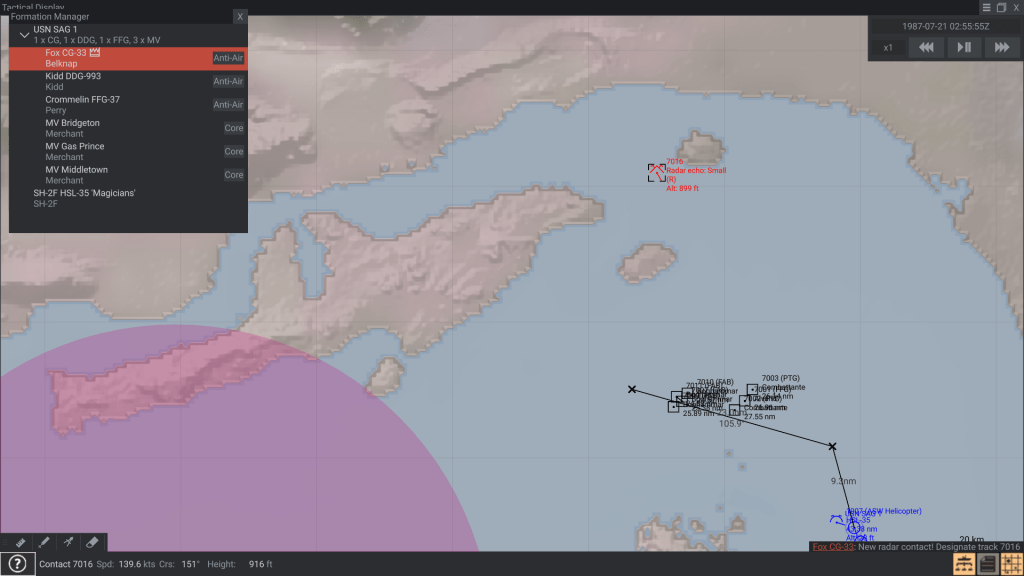
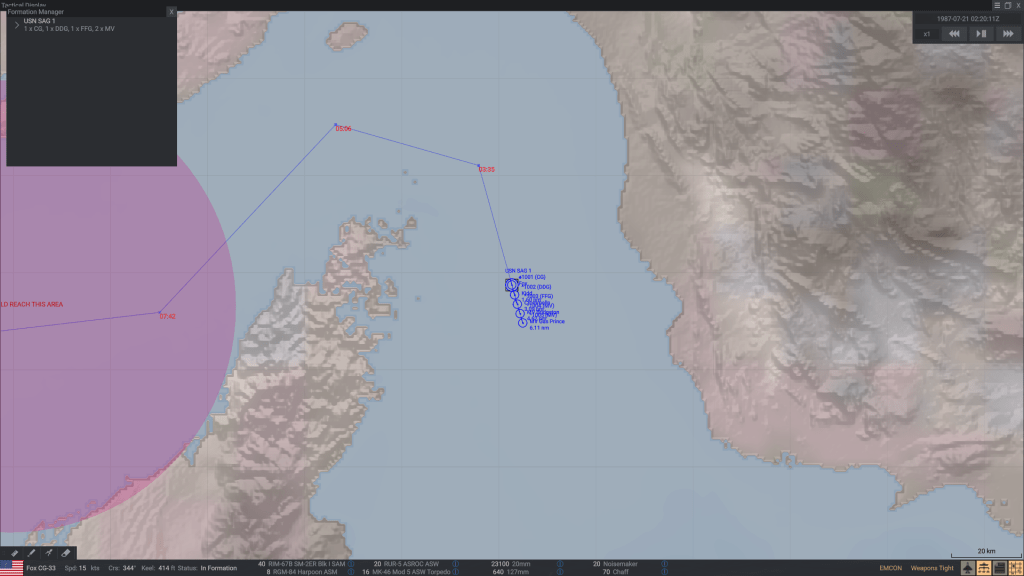
Hormuz is Sea Power’s “what-if” take on the Bridgeton Incident of July 21, 1987. In reality, a U.S. surface action group—USS Fox, USS Kidd, and USS Crommelin—escorted the tankers Bridgeton and Gas Prince through the Gulf of Aden and into the Persian Gulf as part of Operation Earnest Will. Iran didn’t openly challenge the convoy, but its forces laid mines in the tankers’ path. Bridgeton struck one, was damaged, and continued on. No further incidents occurred.
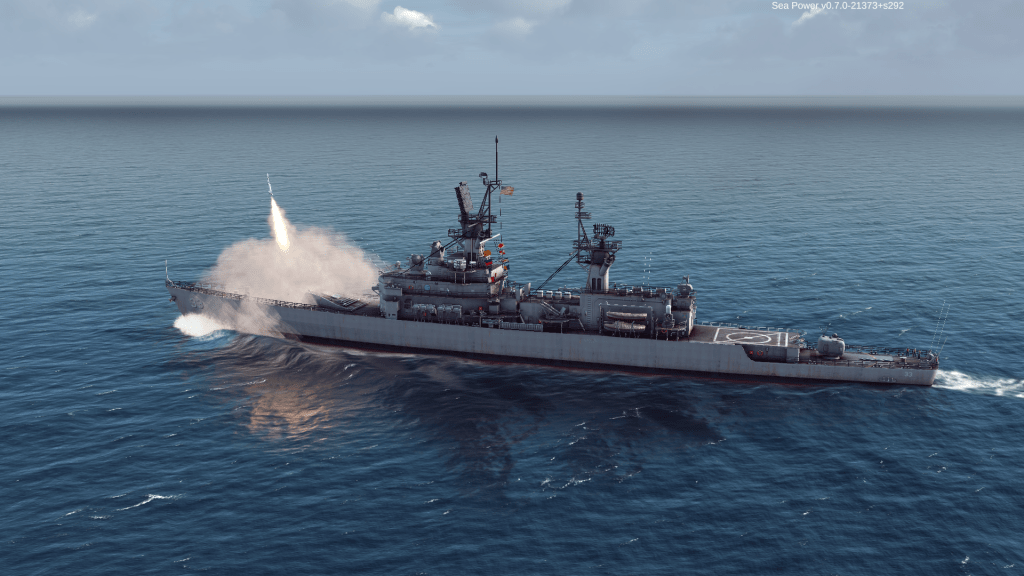
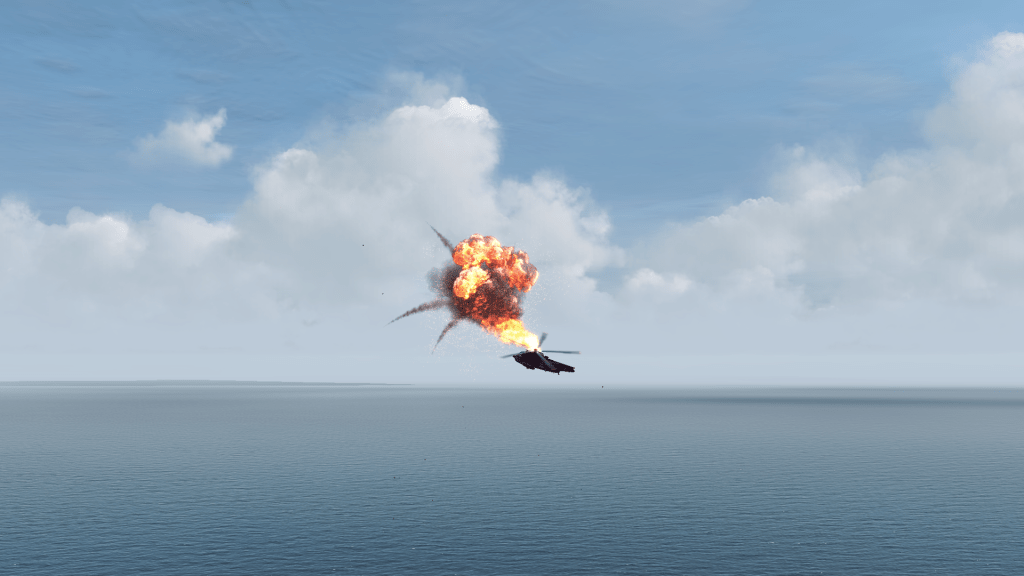
In the game, however, Iran declares the Strait closed and unleashes its full naval, air, and land-based arsenal—including Silkworm anti-ship missiles—to stop the convoy before it reaches a designated safe zone. The scenario is part of the NATO mission pack, and while it’s not overly complex—no carriers, no Kilo-class submarines—it’s far from a cakewalk. Iranian warships, missile-armed helicopters, F-4E Phantoms, and swarms of Revolutionary Guard Boghammar boats all converge on your convoy from multiple directions.
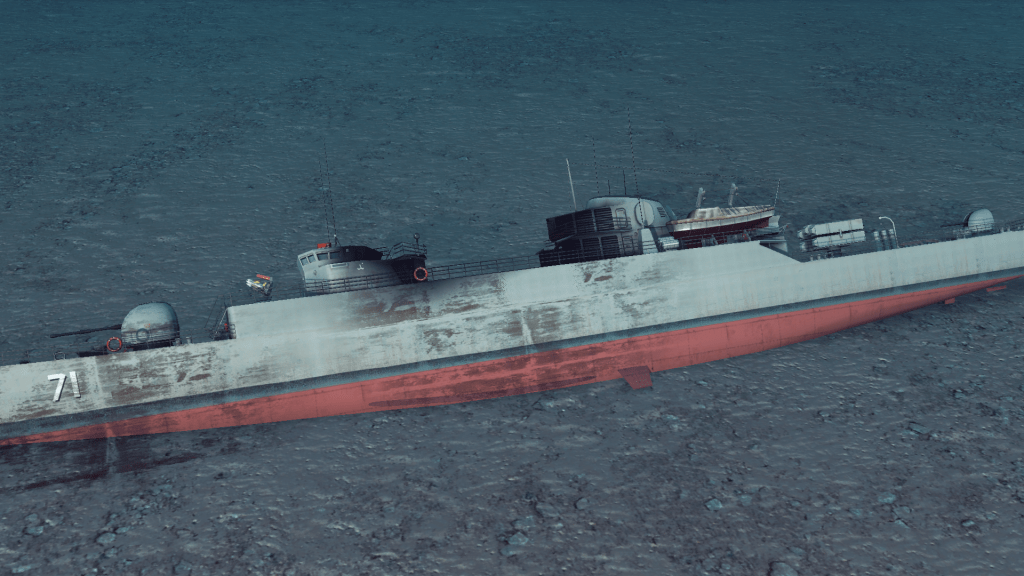
Hormuz is a long mission—easily three hours, even with time compression. Before cloud saves were added, I only played it twice; both times were exhausting marathons, and once I even lost USS Kidd in a collision with Bridgeton thanks to buggy AI and my own overreliance on time compression.
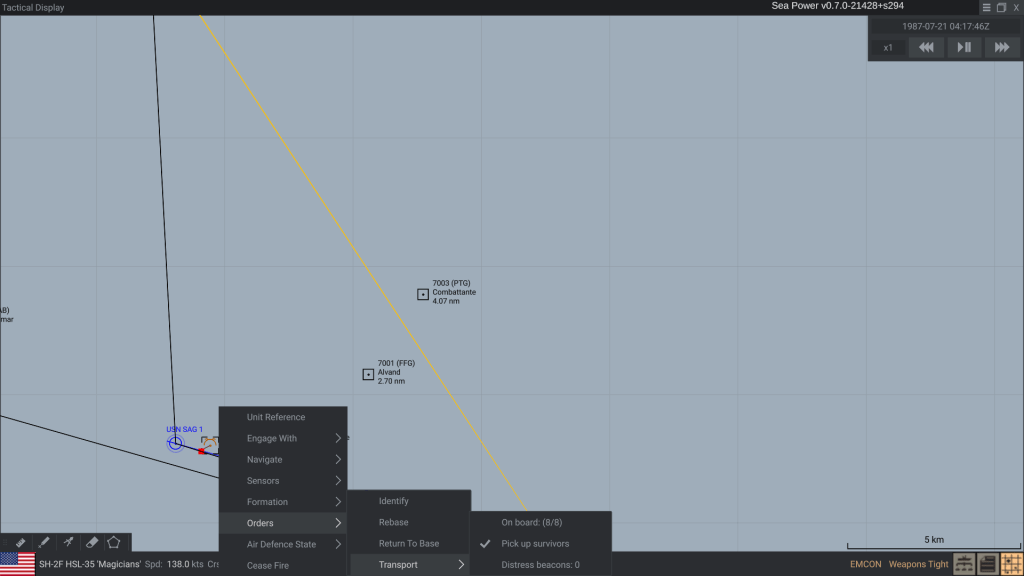
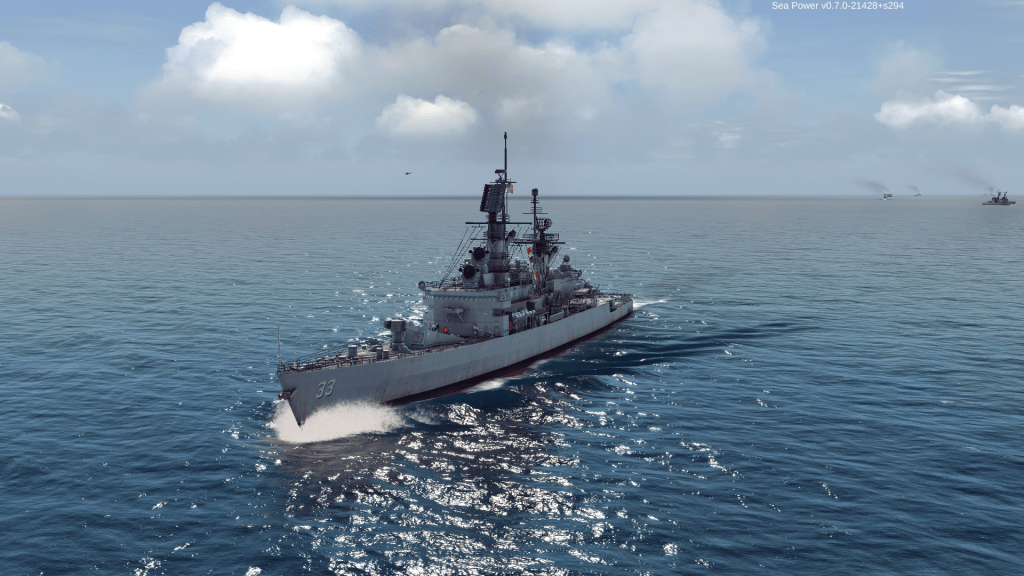
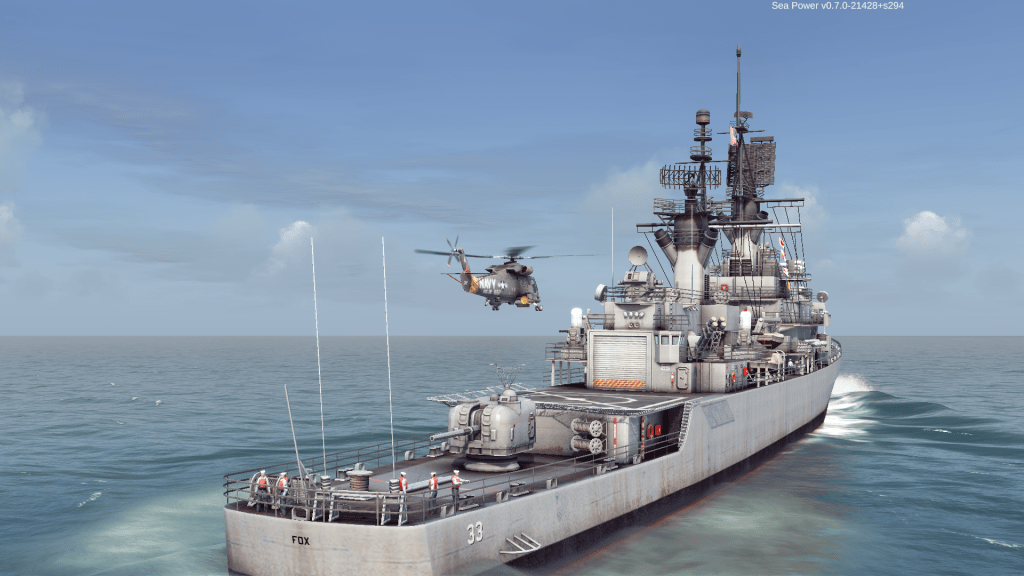
This time around, I’ve been tackling the scenario in shorter sessions—30 to 40 minutes each, mostly at night. So far, my Earnest Will convoy has fought its way past IRIS Alvand, a flotilla of Boghammars, several waves of Iranian aircraft, and a barrage of Silkworm missiles. I’ve even used my SH-2 Seasprite helicopters to rescue Iranian survivors after sinking their ships—a thoughtful touch of realism on the developers’ part.
I’m now in the endgame phase. The Iranians might still fire a few Silkworms from the islands near the Strait, and their air force could theoretically attempt one last strike, especially since my SAM stockpile is running low. But this stage is usually quiet, and the safe zone is less than 40 nautical miles away. If I decide to read a book or watch a movie instead, I won’t miss much action.
For now, though, I’m simply enjoying the luxury of a quiet Saturday—and the hope that ACX will break its silence soon.
 A Certain Point of View, Too
Comments
One response to “Sunshine, Suspense, and Silkworm Missiles”
Enjoy 😊👌👌
LikeLiked by 1 person