Monday, February 23, 2026, Orlando, Florida
Hi, everyone.
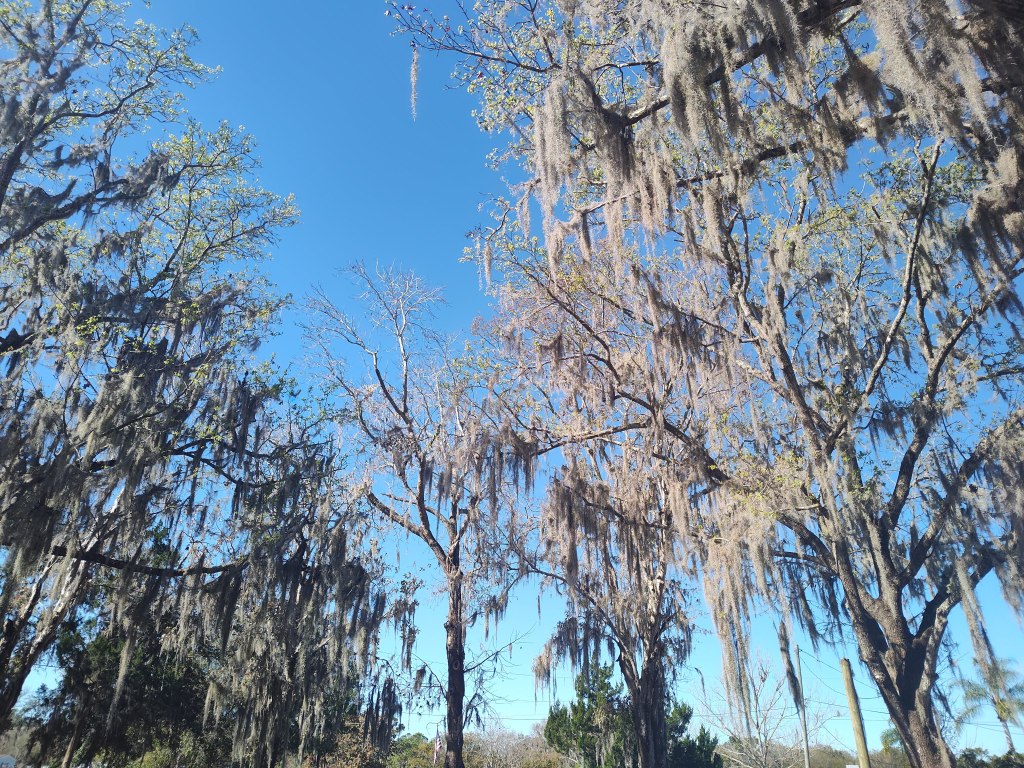
It’s a crisp late‑winter morning here in my corner of Orange County. The skies are clear, the sun is bright, and the thermometer is holding steady at 50°F (10°C). For us Floridians, that’s jacket weather; for anyone in New Hampshire, it’s practically spring. In Madison—where I spent ten months and wrote a large chunk of Reunion: Coda—it’s 24°F (-5°C) under cloudy, breezy skies. I suppose I take after my late mom in that regard: she adapted to new places with remarkable ease, but cold weather was never her friend.

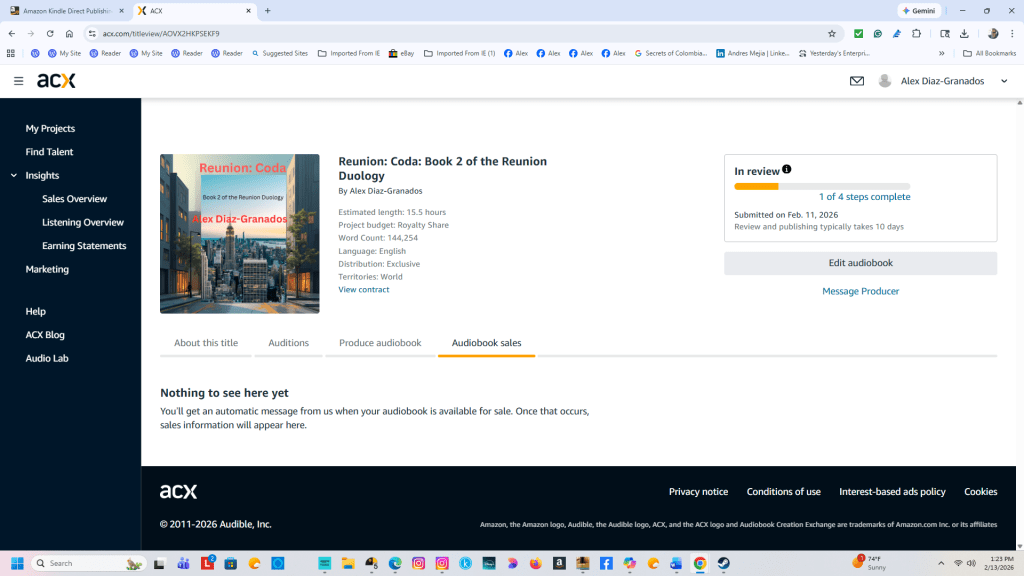
Speaking of Reunion: Coda, I don’t have any updates on the audiobook edition. The ACX project dashboard still shows the status as “In Review,” with only one of the three quality assurance milestones—cover art—checked off. The metadata and audio integrity reviews are still pending. Since I submitted the finished audiobook on the 11th, I had hoped at least the metadata review would be done by now. Apparently not.
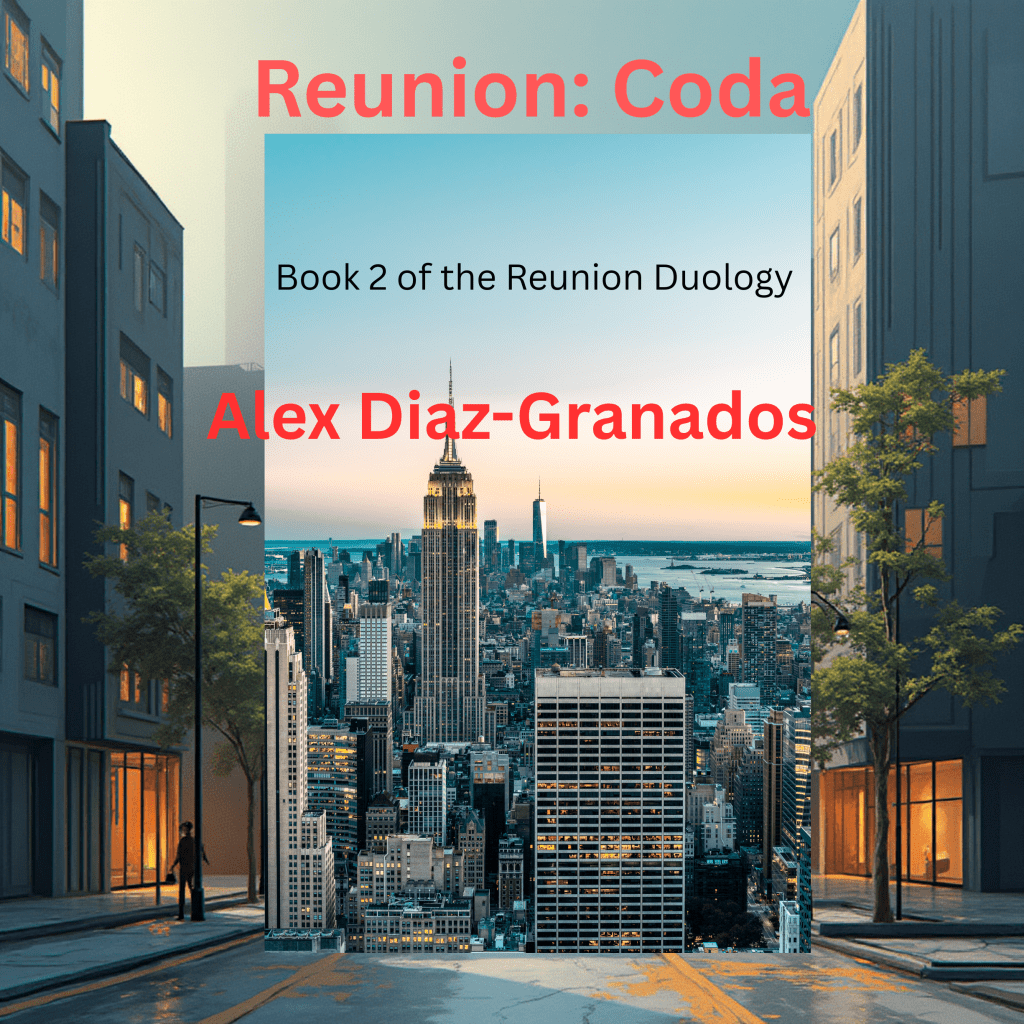
Audible edition cover created by Alex Diaz-Granados
Oh, well. The workday is still young. Maybe I’ll see some movement before evening. As the old saying goes, “No news is good news.” Or so I keep reminding myself.
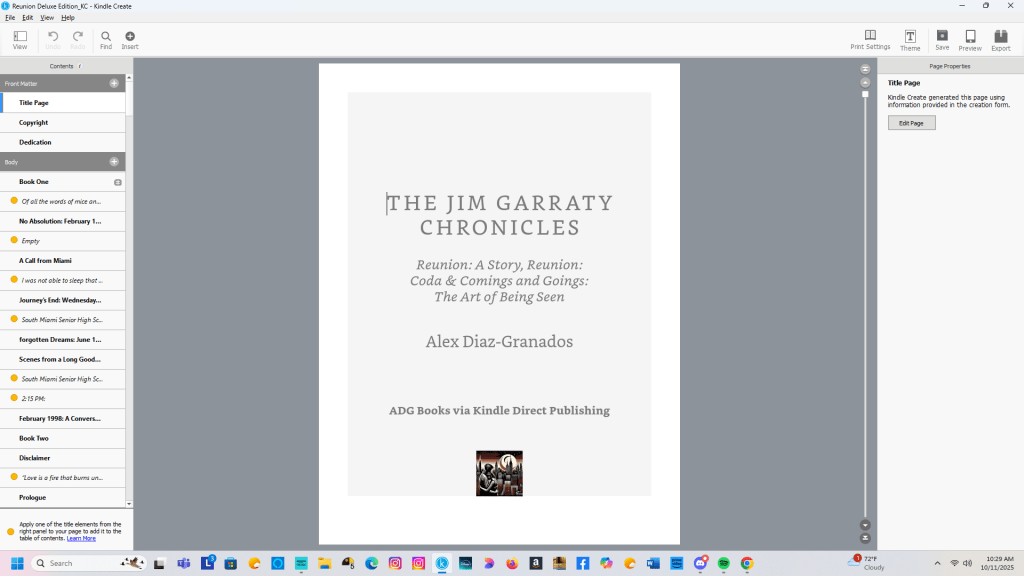
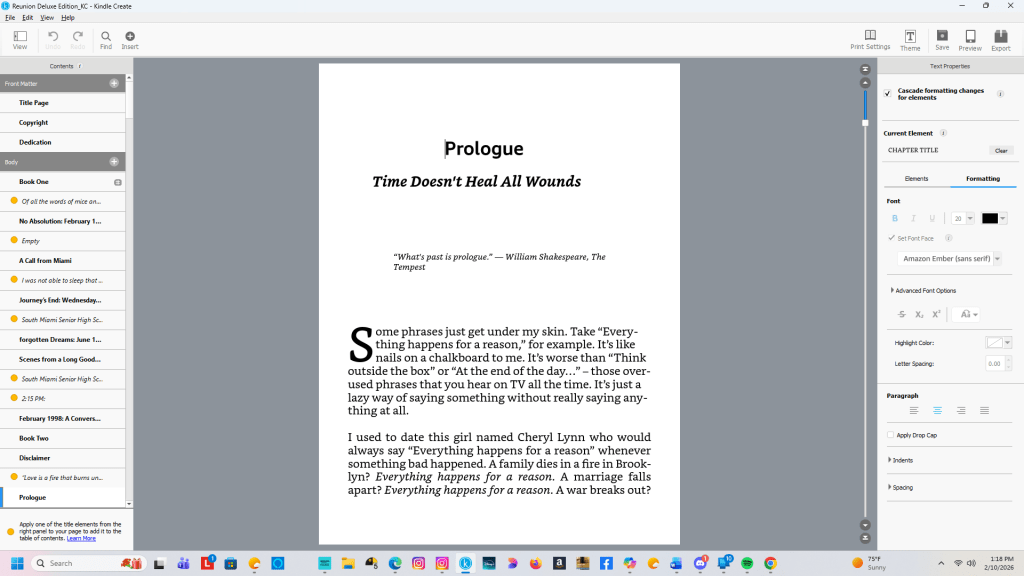
As for The Jim Garraty Chronicles—the omnibus that gathers Reunion: A Story, Reunion: Coda, and Comings and Goings – The Art of Being Seen—I’m still patiently fixing the formatting gremlins in the chapter titles and subheadings. Kindle Create is a solid tool for turning a polished manuscript into a Kindle e‑book or print edition, but it’s not designed for writing or deep editing. That’s what Word (or your preferred writing app) is for.
Unfortunately, the Kindle Create team seems to have prioritized aesthetics over functionality. There’s no spellcheck, and the app has a maddening habit of mangling capitalization in subheadings—even when the original Word document is perfectly formatted. Yes, I can correct them manually. Yes, it’s tedious. And yes, it’s soul‑numbingly boring. I’ve been tempted more than once to delete the subheads entirely.


But Reunion: Coda uses a dual‑timeline structure, and those subheadings are essential guideposts for readers. So, I’m editing them instead of tossing them overboard. It’s not glamorous work, but it’s necessary, and it’s on my docket for this afternoon.
And that’s where things stand on this first day of a new workweek. Not the most thrilling update, perhaps, but part of the writing life is showing up for the unglamorous tasks as faithfully as the creative ones.
Before I sign off…

If you’re new to Jim Garraty’s world—or if you’d like to revisit the emotional terrain that shaped him—the stories currently available form a quiet, resonant mosaic of connection, memory, and second chances.
The Reunion Duology traces the long arc of a life shaped by what’s felt but not always spoken.
- Reunion: A Story follows Jim as a high school senior in 1983, navigating the fragile space between longing and silence.
- Reunion: Coda picks up fifteen years later, as a history professor whose carefully ordered life is unsettled by echoes he thought he’d left behind. Together, the two works explore the ripples of one choice across decades—with wit, honesty, and a deep tenderness for the ways we learn to stay present, even when it hurts.
Comings and Goings – The Art of Being Seen stands alongside them as a companion piece set in 1984 Boston. It captures the moment Jim first discovers the quiet power of being noticed, held, and remembered—not through spectacle, but through genuine human presence.
Read individually or together, these three works offer a spare, intimate, emotionally honest portrait of a man learning how to be seen—and how to stay. Until the fourth Jim Garraty story arrives, these are the doors into his world. I’d love for you to step through whichever one calls to you.
 A Certain Point of View, Too
You must be logged in to post a comment.