

My Reviewing Philosophy: Loving Something Enough to Tell the Truth About It
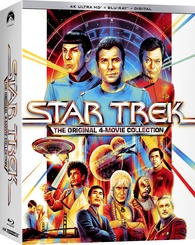
I’ve been a Star Trek fan for most of my life. I grew up with Kirk, Spock, and McCoy. I admire William Shatner—yes, genuinely—and I wanted nothing more than to love Star Trek V: The Final Frontier when it premiered in 1989. I walked into that film ready to embrace it, flaws and all. I walked out disappointed.
And in 2003, when I reviewed it for Amazon, I didn’t sugarcoat that disappointment. I didn’t pretend it was a misunderstood masterpiece. I didn’t let my affection for Shatner or my loyalty to Trek override what was right in front of me: a film with a muddled script, cheap effects, and a premise that collapsed under its own ambition.
That review—written more than twenty years ago—still reflects the core of my reviewing philosophy today.
⭐ 1. Loving a thing doesn’t mean lying about it
If anything, the deeper your love, the more honest you should be.
I adore Star Trek. I admire Shatner. I wanted Final Frontier to soar. But wanting something to be good doesn’t make it good. A reviewer’s job is not to protect their own nostalgia or to shield creators from discomfort. It’s to tell the truth as clearly as possible.
If I can be honest about a franchise I love, I can certainly be honest about a debut novel from a stranger.
⭐ 2. Context matters—history matters—craft matters
My Final Frontier review wasn’t a drive‑by. It was grounded in:
- Trek’s production history
- the franchise’s narrative arc
- Shatner’s directorial ambitions
- the budget constraints
- the script’s development
- the film’s place in the larger canon
A good review doesn’t exist in a vacuum. It situates the work in its lineage. It asks: What was attempted? What succeeded? What failed? Why?
That’s why praise‑circle reviews ring hollow—they avoid context because context exposes the truth.
⭐ 3. A reviewer owes their loyalty to the reader, not the creator
This is the line that separates criticism from cheerleading.
When I wrote that Angela’s novel “reads like the overwrought notebook scribbles of a teenager who just discovered ‘deep’ metaphors,” I wasn’t trying to be cruel. I was trying to be accurate. Readers deserve accuracy. They deserve honesty. They deserve to know what they’re paying for.
A reviewer who protects a creator at the expense of the reader isn’t a reviewer—they’re a publicist.
⭐ 4. Specificity is respect
My Trek V review didn’t just say “I didn’t like it.” It explained:
- why the plot didn’t work
- why the effects failed
- why the themes collapsed
- why the humor felt forced
- why the production history mattered
- why the film’s ambition exceeded its execution
Specificity is the difference between critique and complaint. It’s also the difference between helping a reader and misleading them.
Praise‑circle reviews avoid specifics because specifics reveal the truth.
⭐ 5. Honesty is not cruelty—dishonesty is
When I criticize a book, a film, or a game, I’m not attacking the creator. I’m respecting the reader. I’m respecting the craft. And I’m respecting the idea that improvement is possible.
Dishonest praise does the opposite. It traps writers in mediocrity. It misleads readers. It erodes trust in the entire ecosystem.
If I had written a glowing review of Final Frontier just because I like Shatner, I would have betrayed the reader—and myself.
⭐ 6. A reviewer’s reputation is their legacy
I’ve been reviewing since high school. I’ve written thousands of critiques across Amazon, Epinions, Yahoo! Voices, and my own site. I’ve published fiction and nonfiction. I’ve spent decades reading widely and writing seriously.
My credibility is the one thing I refuse to compromise.
If that means losing followers, so be it. If that means praise‑circle bloggers unfriend me, so be it. If that means some writers bristle at honest critique, so be it.
I’m 63. I’m fresh out of damns to give.
⭐ 7. The truth is the only thing that helps anyone
A bad review—an honest one—can help a writer grow.
A dishonest five-star rave helps no one.
Not the writer.
Not the reader.
Not the industry.
Not the craft.
My Final Frontier review wasn’t written to hurt Shatner. It was written to help readers understand what they were getting—and to articulate why the film didn’t work, even though I wanted it to.
That’s my philosophy in a nutshell:
Tell the truth. Respect the reader. Respect the craft. Love the work enough to be honest about it.


Share your thoughts with the world!