

Saturday, April 11, 2026 — Orlando, Florida
Spring has settled over Central Florida with the confidence of someone who knows they look good in natural light. As I write this, it’s a sun‑washed 76°F (25°C), the kind of day where the breeze from the east‑northeast pretends it’s cooling you off while the humidity quietly bumps the “feels like” temperature up to 83°F. The forecast promises more sunshine and a high of 80°F (26°C), which is Florida’s gentle reminder that yes, it’s April, but summer is already tapping its foot backstage.
This year, of course, carries a different kind of heat. 2026 marks the 250th anniversary of the Declaration of Independence — the Semiquincentennial, a word that sounds like it should come with a parade float and a marching band. In calmer times, we’d probably be drowning in commemorative soda cans and earnest TV specials. Back in 1976, the Bicentennial felt like a national block party.
I was 13 that summer, old enough to sense the country was still recovering from Watergate and Vietnam, but young enough to be dazzled by the pageantry. The Treasury brought back the $2 bill, the Mint rolled out Bicentennial quarters, and even Burger King jingles leaned into the moment with cheerful odes to individuality. It was a strange, hopeful, transitional time — and somehow, we all seemed in the mood to celebrate.
My own Bicentennial memories are stamped with the geography of Coral Estates Park in Westchester, a suburb of Miami where my best friend, Mark Prieto — the real‑life inspiration for Jim Garraty’s ride‑or‑die — lived just three houses down. Mark gifted me a pewter‑colored Bicentennial coin bank embossed with the Declaration of Independence and a cap‑gun musket straight out of a Revolutionary War reenactment. For a 13‑year‑old boy, this was basically treasure.
I also had a girlfriend then — K — four months older, one grade ahead, and already anticipating the junior‑high universe at Riviera while I prepared to start sixth grade at Tropical Elementary. At the time, that one‑grade gap felt like nothing. Later, it would matter more than I wanted it to. But in the Bicentennial summer, we were a sweet, earnest tween couple, and I was convinced we’d last forever. Thirteen-year-old logic is undefeated.

Of course, 1976 wasn’t flawless. Fifth grade had been my first year “mainstreamed” after several years in Mrs. Chambers’ Special Education class. I was 12 — older than most of my classmates — and still adjusting to English, American schooling, and the aftershocks of leaving Bogotá and Colegio El Nogal behind. Mrs. Brown, my fifth‑grade teacher, was kind but demanding, and the academic leap was steep. Math and science felt like uphill battles; language arts and social studies were more my speed. I worked hard, earned my way into Mrs. Vaughan’s sixth‑grade class, and collected my first pair of eyeglasses and a hearing aid along the way.
Socially, things were just as complicated. K was blossoming, other boys noticed, and I was trying to be loyal while also being a 13‑year‑old with a pulse. I never acted on anything, but I’d be lying if I said I didn’t occasionally daydream about girls like Debbie Voss — the first girl to ever star in one of my teenage dreams — or Theresa Barnes, widely considered the prettiest girl in school and a devoted fan of the song “Ben.” I stayed faithful, but my imagination wandered, as imaginations do.
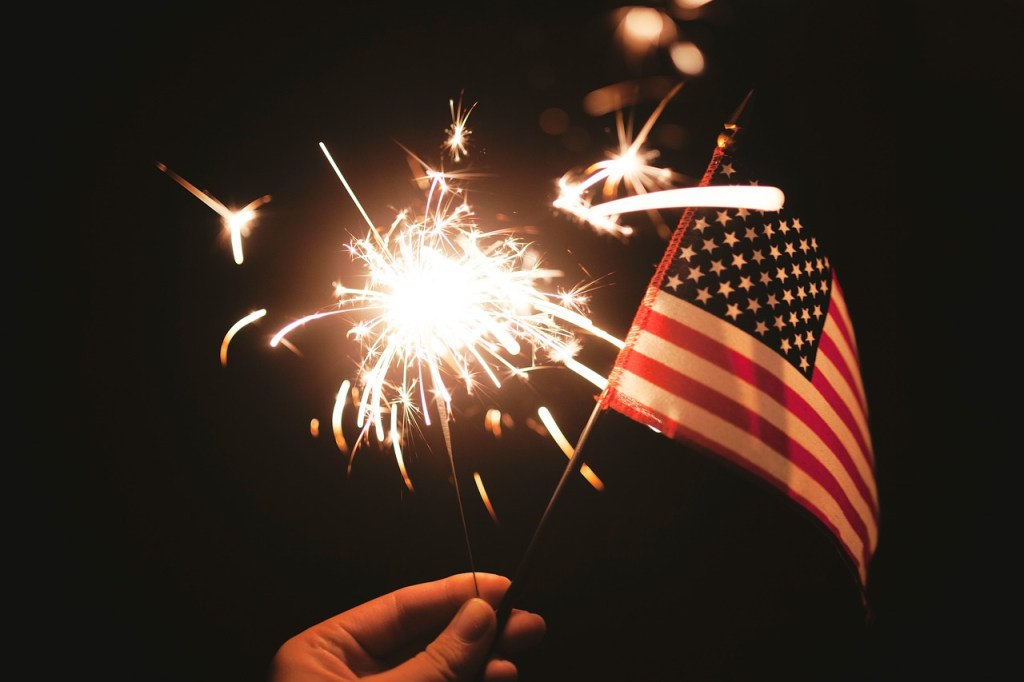
So no, 1976 wasn’t a “Perfect Year.” But looking back from the vantage point of 2026 — a year that feels stormier, moodier, and far less unified — that Bicentennial summer glows a little brighter. Imperfect, yes. But good. Surprisingly good.
And maybe that’s the quiet lesson of anniversaries, whether 200 or 250 years in: the past rarely behaves, but it often shines.
 A Certain Point of View, Too
Leave a comment