
Saturday, May 16, 2026 — Orlando, Florida
It is a torrid late‑spring day in Central Florida. As I write this, it’s just past one in the afternoon, and the heat outside is, in a word, oppressive. The temperature sits at 90°F (32°C) under partly sunny skies. With a southeast wind at 8 mph (13 km/h) and relative humidity at 52%, it feels more like 97°F (36°C). This afternoon promises mostly sunny skies and a high of 91°F (33°C), which is Florida’s way of reminding us that summer doesn’t wait for the calendar.
As you know, I’m not exactly thrilled about this year’s commemoration of the Semiquincentennial of the American Revolution and the Declaration of Independence. The country’s cultural and political divide — compounded by an unpopular war with Iran and the strain it has placed on an already fragile economy — has dampened whatever enthusiasm I might have had for America’s 250th “birthday.” I haven’t googled local or national events. I haven’t bought any “America 250” merchandise. And the word patriot still earns a skeptical side‑eye from me; it’s been freighted with too many associations with far‑right movements and the current Administration.
Nevertheless, I am brushing up on the history of what documentarian Ken Burns and historian Geoffrey C. Ward call “the most consequential revolution in history.” At the moment, I’m:
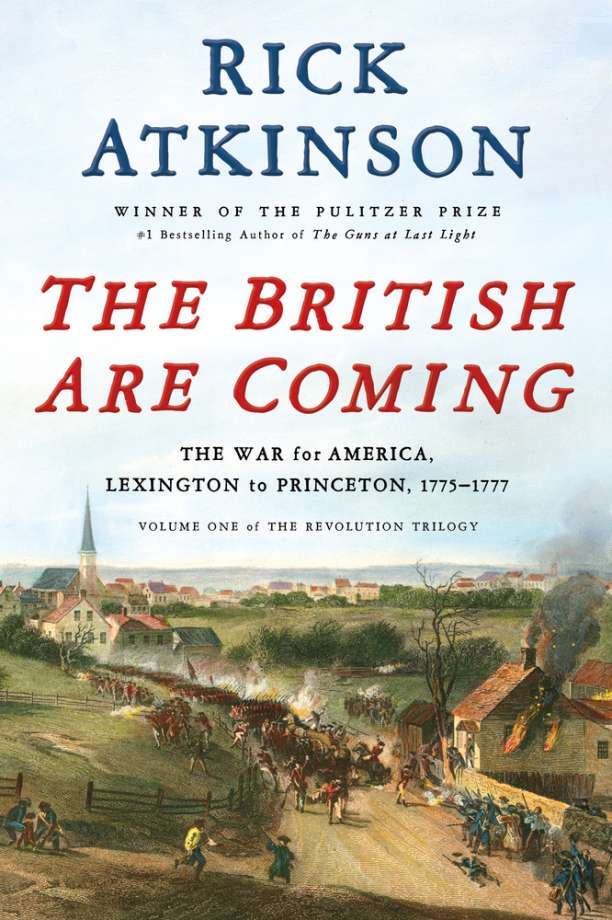
- Re‑reading the first two books of Rick Atkinson’s Revolution Trilogy (The British Are Coming: The War for America, Lexington to Princeton, 1775–1777 and The Fate of the Day, Ticonderoga to Charleston, 1777–1780). I read both volumes when they were first published, but 2026 feels like the right year to revisit these destined‑to‑be classics about our country’s birth saga.
- Rewatching — or trying to rewatch — The American Revolution: A Film by Ken Burns, Sarah Botstein, & David Schmidt. I watched the six‑part 2025 documentary between late November and January, but since I tend to start Blu‑rays late at night and fall asleep midway through anything, I’m restarting from the beginning.
I’ve long known there’s a Grand Canyon‑sized gap between the American past as it’s often taught in school and the American past as it was actually lived: messy, violent, improvisational, and full of people who would never fit neatly into a civics‑class mural. Burns, Ward, and the historians featured in The American Revolution tackle that problem head‑on, especially in Part One, “In Order to Be Free (May 1754 – May 1775).”
One recurring point in that first episode is that many Americans still know the Revolution less as history than as national folklore — a gallery of marble demigods, righteous grievances, and tidy moral lessons. That mythology isn’t hard to explain. Nations, like families, prefer their origin stories polished and presentable. School curricula favor clear heroes and simple plots over chaos and contradiction. And politicians of every stripe are forever rummaging through the Founding era for usable ancestors. A cleaner story is easier to teach, easier to celebrate, and much easier to print on commemorative mugs.
When I was in school in the early 1980s, our first American History unit offered only a brisk, sanitized treatment of the colonists’ “no taxation without representation” complaints — usually without noting that Parliament, inconveniently enough, believed it had practical and even defensible reasons for taxing the colonies after the Seven Years’ War. The result was a Revolution taught less as a turbulent civil conflict within the British world and more as the inevitable triumph of liberty, with the awkward bits trimmed for time.
So, no, I’m still not in the market for an America 250 tricorn hat, a commemorative coffee mug, or any other red‑white‑and‑blue tchotchkes of national self‑congratulation. But I am in the market for a fuller, less flattering, and therefore more honest understanding of the Revolution itself. If this anniversary is worth observing at all, it should be observed not as a pageant of inherited certainties, but as an opportunity to look again at a founding struggle that was as contradictory, human, and unfinished as the country that emerged from it.


Share your thoughts with the world!