
F-14 Pilots Thwart Soviet Attack in the Norwegian Sea
ABOARD USS NIMITZ, March 1, 1985
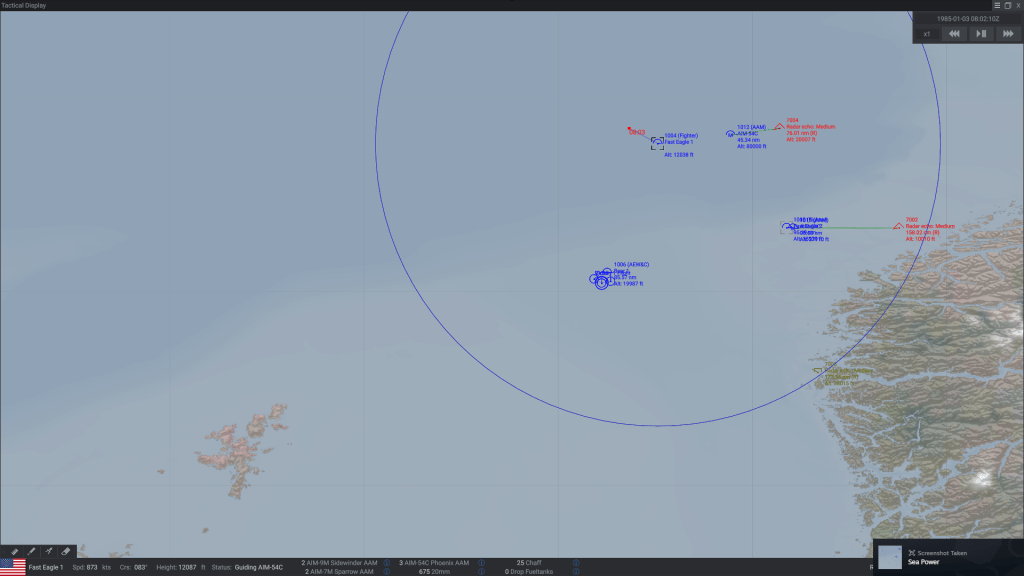
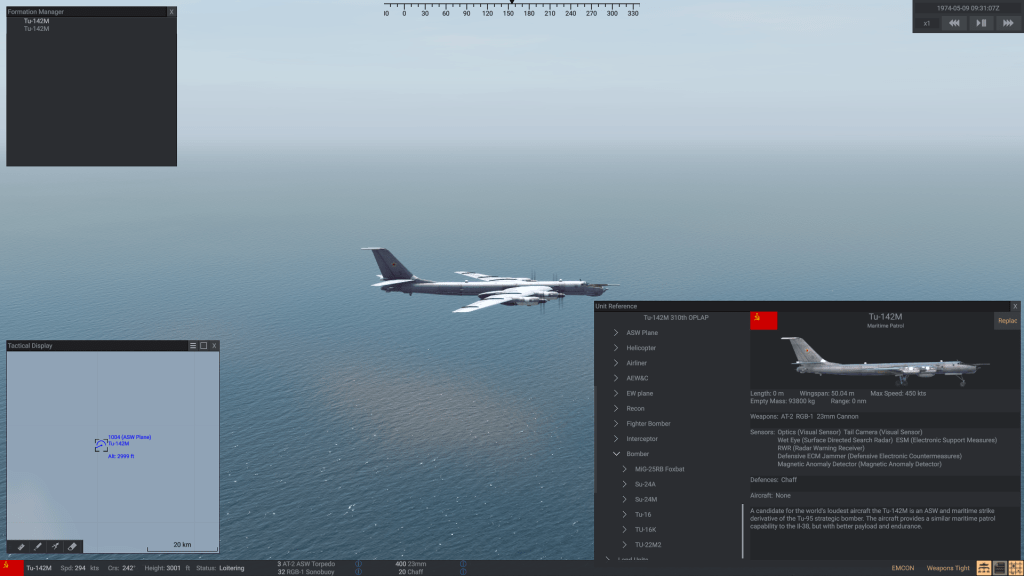
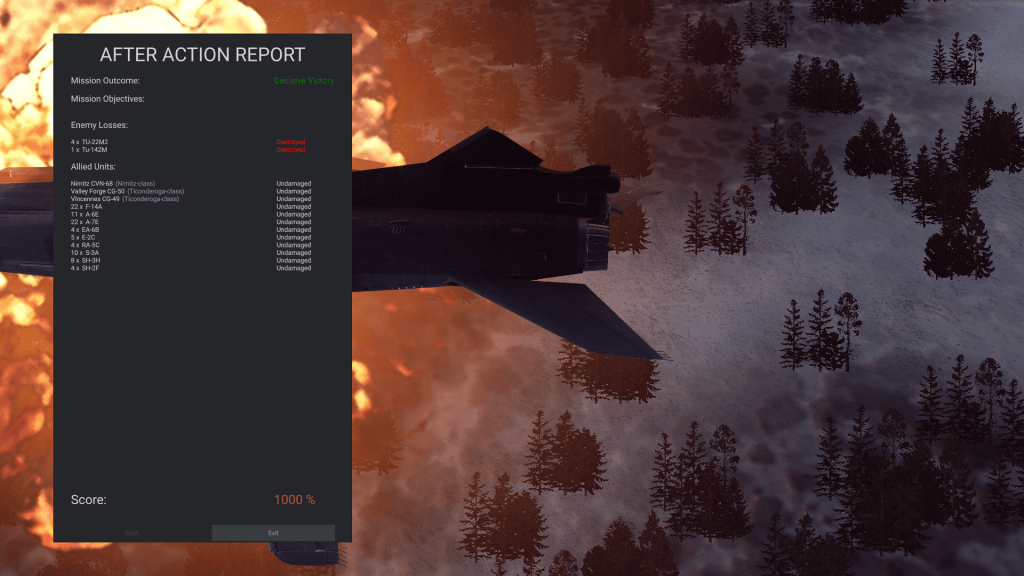
In a series of intense aerial clashes above the Norwegian Sea on Day 12 of the ongoing war between NATO and the Warsaw Pact, F-14 pilots from the USS Nimitz carrier battle group emerged victorious, shooting down four Soviet Backfire bombers and a Tu-142M Bear reconnaissance aircraft. These actions successfully countered a potentially devastating missile attack, thereby safeguarding a critical naval asset in the early days of what is now being referred to as the Third Battle of the Atlantic.
The clashes, which took place under the strained circumstances of a full-scale maritime conflict, saw the F-14 crews, identified solely by their callsigns “Fast Eagle 1” and “Fast Eagle 2,” intercepting and destroying the five enemy aircraft using the AIM-64 Phoenix air-to-air missiles. This marked the first-ever use of these long-range weapons in combat, showcasing their effectiveness in defending the carrier battle group from aerial threats.

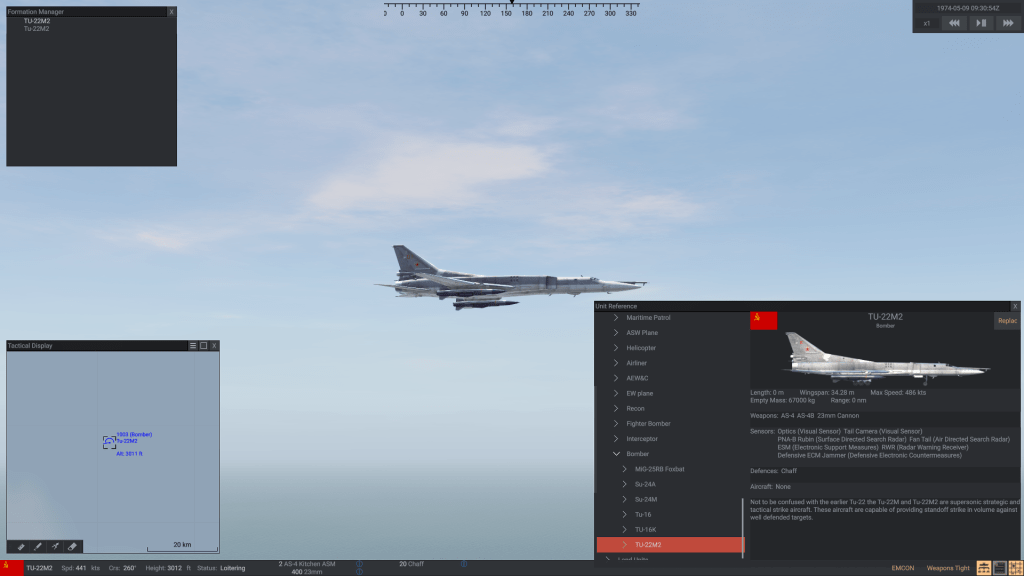
One of the Soviet Backfire bombers managed to launch an AS-4 Kitchen anti-ship missile before being downed; however, the missile was promptly neutralized by SM-2 Standard surface-to-air missiles launched from the Ticonderoga-class AEGIS cruiser USS Vincennes. This successful interception prevented potential catastrophic damage to the Nimitz.
Lt. Thomas Coyle, the Nimitz’s public information officer, commended the two-man flight crews for their professionalism and quick thinking during the confrontation. He highlighted a particularly tense moment when two civilian airliners, including one from the West German airline Flughansa, inadvertently strayed near the battle group amidst the Soviet assault. The Norwegian airliner, quickly identified and responsive to radio communications, was guided safely away. Meanwhile, the Flughansa 707 had a radio malfunction and was unaware of the battle until Fast Eagle 1 managed to warn it away using visual signals, averting a potential disaster.
Lt. Coyle expressed relief that the encounter ended without any Soviet aircraft surviving, but he also cautioned that the battle group still faces numerous threats in this ongoing conflict. The vigilance and resilience shown by NATO forces in this engagement underscore the high stakes and the precarious nature of the war at sea.
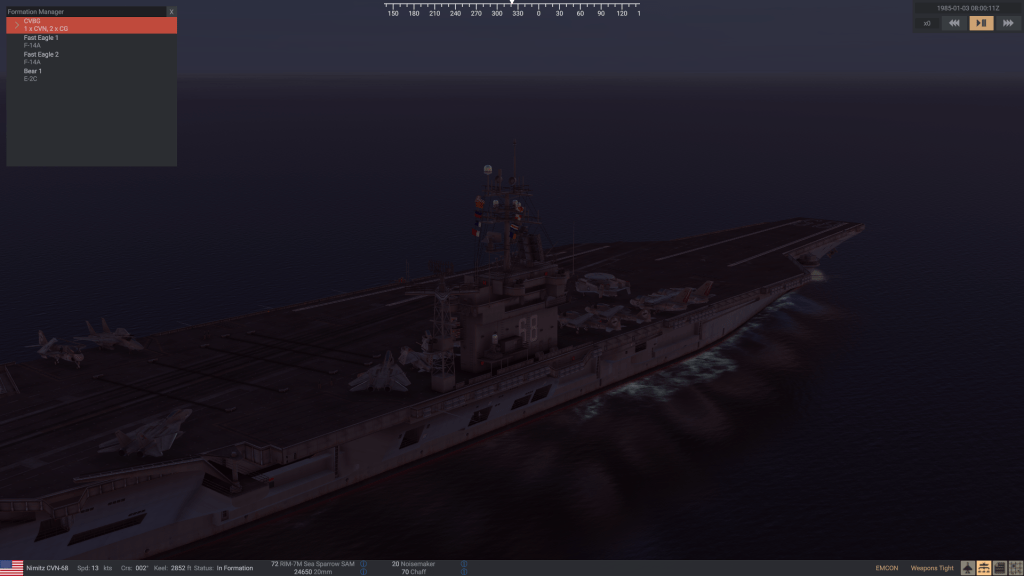
The aerial dogfights over the Norwegian Sea have become emblematic of the broader struggle between NATO and the Warsaw Pact forces. The USS Nimitz, a centerpiece of NATO’s naval power projection, has been a critical target for Soviet forces aiming to diminish NATO’s maritime capabilities. The successful defense of the battle group in this encounter not only preserved a vital asset but also demonstrated the strategic importance of air superiority and advanced missile technology in modern naval warfare.
The AIM-64 Phoenix missiles, with their unprecedented range and precision, played a pivotal role in the outcome of the battle. Designed to engage multiple targets simultaneously, these missiles have now proven their worth in a real-world scenario, providing the F-14 pilots with a significant edge over their adversaries.
The Soviet Backfire bombers, known for their long-range strike capabilities, posed a significant threat to the Nimitz and its accompanying vessels. The downing of these bombers before they could inflict damage was a testament to the skill and readiness of the F-14 pilots. The Tu-142M Bear, a formidable reconnaissance aircraft, was also neutralized, depriving the Soviet forces of valuable intelligence and coordination capabilities.

As the conflict progresses, the Nimitz carrier battle group remains on high alert, continuously monitoring for potential threats from the air and sea. The successful defense of the battle group in this engagement has bolstered the morale of the crew and highlighted the importance of preparedness and adaptability in combat situations.
In his closing remarks, Lt. Coyle emphasized the need for continued vigilance and readiness, acknowledging that while the immediate threat had been neutralized, the broader conflict remained a formidable challenge. “We are relieved that none of the Soviet aircraft survived this encounter, but we are acutely aware that the battle group still faces many threats in this conflict,” he said. “Our crews are dedicated to maintaining the highest standards of readiness and will continue to defend our forces with unwavering resolve.”
The events of March 1, 1985, will undoubtedly be remembered as a pivotal moment in the war between NATO and the Warsaw Pact. The actions of the F-14 pilots and the crew of the USS Vincennes have set a precedent for future engagements, demonstrating the strategic importance of air superiority and advanced missile technology in modern naval warfare.
As the war continues, the USS Nimitz and its battle group will remain a key component of NATO’s efforts to maintain control of the North Atlantic and protect vital sea lanes from Soviet aggression. The resilience and determination exhibited by the crew in this encounter serve as a powerful reminder of the stakes involved and the critical role that each member of the battle group plays in ensuring the success of their mission.
E. Lynn DeVal
The New York Times
 A Certain Point of View, Too
You must be logged in to post a comment.