Jane’s Redux: Chinese Special Forces
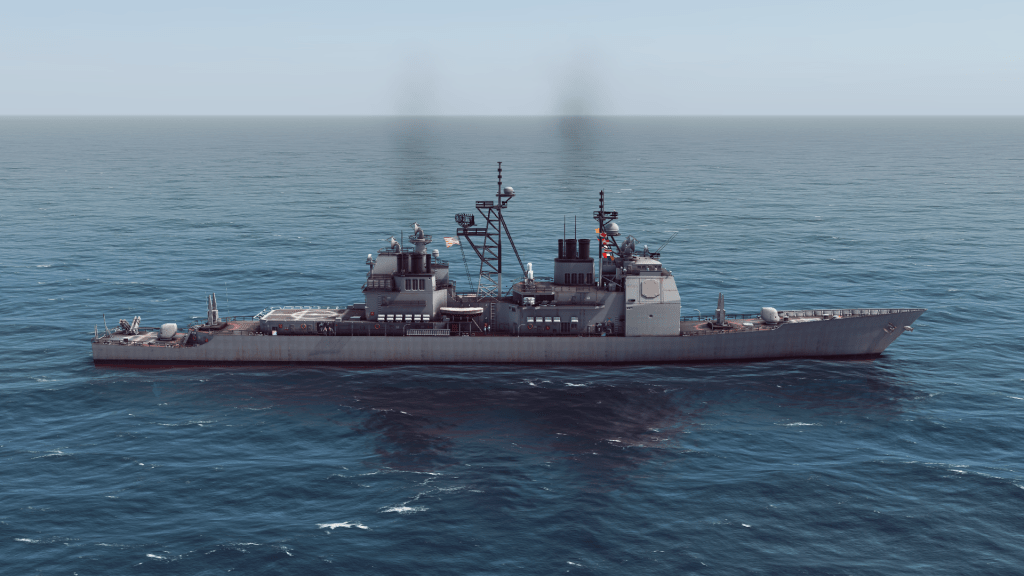
Main Game: Sea Power: Naval Combat in the Missile Age (2024, Triassic Games/MicroProse)
Based on: “Chinese Special Forces” from Jane’s Fleet Command (1999, Sonalysts Combat Simulations/Electronic Arts)
Main Game Rating (Early Access):
Scenario Difficulty Rating:

In November 2024, MicroProse released Sea Power: Naval Combat in the Missile Age, an ambitious real-time strategy and tactical simulation covering naval warfare from the early 1960s to the late Cold War (circa 1985-1987). Developed by a team that includes Cold Waters designer Nils Ducker, Sea Power boasts highly detailed 3D representations of ships, aircraft, submarines, missiles, torpedoes, and environmental elements.

Currently in Early Access, the game is undergoing core gameplay refinements and bug fixes, delaying the dynamic campaign. Due to its late-20th-century naval combat focus, Sea Power often draws comparisons to Fleet Command (1999, Electronic Arts), as both feature historical scenarios like U.S. naval clashes with Libya and Iran in the mid-1980s, along with hypothetical Cold War confrontations between NATO and the Warsaw Pact.
Beyond its core gameplay, Sea Power has fostered a growing modding community, with players crafting custom scenarios available via Steam’s Community Workshop.
Jane’s Redux: A Fleet Command Revival
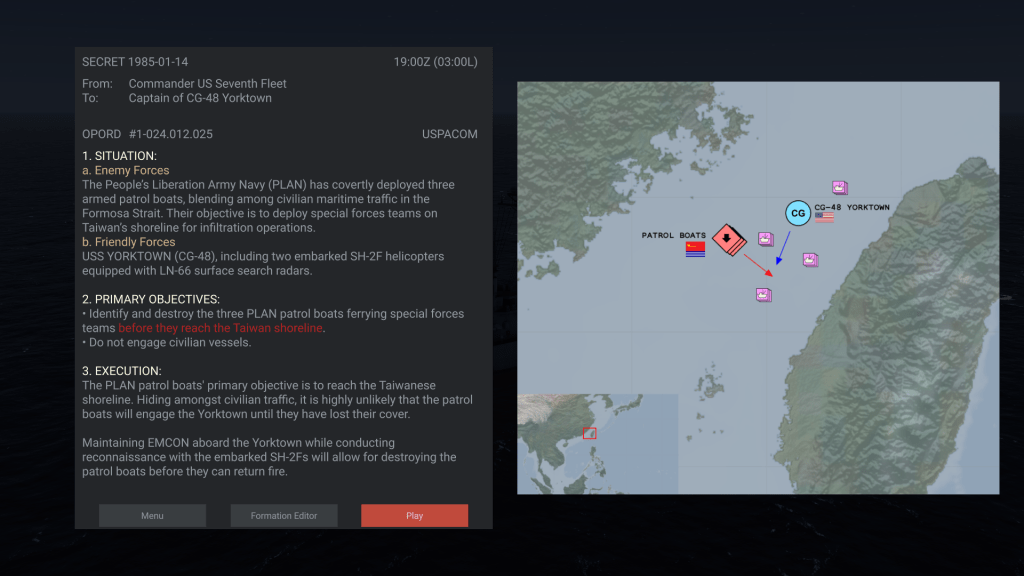
One dedicated Fleet Command fan utilized Sea Power’s Mission Editor toolkit to recreate scenarios from the older game, offering a fresh yet familiar experience. Due to some unavailable ship classes, he modified several mission names for his Jane’s Redux mod.
Designed with accessibility in mind, Jane’s Redux features numerous short-form missions—some lasting under an hour—perfect for newcomers. For instance, Hair Trigger provides a 30-minute introduction to commanding a carrier battle group (CVBG) under pressure. The objective? Protect your carrier from Soviet air and submarine threats—all while your admiral enjoys lunch.
While Hair Trigger is a standout scenario, Chinese Special Forces also offers an intriguing, tactical experience worth discussing.
Dire Straits: The Mission Breakdown
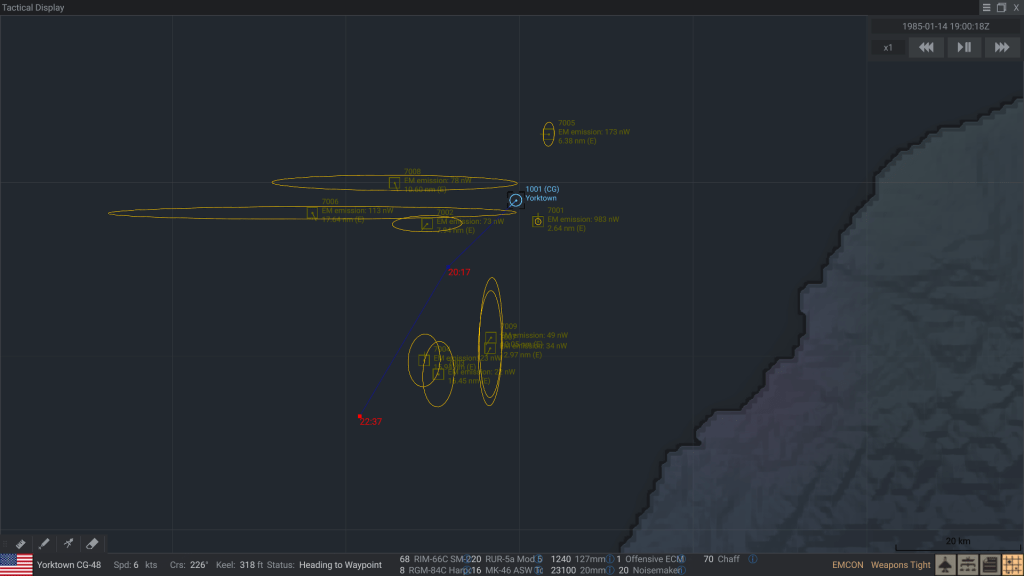
In both the original Fleet Command and Jane’s Redux versions of Chinese Special Forces, players command a Ticonderoga-class guided missile cruiser patrolling the Taiwan Strait—one of the world’s most politically sensitive maritime zones.
– In Fleet Command (1999), players take control of USS Valley Forge (CG-50).
– In Jane’s Redux, the vessel is USS Yorktown (CG-48), and the mission unfolds in early 1985.
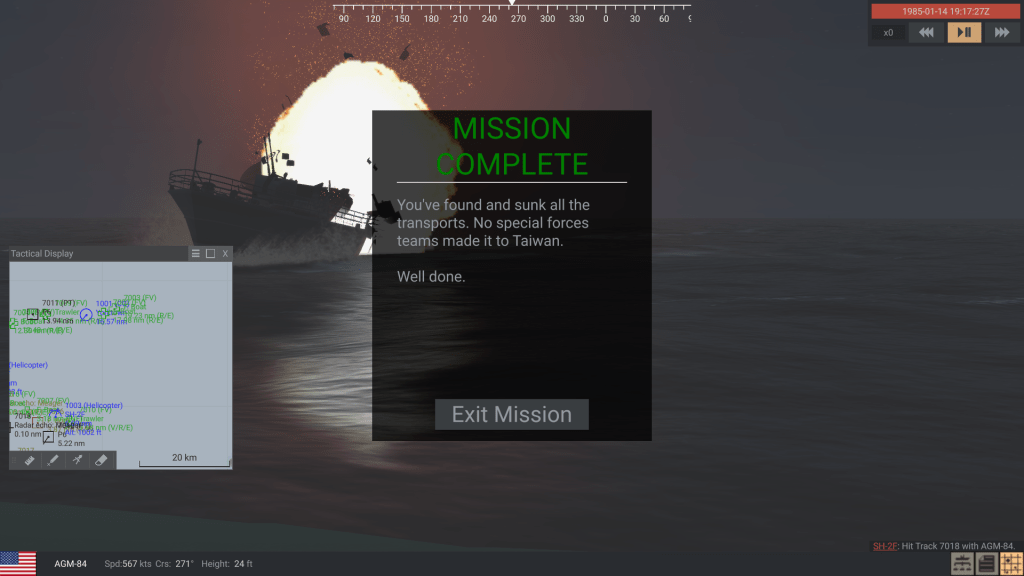
Unlike the original game, the Redux version provides greater detail, with players navigating civilian maritime traffic while attempting to locate and eliminate three People’s Liberation Army Navy (PLAN) patrol boats covertly transporting Chinese Special Forces infiltration teams into Taiwan.
Victory Conditions
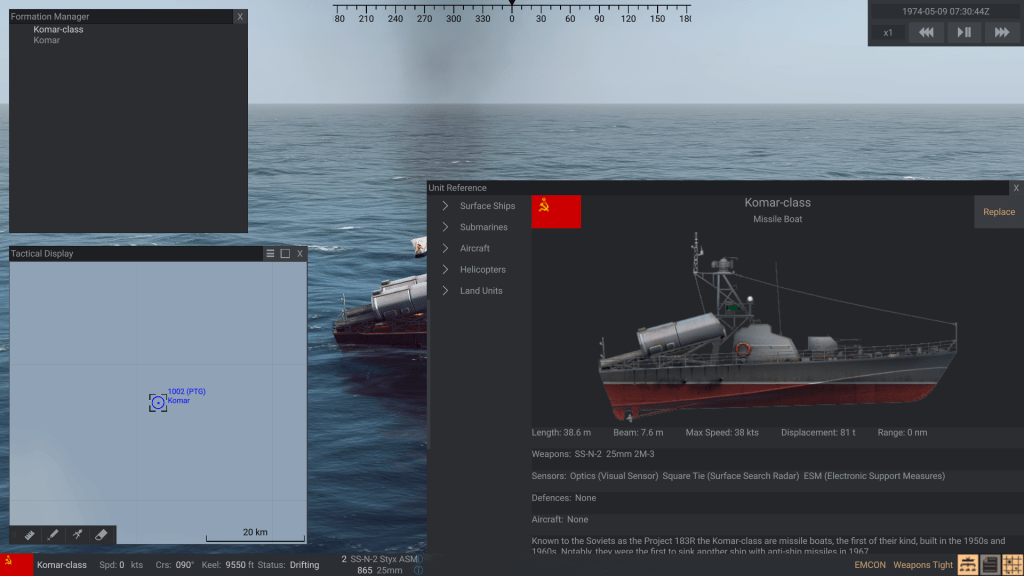
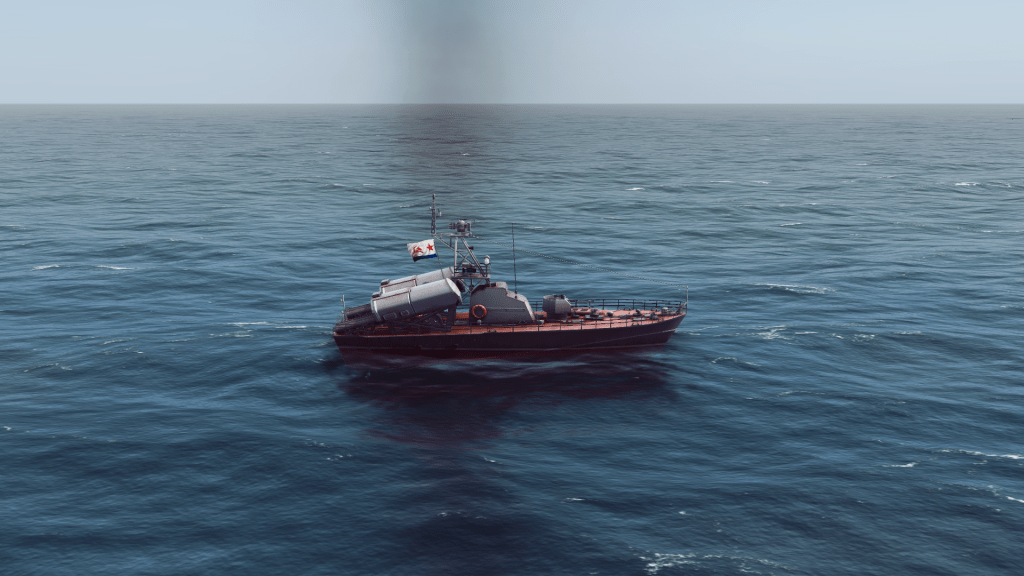
1. Identify the Enemy – Locate three hostile vessels (a Komar-class missile boat and two P6 PT boats) hidden among civilian merchant ships and fishing vessels.
2. Avoid Diplomatic Chaos – Civilian vessels in the area are PRC-based; mistakenly attacking one could trigger a major incident, fueling Chinese propaganda.
3. Choose Your Weapons Wisely – Ideally, engage enemy ships with Yorktown’s 5-inch guns, but use Harpoon missiles with extreme caution—civilian ships caught in the blast zone would be unintended casualties.
4. Stay Hidden – Maintaining EMCON (Emissions Control) keeps Yorktown’s radar silent, preventing enemy torpedo boats from detecting and striking first.
My Experience
Though not the most popular Jane’s Redux mission, Chinese Special Forces offers an engaging challenge with an emphasis on stealth and precision. The mission’s premise—that only PRC civilian vessels transit the Taiwan Strait—feels somewhat unlikely, as Taiwanese and Philippine ships regularly operate in the region. It’s possible Beijing intentionally crowds fishing vessels into contested waters, baiting an international incident to frame U.S. intervention as aggression.
Despite this, the scenario is manageable, with an estimated playtime of 15-20 minutes. Its one-star difficulty rating reflects a relatively low learning curve, making it ideal for beginners. However, the mission serves as an excellent introduction to key naval warfare concepts:
– Precise target identification
– Resource management under tight constraints
– Understanding real-world weapons limitations
My Playthroughs
Since purchasing Sea Power, I’ve tackled Chinese Special Forces multiple times.
– First Attempt – Sank a PLAN P6 PT boat with Yorktown’s guns and destroyed a Komar-class vessel with a Harpoon. Unfortunately, I miscalculated an attack angle, unintentionally hitting a civilian ship—resulting in a Pyrrhic victory.
– Recent Missions– Performance has improved, though occasional game bugs have led to some confusing Pyrrhic victories. In one case, I meticulously sank the correct targets without collateral damage, yet still received a non-optimal mission rating.
– Fine-Tuning Strategy – One frustrating misstep involved a Harpoon hitting a civilian vessel due to a poorly positioned helicopter. After replaying the mission, refining flight paths and missile angles ensured a more precise execution.
Final Thoughts
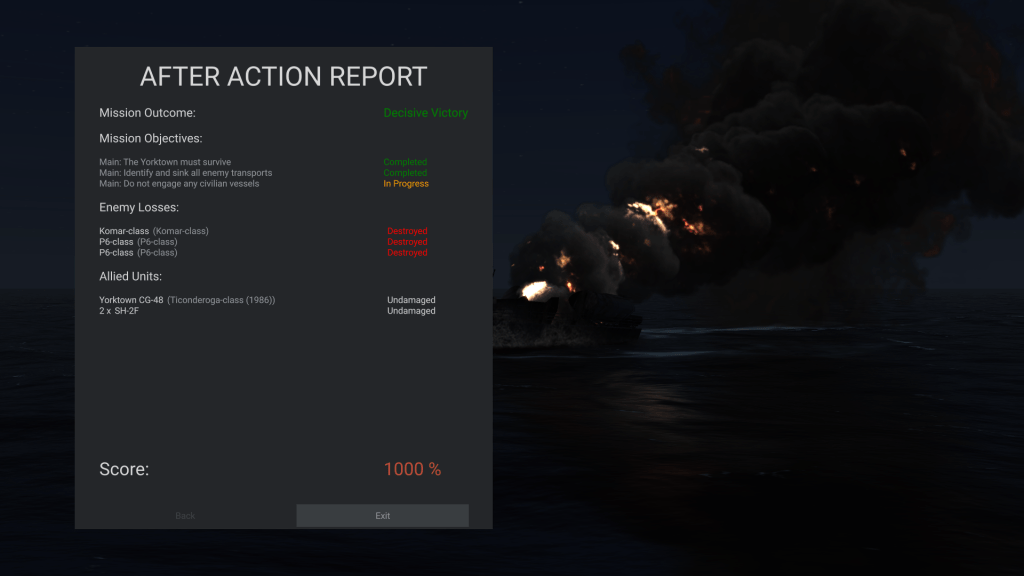
While Chinese Special Forces isn’t the perfect mission scenario, it undeniably offers a richer, more immersive experience than its Fleet Command counterpart. The added complexity in stealth mechanics, engagement rules, and resource constraints elevates the challenge, making it a worthwhile test for naval tacticians.
That said, I strongly advise newcomers to remain primarily in the tactical map view during missions. The cinematic 3D visuals are breathtaking, but prioritizing aesthetics over situational awareness can be detrimental. Balancing immersion with strategic focus is key—especially when missiles are flying and submarines are lurking.
For players looking to ease into Sea Power, Chinese Special Forces is a great introduction to Cold War-era naval combat, encouraging careful planning, adaptability, and respect for engagement limitations.

 A Certain Point of View, Too
You must be logged in to post a comment.