
🎼 A Fever Dream in Five Movements: Remembering My First Encounter with Berlioz’s Symphonie Fantastique
One of the most memorable experiences from my college years—now four decades ago—took place on a rare cool afternoon in South Florida. I was sitting in my Humanities class at Miami-Dade Community College, where Professor Jay Brown, a talented musician known for his skill with the glass harmonica, led us through a discussion that effortlessly spanned topics from epistemology to ethics. On that day, we explored the transition from the Classical elegance of Mozart to the emotional intensity of the Romantic era, focusing on composers like Beethoven, Schubert, and Berlioz.
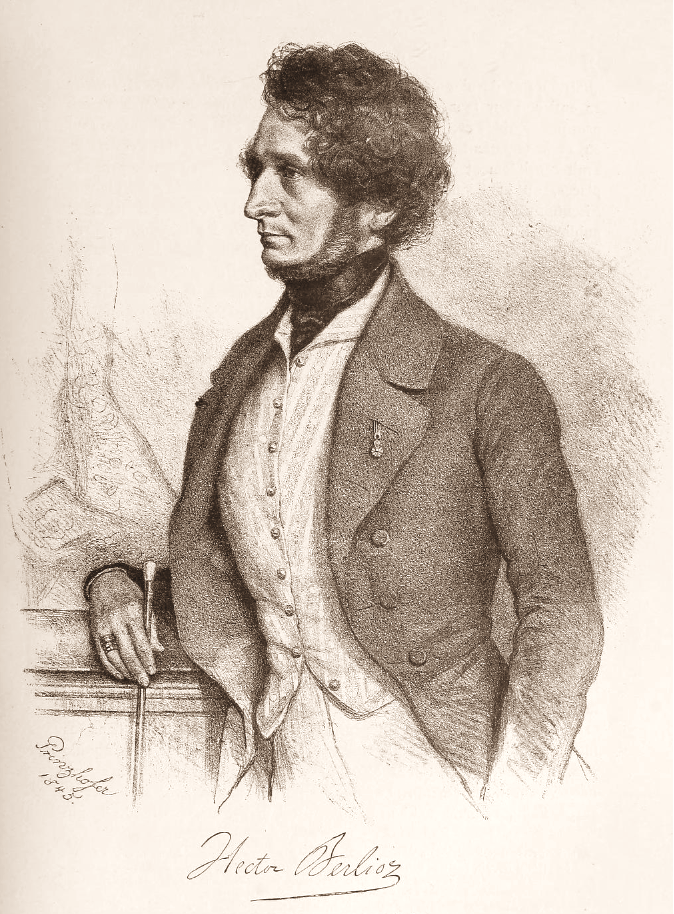
The centerpiece of our discussion was the birth of the big orchestra, and with it, Berlioz’s Symphonie Fantastique (Op. 14). Before playing the first two movements—Rêveries – Passions and Un Bal—Professor Brown introduced the concept of program music: compositions that tell a story through sound. Berlioz’s tale, he explained, was a fevered hallucination spun from the composer’s obsessive love for an English actress, amplified by an opium-induced descent into madness. Think less Romeo and Juliet, more Stephen King with a baton.
🎻 Movement I: Rêveries – Passions
The symphony opens like a dream—soft, drowsy, and disoriented—as the artist lies in his room, lost in a haze of memory and melancholy. The orchestra swells and recedes, mirroring the ebb and flow of his hallucinations. Then, like a ghost stepping into view, the “Beloved” motif emerges: a tender, yearning theme that will haunt all five movements. It’s a precursor to Wagner’s leitmotifs and a technique echoed in modern film scores by composers like John Williams and James Horner. The movement drifts between warmth and dread, ending not in resolution but in foreboding.
💃 Movement II: Un Bal
Here, Berlioz whirls us into a glittering ballroom. The waltz pulses with Romantic flair, conjuring images of Parisian elegance—lace, candlelight, and champagne. The artist, adrift in the crowd, spots his beloved. Her theme slips into the dance like a secret whispered across the floor. It’s a moment of musical magic: two motifs entwined, then the beloved’s theme alone, glowing briefly before the movement closes on a deceptively cheerful note.
🌳 Movement III: Scène aux Champs
The countryside offers a brief reprieve. Berlioz paints a pastoral idyll—meadows, trees, and a picnic for two. But beneath the serenity, tension brews. The beloved’s theme returns, now strained and sorrowful, clashing with a darker musical force. Professor Brown leaned into this moment, telling us, “You can almost see her as she dies.” And indeed, the music turns brutal. The artist imagines he has murdered her, and the movement spirals into grief, disbelief, and despair.
⚰️ Movement IV: Marche au Supplice
Dawn breaks. The artist is condemned. Berlioz unleashes the full power of the orchestra—brass, percussion, strings—marching the artist to the scaffold. The crowd cheers. The beloved’s theme flickers one last time, a ghostly echo before the blade falls. The execution is rendered with chilling precision, ending in a triumphant burst of drums and brass. Justice, it seems, has been served.
🔥 Movement V: Songe d’une Nuit du Sabbat
The final movement plunges us into Hell. The beloved’s theme returns, grotesquely twisted into a mocking laugh. Berlioz layers in the Dies Irae, the ancient chant of wrath and judgment, creating a sonic nightmare. It’s a witches’ sabbath, a grotesque carnival of the damned. The artist, now fully consumed by madness, cowers as his beloved becomes his tormentor. The effect is haunting—cinematic even. I remember Professor Brown noting its influence on John Williams’s score for Close Encounters of the Third Kind. That eerie resonance stayed with me.
That afternoon, Berlioz didn’t just introduce me to Romantic music—he opened a door to the emotional architecture of sound. Symphonie Fantastique wasn’t just a composition; it was a story told in tremors and crescendos, a fever dream that blurred the line between love and obsession, beauty and horror. And thanks to Professor Brown, it became part of my own story too.


You must be logged in to post a comment.