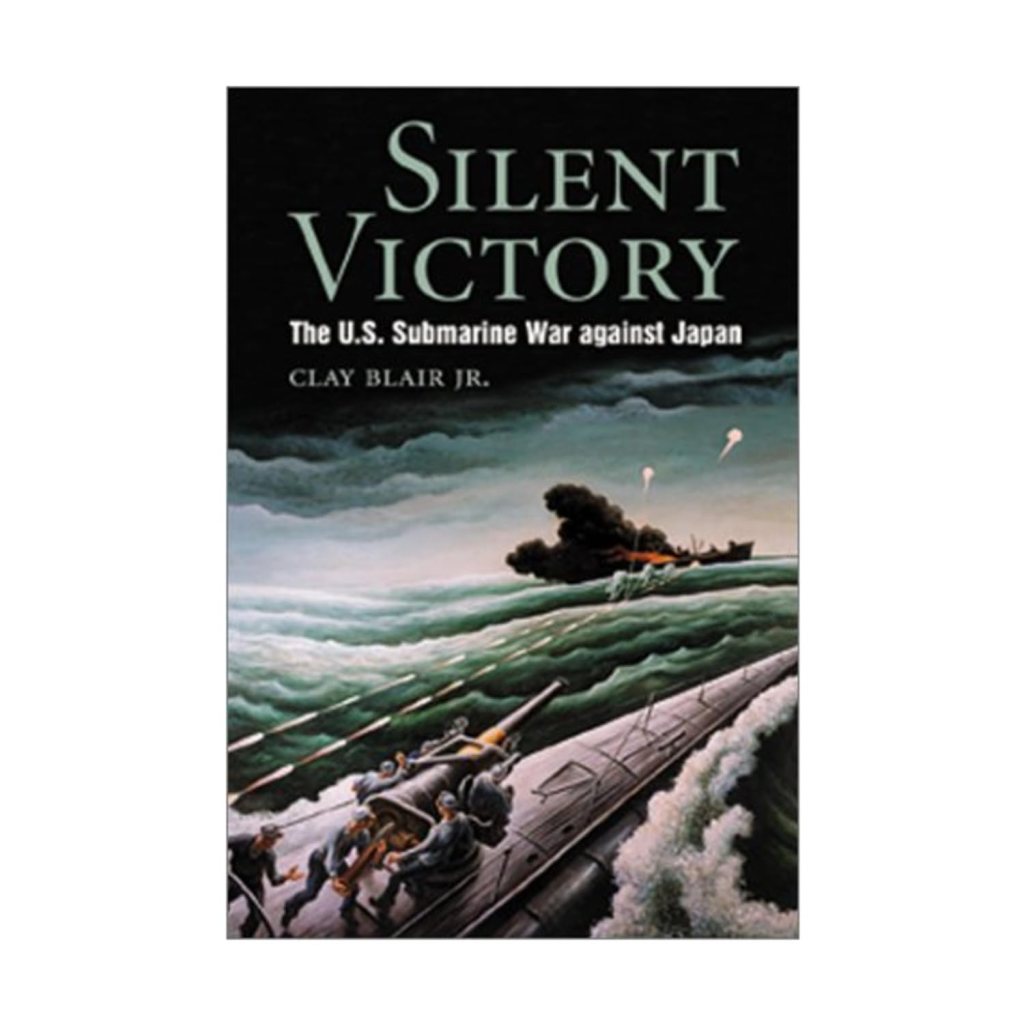
Silent Victory: The U.S. Submarine War Against Japan
By: Clay Blair, Jr.
Publisher (Reissue): Naval Institute Press
Year of Publication: (Original) 1975, (Reissue) 2001
Genre: Naval Warfare, World War II (Pacific Theater), U.S. Navy, Submarines, Submarine Warfare
🚢 Silent Victory: A Masterclass in Undersea Warfare and Strategic Reckoning
Few weapons reshaped the course of 20th-century naval warfare as profoundly as the submarine. In the Atlantic, Germany’s U-boats nearly severed Britain’s lifeline, threatening starvation through relentless attacks on Allied shipping. In the Pacific, however, Japan’s submarine force—hamstrung by rigid doctrine and a narrow focus on capital ships—scored dramatic hits like the sinking of the USS Indianapolis but failed to disrupt the vital flow of Allied logistics.
Clay Blair Jr.’s Silent Victory: The U.S. Submarine War Against Japan, reissued by the U.S. Naval Institute in 2001 after decades out of print, is a definitive chronicle of the American Silent Service’s four-year campaign beneath the waves. Blair, himself a former submariner, delivers a candid, unflinching account of the men, machines, and missions that turned the tide against Japan’s Imperial Navy and merchant fleet.
🧭 From Misfires to Mastery
Blair doesn’t romanticize the early war years. He exposes the painful learning curve: peacetime commanders who faltered under fire, obsolete S-class boats ill-suited for combat, and the infamous Mark XIV torpedo—an engineering marvel that too often failed to detonate. The Navy’s initial obsession with targeting battleships and carriers mirrored Japan’s own strategic blind spots, delaying the shift toward more impactful commerce raiding.
It wasn’t until Admiral Charles Lockwood, along with fellow leaders Ralph Christie, James Fife, Robert English, and Richard Voge, tackled the torpedo’s defects and reoriented the force toward merchant shipping that the submarine campaign truly began to strangle Japan’s war economy. With tankers, troop transports, and freighters sinking by the hundreds, the Silent Service achieved what Germany’s U-boats could not: a sustained blockade that crippled an island empire.
📘 A Living Document of Courage and Complexity
Blair’s narrative is rich with suspense, technical insight, and human drama. He introduces readers to a cast of officers and crews whose bravery and ingenuity under pressure helped rewrite the rules of naval warfare. The book’s meticulous detail and vivid storytelling make it essential reading for anyone fascinated by World War II, naval strategy, or the evolution of undersea combat.
Notably, Silent Victory served as a key source for MicroProse’s legendary submarine simulators Silent Service and Silent Service II, underscoring its enduring influence on both scholarship and interactive media.
🎯 Verdict: Silent Victory is more than a history—it’s a tribute to adaptation, resilience, and the quiet ferocity of those who fought beneath the surface. For naval buffs and WWII historians alike, it remains an indispensable classic.
 A Certain Point of View, Too
You must be logged in to post a comment.