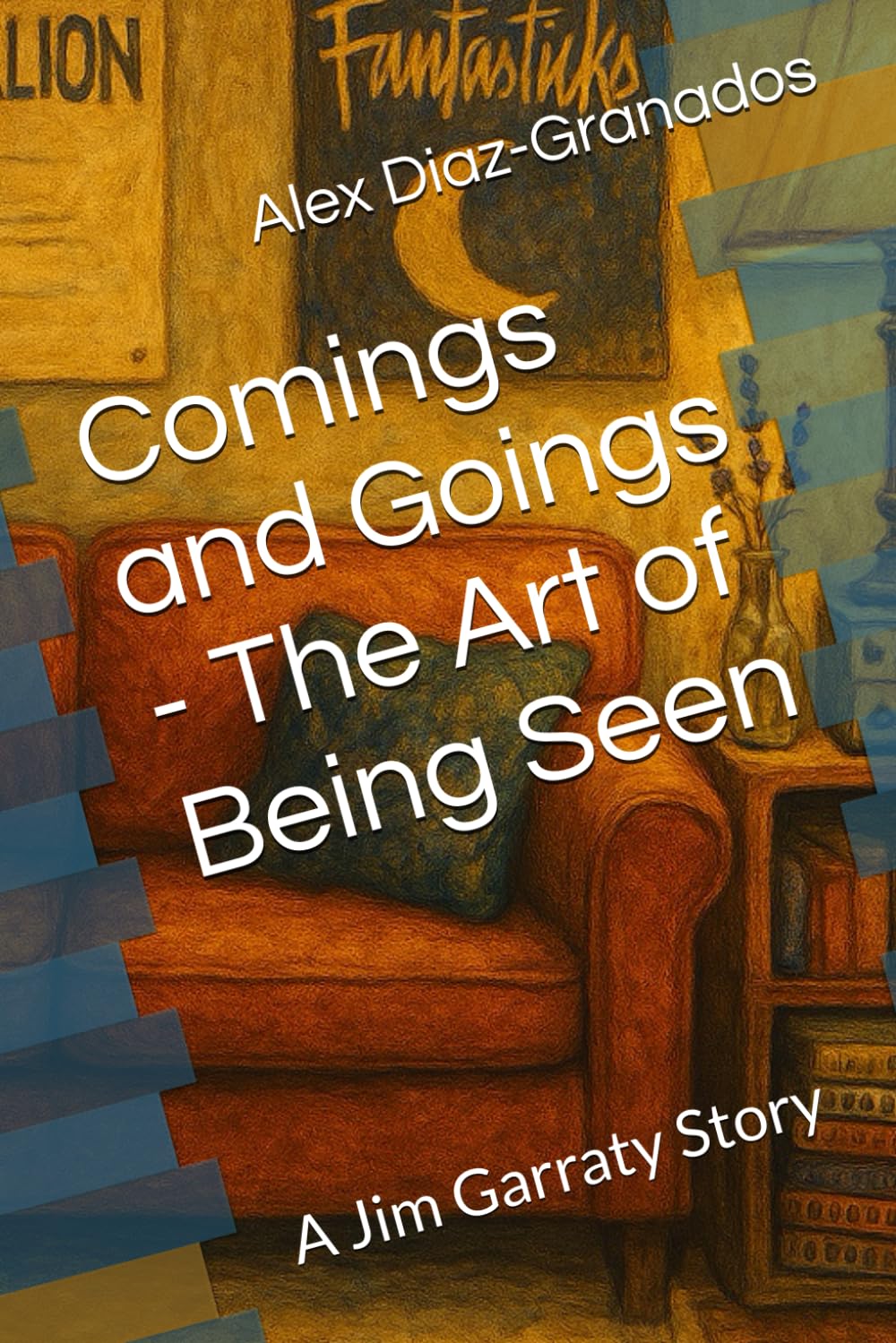
The Music That Hurt Less: A Response to Thomas Wikman’s Review
When Thomas Wikman described Comings and Goings – The Art of Being Seen as a luminous prelude to Reunion: Coda, I felt seen—not just as a writer, but as someone who stitched memory and melody into fiction, hoping someone might hear the emotional subtext.
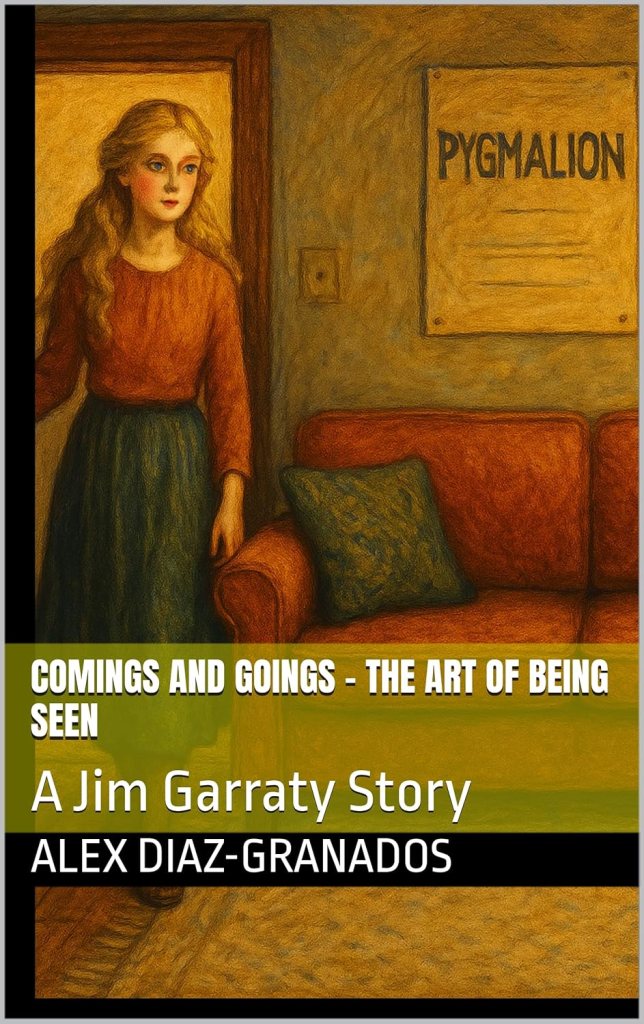
Thomas, your review honored the emotional realism I strive for. You recognized Jim Garraty’s awkward misery not as a trope, but as a lived texture. You saw Kelly Moore’s quiet grace not as a romantic device, but as an emotional presence. And you understood that this story isn’t about first love—it’s about the first time someone noticed without asking.
There’s a scene I keep returning to. It begins with broken glass and ends with Billy Joel. It’s the hinge of the story—the moment Jim chooses breath over performance, melody over noise. Here’s a glimpse:
The kitchen smelled like beer and broken glass. Somewhere deeper in the apartment, someone had puked. A couple near the bedroom was locked in a heated argument—he wanted sex, she didn’t, and neither seemed inclined to keep their voices down.
I had given this party my best shot—tried to tolerate the noise, the sweat, the half-stale Budweiser in my hand. But one hour and twenty minutes in, my patience had worn thin.
Even the music couldn’t save it.
Hard rock dominated, roaring over the voices, but every once in a while, something softer sneaked through. “The Winner Takes It All” landed unexpectedly, and before I could stop myself, I was back in ninth grade—back in the summer when Kathy Maraschino blew my world apart.
She hadn’t just drifted from me like a leaf caught in the wind. She had cheated. And not with just anyone—with Harry Schneider, the so-called “bad boy” who played heavy metal in his garage band, the kind of guy she used to roll her eyes at when we sat together in the cafeteria.
It had blindsided me, wrecked whatever naive certainty I had in young love. My mother had tried to comfort me, offered the same hollow phrase she’d always used—”Time heals all wounds.”
It wasn’t true.
Time didn’t heal anything. It just buried things under layers of new experiences, waiting for the right song—or the wrong one—to bring them roaring back.
I swallowed hard, forcing my face to stay neutral.
But Kelly noticed.
She didn’t pry, didn’t ask—just flicked her gaze toward me at the exact moment the song faded out, catching something in me before I had the chance to hide it.
Later, “Never Gonna Fall in Love Again” played, and Kelly, in that effortless way of hers, remarked, “You know, the chorus is based on a Rachmaninoff theme.”
I glanced at her, still shaking off the last remnants of Kathy’s ghost. “Which one?”
“Symphony No. 2 in E minor. The adagio.”
“I’ll check it out,” I promised.
But even moments like that weren’t enough to make staying worthwhile.
I exhaled sharply, leaning slightly toward Kelly. “Want to step out front?”
She didn’t hesitate. “Thought you’d never ask.”
The air outside wasn’t much cooler, but at least I could breathe. The muffled bass still thrummed through the walls, but the claustrophobia of the party had been replaced by something quieter, easier.
Kelly stretched her arms slightly, shaking off the last remnants of the party. “We should get medals for surviving that.”
I chuckled. “No kidding.”
She smiled wryly. “Honestly, the best thing about that disaster was the music. Well, the two decent songs, anyway.”
“Agreed.” I shook my head, glancing back toward the door like I could still hear the chaos inside.
“I don’t mind rock, but Jesus—who picked that setlist?”
Kelly laughed. “Probably someone deep into their ‘music should hurt’ phase.”
For a moment, I just stared at her, caught off guard by how easy she made everything feel.
We talked—about songs, about why melody mattered, about the weird ways certain tracks stick to memories.
Somewhere in the middle of it, Kelly said, “I’ve got An Innocent Man on cassette back at my place.”
I blinked. “Billy Joel?”
She grinned. “That one. My stereo isn’t top of the line, but it’s decent. Want to come listen?”
I felt something shift—excitement, nerves, maybe a little panic. I had never been alone in a girl’s apartment before. Even with Kathy, I’d barely made it past the family room.
This was different.
“Uh—” I coughed slightly. “Yeah. Sure.”
Kelly tipped her head toward the street. “Come on, then.”
And just like that, the party was behind us.
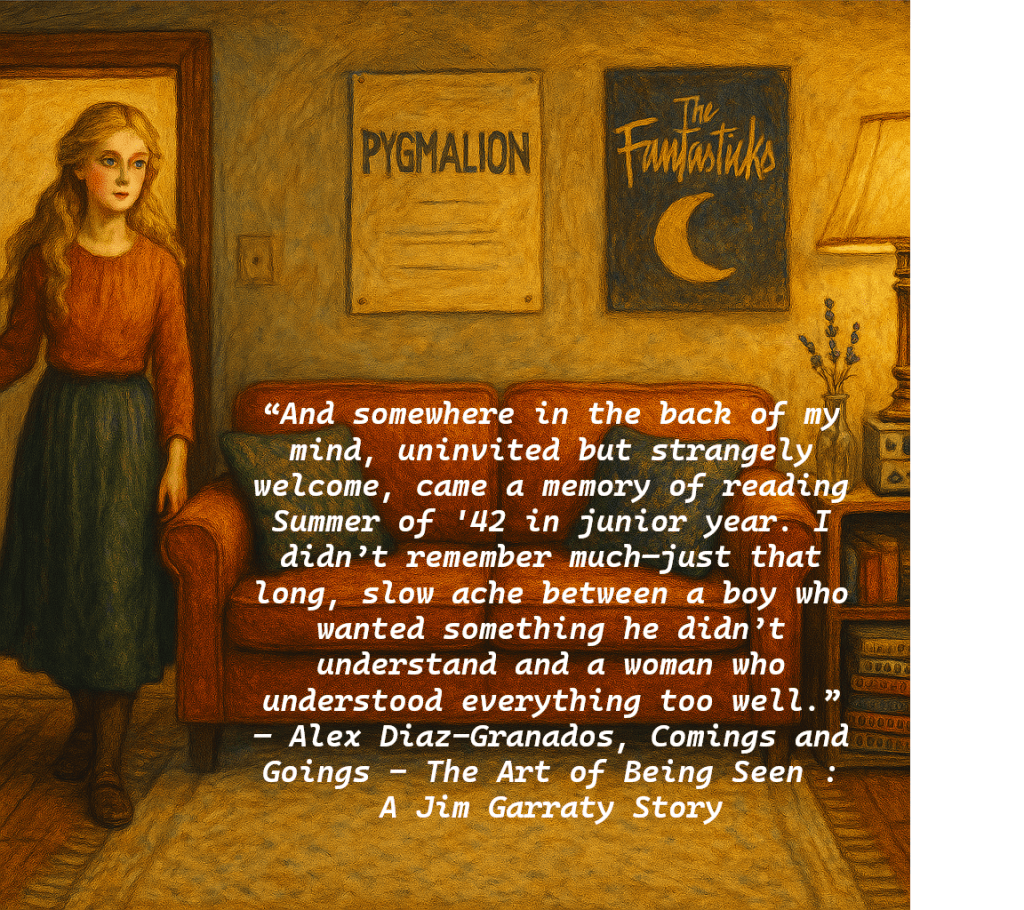
That moment—when Kelly offers music as sanctuary, and Jim accepts—is the emotional heartbeat of the story. It’s what your review captured so beautifully: the quiet triumph of being met where you are.
Thank you for your kindness, your insight, and your willingness to promote this story.
With gratitude,
Alex Diaz-Granados


Comments
10 responses to “The Music That Hurt Less: A Response to Thomas Wikman’s Review of ‘Comings and Goings’”
Thank you so much for highlighting my review and for your kind words Alex
LikeLiked by 1 person
Least I could do under the circumstances, Thomas…:)
LikeLiked by 1 person
I love this scene because it not only describes the vibe so well but also because the conversation feels so real. I just finished reading his review and really enjoyed it.
LikeLiked by 1 person
I’m glad that the scene I featured in my post lands with you, Pooj. It’s one of my favorites from Comings and Goings, although my best (in my all-too-subjective opinion) one is In the Still of the Night. I’m also happy beyond words that the conversation feels authentic! I try hard to write realistic dialogue….especially for the women in my stories.
LikeLiked by 1 person
I can tell you put effort into the dialogues, they come off as real conversations with real people.
LikeLiked by 1 person
Why, thank you, P.J.!
It’s possible that years of reading fiction (especially Stephen King, whose style influences mine) and learning how to write screenplays helped me develop an ear for dialogue. It’s the toughest element in storytelling for me to “get right,” but I’m getting good at it.
LikeLiked by 1 person
That’s why reading is so important for anyone that wants to be a writer. It really does help to see how others write and picking up those skills helps our writing.
LikeLiked by 1 person
“If you don’t have the time to read, you don’t have the tools to write.”
― Stephen King, On Writing: A Memoir of the Craft
LikeLiked by 1 person
Congratulations, Alex!
LikeLiked by 1 person
Thanks, Dawn.
LikeLike