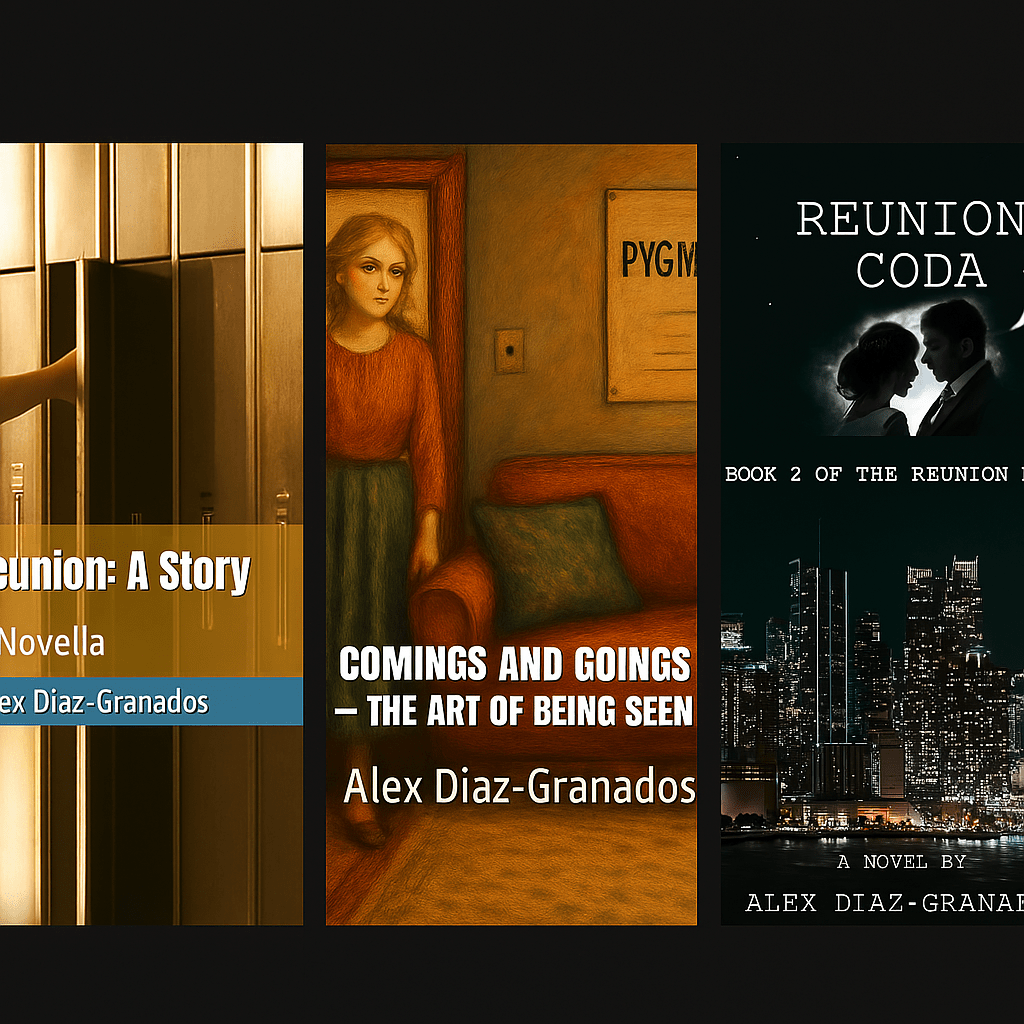

On Having a Reader Like Thomas Wikman
Thomas Wikman’s Review of “Reunion: Coda” (2025)

(C) 2025 Alex Diaz-Granados
This is a love story complicated by life. Jim Garraty is a successful History Professor who has tragically lost love and found love again. The story follows two timelines. One is focused on Jim’s high school days and his secret love Martina Reynaud, as well as everything that goes on in high school. The second timeline is focused on Jim’s life as a professor at Columbia University, memories of love lost and a divorce, as well as a newfound love, Maddy. The switch between the two timelines is obvious and clearly stated and yet seamless. The two timelines are built upon each other in a way that creates a captivating story and the fascinating world of Jim Garraty and his lovers and friends. I should mention that there are surprising connections between the two timelines, serendipity if you will.
The story is touching and romantic but also real and thought-provoking. I found the many subplots fascinating and insightful. For example, the story about one of his students becoming ensnared and bamboozled by far-right propaganda and acting upon it. That story was a good story on its own, but it also added to the overall narrative. Life is complicated and difficult, people will disappoint you, and mishaps in your professional life as well as traffic effects your romantic life as well. There were many other sub plots. The book enlightens us on subjects like lost love, courage, disappointments, tragedy, integrity and forgiveness. Life can be good but never perfect. We recognize ourselves in the stories and it helps us feel and grow.
The character development is astounding, and the prose is beautiful and lyrical. The writing is of a very high quality and the story telling is epic. I read the hardcover version of this book, which featured a lot of black and white illustrations. It is far from a graphic novel, but I appreciated the appealing and interesting illustrations. I highly recommend this book.

This is a love story complicated by life. – Thomas Wikman
Every writer hopes for a certain kind of reader — not the casual browser, not the polite five‑star tapper, but the one who reads with attention, empathy, and curiosity. The one who doesn’t just enjoy the story but sees it. The one who understands the architecture beneath the prose, the emotional logic beneath the plot, the quiet intentions that never get spoken aloud.
For me, one of those readers is Thomas Wikman.
What moves me most about Thomas’s reviews isn’t the praise, though of course that’s always gratifying. It’s the trust. He approaches each book as if he believes there’s something worth finding inside it — and then he goes looking. He reads the dual timelines the way I hoped someone would. He hears the music in the prose. He notices the emotional echoes between past and present. He understands that the Garraty stories aren’t about nostalgia or romance alone, but about the long shadow of memory, the ache of regret, the courage it takes to forgive yourself.
That kind of recognition is rare. And it’s humbling.
Because when a reader like Thomas says, in so many words, “I have faith in your stories,” what he’s really saying is, “I believe you’re telling the truth.” Not factual truth — emotional truth. The truth of how people love, lose, remember, and try again. The truth of how adolescence shapes adulthood. The truth of how a single moment can echo across decades.
Thomas Wikman’s Review of “Comings and Goings – The Art of Being Seen” (2025)
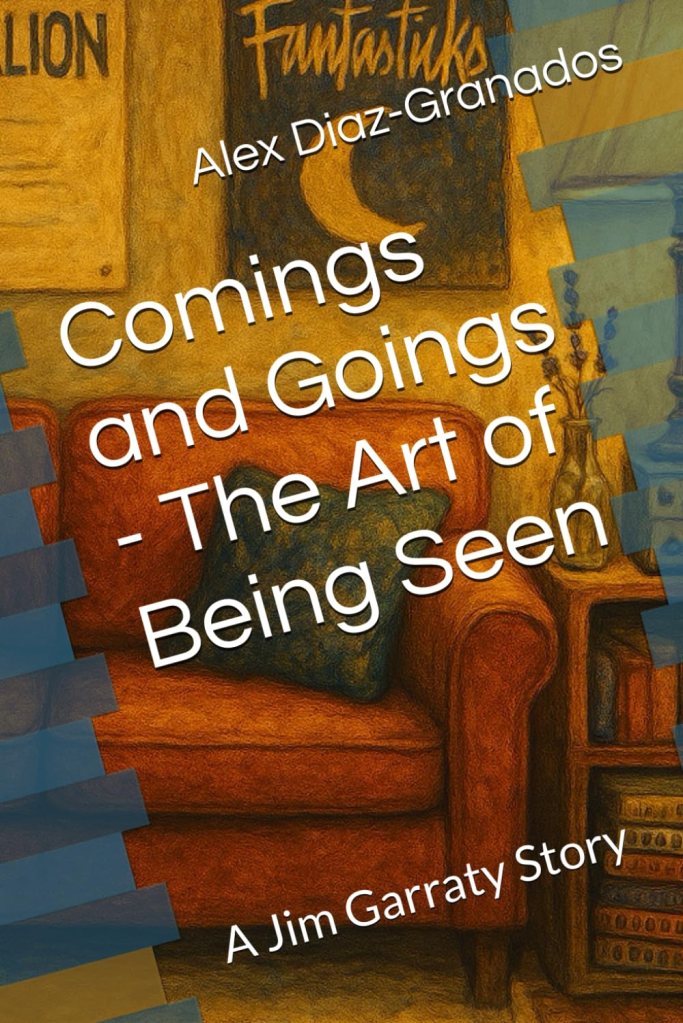
I think this novelette is best read as a companion to the author’s larger masterpiece Reunion: Coda. Alternatively, it serves as an introduction to the author’s writing style and storytelling prowess. The author has an exceptional skill in crafting and delivering compelling narratives that engage audiences, and this short novelette could be one of the many chapters in the life of the protagonist Jim Garraty, a man who will become a celebrated professor at Columbia University.
In this book, Jim Garraty is a first-year student at Harvard, and he attends a party where he does not know anyone except for a fellow student who is quite busy elsewhere, leaving him on his own. He feels lonely, awkward, and out of place until a girl, Kelly Moore, takes an interest in him, and his miserable night turns into quite an adventure. What stands out about this book is the realistic description of emotions, inner thoughts, and the realistic dialogue. It serves as a prelude to what to expect from his other books. I highly recommend this short novelette.
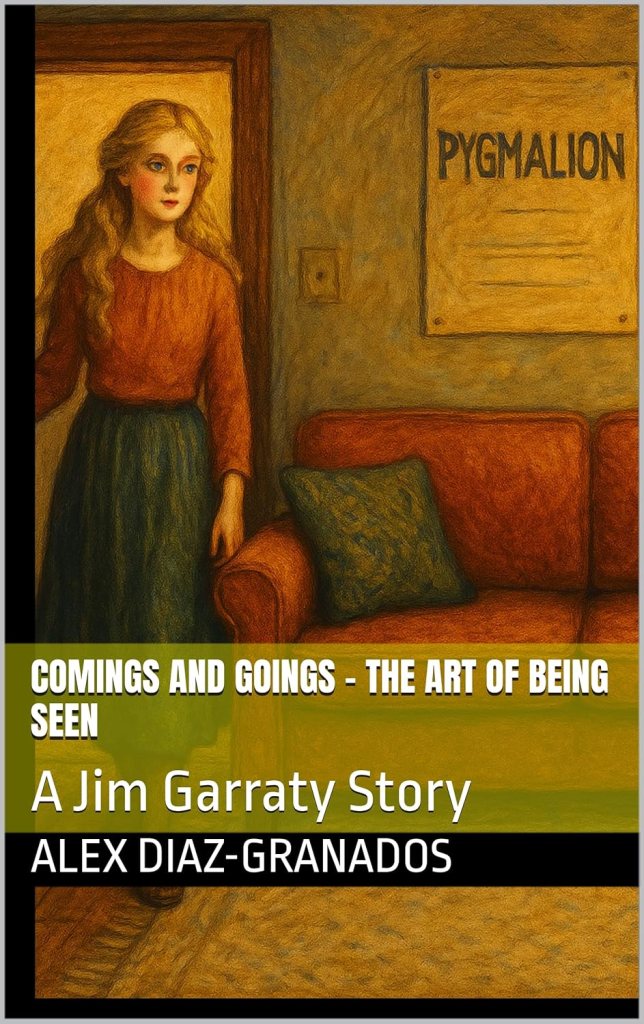
What stands out about this book is the realistic description of emotions, inner thoughts, and the realistic dialogue. – Thomas Wikman
His faith isn’t blind. It’s earned — by the characters, by the emotional honesty, by the restraint, by the willingness to let aftermath speak louder than spectacle. And in turn, his faith gives something back: permission to keep going. Permission to trust the work. Permission to believe that the quiet things matter.
Writers don’t always get readers like that. When they do, it feels like a kind of grace.


 A Certain Point of View, Too
Leave a reply to Cindy Georgakas Cancel reply