
10 Quotes About Writing (and Writers)
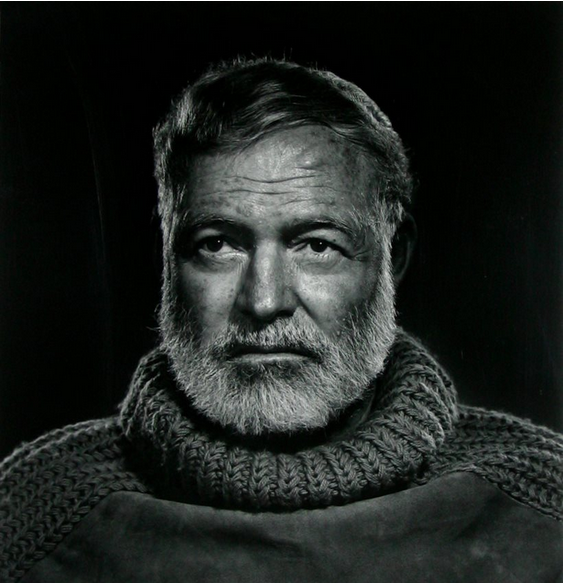
- “Lock up your libraries if you like; but there is no gate, no lock, no bolt that you can set upon the freedom of my mind.” ― Virginia Woolf, A Room of One’s Own
- “Start writing, no matter what. The water does not flow until the faucet is turned on.” ― Louis L’Amour
- “As a writer, you should not judge, you should understand.” ― Ernest Hemingway
- “Writing a book is a horrible, exhausting struggle, like a long bout with some painful illness. One would never undertake such a thing if one were not driven on by some demon whom one can neither resist nor understand.” ― George Orwell, Why I Write
- “Fiction is art and art is the triumph over chaos… to celebrate a world that lies spread out around us like a bewildering and stupendous dream.” ― John Cheever
- “The reason that fiction is more interesting than any other form of literature, to those who really like to study people, is that in fiction the author can really tell the truth without humiliating himself.” ― Eleanor Roosevelt
- “My aim is to put down on paper what I see and what I feel in the best and simplest way.” ― Ernest Hemingway
- “Which of us has not felt that the character we are reading in the printed page is more real than the person standing beside us?” ― Cornelia Funke
- “Writers remember everything…especially the hurts. Strip a writer to the buff, point to the scars, and he’ll tell you the story of each small one. From the big ones, you get novels. A little talent is a nice thing to have if you want to be a writer, but the only real requirement is the ability to remember the story of every scar. Art consists of the persistence of memory.” ― Stephen King, Misery
- “Talent is helpful in writing, but guts are absolutely essential.” ― Jessamyn West
Selected Reviews of the Jim Garraty Stories
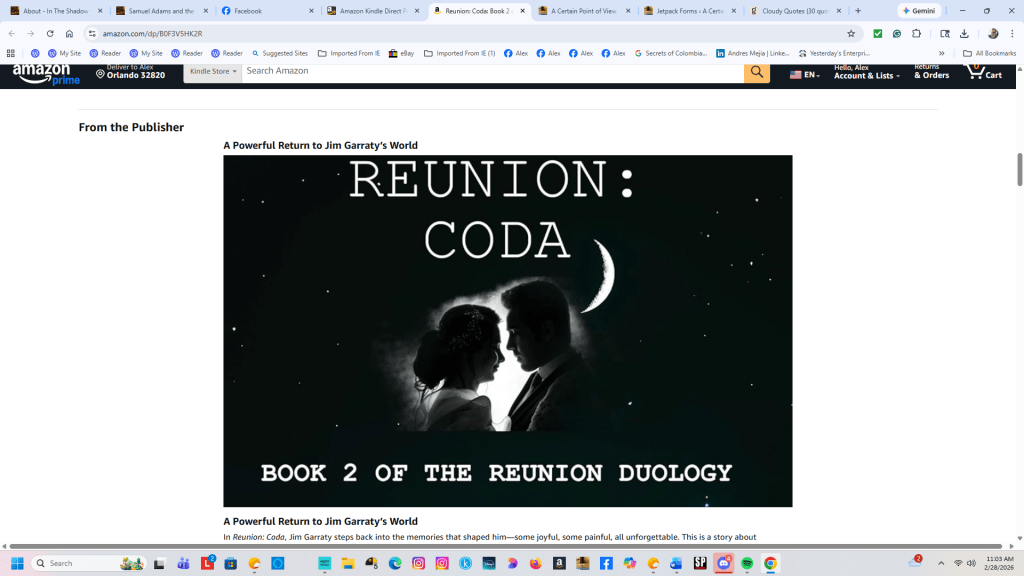
The Reunion Duology is a quiet, resonant exploration of connection, regret, and the complicated beauty of second chances. Told across two deeply personal works—Reunion: A Story, a novella, and Reunion: Coda, a novel—the series invites readers into the life of Jim Garraty, a man shaped as much by silence as by memory.
In Reunion: A Story, a high school senior in 1983 grapples with the distance between what’s felt and what’s said. Fifteen years later, he’s a history professor whose carefully composed life is disrupted by echoes he thought he’d silenced. The novella lays the emotional groundwork for a much longer reckoning.
Reunion: Coda deepens the narrative, tracing the ripples of one choice across decades. With wit, heart, and unflinching honesty, it expands Jim’s world and voice—offering a story not just of reconciliation, but of learning how to stay present, even when it hurts.
Those stories now find quiet resonance in Comings and Goings – The Art of Being Seen, a standalone companion set in 1984 Boston. It captures the moment Jim first discovers the power of connection—not through spectacle, but through the quiet intimacy of being noticed, held, and remembered. Together, the three works form an emotional mosaic of longing, memory, and the small choices that shape a life.
Spare, intimate, and emotionally honest, the Reunion Duology and its companion offer readers a lingering reminder: sometimes the most profound stories begin not with what’s said, but with the courage to stay.
Reunion: A Story (Book 1 of the Reunion Duology)
The big “what if”
A successful history professor is forced to confront the fact that he allowed a love interest to slip away because of insecurity as well as because of the lure of promising opportunities. This novella presents a profound “what if” scenario that is poignantly but beautifully told. It is a sad love story about regret and loss but also a story about friendship. The book reminds us about how differently a teenager and an adult views life and themselves and what the consequences could be.
Character development is excellent. The characters have personality and depth. The author describes the feelings and the thoughts of the characters in a manner that is both realistic and easy to relate to. The story is compelling and well written, it draws you in, and it has something important to tell us, especially young people.
I was planning to read it over a couple of days, but after I started reading it, I couldn’t put it down, so I read it in one sitting. Later, I read it again, more than once, which is why I updated this review. It is a really great story, one of the best I’ve ever read, and you can read it many times. I highly recommend it. – Thomas Wikman
Reunion: Coda (Book 2 of the Reunion Duology)
Loved it!
Firstly, the writing was excellent. I felt drawn in from the moment I began reading and I think it helped that I was already familiar with the characters. I appreciate that his writing is incredibly intelligent and well done without crossing the line into being pretentious.
I thought the themes that Alex Diaz-Granados chose to explore were very meaningful. Lost love, loss in general, being stuck in the past/memories of the past are things we can all relate to.
I really enjoy the way Alex creates characters because they very much feel like real people. They have flaws and they have redeeming qualities just as most of us do.
I won’t go into the details of the plot because with books like this one giving away too much can ruin the experience for other readers. But I will say there are some beautiful moments, some heavy moments, some thoughtful moments and most importantly the plot deals with the complex nature of relationships that humans have with one another. We crave love, social interactions and connections yet when we achieve them things are often more complicated than we realise.
Overall, I very much enjoyed Reunion: Coda by Alex Diaz-Granados. I had high hopes for this book and he delivered it. If you enjoy a poignant, thoughtful and well written book- this one is for you. I highly recommend it. And if you haven’t read the first book in the series, please do as it will help you understand the plot of this one much better. – Pooja Gudka
Comings and Goings – The Art of Being Seen (A Jim Garraty Story)
A Lovely Tale of Empathy
At a party where Jim is more observer than participant, a young woman approaches him and asks him, “You’re not having a good time, are you?” Feeling dejected, disliking his beer, which by now has grown warm, Jim is struck by the confidence of the woman who introduces herself as Kelly. Kelly listens and does not push, mock, or judge (other than to call Budweiser “horse piss.”) She sees, something Jim, invisible up to that point, is grateful for.
The story is not a romance, but rather an enjoyable, insightful journey into empathy and the importance of human connection. It portrays the gift of intimacy set against a backdrop of alienation—college, often one’s first time away from home. The author adds music to the narrative, not only to evoke the 1980s (UGH), but also to enhance the conversation between Jim and Kelly. – Denise Longrie


Share your thoughts with the world!