
Writing stories that draw, even partially, from an author’s lived experience can be a bit of a double-edged sword: wonderfully useful on one side, faintly perilous on the other. Memory is generous that way. It offers texture, specificity, and the small, telling details writers spend ages trying to invent—but it also comes with baggage, assumptions, and the occasional reader who arrives with a detective’s magnifying glass.

On the plus side, if you’re writing a story set in, say, 1980s Miami during your childhood or adolescence, you already have a treasure chest to rummage through. You can return to the heat rising off the pavement, the particular slang people used, the neighborhoods that seemed enormous when you were young, the corner stores, the music drifting from passing cars, and the relatives, neighbors, and local characters who lodged themselves permanently in your imagination. All of that makes it much easier—and much more fun—to do a deep dive into those years, cherry-pick the people, places, and situations you know well, and reshape them with a little invention into a fictional world that feels textured, convincing, and alive.
On the other hand, once readers catch even a whiff of real life in a story, some of them become convinced they’re reading autobiography in a thin fake mustache. Fictionalizing even small pieces of your experience can lead people to assume that everything on the page happened more or less exactly as written, with only names, addresses, and a few strategic details changed “to protect the innocent.” In one sense, it’s flattering, because it means the material feels emotionally true. But it can also be slightly awkward, since the imagination has usually done far more heavy lifting than readers suspect.
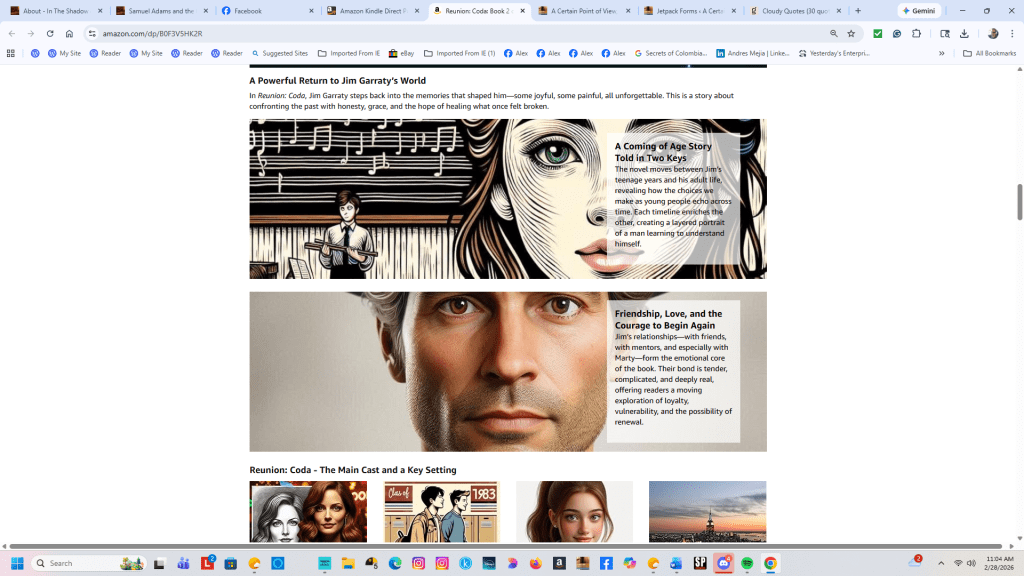
I learned this firsthand when a classmate and I got into a surprisingly spirited debate about one of my characters, Marty Reynaud. I explained—truthfully—that Marty is entirely fictional. Yes, I borrowed a few surface details from one of the prettiest girls in our class, Cece Trotter, because writers are magpies and teenage memory is a glittering hoard. But the person Marty became on the page was invention, intuition, and a lot of quiet listening to a character who gradually revealed herself.
My classmate wasn’t buying it. She insisted Marty “reads like someone you really knew,” as if I were hiding a secret muse behind my notebook. The more I tried to explain the alchemy of character creation, the more convinced she became that Marty must have been a real girl with a real history.
See for yourself:
Excerpt (Adapted from Reunion: Coda for this blog):
Mark took a swig of his milk. “So which chorus did you end up joining, Mr. Singing Cobra?”
“The men’s ensemble,” I said, choosing the more dignified name for Boys’ Choir. I was sixteen, not twelve.
“Why not Mixed Chorus? There are girls there.”
At the word girls, I glanced down before I could stop myself. “Have to start somewhere,” I muttered.
Mark smirked. “You used to sing in sixth grade. That’s not starting.”
“My voice changed,” I said. “I’m rusty.”
“Except when you sing the Star Wars theme.”
“That’s humming,” I shot back.
He laughed and nudged me. “Hey, I’m glad you’re doing something besides studying and wargames. You’re still a kid. Plenty of time for history after graduation.”
Before I could reply, a blur of blue denim caught my eye. A girl with long chestnut hair stepped into the cafeteria line.
“Do you see her?” I asked.
Mark squinted. “Yeah. Pretty. Who is she?”
“I don’t know her name,” I said. “But she sang ‘We’ll Meet Again’ this morning. She was incredible. And she has a British accent.”
Mark let out a low whistle. “Sounds like you’ve got a crush.”
I felt my face heat. “No. She’s just talented.”
A moment later, she walked up to our table, smiling shyly.
“Hi,” she said. “Thanks for helping me with the audition earlier.”
I blinked. “All I did was hand Mrs. Quincy a pen.”
She blushed. “I’m Martina. But you can call me Marty.”
“Marty,” I repeated.
She shook my hand gently. “Nice to meet you, Jim.”
And just like that, she was gone again, swept into the lunch crowd, leaving me staring after her until Mark nudged my shoulder.
And that was the moment my classmate insisted Marty had to be real.

What she was responding to, I think, wasn’t biography but emotional truth. Marty feels real because I wrote her as real: with contradictions, hesitations, warmth, and a life that extends beyond the scenes she appears in. She’s not Cece, and she’s not anyone else from my past. She’s the result of memory’s raw material filtered through imagination’s shaping hand.
And that’s the paradox of drawing from lived experience. The more honestly you write the emotional landscape, the more readers assume the literal landscape must be true as well. Really, it’s a compliment. It means the fiction is doing its job. It means the characters breathe.
But it also means you sometimes find yourself explaining, with a smile, that no—this girl, this moment, this heartbreak, this triumph—didn’t happen exactly that way. It only feels as if it did. That’s the magic of fiction: it lets us turn memory into something new, something that belongs to the story rather than the past.
And if a reader insists a character must have been real? Well… that’s a sign you’ve done something right.
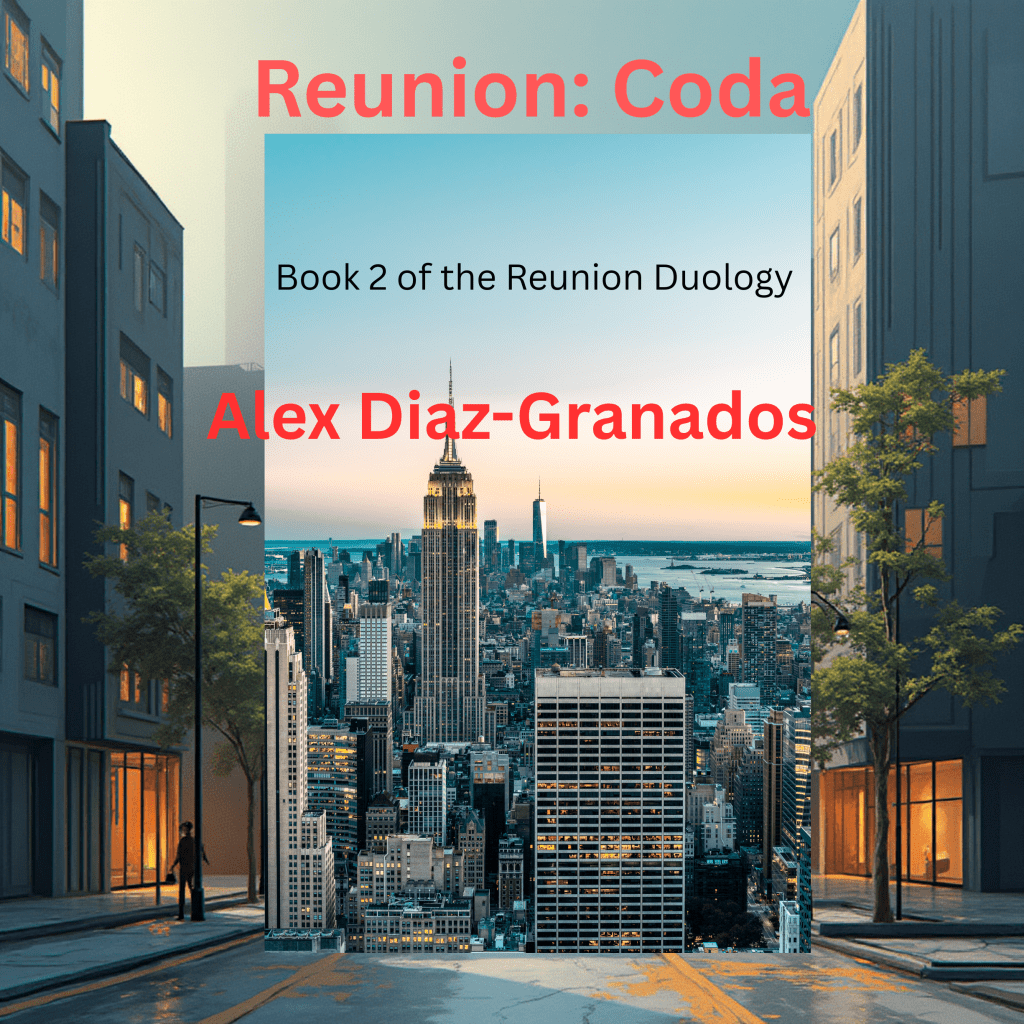
Audible edition cover created by Alex Diaz-Granados
If you want to listen to the Audible version of the chapter the excerpt is drawn from, just play the audio file below!


Share your thoughts with the world!