
Thoughts About Writing and Storytelling
I’ve been a writer since I was a student in the Dade County Public Schools system between 1972 and 1983. More accurately, I spent much of that time as an aspiring writer. I wrote only one poem—or was it a story?—in fourth grade for the Dade County Youth Fair & Exposition sometime in 1973. My public life as a writer truly began later, when I submitted two guest articles to Riviera Junior High School’s student paper, The Ram’s Horn, late in the 1979–80 school year. Unbeknownst to me at the time, that was a dress rehearsal for my involvement in South Miami Senior High’s journalism program between August 1980 and June 1983.

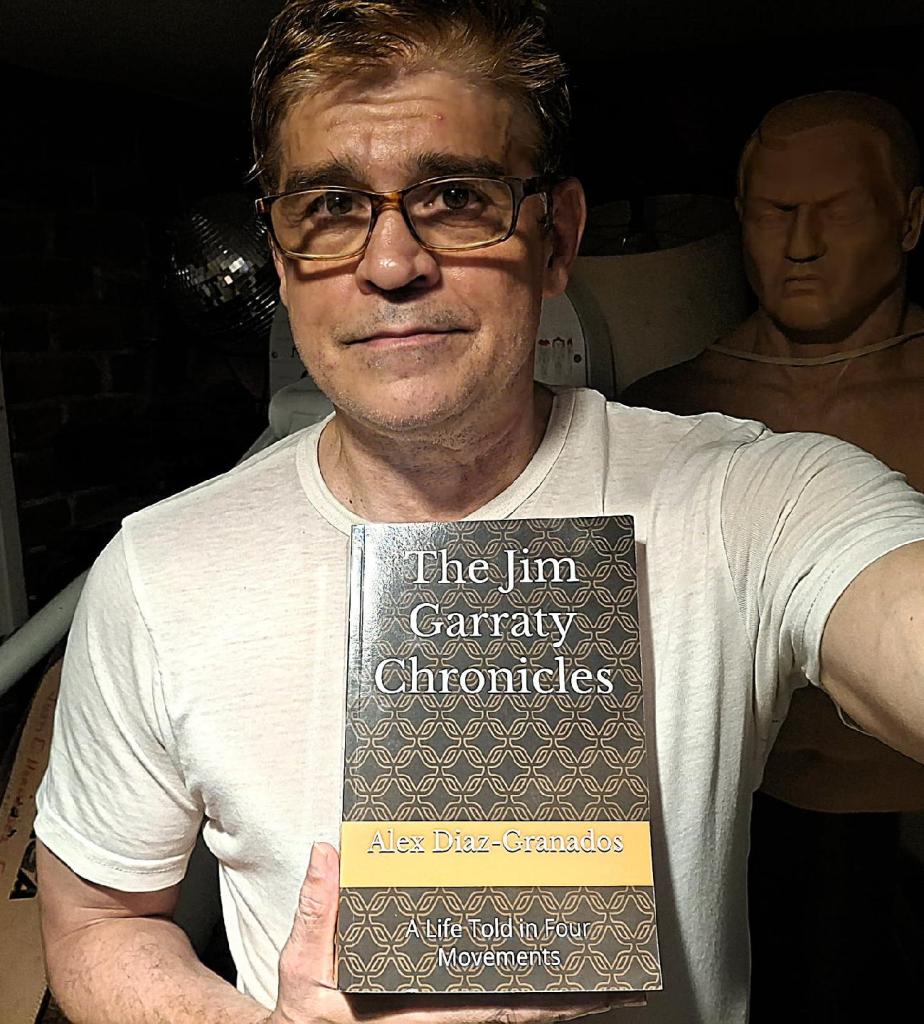
I’ve been doing this writing stuff for almost 50 years, if we count only my stint as a student journalist at Riviera and South Miami. I’m not going to claim that I’m a great writer; I think I’m good at what I do because I was well trained, both in high school and college, and because I practice the craft every day. I take pride in following one of Stephen King’s most practical precepts on how to be a better writer: “Read a lot. Write a lot.” It’s simple advice, but it has the ring of truth because it treats writing not as magic, but as work—patient, repetitive, sometimes stubborn work.
I also have a great, undying love for language, especially the English language, which I learned—really learned—as a second tongue when Mom and I moved back Stateside from Bogotá, Colombia, in the spring of 1972. I think I developed this passion for what was once my “second tongue” because I had struggled in my Colombian school’s mandatory English lessons as a third grader. Yet once I was in an American elementary school—Coral Park at first, then Tropical—and was exposed to English 24/7, I absorbed inglés the way a sponge sucks in water. The sounds, the rhythms, the odd rules and odder exceptions all began to feel less like obstacles and more like tools I could use.
I love English. I love its sound. I love its quirks. I love its cadences. And I love how it’s the Great Borrower, gathering words from French, Latin, German, Norse, Gaelic, Spanish, and plenty of other sources along the way. Maybe that’s part of why I respond so strongly to prose that sounds right, not just prose that tells me what happened. Story matters, of course. But rhythm matters, too. The beat of a sentence, the shape of a paragraph, the way one word leans into the next—those are part of the experience I want to create when I write, and they’re a big part of what I admire when I reread a passage I’m proud of.

I often write and rewrite copy several times during the drafting process. When I was a student journalist, I wasn’t just aiming for reportorial accuracy—although that mattered—but also for how my stories sounded in my ear. It wasn’t enough to know that I had accounted for the What, Where, Who, When, Why, and How of reporting. I would take my drafts—whether they were news stories, op-ed pieces, or columns—and keep working them until the sentences had the right cadence. Sure, it was, and still is, time-consuming and demanding work. But the result—writing that feels deceptively easy to read and lingers in the audience’s mind—has always been worth it.
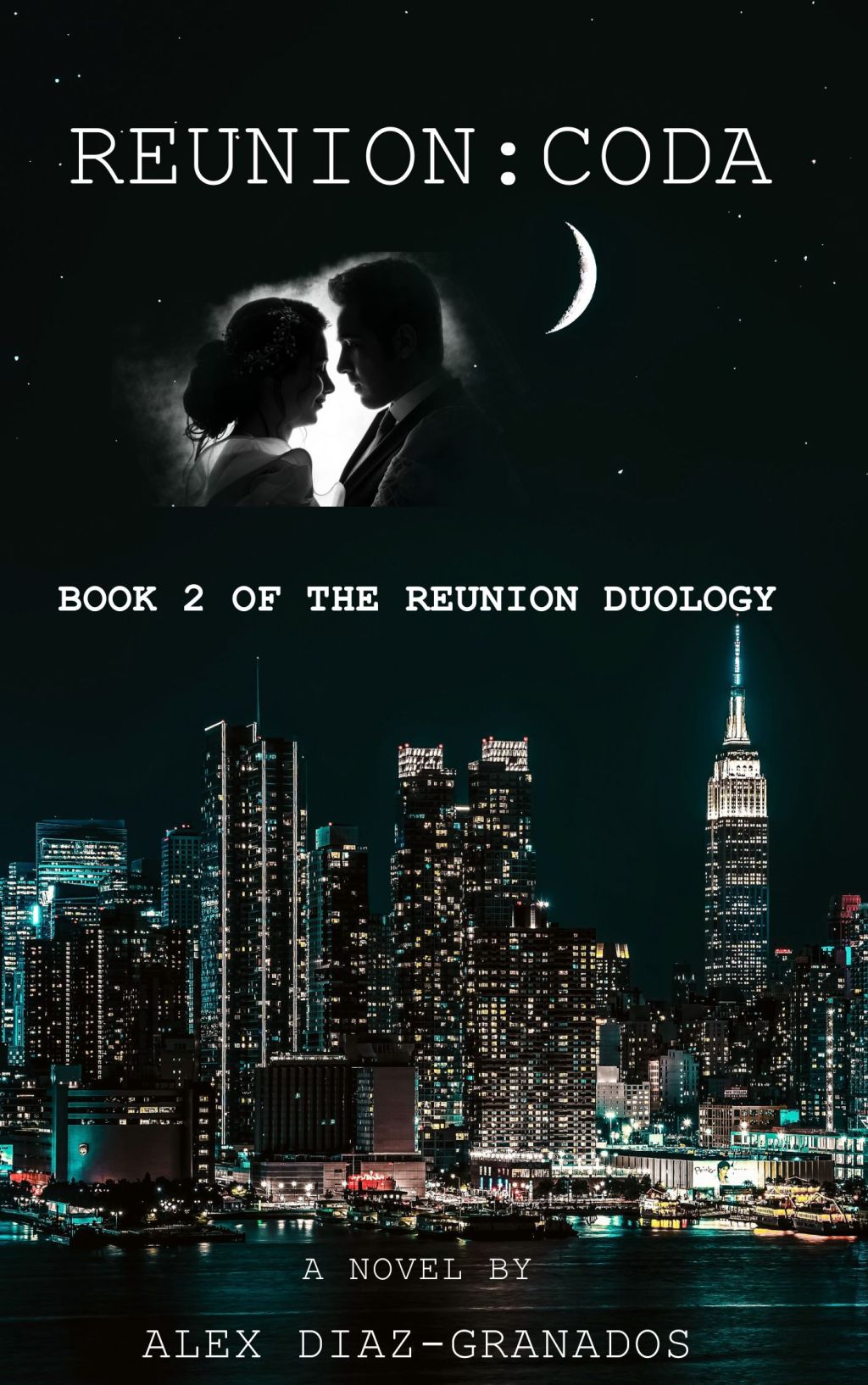
For instance, here’s an excerpt from Reunion: Coda that, in my mind, works well not only because of the characters and situation, or even because of the concrete details, but because of the cadence of the narrative and the dialogue. This is the kind of passage I like to read aloud to myself—not to admire my own cleverness, but to hear whether the language moves the way I want it to move.

(C) 2025 Alex Diaz-Granados
The chanty ended, and Mrs. Quincy clapped her hands sharply. The sound was like two pistol shots being fired. We hadn’t been singing along or talking – much – but the room became as silent as an empty church at midnight.
“All right, gentlemen,” Mrs. Quincy said, her voice sweet but laced with authority. “Since we only have 10 minutes left before the next class period, that will be all. You can talk among yourselves…but quietly. Is that clear?”
“Yes, Mrs. Quincy,” said a tall, dark-skinned boy with an athletic build and the attitude of an upperclassman. He looked like he was 17 or 18, and he spoke with both calm and deference.
Bruce, who sat next to me in the bass-baritone section, prodded me gently with an elbow. “So, what do you think, huh? Pretty cool class, right?”
I nodded in agreement. “Yeah, it’s cool,” I said after a moment’s pause. “Mrs. Quincy’s nice, and the chorus is a more fun way to start school than, say, AP English.”
“Oh, about that,” Bruce said. “Did Ms. Back give you a hard time about the class switch? I hear she can be a real hard case about some things.”
“Nah. She might have been a bit pissed, and she acted as though signing the schedule change form was a major hassle, but it’s all an act. I get good grades in AP English and don’t screw around in class. She said that her third-period class is reading the same book, Heart of Darkness, as first period, so I’ll be fine.”
Bruce was about to say something, but then there was a gentle, almost hesitant knocking at the door.
Mrs. Quincy called out, “Come in!” in a calm, pleasant, even welcoming tone.
Slowly, ever so slowly, the heavy door to the chorus room creaked open. We all looked to see who was entering the room.
It was a girl. She was tall but not gawky, clad in new “first day of the semester” jeans, a white blouse that peeked out from under a navy-blue jacket, and clean new Keds girls’ sneakers. Her chestnut-colored hair was pulled up into a ponytail, and her cheeks were rosy against her pale skin, partly because it was cold outside, partly because she thought she was interrupting the class.
“Can I help you?” Mrs. Quincy asked.
The girl hesitated at the door, clutching her backpack tightly. She looked at Mrs. Quincy nervously and fumbled for a piece of paper in her pocket. She walked up to the teacher, holding out the class schedule change form with both hope and a bit of fear. She bit her lip and waited for Mrs. Quincy’s reaction, hoping she wouldn’t be turned away or scolded.
Mrs. Quincy reached for the form and, in that grandmotherly way of hers, said, “Oh, don’t worry, young lady. These gentlemen and I are done for the period. First day’s not too busy.”
The girl let out a sigh of relief and gave Mrs. Quincy a shy smile but said nothing.
Mrs. Quincy scanned the form, nodded a couple of times as she read it, and reached into her jacket pocket for a pen to sign it – and came up empty-handed.
“Quick,” she said as she snapped her fingers. “Any of you men have a pen?”
“I do, Mrs. Quincy,” I said, holding up the Bic pen I’d had in my jacket pocket as if it were the torch held by the Statue of Liberty. Without being prompted, I got up from my chair, walked over to Mrs. Quincy, and handed her the pen.
“See?” Mrs. Quincy said to the girl as she marked the schedule change form as approved and signed it with a flourish, “Chivalry isn’t quite dead in 1981.”
The girl gave me a shy smile but said nothing.
Oh, boy. She’s gorgeous! I thought. Even though she’s probably suffering from first-day jitters, she’s beautiful.
On the heels of that: I better get a grip. For all I know, she probably has a boyfriend. Or maybe I am just dreaming, and she isn’t really here.
That, to me, is where a writer’s love of language becomes more than decoration. Plot, character, setting, conflict, and theme all matter; without them, even the prettiest sentences don’t have much to carry. But language is what gives those elements their pulse. It is the difference between a story that merely reports events and one that lives in the reader’s ear after the page is turned. Reviewers have called Reunion: Coda lyrical, and that’s not an effect a writer achieves by accident. Lyricism depends on more than attractive sentences; it comes from rhythm, pacing, dialogue, observation, and the deliberate placement of words. A writer does not have to be ornate or “literary” in the fussy sense to care about cadence, diction, and rhythm. But if the language itself has no music, no precision, no sense of being chosen with care, then even a sound premise can curdle into literary dross. Love of language is not the only thing a fiction writer needs, but it may be the thing that turns competent storytelling into something worth remembering.


Share your thoughts with the world!