
Saturday, October 24, 2026 – Orlando, Florida
The Stories Hiding Inside the Stories
If you’re one of the Constant Readers of this blog (thank you, by the way!), you doubtlessly know that I’m working on the fifth book of The Jim Garraty Chronicles.
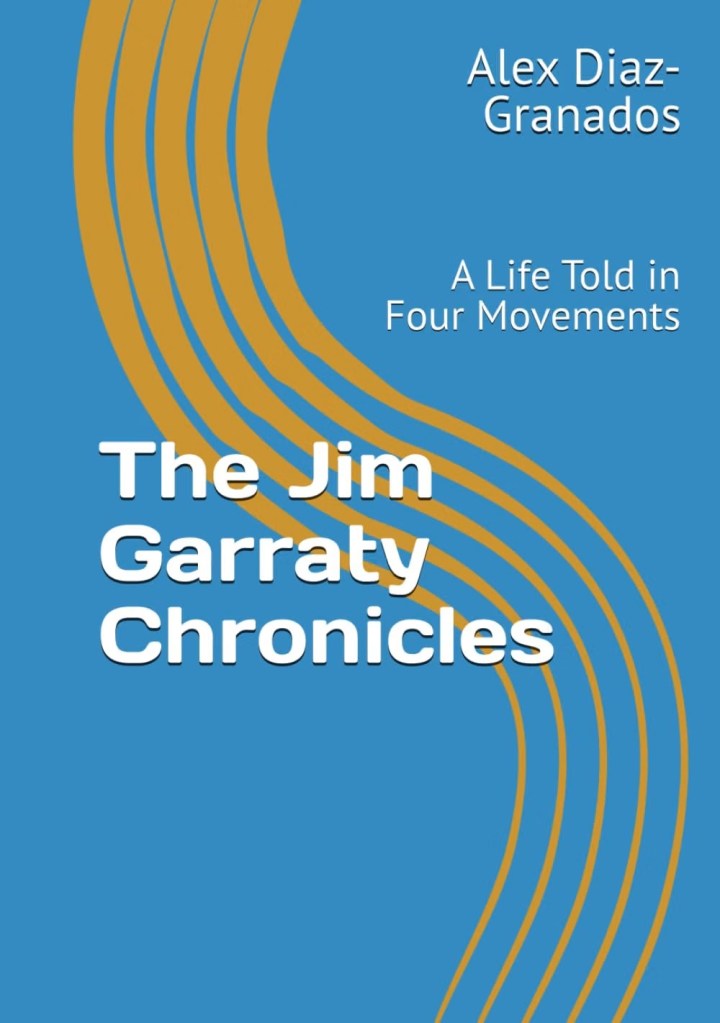

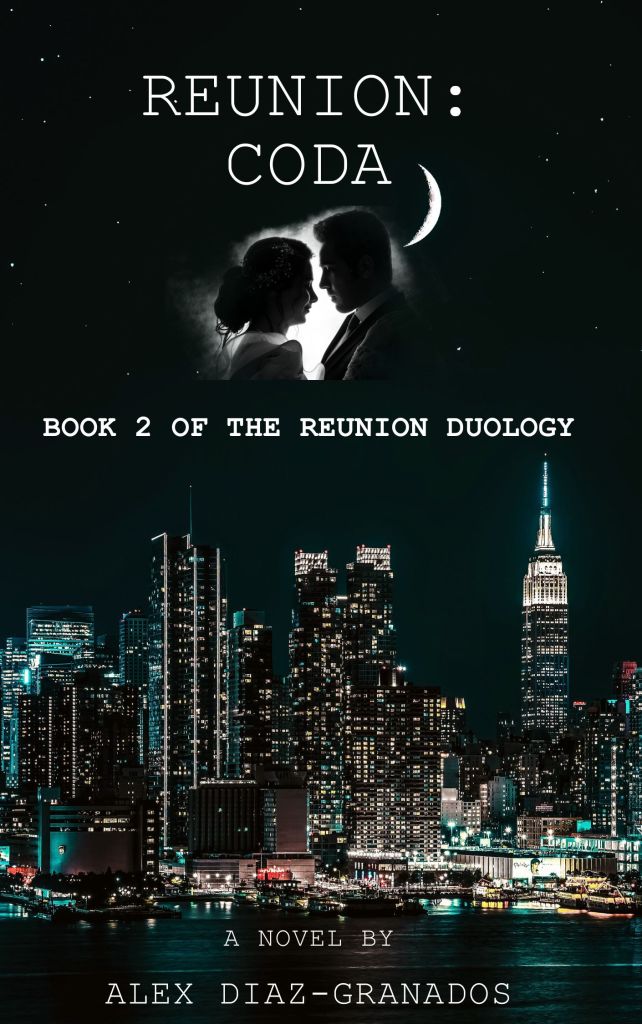
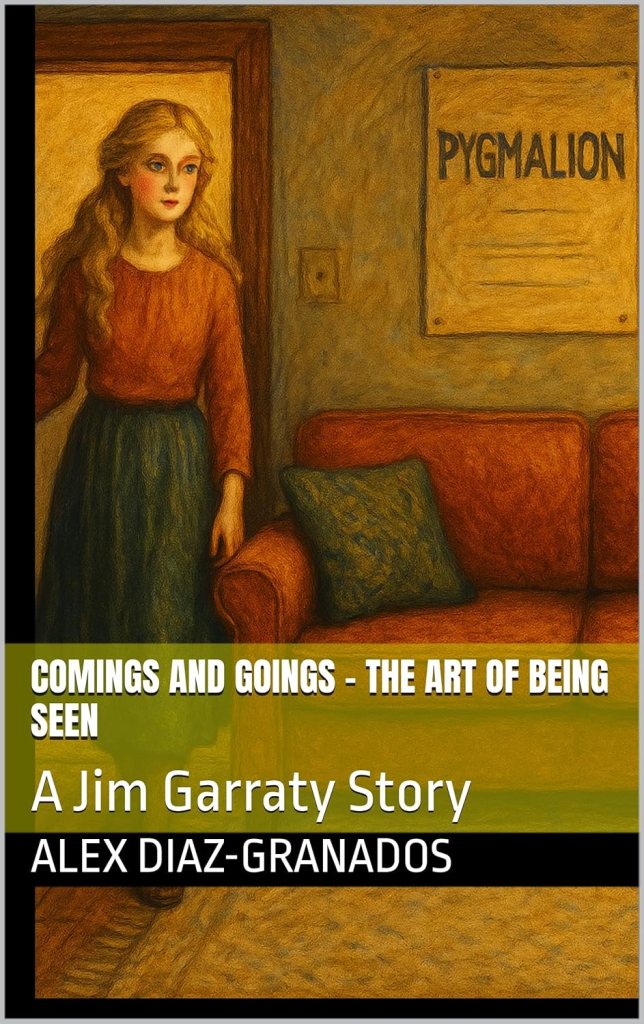
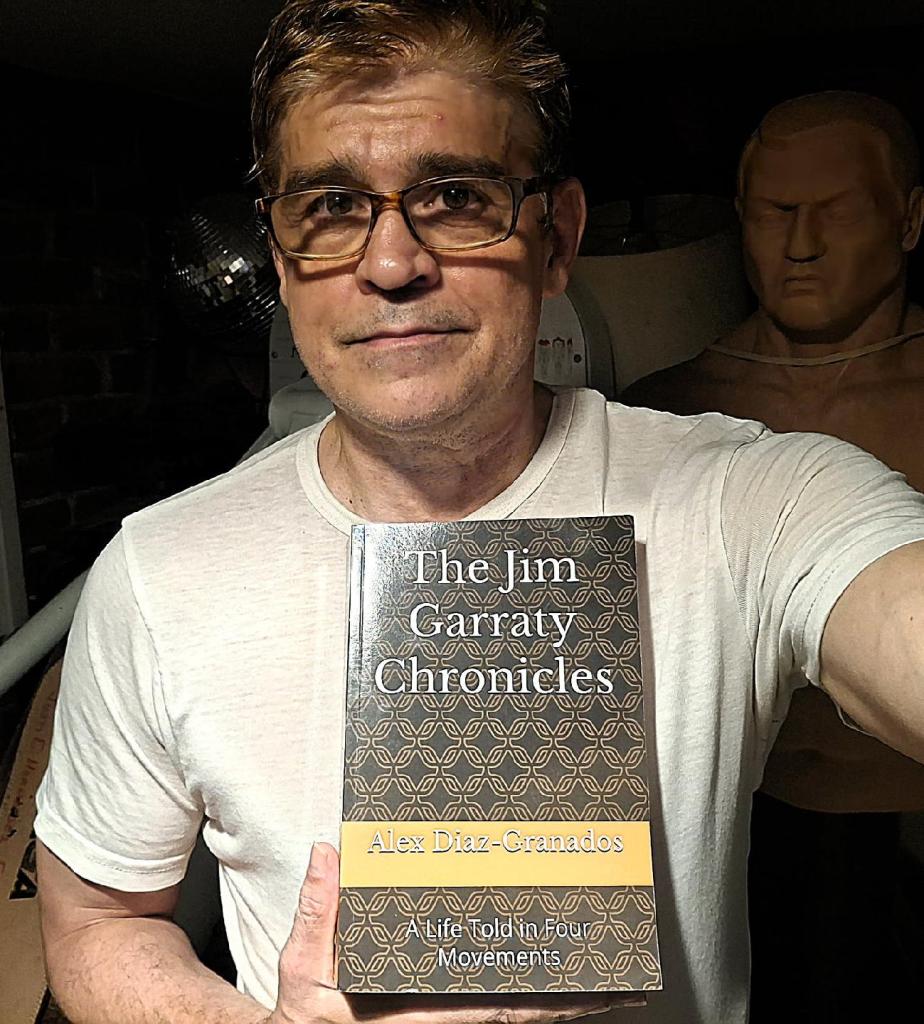
More specifically, it’s the fourth long-form standalone work. The Jim Garraty Chronicles: A Life Told in Four Movements is an omnibus containing Reunion: A Story, Reunion: Coda, Comings and Goings: The Art of Being Seen, and the bonus flash-fiction piece The Summer of Two Movies. The new book, And the Horse You Rode in On…, will also be the third novella/novelette in the series.
As I’ve mentioned before, And the Horse You Rode in On… takes us back to the mid-1970s, when Jim Garraty is still a preteen boy navigating fifth and sixth grade at South Miami Elementary. It also introduces us to Mark Prieto as a kid: the wisecracking extrovert who will become Jim’s best friend.
In the internal chronology of the Chronicles, this is the first story.
It’s Episode I of my Garratyverse, if you can dig it.

So far, I’ve completed the rough draft of the first chapter, and I’m about halfway through the second as of this writing. After a minor hiccup figuring out exactly where and how the story should begin, things have been moving along fairly well.
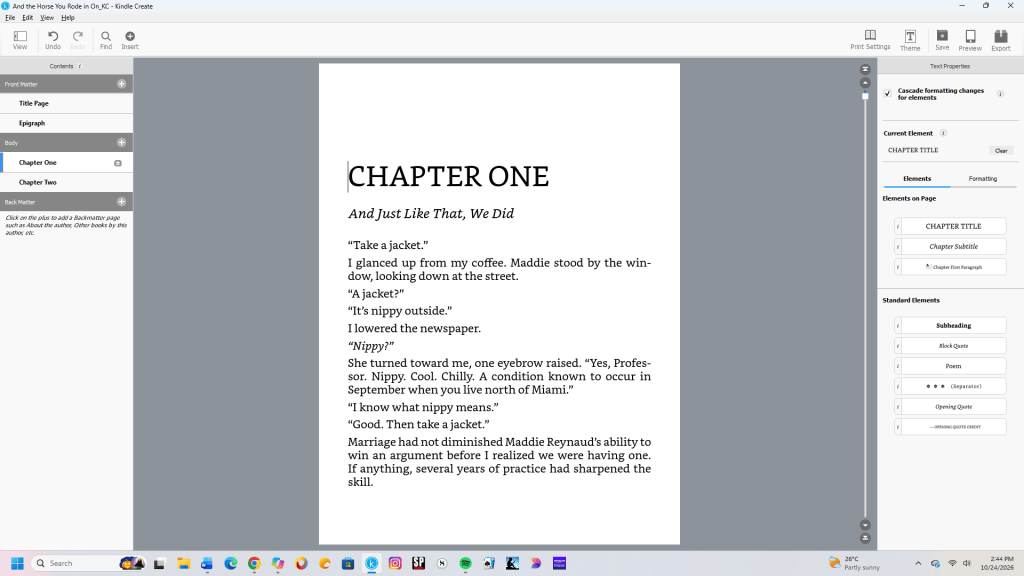
I think that has something to do with the peculiar way I write fiction.
I don’t create detailed outlines for my stories. Hell, most of the time I don’t even plan these daily blog posts very far in advance. But after spending this much time writing about Jim Garraty and the people who wander in and out of his life, I’ve discovered something interesting:
Sometimes the next story is already hiding inside one I’ve written.
I just don’t necessarily know it yet.
Take Comings and Goings: The Art of Being Seen.
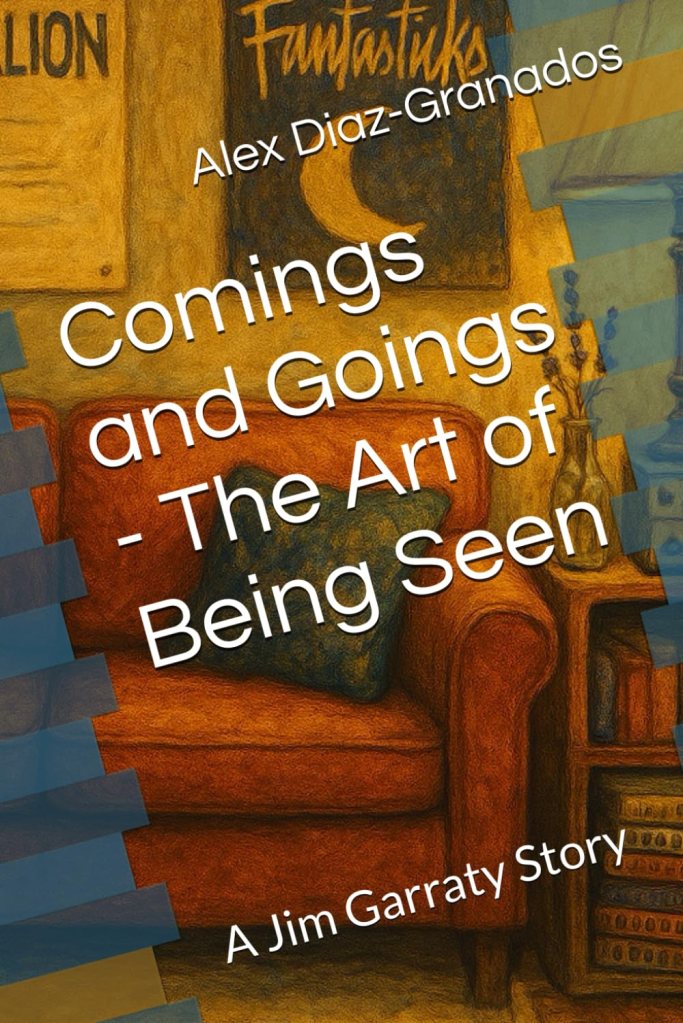
That story was made possible by what was originally little more than a stray memory in Reunion: Coda.
It’s the spring of 2000. Jim, now in his thirties, is strolling across the Columbia University campus when he spots a young woman who reminds him of Kelly Moore, a girl he knew sixteen years earlier.
The resemblance triggers a memory.
Kelly, Jim remembers, was the girl with whom he had his first sexual experience.
When I wrote that passage in Coda, I didn’t stop everything to give the reader the complete history of Kelly Moore. There was no need. Jim sees someone who reminds him of a person from his past, and his mind briefly wanders back there.
That’s what memories do.
Except, eventually, my mind wandered back there, too.
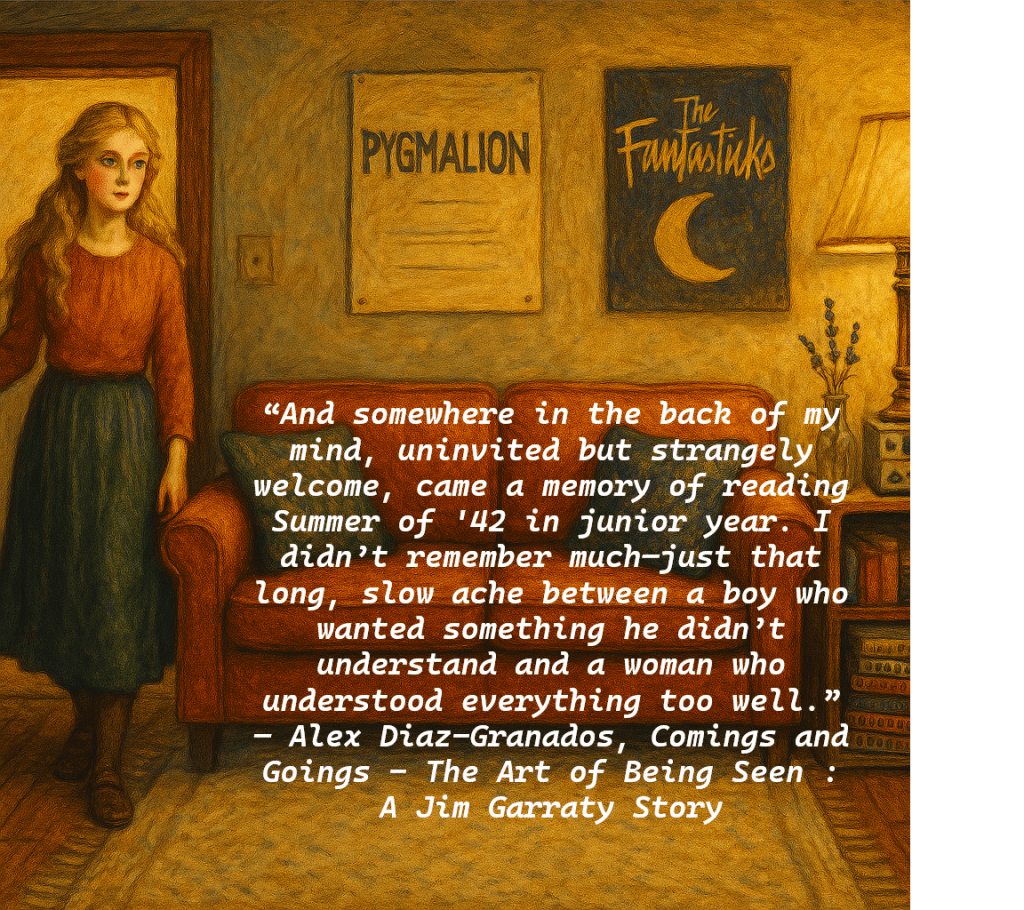
Who was Kelly Moore?
What happened between her and Jim?
How did they get together?
And if a fleeting resemblance could bring her back into Jim’s thoughts sixteen years later, what else might be hiding inside that memory?
Those questions eventually became Comings and Goings.
Something similar is happening with And the Horse You Rode in On..., but this time the connection to Reunion: Coda runs even deeper.
I’m not going to reveal the Big Plot Point here. I’m trying to entice you to read the eventual book, after all, not hand you the answer key.
But the important thing is this:
It has already happened.

Well, sort of.
It hasn’t happened on the pages of And the Horse You Rode in On… yet. We’re still very much in the setup stage. Jim and Mark have only recently met, and I’m still establishing the boys, their developing friendship, their school, and the little world they inhabit in mid-1970s South Miami.
What I mean is that the Big Moment is already part of the established Garraty canon.
In Reunion: Coda, thirtysomething Jim and Mark have a telephone conversation in which they remember something that happened when they were boys. Readers don’t actually see the event. They hear two men, many years later, referring to something both of them remember.
And the Horse You Rode in On... is eventually going to take us there.
Eventually being the operative word.
And I think that’s one reason the writing has been going relatively smoothly since I worked out that minor problem with the opening. I’m not staring at a blank screen wondering, Okay, what happens to Jim in this book?
I already know one very important thing that happens.
The destination was established years ago.
Right now, though, I’m still laying the road.
And that turns out to be half the fun.
Because before I reach that established event, I get to explore things that were never really part of the plan when I wrote Reunion: Coda.
I get to meet Jim Garraty before Mark Prieto becomes his best friend.
Better still, I get to meet Mark before he becomes the Mark whom the adult Jim remembers so fondly.
We know these two boys become close friends. There’s no suspense about whether that happens. What I get to discover now is how it happens.
What was Jim like before Mark came into his life? What did outgoing, wisecracking Mark see in quiet, introverted Jim? What did Jim find in Mark? What were these two boys like together before they accumulated all those memories that their older selves could look back on decades later?
That, my friends, is the icing on the cake.
The book doesn’t exist merely because I decided the Garratyverse desperately needed Jim & Mark: The Early Years.
There is an actual story here, and its biggest plot point has been part of the Chronicles’ canon since Reunion: Coda.
The setup, though, isn’t filler that I have to get through before reaching the “real” story.
Quite the opposite.
It’s the process of turning something that once existed only as backstory into lived experience.
By the time Jim and Mark reach the Big Moment, they won’t simply be two names from a telephone conversation in another book. We’ll have been with them.
And, I hope, that means the moment will matter more.
The funny thing is that this isn’t terribly different from what happened with Kelly Moore.
Kelly began as a memory.
Jim and Mark’s childhood adventure began as a memory.
One fleeting thought on the Columbia campus eventually became Comings and Goings. A conversation between two old friends is now helping to generate And the Horse You Rode in On….
Different memories. Different periods in Jim’s life. Different stories.
Same dangerous question:
What actually happened?

That’s one of the things I’ve come to enjoy most about writing an interconnected series.
Every story creates history.
And history creates possibilities.
A name mentioned in passing can become a character.
A memory can become a scene.
A scene can become a relationship.
A relationship can become an entire novella.
And a few lines in a telephone conversation between two men remembering their childhood can, years later, become the foundation for another book.
I rather like that.
It means I’m not so much “expanding the Garratyverse” according to some grand design as I am exploring corners of it that were already there.
Sometimes I leave a door slightly ajar without realizing it.
Months or years later, I notice the door.
Then I make the mistake of asking myself:
What’s on the other side?
And before I know it, I’m writing another book.
Which may explain why The Jim Garraty Chronicles is beginning to resemble Douglas Adams’ increasingly inaccurately named Hitchhiker’s Guide to the Galaxy trilogy.
I’m not complaining.
But enough about where the road eventually leads.
As I said, I haven’t reached the Big Moment yet. Jim and Mark, the poor kids, have no idea what I have waiting for them farther down the road.
Right now, I’m still getting them there.
So, since I’ve spent this much time talking about And the Horse You Rode in On..., I suppose I should let you see a little of it.
Here’s an excerpt from the work in progress:
From And the Horse You Rode in On…
When I was ten, I liked history partly because history had beginnings. Lexington and Concord. Pearl Harbor. Normandy. Somebody could point to a date on a calendar or a place on a map and say, Here. This is where it started.
Real life usually isn’t that accommodating.
With Mark, though, I can come pretty close.
It was raining.
The rain had started sometime before breakfast.
Before I finished my cereal, water was streaming down the kitchen window and the world outside had turned gray.
Mom looked out the window.
“I’ll drive you.”
I stopped with my spoon halfway to my mouth.
“Really?”
“Really. Unless you’d rather swim.”
I looked outside.
“I’ll get my book bag.”
Ordinarily I didn’t mind walking to South Miami Elementary. The problem wasn’t the distance. The problem was that South Miami had a remarkable ability to produce ankle-deep puddles exactly where you needed to put your feet. Avoiding them worked until a passing car discovered one and deposited half of it on your pants.
Besides, my sneakers were relatively new.
I had standards.
A few minutes later I climbed into the car, my book bag beside me and the World War II book I’d been reading tucked under my arm.
I read a lot about World War II that year. The Longest Day, Flying Forts, anything with battles, airplanes, ships, maps, and photographs. Mom didn’t discourage the reading, exactly, but my interest in war sometimes made her uneasy.
Every so often she would catch me reading about Normandy or Guadalcanal and remind me that she didn’t want me following my father into the Army.
“I’m not going into the Army,” I always told her.
At ten, I had no idea what I was going to do when I grew up, but I knew that answer made her feel safer.
The windshield wipers beat steadily back and forth as we drove. Tires hissed against the wet pavement, and water filled the gutters and collected in every low spot along the road.
The country, meanwhile, was getting ready to turn two hundred.
The Bicentennial was still more anticipation than celebration that fall, but it seemed to be creeping into everything. Teachers talked about Lexington, Concord, and Bunker Hill. Newspapers ran stories about the Revolution. Flags and commemorative things were beginning to appear in places where commemorative things had not previously been required.
I didn’t mind.
As far as I was concerned, a national celebration involving history was considerably preferable to one involving mathematics.
Mom pulled up near the school entrance.
“Have a good day.”
“I will.”
“And Jim?”
I stopped with my hand on the door.
“Try talking to somebody today instead of reading through lunch.”
“Mom.”
“I’m just suggesting.”
“I have friends.”
“I know you do.”
The way she said it told me she knew I had considerably more books than friends.
“Love you,” I said.
“Love you too.”
I opened the door and made a dash for the covered walkway, successfully avoiding the larger puddles.
Dry socks.
Victory.
By the time I reached Mrs. Nabutovsky’s fifth-grade classroom, several kids were already there.
The school year was still young enough that everything had a little September newness left in it. Notebooks still had most of their pages. Pencils were reasonably long. Book covers had not yet been decorated beyond recognition. Even the classroom seemed to retain some of the optimism adults apparently felt whenever confronted with a fresh school year.
I took my usual seat and opened my book.
I was looking at photographs from Normandy when Mrs. Nabutovsky entered with a boy I hadn’t seen before.
The room gradually quieted.
“This is Mark Prieto,” she said. “Mark is new to South Miami Elementary. I’d like everyone to make him feel welcome.”
I noticed the curly brown hair first.
Then the freckles.
Mark looked around the room and grinned.
It wasn’t the nervous smile I would have produced if someone had stood me in front of a classroom full of strangers. He looked as though being introduced to us was merely another mildly interesting thing that had happened that morning.
Mrs. Nabutovsky pointed toward an empty desk not far from mine.
Mark sat down, put his book bag on the floor, and glanced at the book on my desk.
“You like war stuff?” he whispered.
“World War II.”
“I know.”
“Then why’d you ask?”
Mark looked at me.
Then he grinned.
“Okay. You’re funny.”
“I wasn’t trying to be.”
“That’s why you’re funny.”
I wasn’t sure whether this was a compliment.
He leaned toward the book.
“My grandfather was in the Navy.”
That got my attention.
“What kind of ship?”
“I don’t know.”
I stared at him.
“How can you not know?”
“I never asked.”
“You should ask.”
“Okay, Admiral.”
“I’m not an admiral.”
“I know. I’m kidding.”
I tried not to smile.
I failed.
“Mark,” he whispered, holding out his hand beneath desk level.
“I know. Mrs. Nabutovsky just told us.”
He gave me a look that suggested I might be hopeless.
“What’s your name?”
“Oh.”
I shook his hand.
“Jim. Jim Garraty.”
“Hi, Jim Garraty.”
And there you have it.
No Big Moment. No earth-shattering revelation. No flashing neon sign announcing THIS IS WHERE THE PLOT STARTS.
Just two ten-year-old boys in a fifth-grade classroom on a rainy South Florida morning.
One has a World War II book.
The other has a wisecrack.
And neither one has any idea that this otherwise ordinary morning is the beginning of a friendship Jim will still remember decades later.
I know something important lies ahead of them because, without realizing what I was doing at the time, I planted it in Reunion: Coda years ago.
What I don’t know, at least not completely, is everything that will happen between here and there.
And after struggling for so many years to write fiction, I’ve discovered that this is one of the nicest problems a writer can have.
Sometimes you finish a story and move on.
Sometimes you look back at something you wrote years ago, notice a loose thread dangling from it, and give it a tug.
And sometimes an entire story comes tumbling out.
We aren’t at the Big Moment yet.
But we’re on the road.


Share your thoughts with the world!