Tuesday, October 27, 2026 – Orlando, Florida
Hi, everyone.
Well, yesterday was one of those working days that starts off on the wrong foot, as in, “Oh, crap, I’m ‘blocked.’ I can’t think of a good way to start this new scene!” Yet somehow, it ended on a note of accomplishment because I surprised myself and got something done despite the frustration and self-doubt.
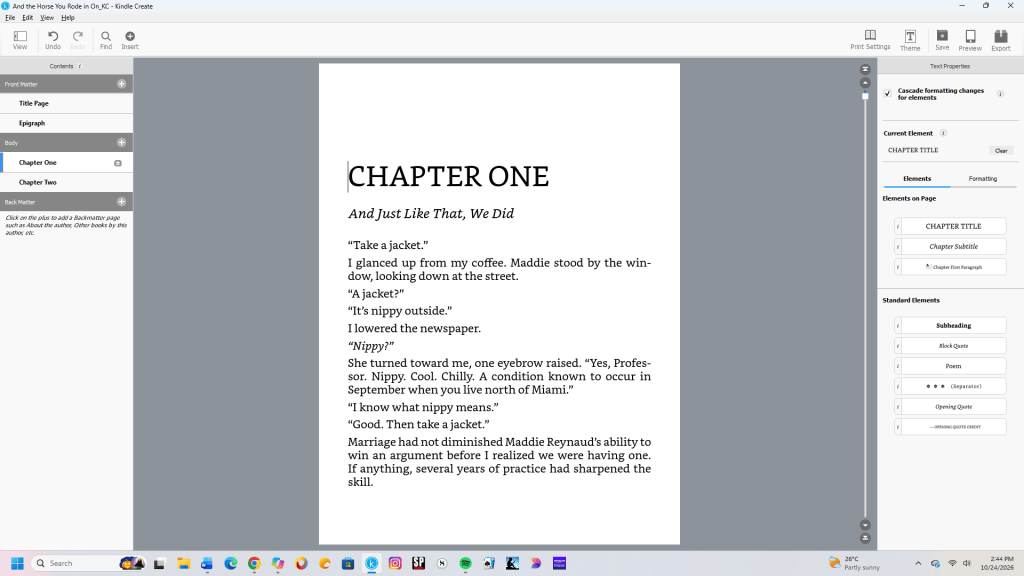
I had hoped, Dear Reader, to follow up my successful effort to rewrite the “botched” beginning of And the Horse You Rode in On….
As you may remember, this new book takes us back to the beginning of Jim Garraty’s story to explore how his lifelong friendship with Mark Prieto began in the fall of 1975, and the two events that bound them together as the Twins from Different Mothers.
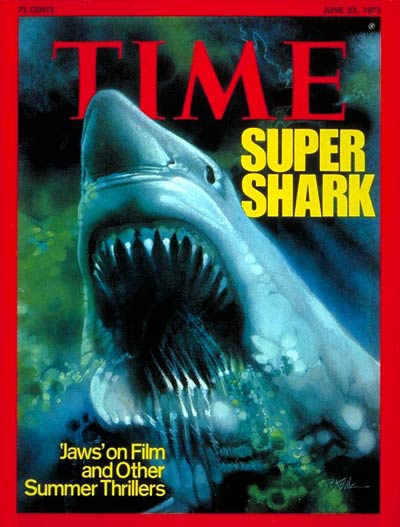
A few weeks back, I’d written a decent, nay, a good, first chapter establishing how and when Jim met Mark at South Miami Elementary School in the shadow of the Summer of Jaws and the start of America’s Bicentennial. Everyone remembers that national celebration as taking place in 1976, but it actually began in 1975.
As I wrote in On Writing and Storytelling: The Second Try Was the Charm, I Guess:
After several hours of contemplation, re-reading parts of other Garratyverse stories (Reunion: Coda especially), and drinking half a carafe’s worth of Colombian coffee, I revised the beginning of the novella so it’s more consistent with the current canon.
The problem with the original version of Jim and Mark’s first meeting wasn’t the quality of the writing. I don’t pretend to be my generation’s version of Ernest Hemingway, John Steinbeck, Herman Raucher, or Stephen King, but I studied both journalism and creative writing when I was a young man, and I earned a reputation for being a good writer.
So, even though I’m not “rich and famous” in my chosen career, I work hard at being a wordsmith and storyteller. I might not be overly confident, but I am no hack, either.
No, the problem with the first version of And Just Like That, We Did wasn’t whether the words I’d written were right and true. They most certainly were.
No, no, folks.
The problem was that I was contradicting “facts” I had established in Reunion: Coda, facts that were now canon.

(Lesson No. 1 from that fiasco: If you’re writing a new story that expands upon a story thread from a previous work, make sure you don’t contradict yourself. It doesn’t matter that you’re writing fiction; you must treat your characters and settings as though you were a journalist writing about real people and real events. That’s part of the magic of storytelling: creating the illusion of reality and encouraging the suspension of disbelief that keeps your Constant Readers engaged and, hopefully, coming back for more new stories by you.)
Well, I fixed that literary faux pas. And Just Like That, We Did was rewritten and is now consistent with the “facts” I first mentioned in Reunion: Coda.
Yesterday’s plan, of course, was to move on to Like It Had Teeth, the novella’s second chapter, which involves Mark, Jim, and the stratagems they devise to go see Jaws.

Mark has already seen it, but Jim’s mother, Sarah Garraty, doesn’t want her son to watch it. She read Peter Benchley’s novel the previous year and thinks Steven Spielberg’s film might be too “adult” for Jim.
Mark doesn’t agree.
And being Mark, he comes up with a plan to circumvent this prohibition.
But, as I said earlier, as soon as I sat down at my desk and opened the Word file with The Manuscript, the little gray cells in my head lost their grip on the narrative and decided to focus on other things besides And the Horse You Rode in On….
Apparently, though, they weren’t taking the day off entirely.
After spending an annoying amount of time staring at the screen and trying to coax some “new copy” into existence, I finally decided to stop fighting myself.
If my brain wasn’t going to cooperate with the task I had planned, maybe I could put it to work doing something else.
So I went back to what I already had.
And, Dear Reader, that turned out to be the smartest thing I did all day.
Instead of trying to force Like It Had Teeth forward, I started reading and editing the existing manuscript.
Not just proofreading, mind you.
I looked at sentences that could be tightened. I found passages whose rhythms could be improved and little bits of characterization that could be sharpened. And given my recent misadventure with Jim and Mark’s first meeting, I paid particular attention to continuity.
Somewhere along the way, the feeling that I wasn’t getting anything done quietly disappeared.
Because I was getting something done.
I wasn’t adding new words to And the Horse You Rode in On….
I was making the words already there better.
And sometimes, Dear Reader, that’s harder to appreciate.
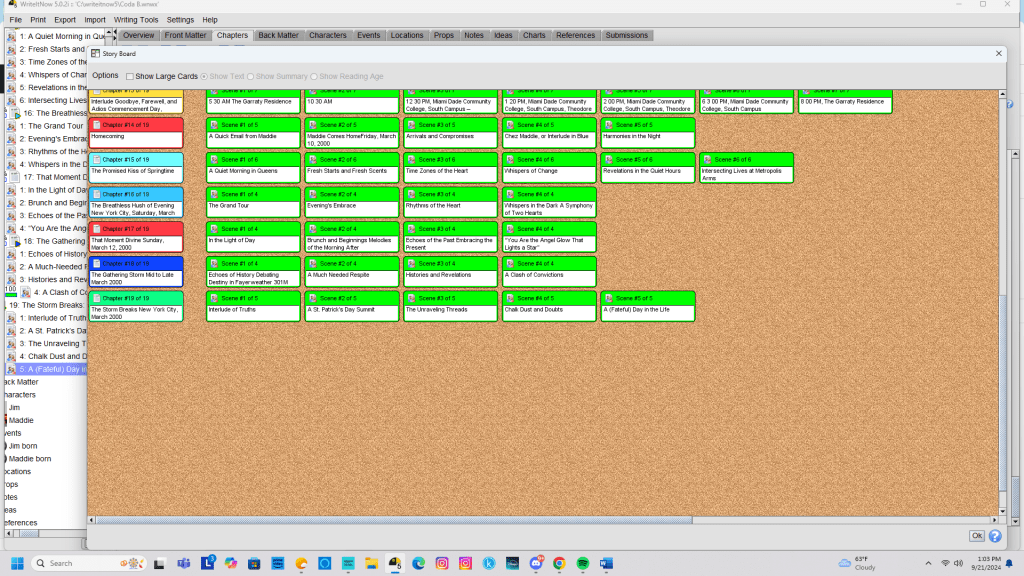
Writers can develop a slightly unhealthy fixation on word counts. We like tangible evidence that we’ve accomplished something.
Five hundred new words!
A thousand new words!
A finished scene!
Another chapter underway!
Numbers are comforting because they give us something measurable to point at and say, “See? I wrote today.”
Editing doesn’t always give you that nice little dopamine-producing statistic.
Sometimes a productive afternoon leaves you with fewer words than you started with.
But fewer words can still mean a better story.
And that was yesterday’s lesson.
Once I stopped measuring success by whether I had advanced the plot of Like It Had Teeth, the frustration began to ease. I started enjoying myself. I was back inside Jim and Mark’s world, listening to their voices, looking at the machinery of the story, and making adjustments whenever something didn’t quite sound or feel right.
The funny thing is that I know this.
I’ve been writing for a long time. I know perfectly well that revision is part of writing, not some lesser activity you resort to when your imagination refuses to show up for work.
Still, knowing something intellectually and believing it when you’re staring at the blinking cursor are two different things.
That cursor can be judgmental.
Blink.
You haven’t written anything.
Blink.
Still haven’t.
Blink.
Well? We’re waiting.
There comes a point when you want to tell Microsoft Word, “Oh, shut up.”
So perhaps yesterday wasn’t a case of writer’s block after all.
Maybe it was simply my creative brain telling me, in its irritating and indirect way, Not this. Not today. Work on something else.
And once I listened, I stopped feeling stuck.
I even felt happy.
There is a particular satisfaction in taking something you wrote earlier, looking at it with slightly fresher eyes, and suddenly seeing how to make it work better. A sentence clicks into place. An unnecessary phrase disappears. A character sounds a little more like himself. A scene develops a better rhythm.
Individually, those changes may seem small.
Collectively, they make a difference.
And by the time I stepped away from The Manuscript, I was happier with it than I had been when I sat down, determined to add new material to Chapter Two.
So:
Lesson No. 2: Progress does not always mean moving forward. Sometimes it means stopping, looking back at the road you’ve already traveled, and filling the potholes.
Okay, perhaps that’s an unfortunate metaphor to use while writing a novella called And the Horse You Rode in On….
One starts thinking about horses stepping into potholes, and then the ASPCA gets involved.
Let’s forget I said that.
The point is that yesterday I didn’t get where I intended to go.
But I still went somewhere.
Like It Had Teeth will still be there when I return to The Manuscript. Jim and Mark are still plotting their expedition to see Jaws. Sarah Garraty is still going to disapprove. Mark is still going to be Mark.
And sooner or later, the little gray cells will decide to tell me exactly what happens next.
Yesterday, they had other plans for me.
For once, I had enough sense to listen.
And for a writer who began the day convinced that he was blocked?
That’s not a bad day’s work at all.


Share your thoughts with the world!