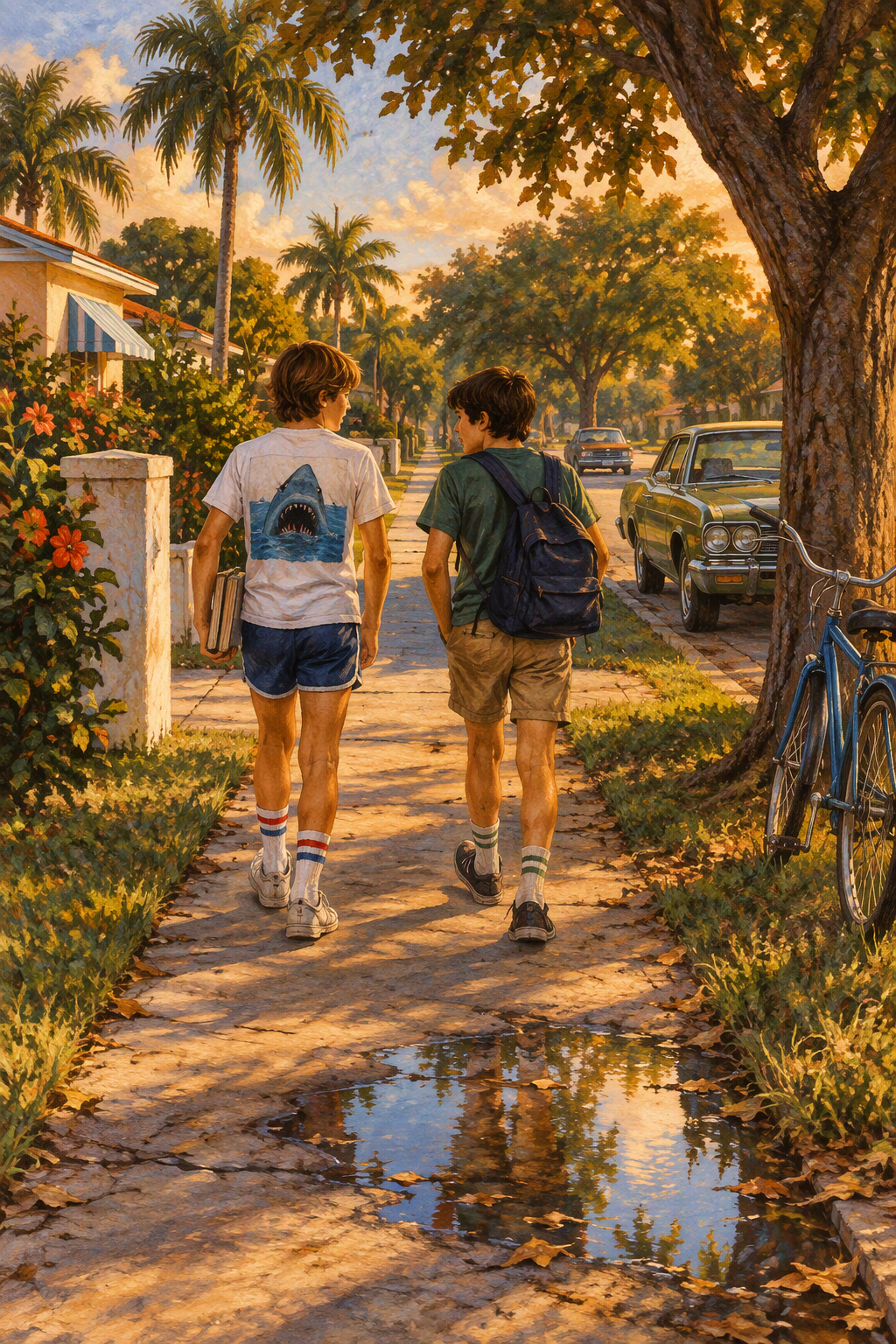

Every great friendship has to start somewhere.
For Jim Garraty and Mark Prieto, it started with a rainy morning in South Miami, a World War II book, a new kid in class, wet socks, Wacky Packages, Star Trek, and a rather colorful expression involving a horse.
Jim was ten.
He had no idea what he was getting into.
Here’s an excerpt from And the Horse You Rode in On…: A Jim Garraty Novel.
When I was ten, the worst of the summer heat might begin easing off in September, but not by much. The days were still hot and humid, and it rained. Sometimes in the afternoon. Sometimes in the morning. Sometimes whenever the hell it felt like it.
Hurricanes wandered around the Atlantic and Caribbean during those months, occupying a corner of the grown-ups’ attention. Somebody would mention a storm over breakfast or watch a weather report a little more closely than usual. In those days, though, the storms always seemed to turn away from Miami, threaten somewhere else, or make landfall somewhere else.
At least that was how it seemed to a kid.
But it wasn’t hurricanes I remembered that September morning in New York.
It was rain.
A steady rain falling beneath a low gray sky. Water rushing along the gutters. Wet lawns. Cars hissing along flooded streets. Puddles deep enough to swallow a ten-year-old boy’s sneakers if that ten-year-old boy wasn’t paying attention.
I hated puddles.
More precisely, I hated wet socks.
There are few miseries in life quite as pure as being ten years old and realizing you have six hours of school ahead of you with wet socks squishing inside your shoes.
Funny what survives in memory.
I can’t tell you the exact date. I don’t remember what I ate for breakfast that morning. I don’t remember what Mrs. Nabutovsky taught us, what I had for lunch, or what homework she assigned.
But I remember the rain.
And I remember Mark Prieto.
When I was ten, I liked history partly because history had beginnings. Lexington and Concord. Pearl Harbor. Normandy. Somebody could point to a date on a calendar or a place on a map and say, Here. This is where it started.
Real life usually isn’t that accommodating.
With Mark, though, I can come pretty close.
It was raining.
The rain had started sometime before breakfast.
Before I finished my cereal, water was streaming down the kitchen window, and the world outside had turned gray.
Mom looked out the window.
“I’ll drive you.”
I stopped with my spoon halfway to my mouth.
“Really?”
“Really. Unless you’d rather swim.”
I looked outside.
“I’ll get my book bag.”
Ordinarily I didn’t mind walking to South Miami Elementary. The problem wasn’t the distance. The problem was that South Miami had a remarkable ability to produce ankle-deep puddles exactly where you needed to put your feet. Avoiding them worked until a passing car discovered one and deposited half of it on your pants.
Besides, my sneakers were relatively new.
I had standards.
A few minutes later I climbed into the car, my book bag beside me and the World War II book I’d been reading tucked under my arm.
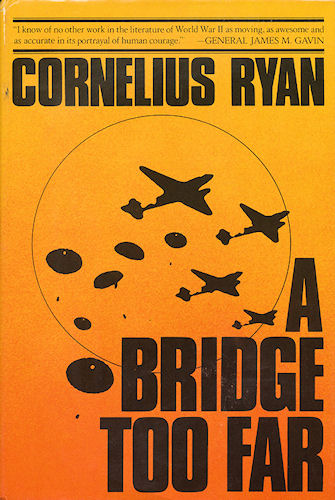
I read a lot about World War II that year. The Longest Day, Flying Forts, anything with battles, airplanes, ships, maps, and photographs. Mom didn’t discourage the reading, exactly, but my interest in war sometimes made her uneasy.
Every so often she would catch me reading about Normandy or Guadalcanal and remind me that she didn’t want me following my father into the Army.
“I’m not going into the Army,” I always told her.
At ten, I had no idea what I was going to do when I grew up, but I knew that answer made her feel safer.
The windshield wipers beat steadily back and forth as we drove. Tires hissed against the wet pavement, and water filled the gutters and collected in every low spot along the road.
The country, meanwhile, was getting ready to turn two hundred.
The Bicentennial was still more anticipation than celebration that fall, but it seemed to be creeping into everything. Teachers talked about Lexington, Concord, and Bunker Hill. Newspapers ran stories about the Revolution. Flags and commemorative things were beginning to appear in places where commemorative things had not previously been required.
I didn’t mind.
As far as I was concerned, a national celebration involving history was considerably preferable to one involving mathematics.
Mom pulled up near the school entrance.
“Have a good day.”
“I will.”
“And Jim?”
I stopped with my hand on the door.
“Try talking to somebody today instead of reading through lunch.”
“Mom.”
“I’m just suggesting.”
“I have friends.”
“I know you do.”
The way she said it told me she knew I had considerably more books than friends.
“Love you,” I said.
“Love you too.”
I opened the door and made a dash for the covered walkway, successfully avoiding the larger puddles.
Dry socks.
Victory.
By the time I reached Mrs. Nabutovsky’s fifth-grade classroom, several kids were already there.
The school year was still young enough that everything had a little September newness left in it. Notebooks still had most of their pages. Pencils were reasonably long. Book covers had not yet been decorated beyond recognition. Even the classroom seemed to retain some of the optimism adults apparently felt whenever confronted with a fresh school year.
I took my usual seat and opened my book.
I was looking at photographs from Normandy when Mrs. Nabutovsky entered with a boy I hadn’t seen before.
The room gradually quieted.
“This is Mark Prieto,” she said. “Mark is new to South Miami Elementary. I’d like everyone to make him feel welcome.”
I noticed the curly brown hair first.
Then the freckles.
Mark looked around the room and grinned.
It wasn’t the nervous smile I would have produced if someone had stood me in front of a classroom full of strangers. He looked as though being introduced to us was merely another mildly interesting thing that had happened that morning.
Mrs. Nabutovsky pointed toward an empty desk not far from mine.
Mark sat down, put his book bag on the floor, and glanced at the book on my desk.
“You like war stuff?” he whispered.
“World War II.”
“I know.”
“Then why’d you ask?”
Mark looked at me.
Then he grinned.
“Okay. You’re funny.”
“I wasn’t trying to be.”
“That’s why you’re funny.”
I wasn’t sure whether this was a compliment.
He leaned toward the book.
“My grandfather was in the Navy.”
That got my attention.
“What kind of ship?”
“I don’t know.”
I stared at him.
“How can you not know?”
“I never asked.”
“You should ask.”
“Okay, Admiral.”
“I’m not an admiral.”
“I know. I’m kidding.”
I tried not to smile.
I failed.
“Mark,” he whispered, holding out his hand beneath desk level.
“I know. Mrs. Nabutovsky just told us.”
He gave me a look that suggested I might be hopeless.
“What’s your name?”
“Oh.”
I shook his hand.
“Jim. Jim Garraty.”
“Hi, Jim Garraty.”
Mrs. Nabutovsky called the class to order before I could answer.
For the next couple of hours, Mark was simply the new kid who sat near me.
By lunchtime, he wasn’t.
* * *
I don’t remember everything we talked about that day, beyond the first exchange over my book.
That bothers the historian in me.
I wish I could produce a transcript. I wish I could tell you exactly what Mark said, exactly what I said, and identify the precise moment when two boys who had been strangers at eight-thirty that morning stopped behaving like strangers.
Memory doesn’t work that way.
I remember fragments.
Music.
Television.
Comics.
Mark thought I was too serious.
I thought Mark wasn’t serious enough.
We were probably both right.
Then, sometime during lunch, I asked the obvious question.
“Where do you live?”
Mark told me.
I stared at him.
“You’re kidding.”
“No.”
“That’s two houses down from me.”
Now it was his turn to stare.
“Seriously?”
“Yeah.”
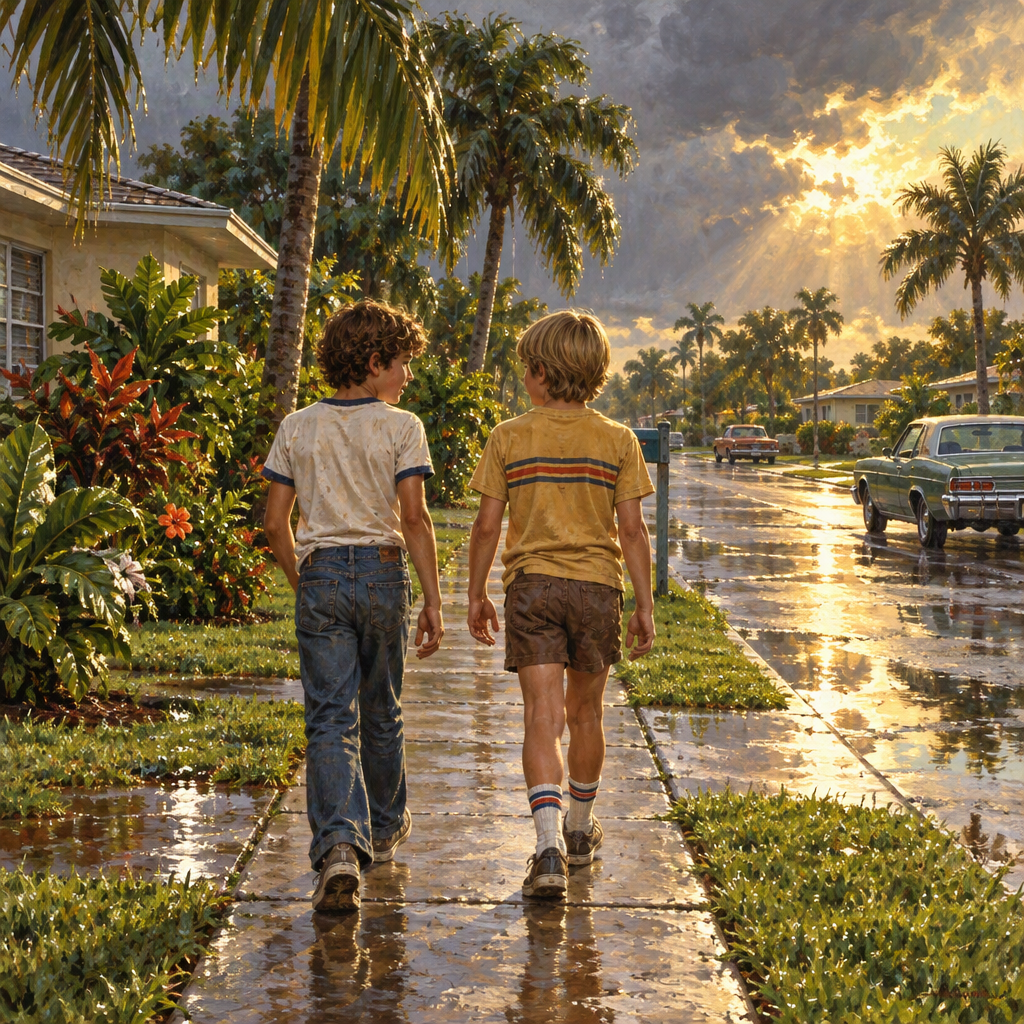
In our neighborhood, two houses down didn’t mean what it might in a row of townhouses. The lots were large, the lawns broad, and there was enough room between driveways that two houses could take up nearly half a block.
But half a block was still half a block.
Mark grinned.
“Hey, that’s easy.”
“For what?”
“Hanging out.”
He said it as though we had already agreed that hanging out was something we were going to do.
Maybe we had.
* * *
The rain had mostly stopped by the time school let out, leaving behind a light drizzle and pavement that gleamed beneath a sky still deciding what it wanted to do.
Mark and I walked home together.
I picked my way around the deeper puddles.
Mark walked directly through one.
I looked at him.
“What?”
“Your shoes are wet.”
“So?”
“Your socks are wet.”
He looked down.
“Probably.”
I shook my head.
“What?”
“Nothing.”
“You’re weird.”
“You’re the one walking through puddles.”
Mark grinned.
“See? Funny.”
“I still wasn’t trying to be.”
We reached his house before mine.
“You wanna come in?”
I hesitated.
Not because I didn’t want to.
I did.
I was thinking about Mom.
“I gotta tell my mom first.”
“You can call her.”
This settled the matter as far as Mark was concerned.
He led me up the driveway.
The Prieto house still bore the evidence of a recent move.
Mark opened the door.
“Mom?”
A voice came from somewhere inside.
“In here.”
We found Dale Prieto amid the accumulated debris of unpacking. Cardboard boxes stood along the walls, some open and half-emptied, others still secured with tape. A few were marked KITCHEN or LINENS in thick black marker.
The house smelled like cardboard boxes and lemon cleaner.
Dale looked to me as though she were in her late thirties or maybe early forties, pretty in a soft, everyday way. She wore cutoff jeans that looked as if they might once have been bell-bottoms and a rainbow-striped blouse that had the Burdine’s-or-Richard’s look half the mothers in Miami seemed to favor. Flip-flops slapped lightly against her heels when she walked. Her fingernails and toenails were painted the same bright red.
She looked at Mark.
Then at me.
“You brought somebody home.”
“This is Jim.”
“A friend from school?”
Mark turned toward me.
“She knows everything.”
“I’m his mother,” Dale said. “It’s in the job description.”
I liked her immediately.
“Hi, Mrs. Prieto. I’m Jim Garraty.”
“Dale is fine.”
I had never addressed somebody’s mother by her first name in my life.
“All right.”
She smiled as if she understood that all right did not necessarily mean I intended to do it.
“Garraty? So you’re Sarah’s boy.”
“Yes, ma’am.”
“Your mother and I met the other day.”
This was news to me.
Mark looked equally surprised.
“You know his mom?”
“I do.”
Mark turned to me.
“Well, this is getting weird.”
Another voice came from the hallway.
“What’s weird?”
I looked over.
A little girl stood there, studying me with the frank curiosity eight-year-olds sometimes reserve for strangers who have materialized unexpectedly inside their house.
I knew she was Mark’s sister before anybody said so.
She looked so much like Dale that for one ridiculous instant I wondered if the Prieto family had simply made a smaller copy. Same general features, same hair, even something familiar in the way she stood there taking stock of me.
“That’s Leslie,” Mark said. “My sister.”
“I’m eight,” Leslie informed me.
Apparently this was important.
“I’m ten.”
“I know.”
I looked at Mark.
He shrugged.
“Told you. Everybody knows everything around here.”
Leslie ignored him.
“Are you from Mark’s school?”
“Yeah.”
“Is he your friend?”
That stopped me.
Mark and I had met that morning. I wasn’t sure enough time had passed for there to be an official ruling.
Mark apparently was.
“Yeah,” he said.
Leslie nodded.
“Okay.”
And that was that.
No application. No waiting period. The Prieto family had apparently reached a decision.
“You live two houses down,” Leslie said.
“Yeah.”
“Mom knows your mom.”
“Yeah, she told me.”
Leslie looked at her brother. “Are you going to show him your stupid Wacky Packages?”
“They’re not stupid.”
“They’re really stupid.”
“Go away, Leslie.”
“I’m going.”
She turned and disappeared down the hall.
Mark shook his head.
“Little sisters.”
I didn’t have one, so I accepted his diagnosis without comment.
“Come on,” he said. “My room’s this way.”
Mark’s room was still settling in.
That was the only way I knew to describe it.
Mine was orderly, partly because Mom expected it to be and partly because I liked knowing where my books were.
Mark’s room looked as though several different interests had collided and decided to stay.
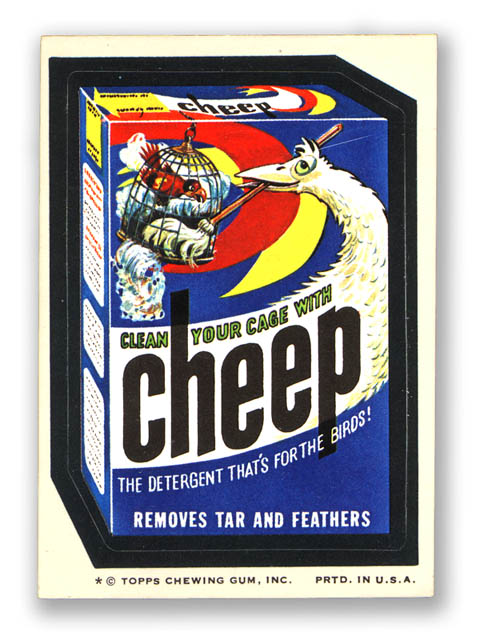
Records leaned beside a small stereo. The Beatles’ Red and Blue albums were there, along with Elvis and Elton John. Comics occupied portions of the floor, Marvel and DC mixed together in an arrangement that suggested Mark saw no compelling reason to choose sides. A couple of Cracked magazines lay beneath the window. Wacky Packages were scattered across the dresser.



And there were posters.
Cheryl Tiegs.
Lynda Carter.
Susan Dey.
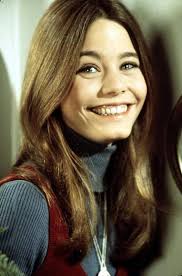
I looked at Susan Dey a little longer than I intended.
Mark noticed.
Of course he did.
“You like her.”
I looked away from the poster.
“She’s pretty.”
“Yeah.”
He studied her picture as though we were two art critics contemplating an important work.
“Everybody likes Susan Dey.”
For some reason, this reassured me.
“What about her?” I asked, indicating Lynda Carter.
Mark stared at me.
“Wonder Woman?”
“I know who she is.”
“Then why’d you ask?”
I looked at him.
He grinned.
I realized with some satisfaction that he had just used my own line against me.
“You’re a wiseass,” I said.
“So are you.”
“No, I’m not.”
“You will be.”
Near the stereo, partly hidden behind a stack of comics, was a photograph of the Enterprise.
I recognized it, although mostly from commercials and the handful of episodes I’d seen.
“You like Star Trek?” I asked.
Mark stared at me.
It was exactly the wrong question.
“You don’t?”
“I didn’t say that.”
“What’s your favorite episode?”
“I don’t know.”
His expression changed from disbelief to concern.
“You don’t know?”
“I’ve seen it.”
“How much?”
“Sometimes.”
Mark sat up straighter. “Sometimes?”
I felt as though I’d just failed an examination—one I hadn’t known I was taking.
“It’s okay.”
“It’s more than okay. It’s Star Trek.”
“I know what it is.”
“Kirk. Spock. McCoy.”
“I know who they are.”
“Scotty?”
“Yes.”
“Uhura?”
“Mark.”
He grinned. “Okay. Just checking.”
Then his expression became serious again.
“You gotta watch more.”
“Why?”
“Because it’s great.”
Apparently, that settled the matter.
With Mark, it usually did.
He dropped onto the bed, and I sat in a chair nearby.
For a few seconds neither of us said anything.
Then Mark leaned toward me.
“You know what my dad says when somebody really pisses him off?”
I glanced instinctively toward the open bedroom door.
“What?”
Mark lowered his voice.
“Fuck you, and the horse you rode in on.”
I stared at him.
I knew the word.
Of course I knew the word.
There were things kids said in the playground and words adults occasionally used when they thought children couldn’t hear them. That word belonged to the category of things I knew perfectly well but had no intention of saying anywhere within fifty yards of my mother.
“You can’t say that.”
Mark looked pleased with himself.
“I just did.”
“My mother would kill me.”
“Then don’t say it around your mother.”
I considered this advice.
“What horse?”
Mark stared at me.
“The horse.”
“What horse?”
“There isn’t a horse.”
“Then why say it?”
He started laughing.
I frowned.
“What?”
“Nothing.”
“What’s so funny?”
“Jesus, Jim.”
“What?”
That made him laugh harder.
I started laughing too, although I wasn’t entirely sure why.
That happened with Mark.
He had a way of deciding something was funny so completely that sooner or later you found yourself agreeing with him.
When he recovered, he pointed at me.
“You’re gonna use it someday.”
“I am not.”
“You will.”
“My mother would wash my mouth out with soap.”
“Only if she hears you.”
“I’m not saying it.”
“Okay.”
He sounded far too confident.
Then he reached for a record.
And just like that, the subject changed.
That was another thing I would learn about Mark.
He could move from profanity to music without so much as changing gears.
I stayed.
We played records. We talked about comics and television and school. Mark showed me his Wacky Packages despite Leslie’s warning, and I had to admit they were funny.
A few were curled at the edges from being peeled, traded, and handled too many times. Mark treated them like collectibles of immeasurable value. I could see what Leslie meant about their being stupid.
They were also fun.
And for a while that was enough.
Outside, water still dripped from the eaves. The occasional car went past on the wet street. Inside, Mark kept pulling things from boxes and shelves, showing me records, magazines, comics, anything he thought might interest me.
At some point I stopped thinking about what time it was.
Eventually Dale called from the hallway.
“Jim?”
I looked toward the door.
“Your mom just called.”
My stomach dropped.
“What time is it?”
Mark checked.
“Oh.”
That was not reassuring.
Dale appeared at the doorway.
“She was starting to worry. She’d like you to come home for dinner.”
“I forgot to call.”
Mark looked at me.
“Oh, yeah. You were gonna call.”
“That helps.”
“Sorry.”
I stood and collected my book bag.
“I’m probably dead.”
“You live two houses away.”
“Good. They won’t have to carry me far.”
Mark laughed.
At the front door, I said goodbye to Dale. Somewhere farther inside the house I heard Leslie, so I called a quick goodbye to her too.
Mark followed me outside.
The rain had stopped completely. Everything smelled wet and clean, and water still stood in the low places along the sidewalk.
My house was visible from where we stood.
Two houses.
Half a block.
“You coming over tomorrow?” Mark asked.
I looked at him.
“Maybe.”
“That’s yes.”
“No, it means maybe.”
“Okay. See you tomorrow.”
I started walking.
“Hey, Jim.”
I stopped and turned around.
“What?”
Mark grinned.
“And the horse you rode in on.”
I raised my hand and flipped him off.
Or tried to.
I used the wrong finger.
Mark doubled over laughing.
I looked at my hand, realized my mistake, and immediately corrected it.
That only made things worse.
“You’re an asshole,” I said.
Mark straightened with some difficulty.
“See? You’re learning.”
I was still laughing when I turned toward home.
By the time I reached my driveway, I already knew I wanted to go back to his house the next afternoon.
Mark, apparently, had figured that out hours earlier.


Share your thoughts with the world!