

The Best Beach I’ve Ever Been To? Well…
Today’s WordPress prompt asks:
What is the best beach you’ve ever been to?
This presents a small problem.
I’m not a beach connoisseur.
Yes, I grew up in Miami. Yes, I live in Florida again. And yes, I’ve been to beaches on more than one continent. Nevertheless, I don’t maintain mental rankings based on sand quality, water clarity, available concessions, or the likelihood that Roy Scheider will suddenly appear and start yelling at everyone to get out of the water.
Still, when I saw the question, one place immediately came to mind:
Playa de Mazagón, Spain.
Was it the most beautiful beach I’ve ever seen?
Probably not.
Was it the warmest?
Definitely not.
But nearly four decades later, I remember it.
And perhaps that counts for something.
Spain, 1988

In the fall of 1988, I was 25 years old and participating in the Semester in Spain study-abroad program in Seville. The program was co-sponsored by the College Consortium for International Studies and what we then knew as the CCIS Center in Seville.
Spain had not always been on my list of Things Alex Absolutely Must Do.
In fact, before late 1987, I had never been particularly keen on going to Spain. I had considered a study-abroad program in Salamanca for the spring of 1988, but that fell through.
Then one of those eureka moments struck me.
I realized that studying abroad might be my best opportunity to see Europe.
My first Spanish teacher at Miami-Dade Community College’s South Campus encouraged me to apply for the Seville program. So, only four or five months before departure, I signed up.
On September 21, 1988, I boarded a red-eye flight bound for Madrid.
I was 25 and a half years old.
I had never been to Europe.
And apparently I had decided that merely moving to another continent for a semester wasn’t enough to keep me occupied.
I was carrying 15 credits’ worth of classes, including advanced Spanish, History of Spain, and Government of Spain. I had also rather cockily volunteered to serve as a foreign correspondent for Catalyst, South Campus’ student newspaper.

What could possibly go wrong?
Well, this was 1988, so one answer was air mail.
I wrote five columns from Spain between early October and early December. Only one managed to cross the Atlantic quickly enough to appear while I was still there, in the December 1 issue.
The Internet would eventually improve the foreign-correspondence business considerably.
Sherry, Columbus, and a Beach
Our first big all-day excursion away from Seville came in early October.
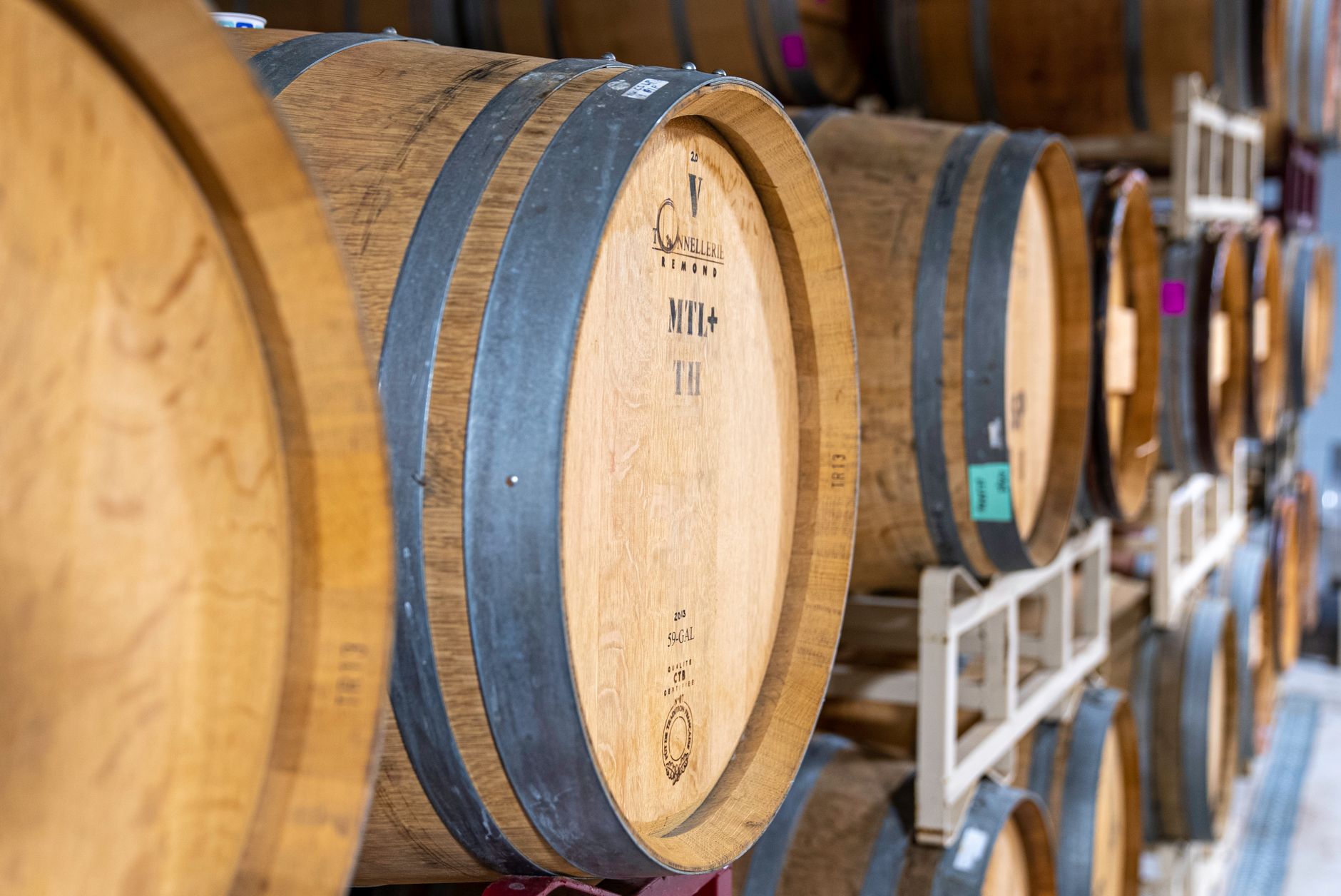
A chartered bus carried us on a trip with several destinations. One was a Domecq winery in Jerez de la Frontera (Or was it Arcos de la Frontera?), where we toured the facility and saw the enormous casks used to store wine and sherry.
We were told about the grapes used to produce sherry, and samples were offered.
This greatly pleased some of the younger students.
I was ancient, of course.
Twenty-five.
I also wasn’t much of a drinker then, so I don’t remember partaking.
My later performance involving red wine during an overnight trip to Granada would demonstrate that standards can change.
Another stop was La Rábida, the monastery associated with Christopher Columbus and the planning of his voyage westward.
I had never heard of La Rábida before that day.
What I remember most is how modest it seemed. Old. Austere. Very Catholic.
And small.
You somehow expect places connected to enormously consequential historical events to look enormously consequential themselves.
History rarely cooperates.
Standing there, I dimly remember thinking something along the lines of:
Columbus, if you only knew….
For me, there was an especially strange resonance to being there. Both sides of my family came from Colombia. Spain’s voyages across the Atlantic helped set in motion centuries of history that eventually resulted, through an impossibly complicated chain of consequences, in me standing inside that monastery as an American college student.
History can feel very abstract in a classroom.
Sometimes it feels considerably less abstract when you’re standing inside it.
Then we went to the beach.
The Mediterranean! Er…No
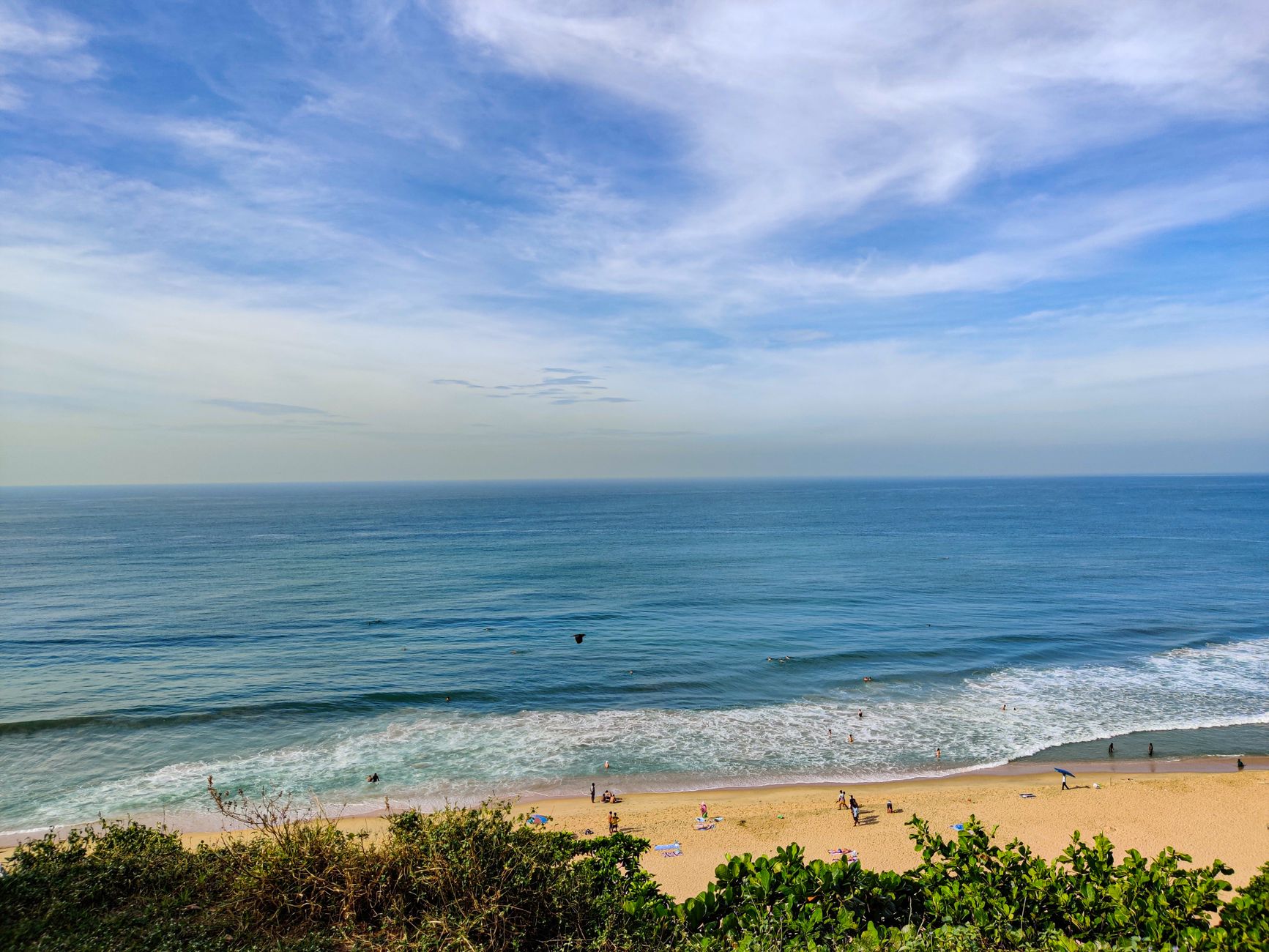
We knew beforehand that Mazagón was part of the excursion, so we had been told to plan accordingly.
It was a beautiful, warm, sunny day.
And I’ll admit to one small disappointment.
I was in Spain. I had traveled all the way to Europe for the first time in my life. Part of me really wanted to see the Mediterranean.
Instead, I got…
…the Atlantic Ocean.
Again.
Mazagón itself reminded me, at least in memory, of a somewhat dingier version of Miami Beach without the big hotels. It wasn’t terribly crowded. Certainly nothing resembling Amity Beach on the Fourth of July weekend in Jaws.
I approached the water.
I put my feet into the surf.
The water was cold.
My considered response was approximately:
Fuck, no.
Some of my braver fellow students actually went swimming.
I regarded these people as obviously insane.
Fortunately, there were other activities.
I believe we had something resembling a picnic. Some of the girls sunbathed, an activity that 25-year-old me regarded with considerable approval because some of them were cute.
We split into smaller groups.
My friend Bob Holzweiss, from New York, and I built a sandcastle near the surf.
Bob would become one of my three closest friends during my semester in Spain. The others were Ingrid Gottlieb, an 18-year-old from Broward County whom I befriended partly because she was homesick, and Michelle Kirby, a fellow journalist.
And then somebody had an idea.
Soccer.
On the beach.
This Seemed Like a Good Idea at the Time
Dr. Juan Durá, the program director, captained one team.
I captained the other.
This should not be interpreted as evidence that I possessed hidden athletic gifts.
I didn’t.
But what we lacked in Pelé-like ability, we compensated for with enthusiasm.
Playing soccer is tiring.
Playing soccer while running through sand is a different proposition entirely.
My team won.
At the time, I felt fine.
The next day, my body submitted its formal complaint.
Still, the game had been enough fun that Bob and I started talking on the bus ride back to Seville about doing it again, preferably somewhere where running did not require negotiating several million loose particles of sand.
The ride back was quieter than the ride out.
Some students slept. Others talked about the day. Some compared notes about the girls.
There was also discussion of a small dead dogfish or shark that had washed onto the beach.
Nothing Spielbergian.
Eventually, I tested student interest in a soccer rematch and proposed the idea to Lisa Dolan, our Student Activities Director. Enough people signed up that the game actually happened at the rather grandly named Campo de Reina Mercedes.
I later wrote about that second game in one of my dispatches for Catalyst. My contemporary account reminds me that we won the rematch 4-3, with Bob captaining our team.
It also reminds me that I scored no goals whatsoever.
Some historical records are unnecessarily thorough.
More Than a Tourist Excursion

The only one of my Spain columns that Catalyst managed to publish while I was still overseas was titled “Study abroad is more than educational: it’s an experience.”
Reading it now is a slightly peculiar exercise.
There I am at 25, earnestly trying to explain to readers back in Miami that studying abroad wasn’t an extended vacation. There were classes, reading assignments, midterms, finals and term papers. There was homesickness and culture shock. There was the challenge of making friends, dealing with a different language and culture, managing money, and learning to rely on myself.
Most importantly, I wrote that it took self-discipline to keep a semester abroad from becoming a mere tourist excursion.
Thirty-eight years later, I think that kid had a point.
If this had merely been tourism, perhaps I would remember Mazagón because it was particularly beautiful.
I don’t.
I remember putting my feet into the Atlantic and immediately deciding that swimming was out of the question.
I remember Bob and the sandcastle.
I remember girls sunbathing.
I remember running around on sand after a soccer ball and somehow persuading my body that this was a reasonable thing to do.
I remember winning.
I remember wanting a rematch.
I remember a small dead shark or dogfish that had somehow washed ashore.
And I remember people who had been strangers only a short time earlier becoming friends.
So, Was It the Best Beach?
I honestly don’t know.
If you asked me to judge Playa de Mazagón strictly as a beach, I doubt I could make much of a case for it. I remember a warm sunny day, cold Atlantic water, a beach that looked vaguely like a less glamorous relative of Miami Beach, and one small deceased marine creature.
Not exactly material for a luxury travel brochure.
But that’s the beach I thought of when I read today’s prompt.
I was 25 years old.
I had been in Europe for barely any time at all. I was taking challenging classes in a language other than English. I was writing dispatches for Catalyst and discovering the limitations of international air mail. I was visiting places whose histories intersected, in complicated ways, with my own family’s history.
And I was making friends.
That may be the part 25-year-old me understood better than I realized when he wrote that studying abroad was more than a tourist excursion.
All these years later, when I remember Spain, I don’t remember it as a collection of attractions I checked off a list.
I remember living there.
I remember people.
I remember experiences.
I remember being 25.
And, for whatever reason, I remember a sunny beach at Mazagón where the Atlantic was much too cold for swimming, my friends were still relatively new, and somebody thought playing soccer in the sand was a good idea.
Maybe Playa de Mazagón wasn’t the best beach I’ve ever visited.
But 38 years later, somebody asked me about beaches.
And Mazagón was the one I remembered.
I think that’s good enough.


Share your thoughts with the world!