
Late Morning, Monday, November 11, 2024, Miami, Florida

Hi, Constant Readers.
It’s a bright, somewhat muggy late autumn day here in South Florida as I kick off a new workday on Veterans’ Day 2024. The temperature is a balmy 83°F (28°C) under partly sunny skies. With humidity at 78% and the wind gently wafting from the north-northeast at a leisurely 3 MPH (5 Km/H), the heat index feels more like 96°F (35°C). I can’t help but chuckle—this might be the highest “feels-like” temperature I’ve encountered since I swapped the sunshine of Tampa Bay for the snowy landscapes of New Hampshire last year.
In true Floridian fashion, today’s forecast is a curious mix of summer and almost-winter. We can expect scattered light rain showers and a high of 88°F (31°C), just enough to keep us guessing whether we should bring an umbrella or a beach towel. Ah, the unpredictable charm of Miami weather!
Weekend Update, Part the Second: Sunday in South Florida

My Sunday was delightfully uneventful. I followed my usual “day off from work” routine: I wrote my daily blog post after breakfast, played a “skirmish” on Regiments (which I won) and a “single battle” in Cold Waters (which I lost), and tried to watch Air Force One on my computer (my TV and Blu-ray player won’t be set up for a while) but found the experience underwhelming. After dinner, I watched Star Wars: Attack of the Clones on the Florida room TV set, then went to bed around 11 PM.
It wasn’t the most exciting of Sundays, but it was peaceful, and I didn’t work on the novel.
On Writing and Storytelling: Action This Day
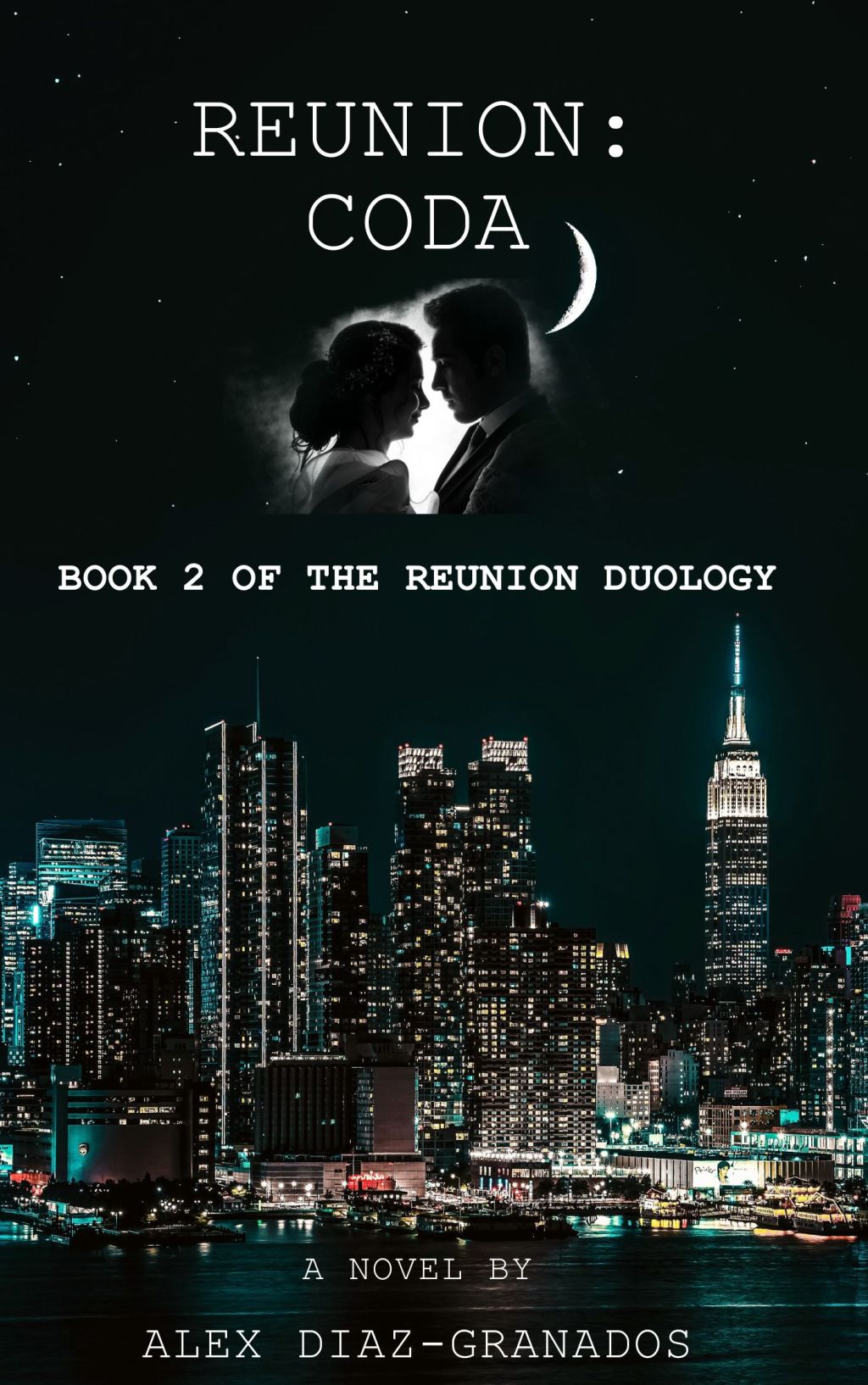
On the other hand, today is a workday for me. I lost quite a few writing days to the epic road trip from Madison to Miami, and now I’m so far behind my projected schedule that I’ve given up on publishing Reunion: Coda by early December. But life—and the novel—must go on, so I’m treating this federal holiday as a dedicated writing day.
I haven’t decided what, exactly, I’ll do when I return to my writing desk after my two-hour midday break. I’m torn between editing and revising some of what I’ve already written and beginning Chapter 21 to move *Reunion: Coda* that much closer to completion. I’ve already made a plethora of revisions to Chapters 1 through 19, and my Beta Reader hasn’t had a chance to look over Chapter 20, so I don’t have a lot to do today if I stay in “revise and edit” mode.

Choosing between editing and writing new content can be a challenging decision for any writer. Editing allows us to refine our work, polishing it to a high sheen and ensuring every detail is perfect. It’s an essential part of the writing process, but too much focus on editing can sometimes stall progress. Conversely, writing new content pushes the narrative forward, allowing creativity to flow and fresh ideas to emerge. The key is to find a balance between the two, knowing when to perfect and when to create.
Despite the dilemma, I’m optimistic. Each word written, whether it’s a new draft or a refined edit, brings me one step closer to completing my novel. Today, I’ll embrace the process and enjoy the journey of writing.
For those eager for an exclusive glimpse into the novel, here’s a delightful surprise. Dive into an early chapter where the Reunion Duology takes a fateful twist. This excerpt unveils the enchanting moment when Jim first encounters Marty, his destined crush, blending wit and insight in a way that’s bound to enchant. Prepare for a scene brimming with quirky charm and a sense of wonder that will leave you grinning from ear to ear!

Enter Marty
8:45 AM
It was only the first day of the new semester, and Mrs. Quincy devoted most of the class period to vocal exercises. She only made us listen to two songs she wanted us to learn.
I only knew one song – “There is Nothing Like a Dame” from South Pacific. Mom took me to a rare screening of the 1959 movie when I was 12. I didn’t want to go; I thought musicals were silly. But she convinced me by saying, “It’s a World War II story. In the South Pacific.”
To my surprise, I ended up liking the movie, even though part of me still found it a bit odd that characters in a movie set during the war would sing and dance as if it was the natural thing to do. And although “There is Nothing Like a Dame” was not my favorite song from South Pacific – I liked “Some Enchanted Evening” more – it was enjoyable enough for me to want to sing.
Mrs. Quincy also played “I’ll Go No More A-roving with You, Fair Maid.” I’d never heard it, but it suited a boys’ choir. I liked the sound and the lyrics. Mrs. Quincy explained them to us: a sailor who has been away for a long time wants to settle down, but regrets leaving the adventure.
The chanty ended, and Mrs. Quincy clapped her hands sharply. The sound was like two pistol shots being fired. We hadn’t been singing along or talking – much – but the room became as silent as an empty church at midnight.

“All right, gentlemen,” Mrs. Quincy said, her voice sweet but laced with authority. “Since we only have 10 minutes left before the next class period, that will be all. You can talk among yourselves…but quietly. Is that clear?”
“Yes, Mrs. Quincy,” said a tall, dark-skinned boy with an athletic build and the attitude of an upperclassman. He looked like he was 17 or 18, and he spoke with both calm and deference.
Bruce, who sat next to me in the bass-baritone section, prodded me gently with an elbow. “So, what do you think, huh? Pretty cool class, right?”
I nodded in agreement. “Yeah, it’s cool,” I said after a moment’s pause. “Mrs. Quincy’s nice, and the chorus is a more fun way to start school than, say, AP English.”
“Oh, about that,” Bruce said. “Did Ms. Back give you a hard time about the class switch? I hear she can be a real hard case about some things.”
“Nah. She might have been a bit pissed, and she acted as though signing the schedule change form was a major hassle, but it’s all an act. I get good grades in AP English and don’t screw around in class. She said that her third-period class is reading the same book, Heart of Darkness, as first period, so I’ll be fine.”
Bruce was about to say something, but then there was a gentle, almost hesitant knocking at the door.
Mrs. Quincy called out, “Come in!” in a calm, pleasant, even welcoming tone.
Slowly, ever so slowly, the heavy door to the chorus room creaked open. We all looked to see who was entering the room.
It was a girl. She was of average height, clad in new “first day of the semester” jeans, a white blouse that peeked out from under a navy-blue jacket, and clean new Keds girls’ sneakers. Her chestnut-colored hair was pulled up into a ponytail, and her cheeks were rosy against her pale skin, partly because it was cold outside, partly because she thought she was interrupting the class.
“Can I help you?” Mrs. Quincy asked.
The girl hesitated at the door, clutching her backpack tightly. She looked at Mrs. Quincy nervously and fumbled for a piece of paper in her pocket. She walked up to the teacher, holding out the class schedule change form with both hope and a bit of fear. She bit her lip and waited for Mrs. Quincy’s reaction, hoping she wouldn’t be turned away or scolded.
Mrs. Quincy reached for the form and, in that grandmotherly way of hers, said, “Oh, don’t worry, young lady. These gentlemen and I are done for the period. First day’s not too busy.”
The girl let out a sigh of relief and gave Mrs. Quincy a shy smile but said nothing.
Mrs. Quincy scanned the form, nodded a couple of times as she read it, and reached into her jacket pocket for a pen to sign it – and came up empty-handed.
“Quick,” she said as she snapped her fingers. “Any of you men have a pen?”
“I do, Mrs. Quincy,” I said, holding up the Bic pen I’d had in my jacket pocket as if it were the torch held by the Statue of Liberty. Without being prompted, I got up from my chair, walked over to Mrs. Quincy, and handed her the pen.
“See?” Mrs. Quincy said to the girl as she marked the schedule change form as approved and signed it with a flourish, “Chivalry isn’t quite dead in 1981.”
The girl gave me a shy smile but said nothing.
Oh, boy. She’s gorgeous! I thought. Even though she’s probably suffering from first-day jitters, she’s beautiful.
On the heels of that: I better get a grip. For all I know, she probably has a boyfriend. Or maybe I am just dreaming, and she isn’t really here.
Mrs. Quincy started to hand the signed form to her new pupil, then stopped, as if she had forgotten something. “Oh, I’m getting a bit goofy in my old age,” she said in a light, jokey manner. “Can you please sing for me the first verse of your favorite song?”

The girl’s eyes – they were hazel, I saw – widened, then returned to normal as she remembered where she was and what she was doing. “Oh, right,” she said shakily in a soft, pleasant voice and an exotic, elegant British accent. “What – what song would you like me to sing?”
“Just sing the first verse of your favorite song. I just want to get some idea of what you can do.”
The girl – I couldn’t get over how lovely she looked, even though she was still a bit nervous – straightened up and squared her shoulders back. Her left leg gave a little tremor, but she took a deep breath. Her face was blank for a moment – she was probably wondering which song she wanted to sing – and then, with more confidence, she said, “Right. Here we go.”
She raised her head, and even though it wasn’t intentional, her eyes locked on mine as she opened her mouth and, in a crystal clear, pitch-perfect voice, sang the first line of “We’ll Meet Again.”
I’d heard “We’ll Meet Again” a few times in World War II documentaries and Dr. Strangelove. It’s an old song, but it’s still catchy. The lyrics are about two lovers who are separated by war, and they vow to meet again someday. It’s a hopeful song, but it’s also kind of sad, because you know that the war is going to be tough.
I remembered the first time I heard it. I was watching a documentary about the Battle of Britain, and the song came on during a scene where a group of soldiers were saying goodbye to their loved ones before they were shipped off to war. It was a powerful moment, and the song stuck with me.
The girl’s voice was clear and pure, and her song moved me to tears. She stopped singing, and the room fell silent. Then, everyone clapped and cheered.
Mrs. Quincy smiled and gave her the signed form. “Lovely, young lady. You have a beautiful voice.”
“Thank you,” the girl blushed.
“What’s your name?” Mrs. Quincy asked.
“Martina Reynaud,” the girl said.


You must be logged in to post a comment.