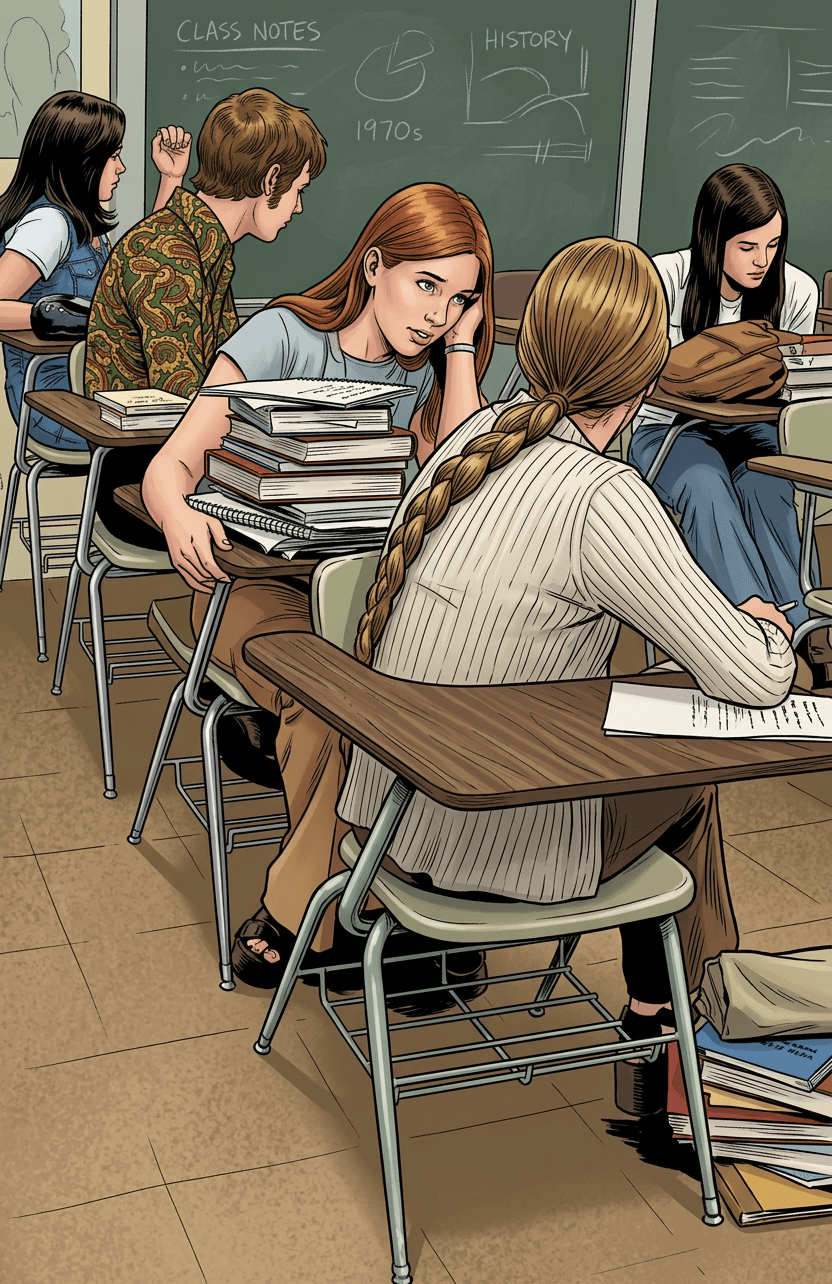

There’s a peculiar trope that shows up in fiction across genres and skill levels: the generic setting, the “It Could Be Anywhere” school, town, neighborhood, or city. You’ve seen it. A thriller introduces a group of high‑school students, but the school has no name, no mascot, no colors, no hallways with personality. The town has streets but no geography. The café has tables but no history. The airport is just “the airport.”
The intent behind this vagueness is usually well‑meaning. Some writers believe that stripping away specificity allows readers to project their own memories into the story. If the school has no identity, then your high school becomes the setting. If the town has no landmarks, then your hometown fills the void. In theory, this creates universality.
In practice, it often creates blandness.
A story set nowhere rarely feels like it happened anywhere.
The Problem with Generic Places

A setting without texture is like a photograph without depth of field. Everything is technically present, but nothing stands out. Readers can imagine the missing details, yes — but imagination is not the same as immersion.
A school without a mascot is not “universal.” It’s unfinished.
A town without a street name is not “relatable.” It’s forgettable.
A thriller set in a place that could be anywhere often ends up feeling like it happened nowhere.
Why I Write About Real Places

When I write fiction, I anchor my stories in real geography: South Miami Senior High, Columbia University, Delmonico’s, Lindy’s, Central Park, Arbetter’s, MIA, JFK, and certain corners of Boston and London. Even my fictional locations — like the Moonglow Club in Williamsburg — are built on real foundations. The Moonglow is essentially an upscale, WWII‑themed echo of the 94th Aero Squadron. It has lineage. It has bones.

I don’t do this out of pedantry. I do it because specificity creates emotional truth.
And because, like Jim Garraty, I walked those halls myself.
Why South Miami Senior High
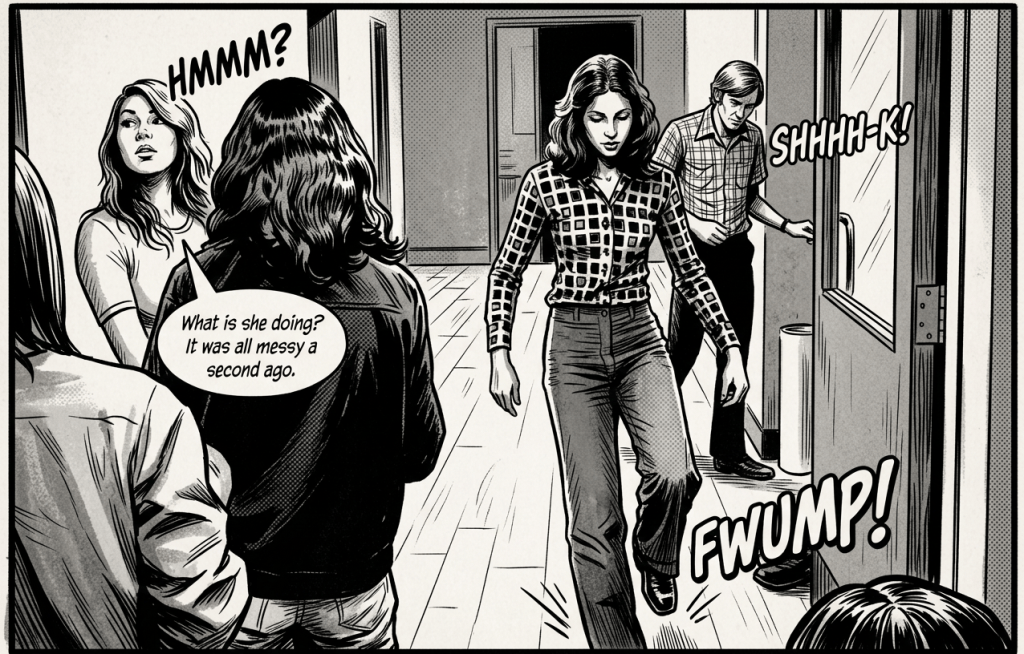
I didn’t choose South Miami Senior High simply because I liked the name (though it does have a certain aura of place, doesn’t it?). I chose it because I attended SMSH from August 1980 to June 1983. It was the only high school I ever knew well. It was where I spent my adolescence, where I learned to write, where I sang in chorus, where I made lifelong friends, where I survived heartbreaks and celebrated victories.
It wasn’t even supposed to be my school. I was originally slated for Miami Southwest High — “Southwest High” to everyone who lived in that part of town — until the School Board decreed otherwise in the spring of 1980. Because Southwest lacked an elevator at the time, disabled students who had trouble getting to class were reassigned to South Miami instead. So I was bussed there, reluctantly at first, and found myself in a place I hadn’t chosen.
But it became my place.
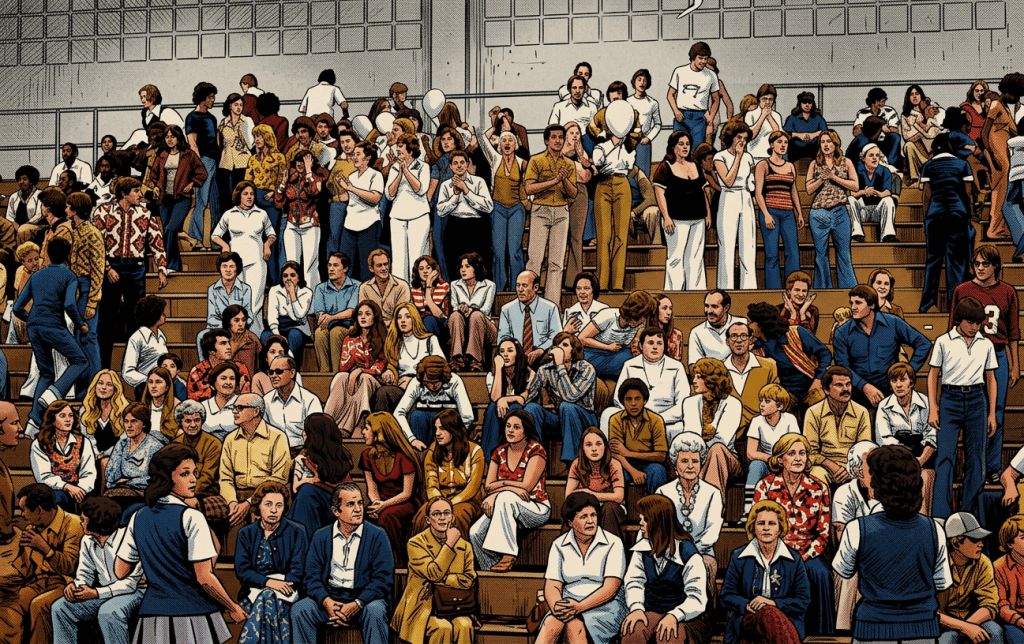
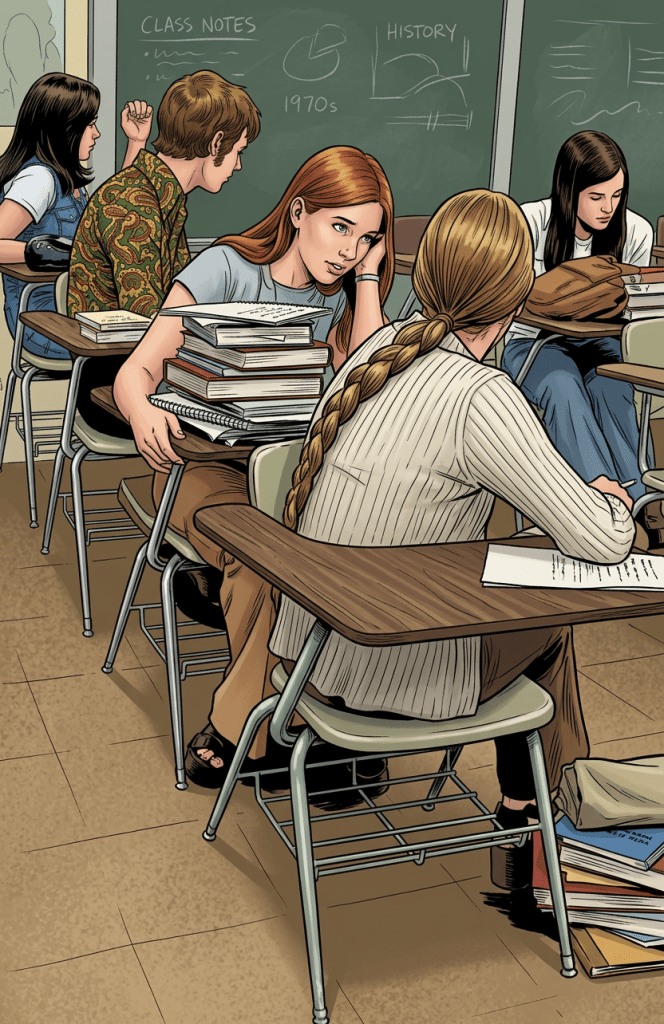
And when I began writing the Reunion Duology, it made perfect sense to set the story in the classrooms, hallways, cafeteria, and chorus room I knew intimately. I could have invented a Dolphin High School or some other fictional campus, but why bother? I already had a real one — vivid, textured, and emotionally charged.
Specificity in Action: The Chorus Room

One of the first places Jim Garraty enters in Reunion is the chorus room — Room 136 — a space that mattered to both of us in real life and its fictional version. Here’s how specificity transforms it from “a music room” into a living, breathing environment:
- windowless walls at the far end of the music wing
- fluorescent lights giving the room a clinical feel
- motivational posters (“If you can dream it, you can do it”)
- a Kawai grand piano at the center of the room
- Mrs. Quincy’s seasonal concert cycles
- kids practicing solos when the room was free
- the sanctuary‑like atmosphere that let students forget their troubles
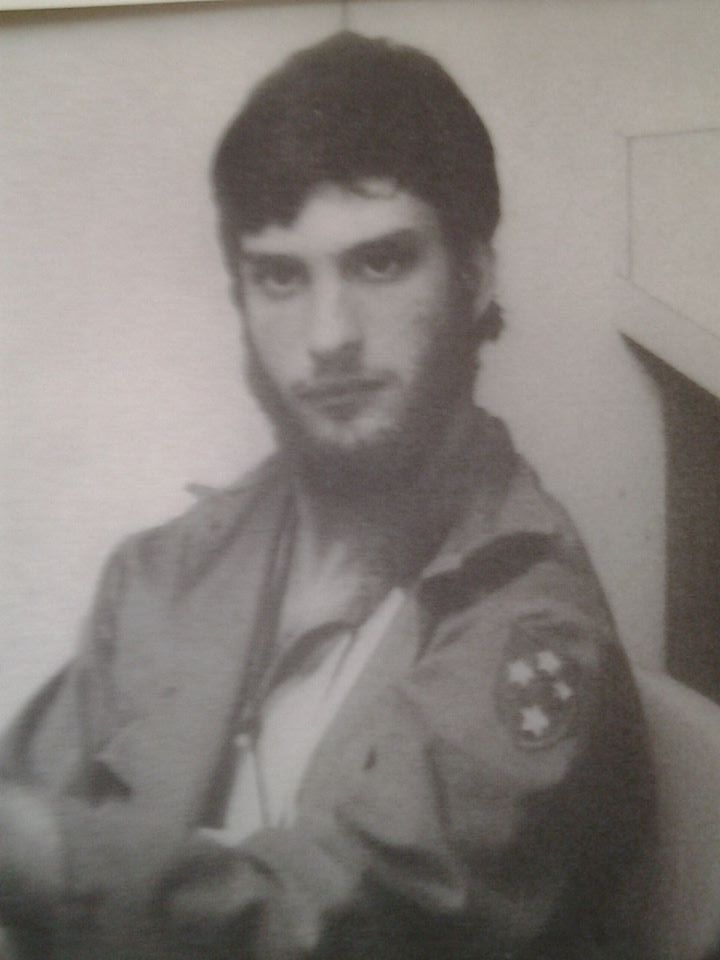

This isn’t a generic “choir room.” It’s South Miami’s choir room — the one I knew, the one Jim knew, the one where nerves and hope mingled at 8:00 AM.
When Mrs. Quincy quiets the boys with “we’re here to sing, not to palaver,” the moment lands because the place feels real. The details give the scene weight. They give it memory.
Specificity in Action: The Cafeteria at First Lunch
Another example comes during first lunch period. Jim sits alone at a round table in the corner by the entrance, surrounded by the sensory overload of a real high‑school cafeteria:
- the smell of cheap pizza and canned vegetables
- the fluorescent lights humming overhead
- the reek of sweat and teenage hormones
- the clatter of trays and utensils
- the two assistant principals watching for trouble
- the half pint of MacArthur Chocolate Milk
- the soggy pizza that’s “nothing like Cozzoli’s”
- the oatmeal cookie he always chose because he knew it wouldn’t disappoint
This is specificity doing its job. This is a cafeteria that exists.
It’s not “a lunchroom.” It’s South Miami’s lunchroom — the one where social hierarchies dissolved for twenty minutes because everyone was too hungry to care.
When Mark finally appears, carrying his tray and wearing his usual jeans and button‑down shirt, the moment feels real because the place feels real. Their conversation — about classes, gossip, Business Math, and Ms. Garcia — lands because it’s happening somewhere, not nowhere.
A setting without texture is like a photograph without depth of field. Everything is technically present, but nothing stands out. Readers can imagine the missing details, yes — but imagination is not the same as immersion.
Alex Diaz-Granados
A school without a mascot is not “universal.” It’s unfinished.
A town without a street name is not “relatable.” It’s forgettable.
A thriller set in a place that could be anywhere often ends up feeling like it happened nowhere.
Specificity in Action: The Last Walk Home
Later, Jim recalls his last walk home after the last day of scheduled classes and final exams:
“South Miami High, that canary yellow bunker on the corner of Southwest 53rd Street and Southwest 68th Avenue… ‘Cobra Country’ was a warehouse for 2100 kids and 150 grown-ups… It was a place full of secrets and surprises. It was where life happened, for better or worse.”
He remembers the exact room number where he kissed Marty. He remembers Mrs. Finklestein and her army of cats. He remembers the sun‑drenched sidewalk and Mark’s Han Solo impression.
These details aren’t decorative. They’re the architecture of Jim’s adolescence.
They make the scene feel lived, not invented.
Specificity Creates Universality
Here’s the irony: The more specific you are, the more universal your story becomes.
Readers who never set foot in Miami still connect with:
- the last walk home after Final Exams and end-of-classes
- the fear of losing a friend
- the ache of unspoken love
- the boredom and chaos of a high‑school lunch period
- the nervous excitement of joining a choir
- the sense that childhood is ending
They connect because the details are real enough to trust.
Generic settings ask readers to supply the missing pieces. Specific settings give readers something solid to stand on.
The Bottom Line

The “It Could Be Anywhere” trope isn’t wrong — it’s simply limited. It works for writers who want their stories to function like parables or fables. But for fiction grounded in emotional realism, specificity is not optional. It’s the engine.
South Miami Senior High gave me the emotional geography I needed to tell Jim Garraty’s story. It gave me hallways with echoes, classrooms with ghosts, sidewalks with memories. It gave me a cafeteria that smelled like cheap pizza and teenage sweat. It gave me a chorus room where a boy found his voice. It gave me a place that felt like somewhere.
And readers don’t fall in love with places that could be anywhere. They fall in love with places that feel like somewhere.


Share your thoughts with the world!