Gaming Chronicles: Naval Warfare and Strategic Simulations
Greetings, Constant Readers!
It’s the weekend, which for me is the only time during the week when I can devote some time for gaming. I haven’t played anything on this sunny but cool South Florida Sunday, and I haven’t decided if I want to do that later. But I did play one of my naval-themed sims for an hour last night, so….
Today I want to talk a bit about Sea Power: Naval Combat in the Missile Age, as well as some of my history with games in the naval warfare genre.
Mastering Submarine Simulators

Of all the computer games I’ve ever played, wargames based on naval strategy and tactics seem to be the most challenging for me to figure out and master. However, I have become quite competent as a submarine skipper—whether in a World War II setting, as in MicroProse’s Silent Service II from 1990, or in the more modern Cold Waters by Killerfish Games in 2017. I’ve played at least five submarine simulators since I acquired my first home computer in 1987, so I’m familiar with the basics of submarines, torpedoes, and underwater warfare in general.

The Struggles of Surface Warfare
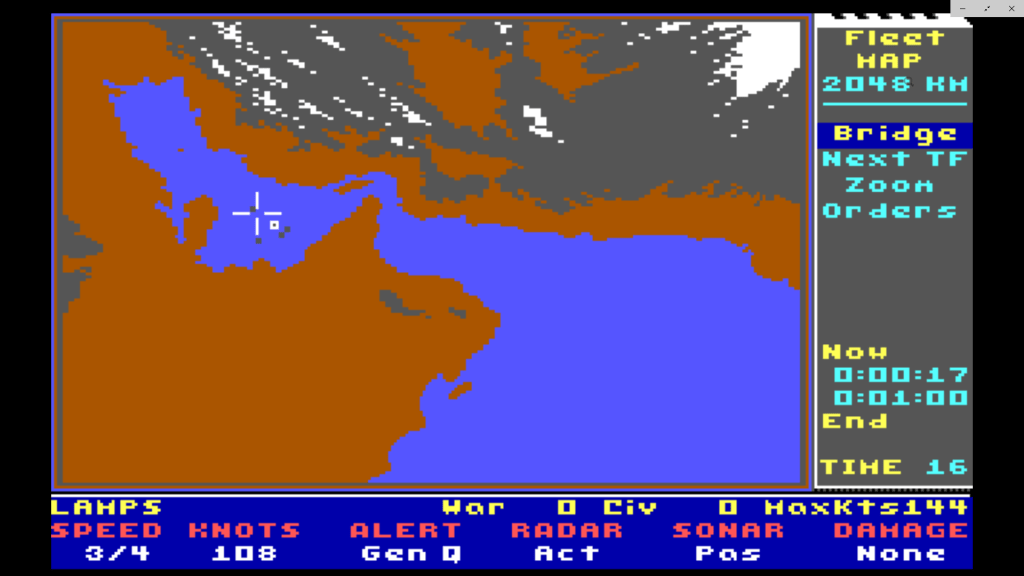
On the flip side, the only surface warfare games I did well with were those I played on my Apple IIe computer between 1987 and 1998: Epyx Games’ Destroyer and Lucasfilm Games’ Strike Fleet. The former was a simulation of a WWII-era Fletcher-class destroyer, while the latter was a precursor to Sea Power: Naval Combat in the Missile Age, set in the late 20th century. It allowed players to command American or British warships in either historical or speculative scenarios set in the early to mid-1980s.
Strike Fleet: A Nostalgic Favorite
Of the two, Strike Fleet was my go-to game because it was more realistic than Destroyer and had somewhat better graphics. Players could command as few as one warship, like an FFG-7 Oliver Hazard Perry-class frigate in Stark Realities, or a multi-ship task force with cruisers, destroyers, and frigates. There was even a “grand campaign” depicting a Third Battle of the Atlantic, pitting U.S. Navy task forces against Soviet fleet units in a series of battles for control of the North Atlantic in what was then a near-future late 1980s setting.
The Transition to PCs
When I switched from using Apple computers to MS-DOS/Windows PCs, I tried playing Interactive Magic’s Harpoon Classic ’97. This game was inspired by Larry Bond’s original Harpoon map-and-miniatures game, which motivated the late Tom Clancy to write both The Hunt for Red October and Red Storm Rising. Unfortunately, I didn’t do well as a commander with Harpoon Classic ’97, partly because I had a hard time figuring out how to conduct air operations. Moreover, some PCs I owned in the late 1990s were off-brand models built from inexpensive components and couldn’t run complex games without crashing.
Transition to Modern Naval Sims

I now own three naval warfare sims with some of Harpoon’s DNA: Slitherine Games’ Command: Modern Operations, Sonalysts Combat Simulations/Electronic Arts’ Fleet Command (formerly Jane’s Fleet Command), and Triassic Games/MicroProse’s Sea Power: Naval Combat in the Missile Age.
Early Impressions of Sea Power

The newest addition is Sea Power, which was released in Early Access less than two weeks ago. Although I haven’t played it extensively, it shows promise. The game is still incomplete and lacks certain features like the ability to save/load games or a grand campaign. These should be available in future updates. Due to time constraints during the regular workweek, I haven’t delved deeply into the lengthy scenarios.
The Dong Hoi Scenario


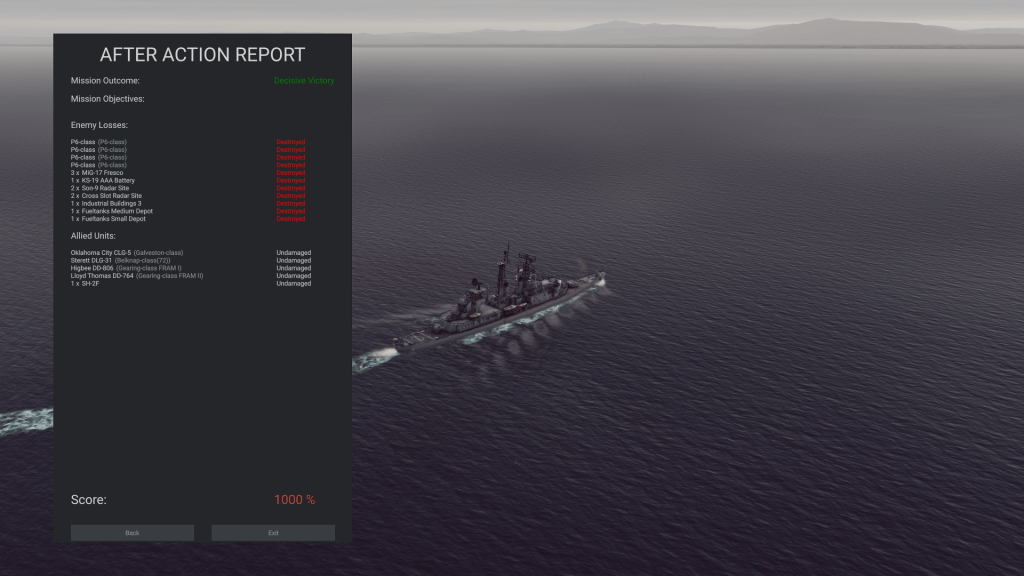
Despite Sea Power’s early access status, I’ve played through the complete Dong Hoi scenario three times. With a difficulty rating of one star, it serves as an ideal tutorial for new players. The scenario covers several key aspects of naval warfare, such as shore bombardment, ship-to-ship combat, anti-aircraft defense, and basic air operations via shipborne helicopters.
Desert Spear: A Challenging Endeavor
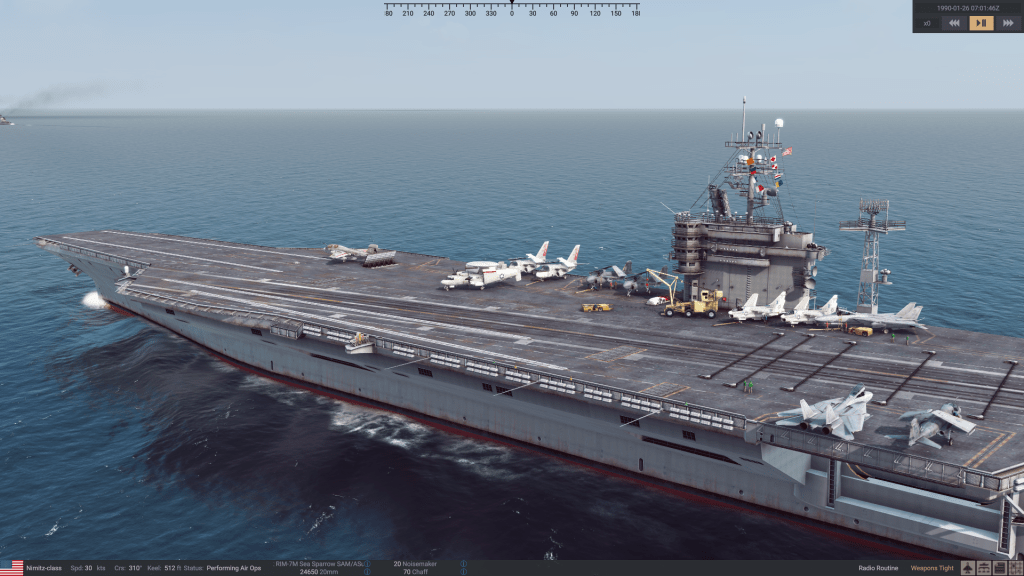
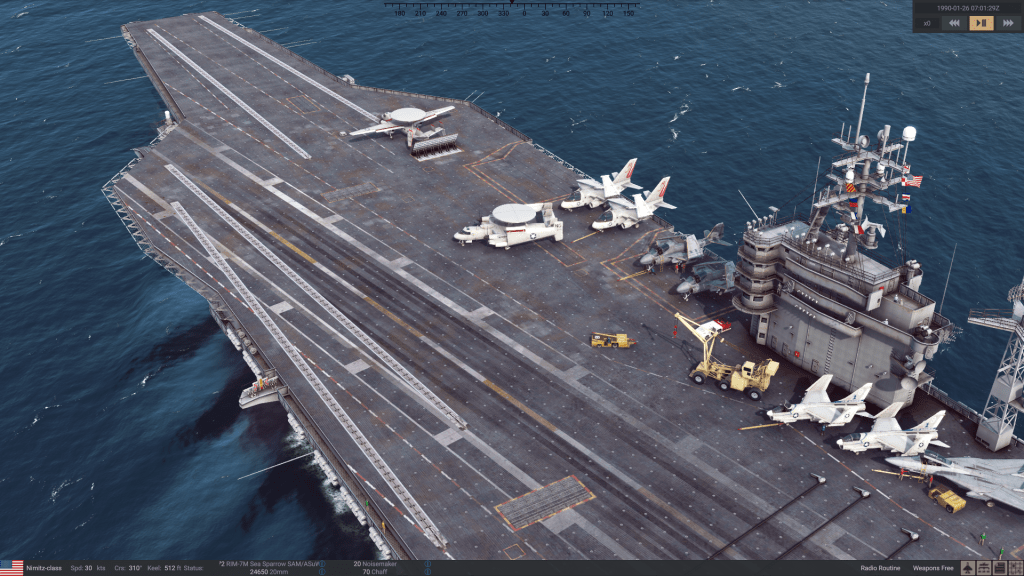
Yesterday, I attempted to play the Desert Spear scenario, which focuses on naval and air operations during the first day of Operation Desert Storm in 1991. I commanded Task Force 70 (TF-70), led by the Nimitz-class carrier USS Carl Vinson, supported by two P-3C Orion ASW aircraft and eight Air Force B-52 strategic bombers. The mission was to destroy Iraq’s small navy in the Persian Gulf, conduct offensive air operations against Iraq’s air force, and protect my task force from Silkworm anti-ship missiles.
Launching Air Operations
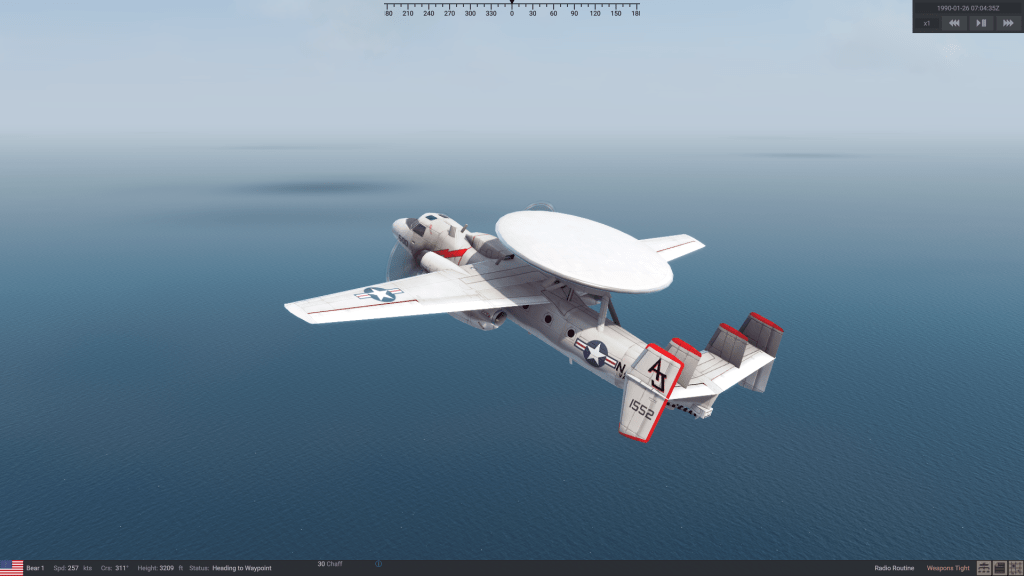
I figured out how to launch planes by sending up an E-2C Hawkeye airborne early warning and control plane and two F-14 Tomcat fighters. The game’s cinematic depiction of the process is impressive—you can see your planes rising from the hangar deck to the flight deck on an elevator, taxiing to the launch point, going through pre-flight checks, and then zooming into the sky with the help of the carrier’s powerful steam catapult.

Once airborne, controlling the planes is straightforward, and you don’t need to micromanage them too much. You can direct them to specific waypoints, adjust their altitude, and activate their radars if necessary. If unknown aircraft appear, you can order your planes to visually identify them or, if identified as hostile by the Hawkeye, engage them with their weapons.
I have not yet learned how to effectively engage enemies with my F-14s. Using my Hawkeye AEWC aircraft, I tracked a flight of Iraqi MiG-25 Foxbat fighters, and my Tomcats attempted to intercept them with AIM-54C Phoenix missiles. Unfortunately, the missiles missed their targets, and one of my F-14s was lost when the Iraqi fighters retaliated.
Exhausted and disheartened by my defeat, I decided to abandon the game. With just one Tomcat remaining and a quartet of relentless Foxbats closing in on TF-70, hope seemed almost non-existent. To make matters worse, Sea Power lacks a “save game” feature, so continuing the mission later was out of the question.
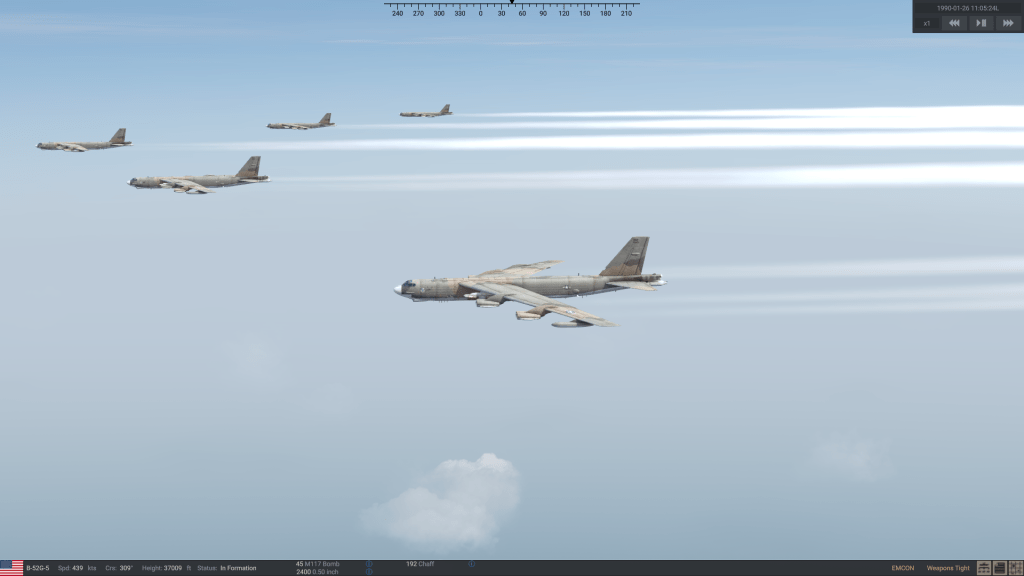
Despite the chaos of last night’s gaming session, I managed to capture some epic screenshots! You’ve got to appreciate the silver lining in any storm, right?

 A Certain Point of View, Too
You must be logged in to post a comment.